

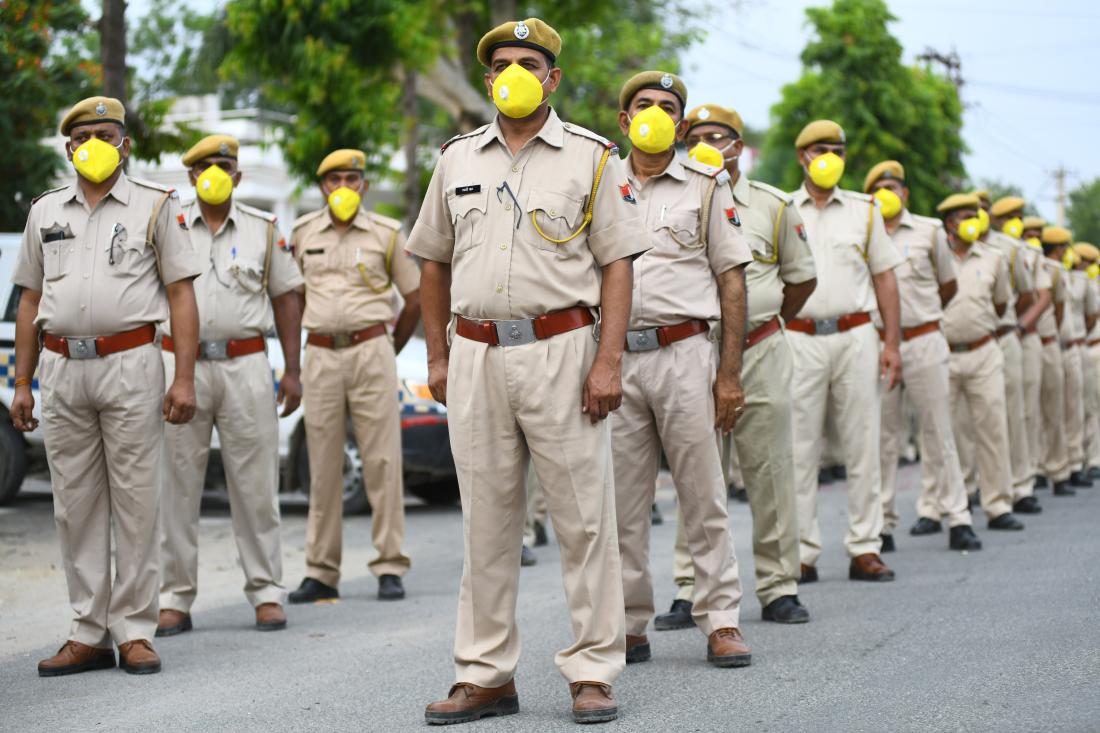
Police Performance and Public Perception in Rajasthan, India
- Police
- Citizen satisfaction
- Provider Performance
- Policing
- Community monitoring
- Police skills training

Which management practices are most effective in improving the performance and public perception of government bureaucracies and law enforcement? In this randomized evaluation in Rajasthan, India, researchers examined the effectiveness of five interventions on police performance: limiting administrative transfers; rotating duties and days off; elevating community involvement; incorporating on-duty training; and implementing “decoy” visits by survey enumerators. While decoy visits and trainings improved police performance, the other three interventions were inconsistently implemented and had no detectable impact.
Policy issue
Understanding how to promote high-quality management has been a primary focus in the study of organizations. However, it remains unclear whether the same good management principles observed in private firms are applicable to improving the performance of various government institutions and public organizations, including the police. In the context of police reform, research suggests that improved management practices and increased training may be helpful in increasing accountability of law enforcement institutions. Yet, reforms must be tailored to individual situations to be most effective, which can present a challenge across different contexts. Which management practices can best improve the effectiveness and public perception of government bureaucracies and can skilled leaders identify practices that will improve organizational productivity?
Context of the evaluation
In India, the organization and rules of the police have largely remained in place from the Police Act of 1861, instated during the British colonial occupation. This law involves a militaristic hierarchy, inflexible pay scale and promotion trajectory, and no guaranteed time off for police personnel. While several police reform commissions have suggested changes since 1977, these reforms have infrequently been implemented.
At the time of the study in 2007, the Rajasthan State Police contained 70,767 personnel, divided across 711 police stations. Among personnel, the majority (76 percent) served as constables, or the lowest rank, while only 0.2 percent were elite members of the Indian Police Service (IPS), the source of most senior officers. At this time, the distribution of police personnel and crime rates in Rajasthan were similar to those of other Indian states—Rajasthan ranked fourth out of 28 states in serious crimes that warrant investigation without court order, but 25th in murder rates. Meanwhile, transfers of police officers occurred frequently—with one in three officers transferred every year and a half—and were often implemented by politicians for party-based motives.
Findings from baseline data collection supports India’s history of estrangement between the police and the public. Surveys showed that only 29 percent of crime victims registered the crime with the police, largely due to doubt that the police would assist them. Of those who did report, 17 percent noted facing backlash from the police, which prevented their cases from being registered. Survey data showed much higher crime rates than law enforcement data, with up to 11.35 times more robberies reported in surveys than in police records. Moreover, surveys showed that 53 percent of respondents believed that law-abiding citizens are afraid of the police.
Details of the intervention
Recognizing these problems, the Rajasthan Police initiated an intervention with the researchers, which aimed to enhance police performance, improve public opinion, and gather objective information about crime rates and performance. In response to survey data that identified issues of concern, the police designed five interventions, which were then randomly implemented in 162 police stations in 11 districts across Rajasthan, with 25 of those stations serving as a comparison. The police intentionally selected these interventions to improve the public perception and effectiveness of the police, based on police commission reports and conversations with researchers.
The Rajasthan police stations within the intervention were randomly assigned to implement various reforms among the following five, low-cost interventions:
- Freezing of transfers: All treated stations were asked to intentionally freeze administrative transfers for at least two years since frequent transfers seemed to have adverse effects on morale and relationship with the local population.
- Weekly day off and duty rotation system: As part of the intervention, all staff, except for the station chief, were meant to be given one day off every eight days, instead of working for 24 hours daily. Additionally, each person was to be given the opportunity to perform all duties on a rotating basis, equally allocating tasks among personnel, and all transfers were also frozen.
- Community observers: All treated stations were asked to invite two local volunteers to sit in the police station for three hours each day, observing day-to-day activities. The objective was to increase public awareness of the roles of the police and improve police behavior through informal monitoring. In these stations, transfers were also frozen.
- In-service training program: Police personnel were randomly chosen to receive training in either professional and investigation skills or soft skills at the Rajasthan Police Academy. These included classes to improve the competence level and scientific techniques of 292 investigating officers, and soft skills training for all 1,541 police personnel, including lessons on communication, mediation, motivation, team building, and leadership. Researchers also randomly varied the percent of police personnel assigned to receive training.
- Decoy crime victims: All treated police stations received unannounced visits by five to six “decoy crime victims,” or enumerators, pretending to be citizens registering complaints. Through this activity, researchers sought to assess whether the interventions increased the police’s willingness to register cases or improved their behavior.
To assess the possibility that the police stations might alter their behaviors or responses in reaction to being observed by external evaluators, an additional group of 12 stations, the “pure comparison,” was also randomly selected. These police stations did not have knowledge of the project and were note visited until the last endline survey.
The impact of the project on police performance and public opinion was measured using a series of baseline and endline surveys and interviews, administered to police personnel and 5,895 households from 2007 to 2008. Researchers also analyzed 982 randomly selected case files from the police stations to measure the impact on individual officers’ performance.
Results and policy lessons
Overall, training and decoy visits improved police performance, whereas the other three interventions either had limited impacts or were improperly implemented. This suggests that while policing may benefit from tailored management reforms, it is difficult for leaders to identify the most effective interventions to invest in. The results below show the impact of the five interventions on police performance and public perception:
Police training: Eighty-eight percent of officers selected for this activity attended the training. When 50 percent of staff within a given station were trained, victim satisfaction in the police increased by 20 percent, with this impact staying level or slightly decreasing as more staff were trained. This represents more than a twofold increase in victim satisfaction (compared to a baseline average of under 30 percent). However, when only 25 percent of the staff were trained, there was no noticeable change in victim satisfaction. As training had little impact on other police activities—such as registering cases, asking for bribes, or making arrests—this suggests that the training more likely improved police behavior, rather than their investigative skills.
Decoy crime victims: Decoy visits had a strong impact on case registration and police behavior in treated stations. Each decoy visit increased the likelihood of case registration during the next visit by a sizeable amount of 22 percentage points (or a 46 percent increase, over an average of 48 percent). Decoy visits also improved citizens’ perceptions of police officers’ politeness toward the “victim” by 7.9 to 11.5 percentage points (or a 35 to 55 percent increase, over an average of 20 percent of citizens finding the police to be polite). As decoys were dressed normally and instructed to act as local citizens, researchers do not believe that these effects came from any special treatment toward the decoy visitor.
Freezing transfers: Despite the intention to freeze all transfers, 21 percent of police officers across all ranks were still transferred during project period. However, there was still a 60 percent reduction in transfers for some ranks, which represents a substantial decrease in transfers. Results show that a small reduction in transfers reduced citizens’ fear of the police by 13 to 24 percentage points. Researchers suggest that the ban on transfers may have reduced citizens’ fear and increased their trust in the police, by allowing citizens to become more familiar with the officers working in their neighborhoods.
Weekly day off and duty rotation: Eighty-four percent of treated stations implemented some form of a rotating day off, compared to 34 percent of the comparison group. However, while treated stations initially offered one day off every 21 days, the time between days off grew longer over time. By the end of the project, treated stations had returned to giving staff one day off every 30 days, which was the same frequency as in the comparison group. Overall, the intended weekly day off and duty rotation did not generate major changes in either police performance or community satisfaction with the police.
Community observer: As observers were only present for a fraction of their assigned hours, this activity was improperly implemented. Originally, observers were present for 20 percent of their assigned hours, but this rate quickly decreased to 10 percent. This reduced the effectiveness of implementing the community observer intervention. Overall, the community observer also had no effect on public perception of the police.
These results demonstrate that it is possible, using the correct methods, to affect the public image of the police in a relatively short period of time, using an affordable and easily implementable set of interventions, including training and a freeze on transfer. Following the evaluated pilot program, reforms were introduced in Rajasthan to provide training in soft skills—communication, team management, leadership, and other personality development skills—to nearly the entire police force, which numbered some 100,000 officials in 2016. For more details, see the Evidence to Policy case study.