Agriculture
Three-quarters of the world’s poor live in rural areas, and many depend directly or indirectly on agriculture. Agricultural technologies have the potential to improve their lives through higher yields, better prices, lower risk, and improved nutrition. But take-up of these technologies—from improved seeds to financial products like microinsurance—is low.
J-PAL affiliates are conducting rigorous research to test new ways to promote take-up, boost farmers’ profits, manage the risks inherent to agriculture, and better link farmers to markets.
In addition to supporting policymakers in applying evidence from randomized evaluations to their work, sector chairs and staff write policy insights that synthesize general lessons emerging from the research, condense results from evaluations in policy publications and evaluation summaries, and build partnerships and fund new research through the Agricultural Technology Adoption Initiative, the Digital Agricultural Innovations and Services Initiative, and the UM6P-J-PAL Applied Lab for Agriculture.
Policy insight
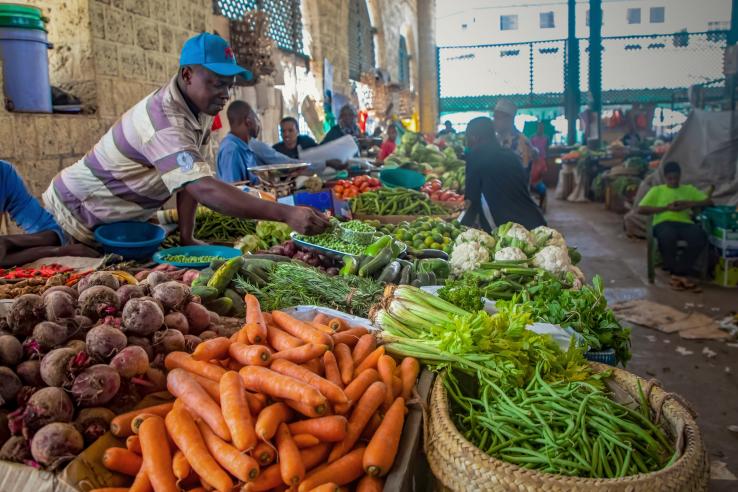
Increasing small-scale farmers’ access to agricultural markets
Farmers in low- and middle-income countries face challenges accessing markets and earning profits on their agricultural goods. When small-scale farmers have better access to both markets where they buy inputs for their own farming and markets where they sell their goods, they can often invest more...
Case study
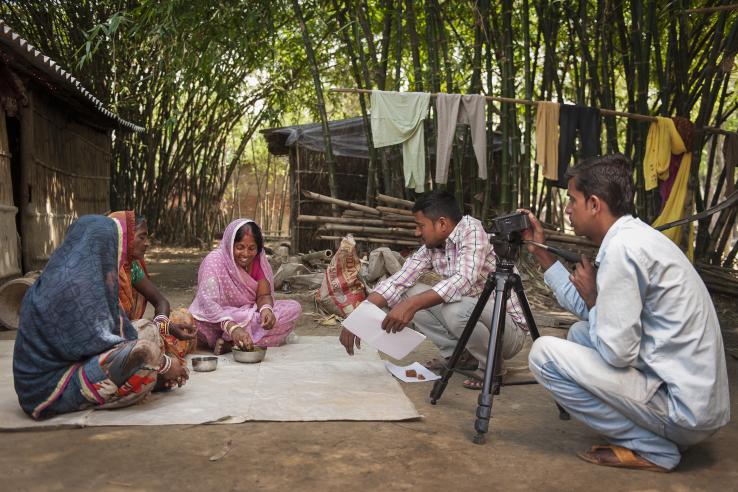
Video-based support for small-scale farmers around the world
Digital Green leveraged findings from randomized evaluations to refine and scale its video-based agricultural extension model, reaching more than 7.2 million small-scale farmers in India and around the world.
Policy insight
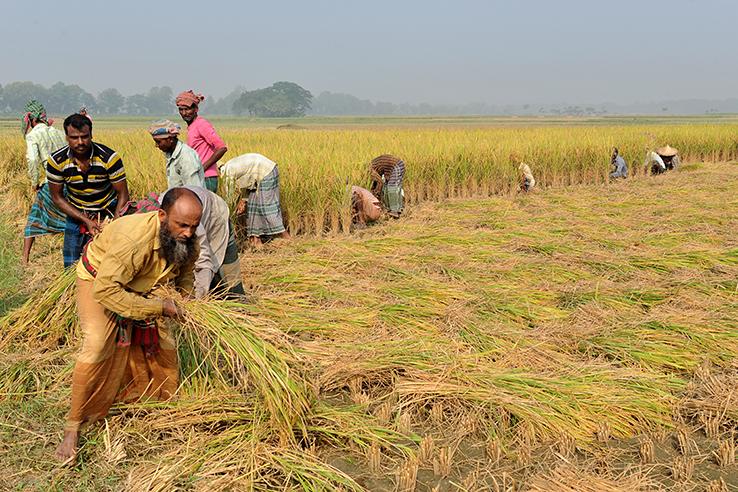
Building farmers' resilience to climate change
In the face of weather shocks, improved agricultural technologies and techniques, financial services, and social assistance programs can improve the resilience of small-scale farmers. These tools can help farmers prevent crop losses, avoid consumption cuts or sales of productive assets, or even...
Evaluation
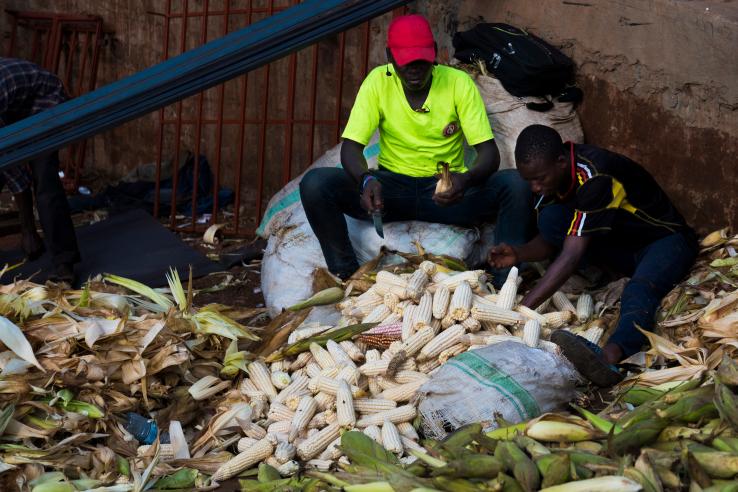
Building Market Linkages for Smallholder Farmers through a Digital Marketplace in Uganda
Researchers conducted a randomized evaluation in Uganda to test the impact of a mobile phone-based marketplace for agricultural commodities on local market prices, entry of traders, farmer revenue, and trader profits. Overall, the platform increased trade flows and decreased price variation across...

Blog
Advancing agricultural transformation through locally-led research
The UM6P-J-PAL Applied Lab for Agirculture (UJALA) announced its first cohort of UJALA African Scholars.
The Evidence Effect
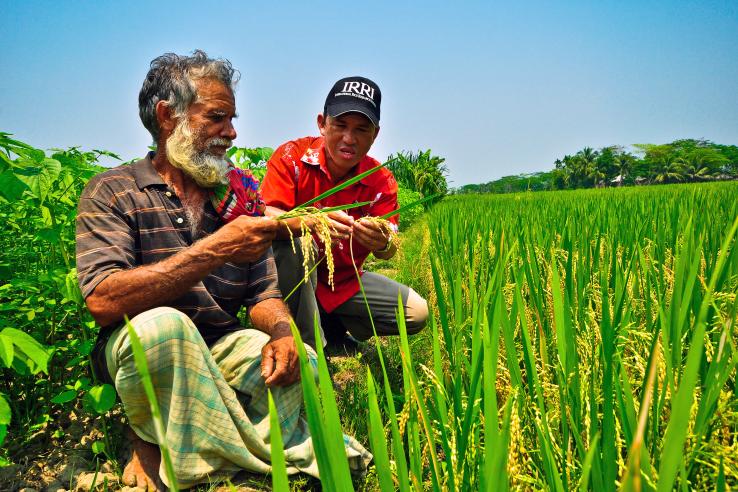
Bringing crop innovation from the lab to farmers’ fields
Flood-tolerant seeds help farmers adapt to extreme weather without sacrificing their yields, making investing in change worthwhile.
File: Policy publication
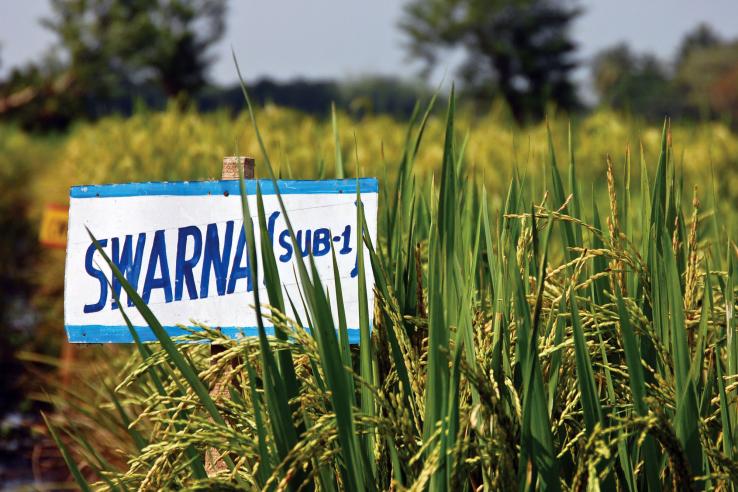
Delivering Resilience: A Decade of Experimental Research on Flood-Tolerant Seeds in India
Small-scale farmers, who adopted flood-tolerant rice, reduced their vulnerability to seasonal flooding, increased investment in their farms, increased productivity, and subsequently increased their profits, whether or not flooding occurred. Targeting agro-dealers with information, holding farmer...