

Changing Teenage Girls' Aspirations and Educational Attainment through Increased Female Representation in Leadership in India
- Parents
- Men and boys
- Women and girls
- Youth
- Discrimination
- Enrollment and attendance
- Women’s/girls’ decision-making
- Aspirations
- Gender attitudes and norms
- Diversity quotas
- Gender quotas







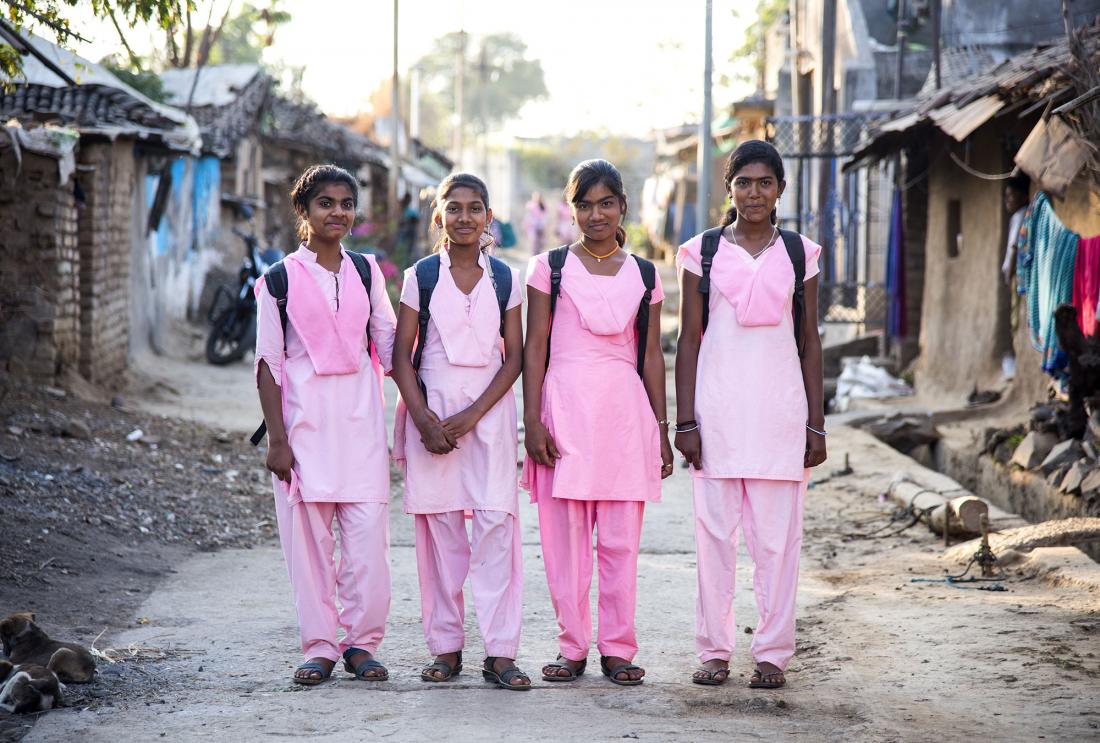
In 2008, women accounted for 18 percent of parliamentarians worldwide, and only 13 countries had a female head of government. In India, researchers studied the impact of a constitutional amendment that reserved village council leadership positions for women on adolescent girls’ career aspirations, educational attainment, and labor market outcomes. The gender gap in adolescent educational attainment was erased in villages with female leaders, and girls spent less time on household chores. Furthermore, adolescent girls had higher aspirations, as did their parents on their behalf.
Policy issue
In 2008, women accounted for 18 percent of parliamentarians world-wide, and a woman headed the government in only 13 countries. In response to such underrepresentation, many governments have introduced affirmative action policies for women in public office. The hope is that these quota systems, beyond their immediate impact on gender balance among leaders, will have long-term effects on women' s labor market outcomes by shaping both parents' and children' s beliefs about what women can achieve. However, little research has been done to date on the actual impact of quota systems on parents' and children's aspirations and educational attainment.
Context of the evaluation
In India, the share of women in national and state legislatures averages only 10 percent. In an effort to increase women's participation in politics, in 1993, the constitution was amended to require a random third of village council positions to be reserved for women. Previous research indicates that the amendment has led to significant electoral gains for women. After ten years of the quota system, women were significantly more likely to stand for and win councilor positions in villages not currently reserved. Exposure to a female leader seems to improve perceptions of female leader effectiveness and to weaken stereotypes about gender roles in the public and domestic spheres.
Details of the intervention
This study examines the impact of female leadership on parents' aspirations for their children as well as adolescents' aspirations for themselves, and whether such changes in aspirations can impact education and labor outcomes.
At the time of data collection in 2006 and 2007, two elections had been conducted since the constitutional amendment: in 1998 and 2003. Prior to each election, one third of the villages in the district were randomly selected to be "reserved" for women leaders. Because of the randomized nature of the assignment, in 2007, a village council could have been reserved for a female leader once (in 1998 or 2003), twice (in 1998 and 2003), or never, creating the opportunity to study the impact of different amounts of exposure to a female leader (often called the "dose response"). In 2006 and 2007, researchers surveyed households in 495 randomly selected villages in the district of Birbhum in West Bengal. The survey was administered to one male and one female adult, as well as all adolescents, in each household. The questionnaire addressed educational attainment and time use in the last 24 hours. It also included four questions on parents' aspirations for their children as well as adolescents' aspirations for themselves: desired educational attainment, desired age of marriage, preferred occupation at the age of 25, and if the parent wished for their child to become a village leader or the child herself hoped to become a village leader.
Results and policy lessons
Parents' aspirations: The presence of a female leader in the village significantly increased parents' aspirations for their daughters. In villages that never had a female leader, parents' aspirations for girls were 0.68 standard deviations lower than for boys. For example, parents were 14 percentage points less likely to state that they would like their daughter to graduate or study beyond the secondary school level. In villages with a female leader for two election cycles, the gender gap in aspirations decreased by 0.14 standard deviations. The most significant change was for occupation-related aspirations. For example, the fraction of parents who believed that a daughter's, but not a son's, occupation should be determined by her in-laws declined from 76 percent to 65 percent.
Adolescents' aspirations: The presence of a female leader also led to a decrease (0.17 of a standard deviation) in the gender gap in adolescent aspirations. Adolescent girls in villages twice reserved were more likely to not want to be a housewife or have their occupation determined by their in-laws (8.3 percentage points); to want to marry after 18, (8.8 percentage points); and to want a job that requires an education (8.6 percentage points).
Impact on education and labor outcomes: Paralleling the changes in aspirations, the presence of female leaders also altered educational attainment and time use. Adolescent boys in never-reserved councils were 6 percent more likely to attend school and had a 4 percent higher likelihood of being able to read and write than their female counterparts. And like elsewhere in the developing world, adolescent girls in never-reserved villages spent more time on domestic chores than their male counterparts (79 minutes more per day). By the second cycle of female leadership, the gender gap in educational outcomes was completely erased and the gender gap in time spent on household activities declined by 18 minutes.