

Teaching Girls Negotiation Skills in Zambia
- Secondary schools
- Students
- Women and girls
- Dropout and graduation
- Enrollment and attendance
- Student learning
- Fertility
- Women’s/girls’ decision-making
- Business skills training
- Coaching and mentoring
- Soft skills


In Sub-Saharan Africa, young girls drop out of school at higher rates than boys. A large portion of drop outs occur between primary and secondary school, when families in most countries have to start paying fees for their children to continue attending school. In Zambia, researchers designed and evaluated the impact of a training that taught adolescent girls non-cognitive skills to negotiate health and educational decisions with authority figures in their lives. They found that girls who were taught negotiation skills had better educational outcomes in the following three years. The negotiation training appeared to have larger effects on girls with higher abilities.
Policy issue
Expanding access to secondary school education is a key challenge in Sub-Saharan Africa, where school participation and completion rates have lagged behind other regions in the world. The challenge is particularly significant for girls, who tend to drop out at a higher rate than boys throughout Sub-Saharan Africa. Girls' lower educational attainment is often attributed to family decisions to invest more in sons than in daughters. Failing to develop the skills and earn the credentials to support themselves can have negative consequences not only for women's financial status but also their health.
Many governments and NGOs try to encourage girls to stay in school by providing material support such as free uniforms and scholarships. Another promising approach may be to teach girls negotiation and interpersonal skills to help them advocate for their needs and goals. Recent neuroscience research suggests that interpersonal skills may develop during adolescence, so reaching girls at this developmental period may be key to improving these non-cognitive skills and enabling girls to better advocate for themselves.1 This research contributes to our understanding of household decision-making about educational investments, and illuminates a promising, non-financial approach to increasing investments in girls' education.
Context of the evaluation
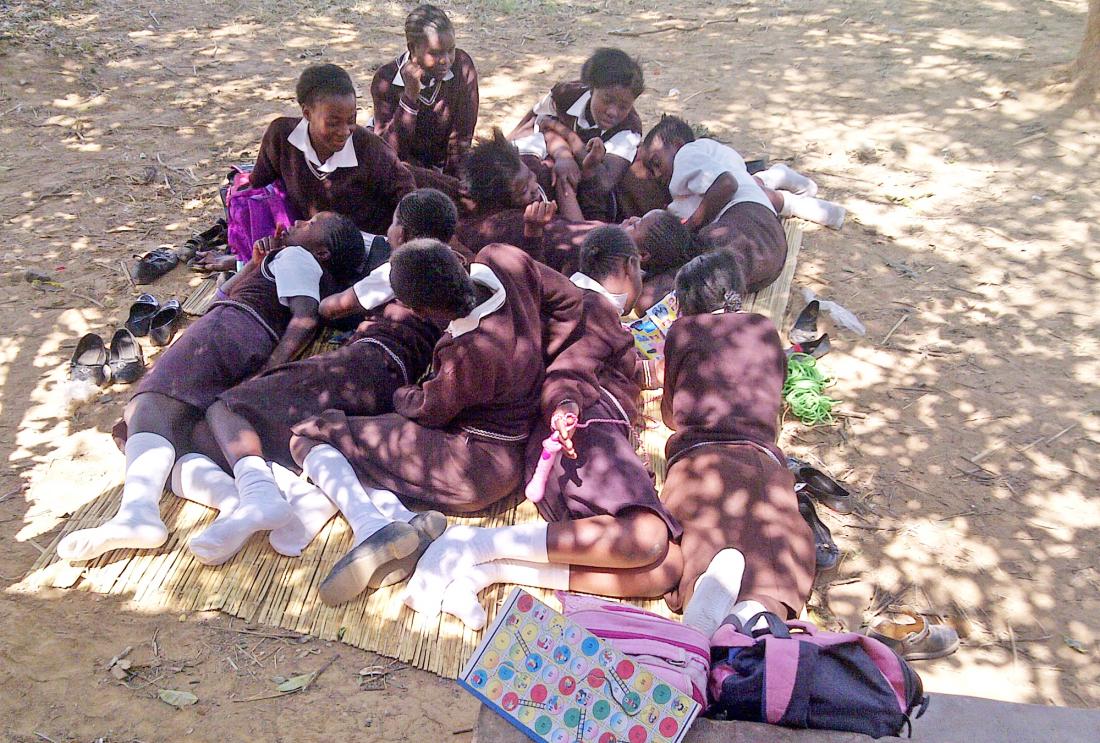
This study took place in government primary schools in Zambia's capital, Lusaka, among girls in the eighth grade. Secondary school fees are high in Zambia, at approximately US$100 per year per student, or almost 10 percent of per-capita GDP in 2015. Given the cost of attending, many students stop attending school after eighth grade, and girls are three times as likely to drop out as boys.2
Details of the intervention
Researchers conducted a randomized evaluation to measure the impact of a negotiation training and empowerment program on educational and health outcomes among adolescent schoolgirls in urban Zambia. The program, called Girls Arise!, was developed in collaboration with the Ministry of Education, teachers from the Anti-Aids Teacher Association of Zambia, and a cadre of young university-educated women of backgrounds similar to students at the target schools. The negotiation curriculum was based on negotiation texts from U.S. business schools, and adapted for the Zambian context.
Among 41 schools in Lusaka, 29 were randomly selected to implement the program as part of the treatment group. 12 schools did not receive the curriculum and formed the pure comparison group, through which the researchers measured spillover effects from the program.
Among 2,366 8th grade girls across the 29 treatment schools, half were randomly selected during the baseline survey to receive an hour-long information session, which addressed topics such as the benefits of schooling and HIV information, to examine the effects of receiving information on health and education. Afterwards, the research team assigned these girls randomly to one of three groups:
- Negotiation group (801 girls): Girls were offered the Girls Arise! curriculum from female Zambian coaches on negotiation and interpersonal communication during six after-school sessions over two weeks. The training included interactive lessons and role-playing games, and was designed to teach girls that compromises and solutions are possible when negotiating partners are willing to consider each other's interests. The curriculum also taught strategies to achieve those compromises. Girls received a free lunch on session days, a notebook, and pens.
- Safe Space group (785 girls): Girls were offered a time and place to play games, study, or just talk with other girls, supervised by trained female Zambian coaches who served as role model figures. These groups also took place during six after-school sessions over two weeks. Girls also received a free lunch on session days, a notebook, and pens.
- Comparison group (780 girls): Girls did not participate in any after-school program.
About one to two months after the intervention, and again during the first term of 9th grade the following year, the same coaches led a one-day booster session at each school for the Negotiation and Safe Space groups. Comparing the Safe Space and Negotiation groups allowed researchers to isolate the effects of improved negotiation skills from the effects of participating in an all-girls after-school activity with a female, Zambian coach.
Two to three months after the sessions, all girls were invited to participate in a midline survey and a game activity with their parents, which was designed to reveal parents' decision-making processes related to investing in their daughters. In the game, parents made decisions about how to allocate ten tokens, which could be redeemed for mobile phone credit or other prizes, between themselves and their daughter. Aspects of the game were randomly varied among participants, including whether girls could communicate with parents before the parents decided, and whether girls could choose to send back some tokens to their parents. In total, seventy percent of girls and their parents attended and participated in the survey and the game. Girls with higher ability, measured by their ability to speak Nyanja and English well, were more likely to attend.
During the midline survey, researchers also tested the girls' knowledge of negotiation skills. To measure long-term effects on health, education, and life choices, researchers collected administrative data on outcomes such as school fee payment, attendance, grades, enrollment status, and pregnancy status for up to three years after the training ended.
Results and policy lessons
Overall, the negotiation training improved girls' negotiation skills and significantly improved girls' welfare outcomes, particularly among girls with higher ability.
Girls' knowledge of negotiation: The negotiation training was effective in improving girls' knowledge of negotiation. Several months after the classes ended, girls in the negotiation group scored substantially better in their understanding of negotiation tactics than girls in the comparison group.
Girls' educational and pregnancy outcomes: The negotiation training significantly improved girls' welfare outcomes, driven largely by improvements among girls with relatively higher ability. Relative to the comparison group, the negotiation training improved girls' welfare by 0.053 standard deviations on an index measuring whether the girl had ever been pregnant as well as educational outcomes including school attendance rates and national exam test scores. For comparison, having a biological mother who completed secondary school, relative to primary school, had an effect of similar magnitude on these outcomes. Neither the Safe Space program nor the information session had any effect.
The effects of the negotiation training were strongest among girls with higher ability, suggesting that girls with higher potential returns to education, who were on the margin of continuing schooling, were best able to change their parents' investments in their education through negotiation.
Parental investment in girls: Results from the investment game demonstrated that girls who received negotiation training were able to improve their welfare when they could communicate with their parents, suggesting that the training helped girls influence their parents' decisions. When girls who received negotiation training were able to communicate with their parents in the game, parents chose to send them more tokens. These girls were able to influence their parents' decisions by increasing their parents' expectations of reciprocity; girls in this group sent more tokens back to their parents.
These results suggest that girls who received negotiation training where able to use their negotiation skills to ask for more from their parents, but also reciprocate and repay them. Survey results demonstrate that negotiation-trained girls were more likely to ask for more food and more willing to do chores in the household. This suggests that this type of give-and-take enabled the girls to benefit from extra educational investments from their parents. Importantly, parents were no more likely to report that their negotiation-trained daughters were disrespectful or rude, indicating that the training did not negatively affect girls' relationships with their parents.
Based on these results, the Zambian Ministry of Education Curriculum Development Center introduced a revised life skills and sexual health curriculum for multiple grades throughout the country. A summarized version of the Girls Arise! curriculum was included in the revision, reaching all grade 8 pupils in government schools beginning in early 2016. Researchers have also made the curriculum freely available for download so that it can be incorporated into existing life skills, HIV prevention, and girls' empowerment programs.
WatchKathleen McGinn and Nava Ashraf discussing this research in 2012:

The full curriculum is available for downloadhere.
Choudhury, S., S.-J. Blakemore, and T. Charman. 2006. "Social cognitive development during adolescence." Social, Cognitive and Affective Neuroscience 1(3): 165-174.
UNICEF. 2011. "State of the World's Children." p.107