



Perceptions of Female Leaders in India
- Civil servants
- Voters
- Citizen satisfaction
- Discrimination
- Gender attitudes and norms
- Diversity quotas
- Gender quotas



In 2008, women accounted for 18 percent of parliamentarians worldwide, and only thirteen countries had a female head of government. Many suggest that in both high income and low- and middle-income countries, women’s access to public office is at least partially restricted by voter bias in favor of male politicians. Researchers studied the impact a quota system which randomly assigned villages in India to reserve village council positions for women. They found that quotas improved voters’ perceptions of the effectiveness of women as leaders and subsequently improved women’s electoral chances.
Policy issue
In 2008, women accounted for 18 percent of parliament members worldwide, and only thirteen countries had a female head of government. These gender disparities do not reflect legal restrictions in most cases—women can vote, support candidates, and run for office in almost every country. Rather, many suggest that in both high-income and low- and middle-income countries, women's access to public office is at least partially restricted by voter bias in favor of male politicians. Women's reservation policies (guaranteeing a certain number of seats for female candidates) are advocated as a way to reduce the gender bias in politics. While such reservations increase female participation in politics and often alter subsequent policy making, little is known of the impact of reservations on changing perceptions of female leaders and the future electoral success of women.
Context of the evaluation
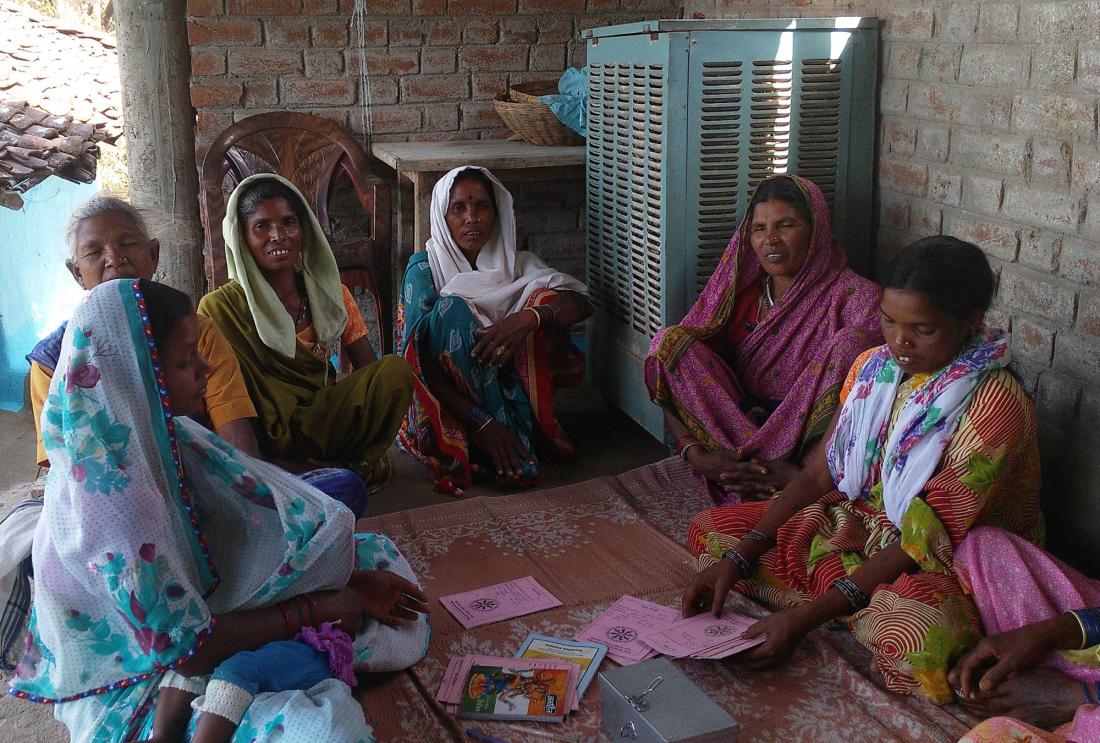
In 1993, a constitutional amendment in India mandated that a randomly selected third of village council leader positions (pradhans) be reserved for women. The village council is responsible for the provision of village infrastructure—such as public buildings, water, and roads—and for identifying government program beneficiaries. Although all decisions in the village council are made by majority, the pradhan is the only full-time member and exercises significant control over the final council decisions.
At the time of data collection in West Bengal in 2006 and 2007, two village council elections had been conducted (in 1998 and 2003) since the amendment was implemented. The randomized nature of the quota assignment meant that, in 2007, a village council could have been reserved for a female pradhan once (in 1998 or 2003), twice (in 1998 and 2003), or never. This created the opportunity to study the impact of different amounts of exposure to a female leader.
Details of the intervention
Researchers used the random variation in exposure to female leaders mandated by the constitutional amendment to examine the impact of reservation on perceptions of female leaders.
Between June 2006 and November 2007, researchers surveyed a random sample of 495 villages, spread across 165 village councils in Birbhum district in West Bengal. In each village, researchers collected data on available public goods, incidence of new investments and repairs since the previous election, and the quality of public goods. An individual survey was also administered to one male and one female adult in fifteen randomly selected households in each village to determine voters' taste for female leaders, and their perceptions of gender roles and the ability of women to lead.
First, the survey asked respondents to evaluate their current pradhan, including detailed questions about public good provision and their satisfaction with the level of provision. Voters' explicit taste for female leaders was then captured by their stated feelings towards the general idea of male and female leaders, rated on a scale of 1 to 10. Voters' implicit tastes were examined through the use of an Implicit Association Test (IAT)—an experimental method that relies on the idea that respondents who more quickly pair two concepts in a rapid categorization task associate those concepts more strongly. To capture implicit tastes, an IAT was used to test the association of male and female leaders with concepts of good and bad. An IAT was also used to examine gender-occupation stereotypes, by measuring the association of male and female names with leadership and domestic tasks. Finally, villagers were asked to evaluate the effectiveness of hypothetical female and male leaders described through vignettes and recorded speeches in which the leader' s gender was experimentally manipulated. Since there were no performance differences between the hypothetical male and female leaders, if respondents gave worse ratings to female leaders, this was evidence of bias.
Results and policy lessons
Impact on Voters' Taste: Reservation did not, in the short run, alter voter taste for female leaders. All villagers exhibited a strong implicit same-gender preference: women associated female names and images of female leaders with positive attributes on the IAT, while men associated male names and images with positive attributes. However, both genders exhibited an explicit preference for male leaders. Male villagers in never-reserved villages rated male leaders 1.45 points higher than female leaders on a ten-point scale. Among female villagers the difference was smaller (0.56 points), but still significant. Reservation did not improve the implicit or explicit distaste for female leaders. In fact, the relative explicit preference for male leaders was actually strengthened in villages that had experienced a quota.
Impact on Perceptions of Effectiveness: While reservation did not make male villagers more sympathetic to the idea of female leaders, it caused them to recognize that women could lead. Repeated exposure to female leaders changed villagers' beliefs on female leader effectiveness and reduced their association of women with domestic activities. Evaluations of female pradhans in villages reserved for the first time were significantly worse than those of (predominantly male) pradhans in never-reserved villages. In contrast, in twice-reserved villages, evaluations of female pradhans were indistinguishable from those of pradhans in never-reserved villages. Reservation also reversed the bias in male villagers' ratings of the effectiveness of a hypothetical female pradhan: men in villages that had been reserved actually rated the effectiveness of a hypothetical female pradhan above that of a male pradhan. Exposure to a female leader also significantly reduced male villagers' association of leadership activities with men.
Impact on Electoral Outcomes: The reservation policy significantly improved women's prospects in elections open to both sexes, but only after two rounds of reservation. Villages that had one previous round of reservation were not significantly more likely to elect a female pradhan than never-reserved villages. However, villages that had been previously reserved twice were more likely to elect female leaders. In unreserved elections, women were elected pradhan in around 10 percent of villages with no prior history of reservation, 13 percent of villages that had been reserved once, and 17 percent of villages that had been reserved twice.