Imagen



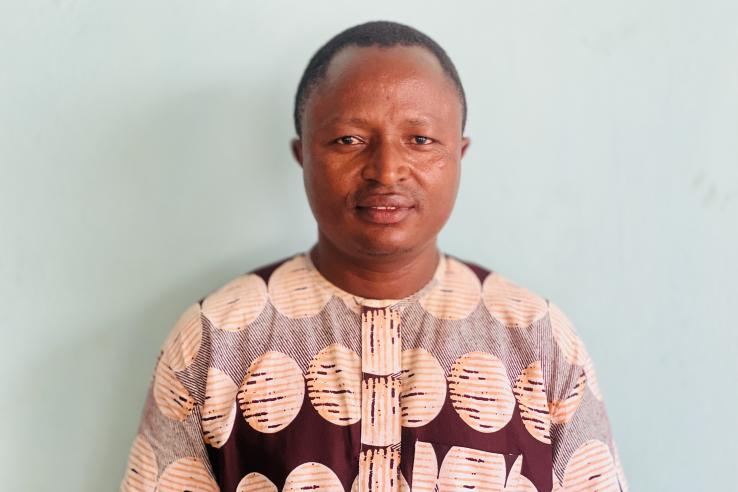
This post is part of our ongoing series showcasing the work and perspectives of economists from the African continent who are leading randomized evaluations. Through our African Scholars Program, we hope to help create more opportunities for African researchers to advance the research agenda on the continent through randomized evaluations. In this spotlight, we speak with Olutegbe Nathaniel Siji of the University of Ibadan in Nigeria.
What drew you into the field of development economics and, in particular, impact evaluations?
My interest in development economics grew from years of working directly with rural communities in Nigeria. I saw firsthand how well-intended programs often miss their targets, not because the ideas were wrong, but because the evidence guiding them was often weak or entirely absent, and because they were not grounded in a rigorous understanding of local contexts and mechanisms.
I became increasingly drawn to the kinds of questions that demand rigorous evidence: What actually works? For whom? Under what conditions? And perhaps most importantly, why does it work in some settings and not others?
As a rural development scholar, I have also always been conscious of how my research impacts the lived experiences of rural dwellers. This consciousness goes beyond academic curiosity, it is a commitment to ensuring that research translates into tangible improvements in people's lives.
One way to honor this commitment is by supporting development interventions with evidence that comes from rigorous project evaluations. Impact evaluations, especially randomized evaluations, offer a powerful way to answer these questions with clarity and precision. They allow us to move beyond assumptions and uncover the specific mechanisms that can meaningfully shape policy and improve lives in ways that are both scalable and sustainable.
My sustained interest has also been reinforced by my teaching roles, particularly in program evaluation. The need to adequately prepare students at the postgraduate level, to equip them with both the conceptual foundations and the practical skills required for rigorous evaluation, has kept my interest and passion alive. Watching students grasp these tools and apply them to real-world problems has been a deeply rewarding experience, and one that continually reminds me why this work matters.
What are your broad research interests?
My research focuses on the socioeconomics and social dynamics of rural systems, particularly food security, climate-related shocks, farmer–herder relations, and community resilience. These themes are deeply interconnected, especially in contexts where environmental pressures amplify existing tensions and vulnerabilities. I am also interested in peacebuilding communication, social norms, gender responsiveness, and low-cost behavioral interventions that strengthen cooperation within the broader social change context, not just in fragile communities.
I am particularly drawn to interventions that are both locally rooted and evidence-informed, recognizing that sustainable change must emerge from within communities rather than being imposed from outside.
What are you using the J-PAL initiative funds to do? What research questions are you trying to answer?
J-PAL’s Humanitarian Protection Initiative (HPI) supported the formative research phase of my project designed to explore whether locally rooted mechanisms, such as community dialogue structures and adapted edutainment, can genuinely strengthen peaceful coexistence between farmers and herders. During this phase, we focused on understanding the kinds of community-based structures that already exist, both formal and informal, and how people perceive them in terms of legitimacy, effectiveness, and accessibility.
Another important aspect was examining how gender dynamics, especially norms around women's participation and differential access to economic opportunities and decision-making spaces, shape engagement in peacebuilding efforts and influence the nature of relationships between farmers and herders. We learned that gender is a fundamental dimension that shapes how conflict is experienced, how peace initiatives are received, and who benefits from interventions.
The next steps involve refining the theory of change based on these insights, developing a structured pilot, and working closely with implementing partners on a practical evaluation design. We hope to get funding to scale up what we have learned into a full randomized evaluation that can generate actionable evidence for policymakers and practitioners working in similar settings.
What big unanswered research questions in humanitarian/conflict settings can RCTs help answer? Does this relate to your future plans?
Several questions remain unanswered, especially around how shifts in norms, trust, and intergroup perceptions translate into real, measurable reductions in violence and sustained improvements in social cohesion. This includes how community mediation structures might be standardized and scaled in conflict environments without losing their cultural specificity and local legitimacy.
Our formative research also highlighted that government policies play a major role in the success of any peace initiative, often operating beyond the influence of non-state actors such as development partners, researchers, and civil society organizations. This makes it even more important to understand how state capacity shapes what is ultimately possible.
Randomized evaluations are well-suited to unpack these mechanisms and trace the causal pathways that link intermediate outcomes, like shifts in attitudes, trust, or perceptions of the other, to concrete outcomes such as reduced conflict incidence, decreased displacement, or improved economic cooperation across group lines.
However, while RCTs are invaluable, their effectiveness also depends on the availability and reliability of armed conflict and violence data. One of the big unanswered questions in the field, and one that deserves far more attention, is how reliable and consistent existing conflict databases truly are. During our formative work, we observed gaps and inconsistencies with major datasets, raising concerns about whether researchers are measuring what they think they are measuring.
For RCTs to precisely isolate impacts in peacebuilding research, the robustness and validity of these data sources also need to be rigorously assessed and, where necessary, strengthened through better ground-level reporting systems.
These gaps strongly shape my future research plans. I am particularly interested in testing scalable, audio-based edutainment and facilitated dialogue models in rural, conflict-affected settings where literacy rates may be low but social networks are strong. Understanding whether these tools can shift perceptions, strengthen social cohesion, rebuild trust, and ultimately reduce violence is central to the work I hope to pursue moving forward. I am committed to research that not only generates knowledge but also informs practical interventions that can be implemented at scale.
How can organizations like J-PAL continue supporting local researchers running randomized evaluations?
J-PAL can deepen and expand its impact by continuing to provide structured mentorship that supports early-career scholars across the full research cycle, from idea development to implementation and dissemination, and even afterwards.
Offering more hands-on methodological clinics tailored specifically to African institutions, addressing not just theory but the practical realities of conducting fieldwork in challenging environments, would also be extremely valuable.
Strengthening support for small exploratory grants would be transformative, as these enable a natural and successive growth pathway, allowing researchers to test tools, refine measurement approaches, and build relationships with implementing partners before applying for full RCT funding.
In addition, building more partnerships with local implementing organizations in a broader range of countries can help make it easier to launch high-quality field studies without requiring researchers to establish entirely new infrastructures from scratch.
Sponsored conferences and workshops that prioritize young grantees will further create important entry points for emerging researchers, helping them break into established research networks, present their work, receive feedback, and build meaningful collaborations that can sustain their careers.
What advice would you give scholars considering applying to J-PAL for funding?
Start early, be intentional, and anchor your idea in a clear and well-informed theory of change that articulates not just what you plan to do, but why you believe it will work and what mechanisms you expect to observe. Scholars can demonstrate feasibility through pilot activities and engage potential implementing partners well before writing the proposal, as these relationships take time to build. Importantly, focus on the research question, not just the intervention itself.
What surprised you most about the funding process?
The biggest surprise was how iterative and genuinely supportive the process is. It is not about simply applying and waiting in isolation; rather, J-PAL provides meaningful feedback, mentorship, and opportunities to refine the idea through dialogue and revision. The emphasis on learning and feasibility, not just scale-ready interventions, was especially enlightening and encouraging. It indicates that the organization values the process of building rigorous research capacity as much as the final outputs, which is refreshing.
Any advice for young aspiring African scholars pursuing a career in economic research?
Be curious, persistent, and intentional about building strong networks within and beyond the continent. Start small, replicate existing studies in your local context, analyze publicly available data to sharpen your skills, and join ongoing projects where you can learn by doing. Seek mentorship early, and don’t hesitate to reach out to scholars whose work inspires you; many are more accessible than you expect. Most importantly, anchor your research in problems you genuinely care about and questions drawn from your lived experiences.
Join mentorship platforms in development economics. Much of my own academic growth, and of course winning the J-PAL HPI grant, is tied to my membership in the Collaborative for Econometrics and Integrated Development Studies. Our regular presentations with established global scholars have shaped my confidence, strengthened collaborations, and encouraged me to apply for competitive opportunities. Apply early for programs and grants aligned with your interests, as these often lay the foundation for a strong and steady research career.
Africa is full of unanswered questions on poverty, inequality, conflict, health, education, and development that need rigorous investigation. Your lived experience is an asset that gives you insight others may not have. Use it, trust your voice and remember that building a research career is a marathon. Be patient, stay committed to learning, and contribute to the evidence needed to inform better policies and improve lives across the continent.