

Housing Quality Improvements for Garment Workers in India
- Women and girls
- Adults
- Migrants
- Workers
- Employment
- Housing stability
- Mental health
- Worker satisfaction
- Employment
- Non-monetary incentives

Migrant workers in India often live in employer-sponsored hostels with poor living conditions, which may affect their job quality and well-being. Researchers partnered with
a garment manufacturer to evaluate the impact of better housing quality on worker outcomes. Despite modest improvements in cleanliness and safety, workers who were
informed about the changes beforehand reported lower satisfaction and greater psychological distress, while new arrivals were more satisfied. These contrasting results
suggested that expectations, not objective conditions alone, drove how workers experienced housing quality changes.
Policy issue
For the rural migrants who make up a large share of India’s garment workforce, housing is far from a peripheral concern. High urban rents make employer-subsidized hostels the only realistic option for most, yet these accommodations are typically cramped, poorly maintained, and lacking in basic security and sanitation. The consequences extend well beyond discomfort: dissatisfied workers leave, and at substantial cost to firms.
Researchers, in this evaluation, ask two key questions: Can improving employer‑provided housing increase migrant workers’ well‑being and workplace outcomes? And does the way these improvements are communicated affect whether workers feel better or worse off?
Context of the evaluation
This evaluation took place in Bengaluru, India, in partnership with Shahi Exports Private Limited, a large garment manufacturer whose workforce is predominantly female, accounting for roughly 80 percent of workers, and heavily made up of rural migrants, approximately 40 percent of the workforce. The average worker in the study sample was around 23 years old with less than a year of tenure at the firm.
Turnover is severe: the firm replaces roughly 75 percent of its workforce each year, driven by a combination of seasonal migration back to rural areas, social isolation from family networks, and dissatisfaction with working and living conditions. Worker departures increase recruitment and training costs and reduce the firm's productivity. Before the intervention, hostel conditions were generally basic. Most hostels had shared sleeping spaces with six to eight residents per room, limited sanitation facilities, and minimal security. Each hostel was overseen by a single live‑in caretaker employed by the firm.
At the time of the study, the firm directly managed 80 hostels housing approximately 7,500 workers across 19 factories.
Details of the intervention
Researchers conducted a randomized evaluation to test whether transferring hostel management from the employer to a specialized NGO improved living conditions, worker satisfaction, and retention.
The firm outsourced management of its 80 Bengaluru‑area hostels to a local NGO in two phases. Ten factories (51 hostels) were randomly assigned to receive the management transfer first, in April 2016. The remaining nine factories (29 hostels) continued under employer management until September 2016.
Ahead of the handover, the NGO held town hall meetings at treatment hostels, outlining ambitious plans for physical improvements and assuring residents these would be funded by the firm. In practice, the budget increase was modest and went largely toward additional staffing rather than the facility upgrades workers had been led to expect. This staggered roll‑out created a comparison period of roughly five months, during which some hostels operated under NGO management while others did not.
- Existing residents, improved hostels (598 workers): Workers already living in hostels that transferred to NGO management in April 2016. These residents attended meetings where the NGO described planned improvements.
- Existing residents, unchanged hostels (482 workers): Workers living in hostels that remained under employer management during the study period.
- New arrivals, improved hostels (117 workers): Workers who joined the firm after April 2016 and were assigned to NGO‑managed hostels, without being exposed to the earlier meetings or promises. New arrivals joined after messaging about planned improvements had occurred and simply experienced prevailing hostel conditions as their starting point.
New arrivals, unchanged hostels (112 workers): Workers who joined in the same period and were assigned to employer‑managed hostels.
In August 2016, researchers surveyed workers about their satisfaction with hostel conditions, jobs, and pay, as well as their psychological well‑being. Independent enumerators, unaware of which hostels had changed management, also visited all 80 hostels to assess cleanliness, safety, and facilities.
Results and policy lessons
Overall, the hostel management transfer produced modest improvements in living conditions, but workers’ experiences depended on how the changes were communicated. Existing residents, who were told in advance about planned improvements, reported declines in well‑being and attendance, while new arrivals whose expectations were shaped by observed conditions, reported higher satisfaction.
Living conditions:
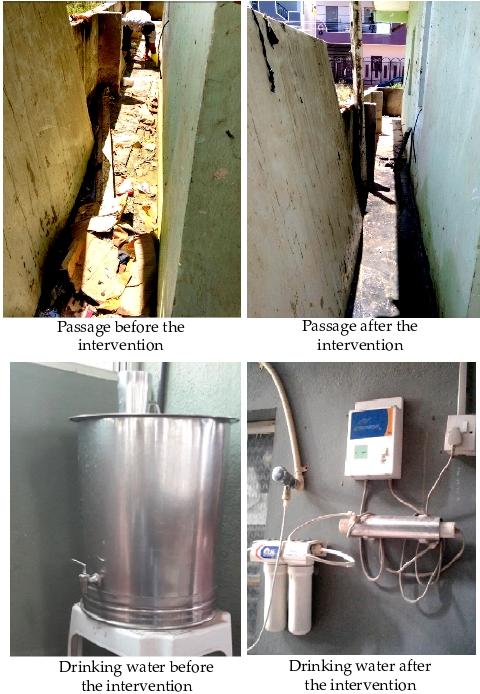
The transfer of hostel management led to modest improvements in measured living conditions. The management transfer led to modest improvements in objective hostel quality. Compared to unchanged hostels, cleanliness and safety scores each increased by around 10 percent (0.32 standard deviations). Conditions in sleeping areas also improved by 0.32 standard deviations, contributing to an overall hostel quality gain of 0.37 standard deviations. These improvements were driven mainly by increased staffing for cleaning and security rather than physical upgrades. No meaningful improvements were observed in kitchen, bathroom, or toilet facilities, which remained similar to those in unchanged hostels.
Satisfaction and psychological well-being:
Despite these improvements, subjective well‑being among existing residents worsened. Life satisfaction declined by roughly half a point on Cantril’s ten‑point ladder, compared to a mean of 6.18 in unchanged hostels. The likelihood of experiencing moderate psychological distress increased by 4.5 percentage points, relative to a baseline rate of 1.9 percent.
By contrast, new arrivals placed in improved hostels reported higher overall well‑being than new arrivals in unchanged hostels. Their overall satisfaction increased by 0.37 standard deviations, indicating more positive experiences in the same hostel conditions.
In simple terms, workers who lived in the hostels before the changes felt worse off even though conditions improved, while workers who moved in later felt better off in the same hostels. This suggests that prior expectations shaped how workers experienced the improvements, not just the improvements themselves.
Workplace outcomes:
Workplace behavior among existing residents followed a similar pattern. In the first month after the management transfer, workers in improved hostels were 3.2 percentage points more likely to remain employed than workers in unchanged hostels. This difference did not persist in later months. Over the same period, these workers took more days of leave and were more likely to arrive late to work than comparable workers in unchanged hostels.
Together, the findings suggest that workers’ responses were shaped in part by how the changes were communicated. Existing residents were informed in advance about planned improvements, which may have raised expectations beyond what was ultimately delivered. New arrivals, whose expectations were shaped by the conditions they observed rather than by prior communication, responded more positively to the same hostels. The results highlight the importance of aligning communication with what can realistically be implemented, as overstating planned improvements may undermine worker satisfaction.