
2003-2026
BY THE NUMBERS
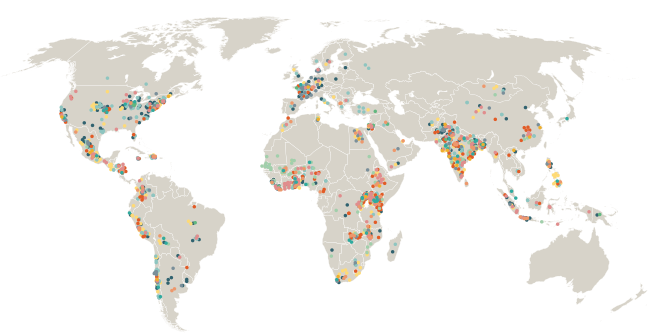
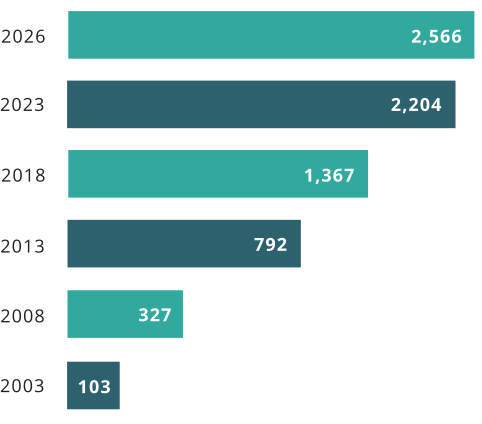
Conducted by researchers in our network across 124 countries, building a strong body of evidence on the most (and least) effective approaches to reducing poverty.
EVALUATION GROWTH OVER TIME

RESEARCH IN 124 COUNTRIES
has identified region-specific, context-appropriate policy solutions worldwide.

11 SECTORS
concentrate research and policy analysis across a wide breadth of social policy priorities.

1,200+ EVALUATION SUMMARIES
of individual studies help make research results more accessible to policymakers and practitioners.

59 POLICY INSIGHTS
highlight lessons emerging across multiple studies and explain the mechanisms driving these results.
Advancing Policy-Relevant Research
Through our innovative initiative model, J-PAL initiatives identify evidence gaps on key policy priorities; fund cutting-edge research through a competitive, peer-reviewed grant-making process; and engage with policymakers to share results and catalyze adoption of evidence at scale.

Local Grounding
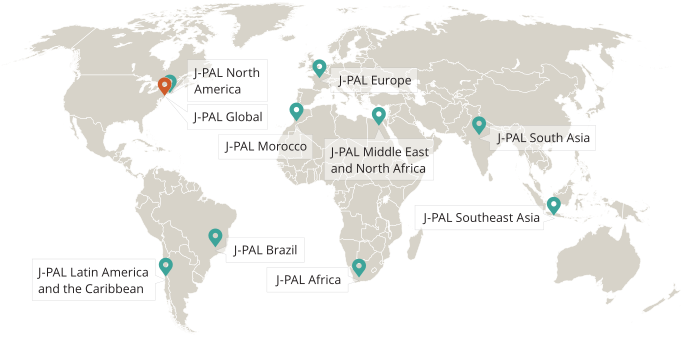
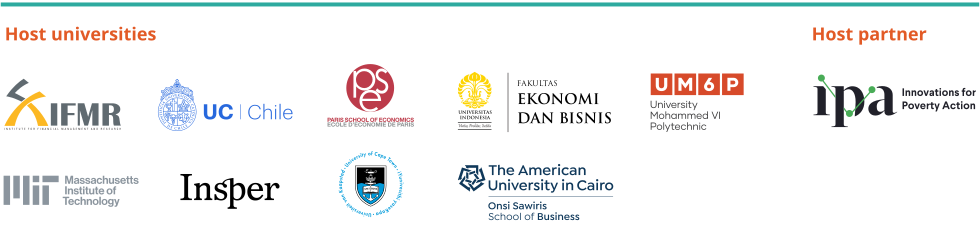
Our network of regional offices and satellite offices are hosted at universities around the world and lead research, policy engagement, and training across their regions. We also work closely with our partner organization, Innovations for Poverty Action, which has offices in 16 countries.
Training and Education
Since its start in 2005, the J-PAL training group has grown to deliver hundreds of online and in-person courses and train more than 32,000 people around the world in conducting rigorous randomized evaluations.

FLAGSHIP TRAINING PROGRAM
Our Evaluating Social Programs course provides an introduction to randomized evaluations for researchers, policymakers, and practitioners and is offered virtually and in-person each year in locations worldwide.

CUSTOMIZED OFFERINGS
Customized trainings are tailored to support policy and research partners working in specific sectors and regions.

ONLINE COURSES
Online courses in several different languages make learning more accessible to broader audiences worldwide.
In partnership with IPA, J-PAL hosts in-person research staff trainings for employees of J-PAL, IPA, and other research staff working on evaluations led by J-PAL affiliated researchers.
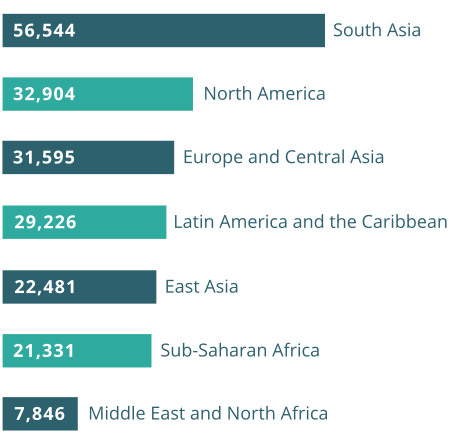
In 2017, J-PAL launched the online Data, Economics, and Design of Policy MicroMasters program in collaboration with MITx and the MIT Department of Economics. The program has reached over 369,000 learners with over 699,000 total enrollments across all courses.
Our learners come from 214 countries and territories, with more than 69% from low- and middle-income countries and 92% receiving some form of financial assistance.
ENROLLED LEARNERS
From Evidence to Policy
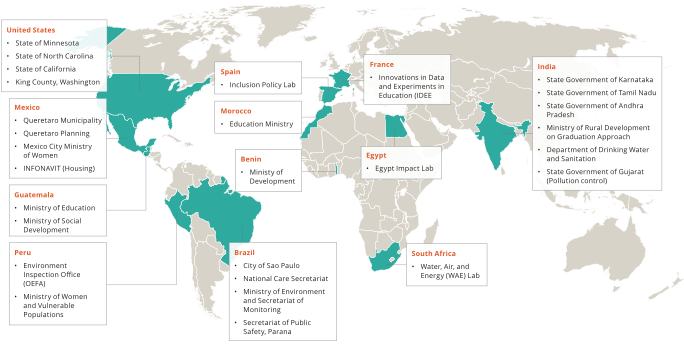
Evidence from randomized evaluations is changing how we understand and address problems related to poverty. Policymakers, practitioners, and funders worldwide are increasingly applying this learning to social policies and programs.
EVIDENCE-TO-POLICY LABS AROUND THE WORLD
Strengthening Our Research Network
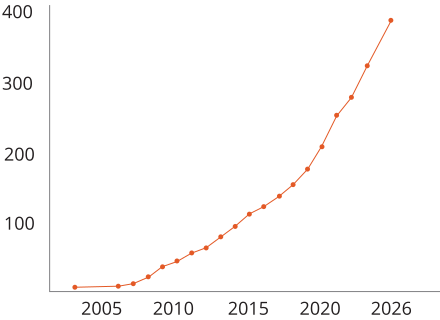
Based at universities around the world, J-PAL affiliates are experts in their fields who are united in their use of randomized evaluations to design, test, and inform adoption at scale of programs and policies aimed at reducing poverty.
J-PAL AFFILIATES OVER TIME
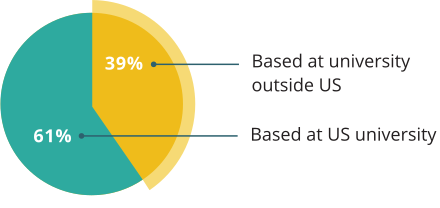
Our J-PAL scholars and fellows programs enrich evidence generation with local, context-specific grounding by removing barriers for researchers based in low- and middle-income countries to conduct randomized evaluations through funding, mentorship, and training.
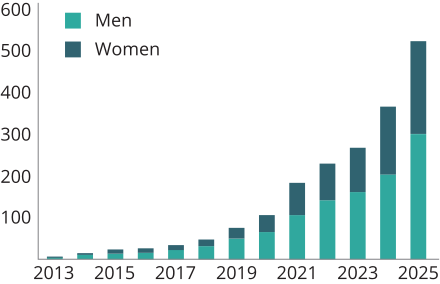
Invited researchers are an important element of our mission to increase the number of high-quality, policy-relevant research. Typically researchers who have less experience carrying out randomized evaluations, they add to a growing evidence base while gaining expertise in rigorous evaluation methods.
J-PAL INVITED RESEARCHERS
GENDER OVER TIME
INVITED RESEARCHERS IN 2025
by programs and policies informed by evaluations in the J-PAL network.