
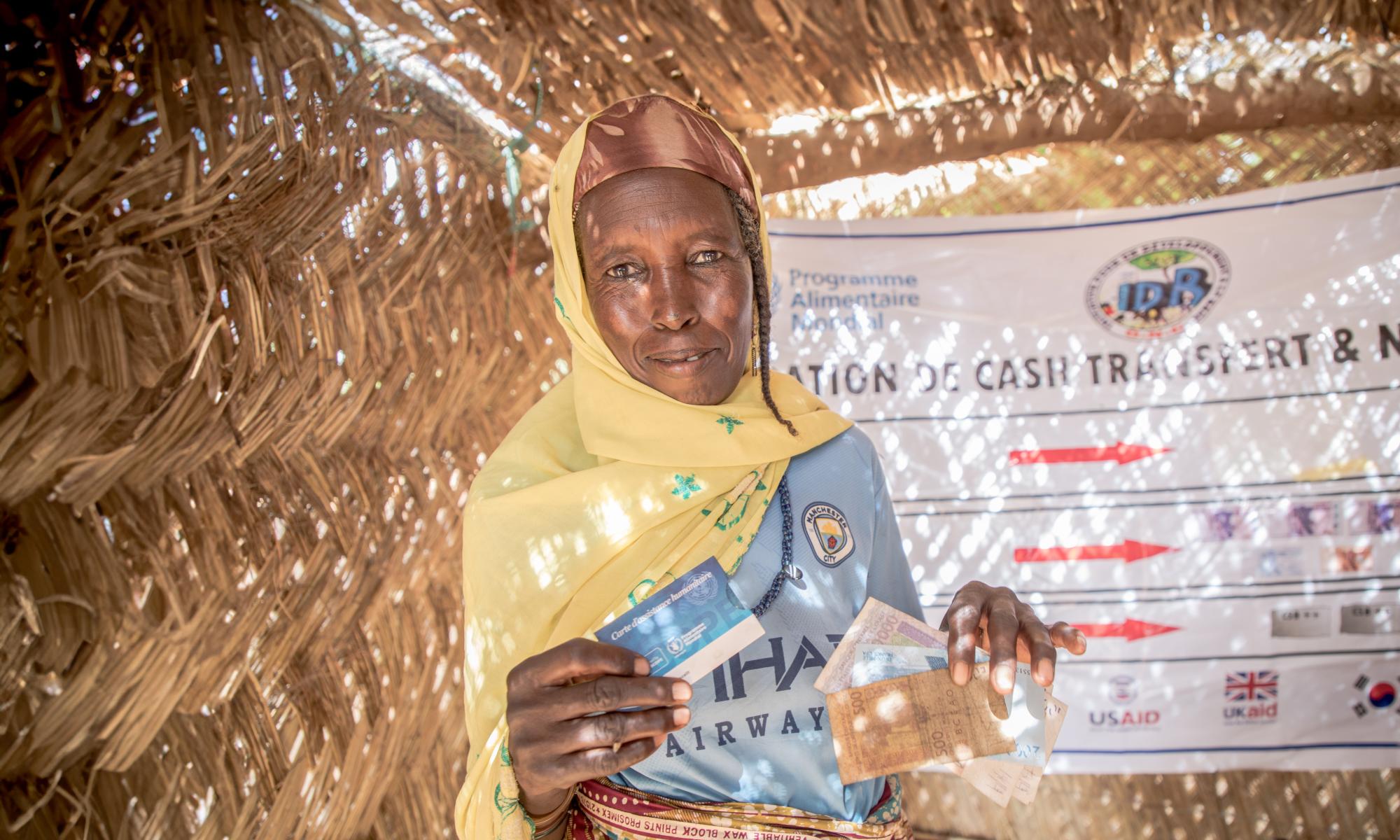
Defining a New Era of Development
Today, hard-won progress in the fight against poverty is at risk, and the stakes have never been higher.
The world has achieved remarkable gains in recent decades, lifting millions of people out of extreme poverty and creating new opportunities for families and communities to thrive. But these successes are built on an increasingly unsteady foundation of political will, innovation, and a once-growing commitment to using data and evidence to inform policy.
Nearly 700 million people worldwide still live in extreme poverty. Access to clean water, basic health care, and good jobs is out of reach for many more millions. Inequality is on the rise, and the future is uncertain.
Cuts in foreign aid budgets and increased scrutiny of development spending raise urgent questions about the effectiveness of development programs. With fewer resources, we need to focus on interventions that are both impactful and cost-effective. Evidence can ensure that successful approaches reach more people, in more places, more efficiently.
That's why we launched The Evidence Effect in 2025: A new website spotlighting examples of development programs with credible evidence of transformative impact, including summaries of how foreign assistance and philanthropy played a catalytic role and calls to action for funders and policymakers.
Alongside the website, we published a series of in-depth blog posts sharing ideas for how funders and governments can find and scale what works—sustainably and in alignment with country priorities.


Evidence is not about confirming what we believe; it’s about discovering what actually makes a difference."
— Esther Duflo, in conversation at the Aspen Institute, July 2025
At J-PAL, we discover solutions that can guide smarter investments. Our scientific approach to evaluation enables us to assess what policies and programs work best, what does not, and why.
Over two decades, evidence from randomized evaluations in the J-PAL network has shaped key policy decisions, made programs more innovative and effective, and improved the lives of more than 850 million people who are experiencing poverty, affected by conflict, or vulnerable to climate shocks. These lessons should inform the next chapter of development.
We want to work with you. Whether you are a policymaker, funder, or implementer, we offer practical guidance to maximize your reach and impact.
Our in-country teams work with partners to provide real-world solutions tailored to local contexts. This commitment to learning, adapting, and scaling is at the heart of our mission to improve lives through evidence. In today’s world, focusing on what is proven to deliver results will be essential to building a more equitable and thriving future for us all.
The Evidence Effect: Evaluating what works in a changing world—and why it matters
From Washington, DC to Paris, J-PAL brought together senior leaders from governments, development organizations, researchers, journalists, and funders in 2025 to discuss the way forward after the dismantling of USAID.
Five key messages from the convenings stood out:
1. Low- and middle-income countries are in the driver’s seat.
These governments are keen to learn how to use high-quality data and research to craft policy, highlighting a continued need for investment in evidence, training, and technical support.
2. We need more resources to de-risk innovation, particularly in LMICs.
Innovation can unlock efficiency gains and help make policies more effective. There is an immense opportunity to leverage public and private funding for "tiered" funds that bridge innovation and scale, like France’s Fund for Innovation in Development and, formerly, USAID’s Development Innovation Ventures.
3. Cost-effectiveness data should shape decision-making.
Now is the time to accelerate progress made by governments and bilaterals like France’s AFD, the UK’s FCDO, and Germany’s GIZ (and USAID, before its closure) in adopting cost-effectiveness lessons to help scarce resources stretch further.
4. Closing knowledge and funding gaps quickly is critical to stronger humanitarian response systems.
We’re working with the International Rescue Committee, the World Food Programme, and the International Committee of the Red Cross, among others, to incorporate more rigorous evaluation in their work, but the need for data still exceeds available resources.
5. We need to change the narrative.
Investments in foreign aid have already led to impressive returns in people’s health, education, and ability to participate in the economy. But more clear, compelling communication is needed to make the case to politicians and the public.
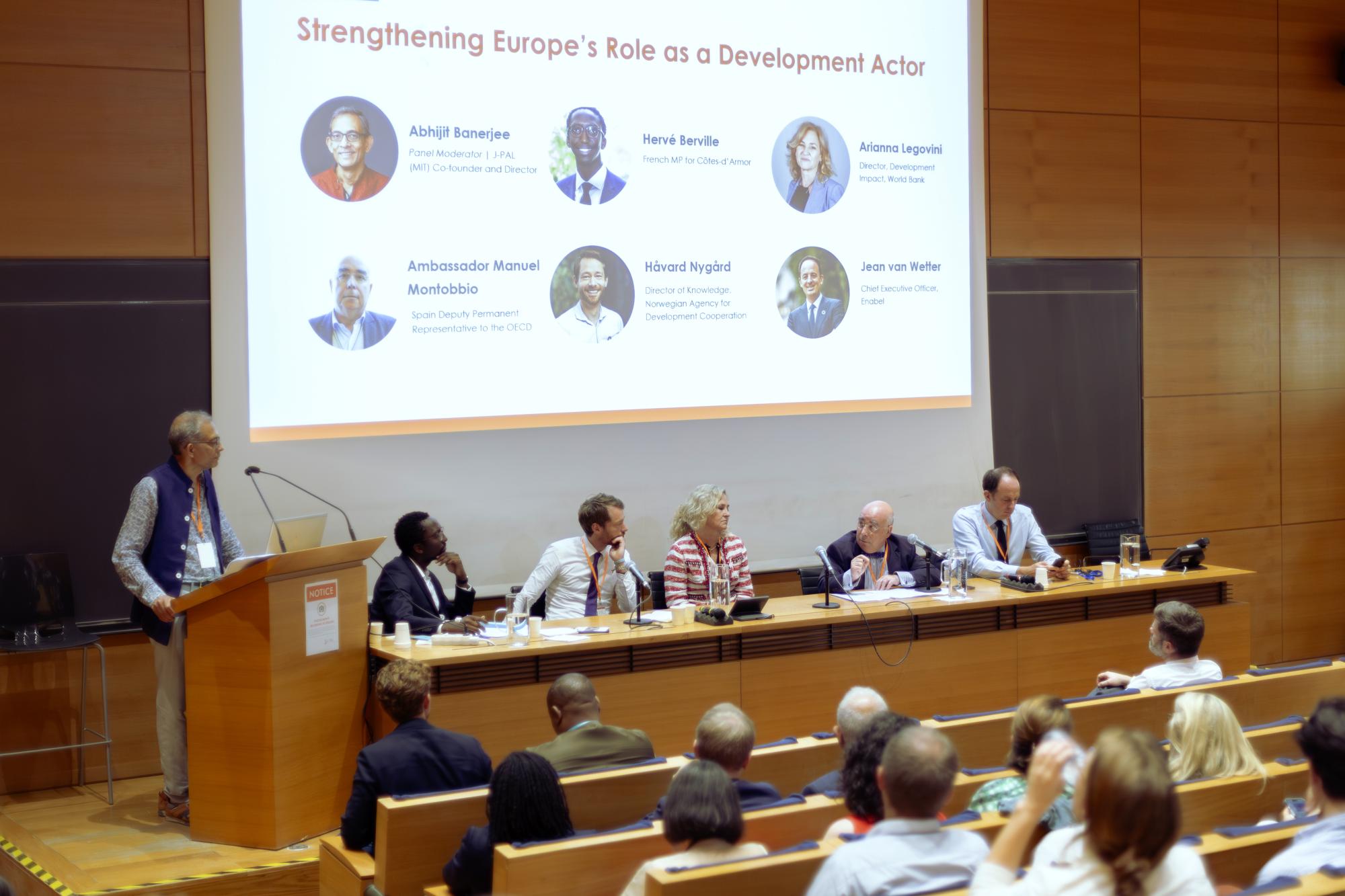
Influencing global debates
We worked with journalists and editors at leading media outlets to help raise awareness of the importance and impact of investments in global development.
Abhijit Banerjee and Esther Duflo: Foreign aid can be effective without the US
Financial Times
As Global Aid Recedes, The Need For Proven Solutions Grows
Forbes
With $1K in cash aid, he built a life-changing barbershop. Now cash aid is under fire
NPR
The retreat from aid is a costly mistake
Washington Post
Lead photo credit: Editorstandard, CC BY-SA 4.0, via Wikimedia Commons