
From Pilot to Policy: Scaling for Impact
In our first two decades, over 850 million people were reached by programs and policies informed by evaluations in the J-PAL network. We aim to reach 500 million more people in the next ten years. As global aid budgets tighten, integrating proven solutions into government systems will be essential to meeting this ambitious goal.
Governments spend far more on health care, education, and social protection than all foreign aid combined—and they have the authority to set priorities, commit resources, and operate at scale.
We partner with dozens of governments around the world to reach the people most in need with financial support, food, clean water, health care, and employment. Through these partnerships and evidence-to-policy labs, we move quickly on urgent policy opportunities with clear, relevant evidence and hands-on support. Our in-country teams create partnerships grounded in mutual trust and a long-term vision for success.
Injecting bilateral and philanthropic funding at the right time, for the right opportunities, is essential to this process, enabling governments with limited resources to de-risk innovation and work with us on proven solutions—turning evidence into real-world action.
Featured 2025 scale-ups
- Every Child Counts, a math curriculum in Indian schools, is on track to reach 500,000 students annually by 2027. J-PAL built a coalition of government and nonprofit partners to scale up the program across the Indian states of Andhra Pradesh, Maharashtra, Karnataka, Delhi, Himachal Pradesh, and Punjab.
- Three new cap-and-trade markets are creating cleaner air in India thanks to partnerships with J-PAL and EPIC’s Emissions Market Accelerator. Launched earlier this year, the Accelerator works with governments to design and implement innovative markets that cost-effectively cut pollution without having an effect on a company’s bottom line.
- A national reform to improve student learning in Morocco, known as Pioneer Schools, launched a series of evaluations through J-PAL’s Morocco Innovation and Evaluation Lab to test and improve on program design for maximum impact.

Four models of scaling for impact
Moving from evaluation to large-scale program implementation requires trade-offs between fidelity to the original program design, feasibility, cost, and political and administrative realities. Our in-country teams bridge the gap between global knowledge—from thousands of evaluations in the J-PAL network—and local expertise. This practical guidance is essential to help implementers navigate roadblocks without losing key components necessary for impact.
Our agile partnership models let us move quickly on urgent policy opportunities and build coalitions of implementation partners, researchers, and on-the ground staff to unlock new opportunities for scale. Community Jameel, the international organization advancing science to help communities thrive in a rapidly changing world, and Co-Impact, a global organization focused on building just and equitable systems in Africa, Asia, and Latin America, are key partners in this effort.
- At a global level, J-PAL’s Innovation in Government Initiative advises governments on their development priorities and helps them adapt, test, and scale new solutions that can be integrated into governments systems. In 2025 IGI catalyzed 16 partnerships in 11 countries, including India, Zambia, Mexico, and Indonesia, to improve education, livelihoods, climate, and health. See featured IGI projects.
- At the country level, we take a strategic, focused approach to working with national governments to co-create solutions across many departments and sectors. In India, for example, the Alliance for Scaling Policy Impact through Research and Evidence complements IGI by bringing together government offices, philanthropies, civil society, and researchers to scale programs addressing India’s most pressing development challenges. In 2025, ASPIRE adapted and scaled evidence-informed programs like Graduation and a gender equity curriculum across India. This on-the-ground, collaborative approach enables governments to adopt and own these innovative programs.
- At the organizational level, we partner with government ministries and international NGOs to build evidence-to-policy labs to integrate policy-relevant research, analysis, and evidence application directly into policy decisions on a daily basis. These labs, like the Egypt Impact Lab, the Morocco Innovation and Evaluation Lab, and the Air and Water Labs in Egypt, India, and South Africa, create a platform for systematic use of data and research in policy discussions, planning cycles, and operational decisions—creating a strong culture of evidence use.
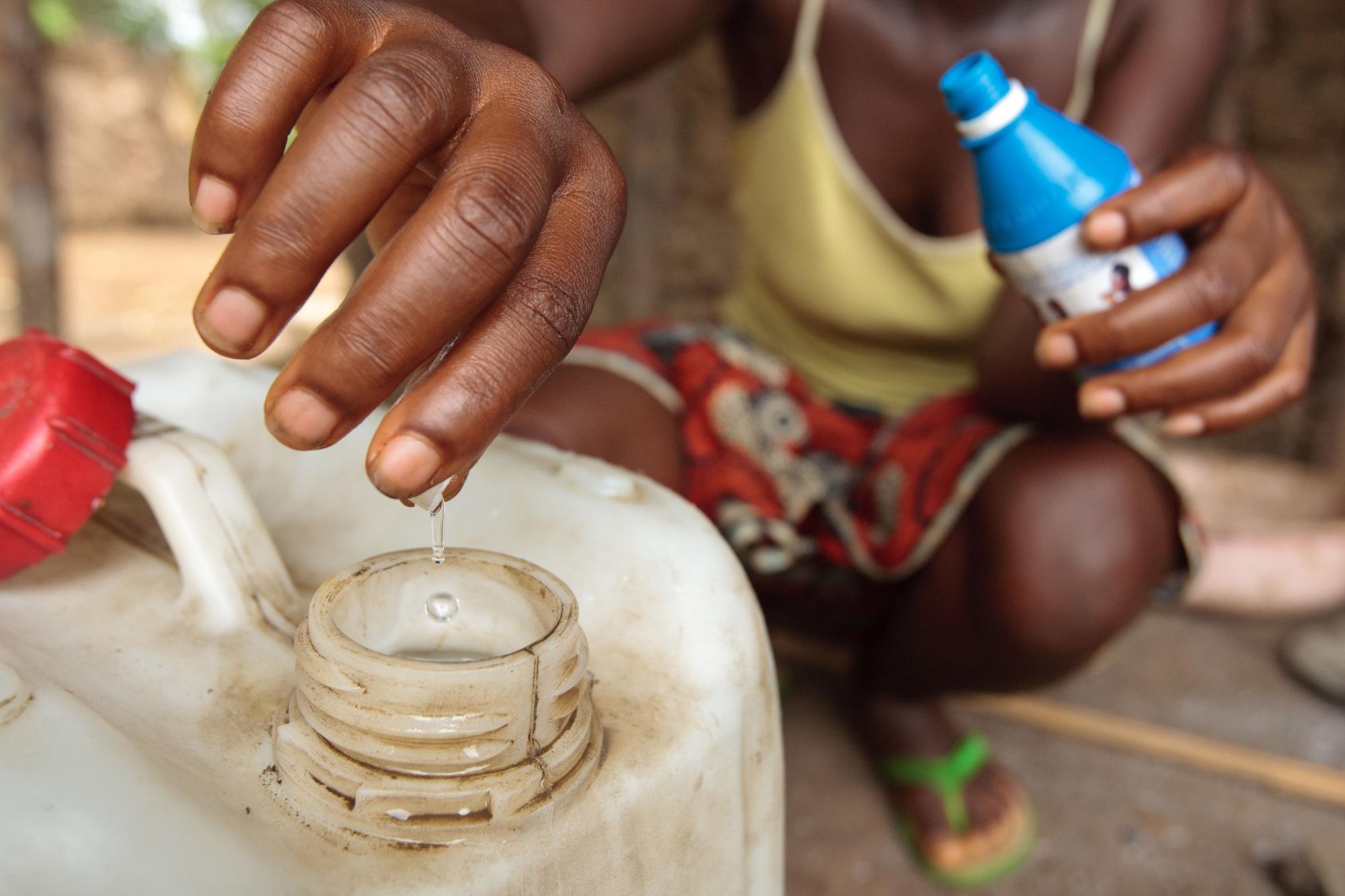
- At the program level, we convene key players and provide technical support to help promising, evidence-backed programs reach more people, either by scaling up an existing program or adapting a program to a new context. For example, J-PAL Africa is actively mobilizing key players and finding policy windows for disease-preventing chlorine voucher programs through a Givewell grant.
Looking ahead
Demand for evidence-informed policymaking is growing across the globe. More than 30 rigorously tested programs are ready for investment and consideration for scale. We are looking to engage a broad community of philanthropies, government partners, and international organizations to harness the resources needed to turn proven ideas into lasting change.
If you're interested in learning more, reach out to us at [email protected].
Scaling a proven solution: Rainwater harvesting in Niger
Degraded land and unpredictable rainfall make farming in Niger difficult and incomes uncertain. Farmers can increase their harvests—and profits—by capturing and redirecting rainwater to prevent flooding and soil erosion. IGI is supporting a scale-up of these innovative rainwater harvesting methods across Niger, led by researchers Jenny Aker (Cornell) , Kelsey Jack (University of California, Berkeley), and Malam Assane Maigari (University of Diffa). Read more.
Scaling a solution to a new context: Protecting ecosystems in Guatemala
Guatemala loses ~61,000 hectares of forest each year, driving biodiversity loss, ecosystem degradation, and high carbon emissions. Payment for Ecosystem Services (PES) programs reward landowners for protecting ecosystems, and can reduce deforestation and increase tree cover. IGI is supporting Guatemala’s Ministry of Environment in designing a PES program to address the consequences of deforestation across the country, led by researchers Seema Jayachandran (Princeton) and Benjamín Nicolas Leiva Crispi (J-PAL LAC). Read more.
Building coalitions for scale: Foundational learning in India
In India, over 70 percent of children in grades 3-5 struggle with foundational math skills, limiting their future learning. Every Child Counts uses playful, evidence-informed math games that tap into children’s intuition, bridging the gap to formal classroom learning. IGI supports its expansion across India through a coalition of governments and NGOs, led by researchers Esther Duflo (MIT), Elizabeth Spelke (Harvard), and Harini Kannan (J-PAL South Asia). Read more.
Technology-enabled scale: Faster payments for workers in India
An app called PayDash gives government workers real-time data to track payments to beneficiaries in India’s largest rural workfare program. In a country where one in four people receive financial assistance from the government, timely payments are essential to keeping poor households out of debt and meeting their basic needs. IGI supports integrating Paydash into government systems to reduce delays and boost participation for millions of people in rural areas, led by researchers Rohini Pande (Yale), Yusuf Neggers (University of Michigan), and Charity Troyer Moore (Ohio State University). Read more.
Generating evidence on the journey to scale: Child immunization in Sierra Leone
Sierra Leone faces high child mortality from preventable diseases; less than 50 percent of children aged 1-2 receive a full course of vaccines, leaving them vulnerable. Colorful bracelets that signal to the rest of the community that parents are on-time in completing their child’s vaccines have been shown to increase immunization at relatively little cost. IGI supports integrating malaria vaccines into this program and evaluating scale-up delivery models, led by researcher Anne Karing (University of Chicago). Read more.
Lead photo credit: J-PAL