Mobilizing agricultural development in Africa: J-PAL joins the Paris Peace Forum Coalition
Africa's agricultural potential is substantial. While the continent holds more than half of the world's fertile and yet-unused land, agricultural productivity lags behind other regions of the world. Unlocking this potential could increase food security across Africa, where 60 percent of the population has unstable access to food.
Policy change is an important component to enable this reality. The Paris Peace Forum (PPF), a French nonprofit organization, launched a policy initiative in 2023 called "Mobilizing for Strong and Sustainable Food and Nutrition Systems in Africa" to promote sustainable agricultural transformation on the African continent through South-North dialogue on policy and practice. J-PAL’s Agriculture sector has joined the coalition of international organizations committed to this initiative, with the goal of supporting evidence-informed decision-making among partner organizations and countries.
Mobilizing a coalition for Africa's agricultural development
Improving the agricultural productivity of small-scale farmers, who dominate Africa’s agriculture sector, is a critical policy objective in order to improve global food security. However, this is a complex task given low agricultural technology adoption rates across the continent coupled with evolving factors like changes in international market structures, trade disruptions under Covid-19 protocols, geo-political conflict, and the increasing impacts of climate change on farmers’ yields and welfare.
The PPF's initiative seeks to unlock Africa's potential as a major agricultural power by 2050 through North-South collaboration and learning. Comprised of international organizations and research institutions, such as the International Fund for Agricultural Development (IFAD), the Consultative Group on International Agricultural Research (CGIAR), the Mo Ibrahim Foundation, Special Envoy for Food Systems at the African Union, and the Mohammed VI Polytechnic University (UM6P) as well as companies and philanthropic organizations, the coalition seeks to build consensus and address the following topics:
- Improve soil health, for instance, by implementing comprehensive soil mapping and providing customized fertilizers to enhance soil fertility and crop yields
- Reduce postharvest losses by enhancing storage and transportation infrastructure to ensure more produce reaches the market
- Support sustainable intensification practices, such as precision agriculture, to help maintain high yields without expanding into new lands, preserving ecosystems, among others.
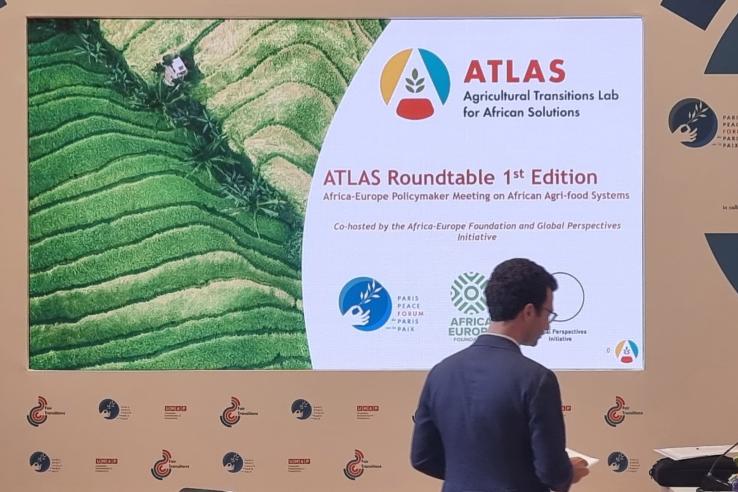
This year, the PPF held its Spring Meeting titled “Fair Transitions” on June 10, 2024, at UM6P in Benguerir, Morocco, convening heads of state to discuss the need for stakeholder cohesion and attracting financial investment. The coalition launched the Agricultural Transitions Lab for African Solutions (ATLAS), a platform for policy dialogue and collaboration between the Global North and South to identify impactful innovations for African agri-food systems and increase investments in African food systems.
Evidence-informed policy decisions and practice
J-PAL will play a critical role disseminating evidence from randomized evaluations in agriculture to inform policy conversations among members of the coalition. Bringing evidence into policy conversations is a powerful tool to enhance the efficiency and effectiveness of policies addressing global challenges.
As climate change continues to affect how farmers and governments make decisions about how to integrate markets to increase food security, among many other decisions, evidence can inform how they frame questions and problems, and understand possible solutions to address the changing policy, economic, and physical environment.
J-PAL’s network of researchers and Scholars have generated research across a number of important and relevant topics to the coalition’s agenda. To support ATLAS’s goals, J-PAL will leverage fifteen years of research generated through the Agricultural Technology Adoption Initiative and the Digital Agricultural Innovations and Services Initiative to disseminate relevant policy lessons on farmers’ constraints to adopting improved technologies. J-PAL will also leverage findings from new research funded through the UM6P-J-PAL Agricultural Lab for Africa, a lab with OCP Africa that will generate actionable evidence on enhancing small-scale farmers’ productivity, profitability, and food security in Africa.
Drawing from this evidence base and through the development of our Policy Insights, J-PAL has synthesized emerging lessons across multiple evaluations and contexts, highlighting the mechanisms that help policymakers make sense of research results.
Driving change through partnership
By bringing together governments, donors, implementing partners, think tanks, and research centers, this coalition creates space for building new links across the agricultural development ecosystem, forging new opportunities for evidence-informed decision-making and collaboration across countries, sectors, and regions. As a member of this coalition, J-PAL will harness rigorous research from the network to inform actionable policies in support of the coalition's mission to drive change through partnership and achieve sustainable agricultural development.
The Regional Scholars Program has taken center stage at the Digital Agricultural Innovations and Services Initiative (DAISI) nearly two years after its launch. The DAISI Regional Scholars Program is integral to DAISI and promotes research opportunities for scholars based in sub-Saharan Africa and South Asia.
This piece was originally published by the Center for Effective Global Action.
The Regional Scholars Program has taken center stage at the Digital Agricultural Innovations and Services Initiative (DAISI) nearly two years after its launch. The DAISI Regional Scholars Program is integral to DAISI, which is co-managed by the Center for Effective Global Action (CEGA) at the University of California, Berkeley, and the Abdul Latif Jameel Poverty Action Lab (J-PAL) at the Massachusetts Institute of Technology, and promotes research opportunities for scholars based in sub-Saharan Africa and South Asia.
In this blog, Abel Mkulama, Program Associate at CEGA, highlights the DAISI Regional Scholars Program’s successes since its launch in 2021.
Building bridges in research
Generating evidence that can positively impact policy decisions requires a deep understanding of the local context and relationships with policymakers. Though researchers from low- and middle-income countries (LMICs) often possess both, according to a UNESCO report, they only produce two percent of the world’s research output. This is mainly due to limited access to research funding and research tools. However, impact evaluation capacity in LMICs is now increasing, thanks in part to programs such as the CEGA’s Global Networks Program and the J-PAL Scholars Programs that provide direct research training, mentorship, and funding opportunities for researchers based in LMICs who are using innovative approaches for reducing poverty.
In 2021, CEGA and J-PAL launched the Digital Agricultural Innovations and Services Initiative (DAISI), which funds research to rigorously evaluate programs that increase the availability, quality, and reach of bundled digital agricultural solutions and services for small-scale agricultural producers in South Asia and sub-Saharan Africa. As part of DAISI’s activities, the DAISI Regional Scholars Program advances funding opportunities and fosters mentorship for researchers interested in impact evaluation methodologies who hold a PhD and are based at academic institutions in South Asia and sub-Saharan Africa.
Mentoring Scholars on the rise
DAISI’s success is closely tied to our partnerships, strong network of researchers, and collaborative culture. The DAISI Regional Scholars Program affirms that local researchers are uniquely positioned to leverage contextual knowledge of the regional policy landscape and stakeholders to identify and evaluate relevant topics that can translate into meaningful policy action for achieving their nation’s development goals.
The program includes mentorship activities, fostering collaboration by pairing a Scholar with a CEGA or J-PAL-affiliated researcher who is based in a leading university and has experience conducting randomized impact evaluations. The mentorship provides space to share knowledge, engage in meaningful discussions, and explore research ideas. Scholars also receive constructive feedback while gaining hands-on experience in impact evaluation methods. Additionally, DAISI intends to convene Scholars for targeted interaction, fostering connections with both CEGA and J-PAL staff. To date, we have organized one virtual convening and expect to host more gatherings in the future.
Embedded in the underlying framework of this program is an approach that invests in and nurtures talent through global academic collaboration. We believe that mentorship serves as a crucial lever for the next generation of researchers involved in the evidence-informed policy movement.
Project spotlights
One DAISI Scholar, Fréjus Thoto, explored the possible effects of a digital, bundled service on agricultural and farmer outcomes like access to inputs and credit in the Benin Republic. Reflecting on the impact of the DAISI mentorship, Thoto said,
"As someone who is new to impact evaluations, the mentorship aspect of the DAISI Regional Scholars Program has been beneficial. My mentor provided insightful guidance on impact evaluations and shared valuable knowledge for evaluating digital applications in the agricultural sector. DAISI isn't merely about submitting and closing projects; it's a collaborative, community-built effort where collective wisdom drives progress."
Another Regional Scholars project, Digital Climate Change Adaptation Services for Sustainable Agricultural Productivity in Nigeria, led by Toyin Olowogbon and Segun Fakayode, explored a digital advisory service bundled with weather-based index insurance for small-scale maize producers in Nigeria. Sharing their DAISI Regional Scholar experience, the team said,
“The mentorship program is the most valuable aspect of the DAISI Regional Scholars program; it helped us develop and refine our research concepts and methods. This mentorship approach is the fastest way for scholars to advance their research and career development goals.”
Impact evaluation resources
CEGA, J-PAL, and our partners offer various opportunities to drive inclusion in the social science and global development ecosystems. Click the links below to learn more about application and eligibility requirements.
- CEGA’s Fellowship Program invests directly in cultivating the talents of junior African researchers by providing residential (at UC Berkeley and Northwestern) and non-residential impact evaluation fellowships.
- J-PAL Scholars Programs provide funding, mentorship, and training opportunities to researchers from low- and middle-income countries. We currently have Scholars Programs in sub-Saharan Africa, South Asia, and the Middle East and North Africa.
Every month, the CEGA Global Networks Opportunities Newsletter publishes funding, events, and career opportunities for scholars from Africa and beyond. Sign up for CEGA’s Opportunities digest here (choose “Global Networks).
To check on the status of future DAISI Requests for Proposals, please visit our website.
An urgent policy priority, both to increase farmers’ own productivity and profits and to contribute to stabilizing food security throughout these regions, is to provide accessible forms of risk protection. J-PAL’s updated Policy Insight reviews 23 randomized evaluations on common interventions intended to boost farmers’ risk protection and help them make optimal farming decisions.
Worsening droughts, more frequent and severe floods, erratic temperatures, and unpredictable seasons: these are just some of the disastrous consequences of climate change that wreak havoc on agriculture. Small-scale farmers in low- and middle-income countries (LMICs) typically have limited social safety nets to protect them against the growing threat of weather-based shocks. An urgent policy priority, both to increase farmers’ own productivity and profits and to contribute to stabilizing food security throughout these regions, is to provide accessible forms of risk protection. J-PAL’s updated Policy Insight reviews 23 randomized evaluations on common interventions intended to boost farmers’ risk protection and help them make optimal farming decisions.
Agricultural decisions in the face of weather-based risk
Farmers are faced with many decisions at the beginning of the agricultural season, including which crops or seed varieties to plant, how much to spend on inputs like fertilizer, and how much land to plant. Higher upfront investments in productive agricultural technologies like fertilizer, seeds, and pesticide can increase yields and profits at the end of the season. However, choosing to make these investments may seem unwise if there’s a chance they will not pay off due to an unexpected extreme weather episode. This uncertainty leads to a cycle of underinvestment and low productivity that can trap small-scale farmers in poverty.
One common tool to protect against risk is agricultural insurance, which typically pays farmers back for their recorded crop losses due to an adverse weather event. Weather index insurance is an innovation developed to reach small-scale farmers in LMICs by basing payouts on an easily observable variable, like rainfall at a local weather station, which is compared against historical norms and used as a sliding-scale index of farmers’ anticipated crop loss.
Insurance can protect farmers against shocks—but most are not willing to buy it
Overall, studies showed that farmers purchase index insurance at such low rates that insurance is often not profitable for lenders, inhibiting the growth of self-sustaining markets. However, overcoming learning, trust, or credit constraints can help boost take-up in some cases.
When insured farmers receive a payout or see their peers benefit from insurance, they are more willing to buy it the following season—but these effects dissipate if farmers pay for insurance and do not later receive a payout. Social learning and financial literacy trainings can boost insurance take-up, but their effects similarly do not always persist over time. Tailoring insurance to farmers’ unique seasonal incomes is also key, since farmers have limited cash on hand at the beginning of the season when they have to pay for insurance. While pairing insurance and credit products has not been shown to increase take-up in most cases, offering farmers flexibility to repay insurance after harvest time is a promising alternative, particularly for the least wealthy farmers.
When insurance is both appropriately tailored to farmers’ local contexts and is heavily subsidized, farmers do purchase it. In these cases, insurance is effective in helping farmers cope after a shock, and this protection also incentivizes farmers to shift their production decisions to higher risk and higher reward choices, like weather-sensitive cash crops. With this added benefit of boosting investments in both good and bad weather years, when insurance is designed in accordance with farmers’ local contexts, it may be an effective form of social protection targeted at small-scale farmers.
Insurance is just one tool to protect against risk: The role of risk-mitigating technologies
New agricultural technologies like drought- and flood-tolerant seeds and climate-smart practices such as rainwater harvesting can help make production itself more resilient to risk, rather than allowing damages to occur and compensating for them with insurance payouts. Pairing insurance and climate-smart technologies may also provide additional benefits than offering them on their own. While improved seed varieties help lower crop losses during moderate weather events, farmers are more willing to make risky production decisions with the addition of insurance.
Looking forward: Crowding in research on innovative technologies
While risk-mitigating technologies are promising complements to insurance to provide comprehensive protection that both lowers farmers’ risk exposure and helps them bounce back after a shock, more research is needed on how to bundle these strategies effectively. The Digital Agricultural Innovations and Services Initiative (DAISI), jointly managed by J-PAL and the Center for Effective Global Action and generously supported by the Bill and Melinda Gates Foundation, was launched in 2021 to shed light on digitally-enabled, bundled agricultural services for small-scale farmers. A core component of DAISI’s research agenda is to disentangle which elements of a bundled service are key to its success—and how to design bundled services to effectively alleviate small-scale farmers’ productivity constraints.
Small-scale farmers are at the forefront of global food security, and their livelihoods are also uniquely vulnerable to the effects of climate change as the intensity of weather shocks accelerates globally. As world leaders emerge from COP28, policymakers should continue to prioritize identifying and scaling evidence-based solutions tailored to farmers’ local contexts to boost global food security and protect farmers’ livelihoods.
On October 10, J-PAL in partnership with University Mohammed VI Polytechnic launched the UM6P-J-PAL Agricultural Lab for Africa. Chaired by Tavneet Suri (MIT, J-PAL Agriculture sector Co-Chair), the lab will be hosted at University Mohammed VI Polytechnic (UM6P) in Rabat, Morocco, with the goal of designing and funding rigorous impact evaluations of private sector programs that improve small-scale farmers’ food security, productivity, and profitability in sub-Saharan Africa.
The lab was announced during this year’s Spring Annual Meetings of the World Bank Group and International Monetary Fund in Marrakech, Morocco, as part of UM6P’s “the Voice of Africa” side event panel discussions on food security and sustainability. Participants heard from Tavneet Suri on her vision for the lab as academic chair, Iqbal Dhaliwal (MIT; J-PAL Executive Director) on expanding J-PAL’s portfolio of work in agriculture with the private sector, and Hicham El Habti (UM6P President) on the importance of partnership to achieve broad development of the agriculture sector in sub-Saharan Africa.
Tackling food insecurity through agricultural value chains
Small-scale farmers face numerous decision points throughout the production cycle, such as how much fertilizer to apply, what mixture of fertilizer is best for their soil and crop, where to sell their output for the highest possible price, among many others.
In recent years, the factors that affect small-scale agriculture in sub-Saharan Africa have become more complicated. Specifically, the world has experienced a rise in global food insecurity, resulting from changes in international market structures and regulation, trade disruptions under Covid-19 protocols and geo-political conflict, climate change, and other political and economic dynamics. Understanding how to improve food systems is, therefore, an essential step along the path to reducing poverty and securing livelihoods for rural communities across sub-Saharan Africa.
In response to this growing uncertainty, clear policies and programs that support farmers to invest in higher-yielding, more profitable, tailored, and innovative technologies are essential. However, there are still a number of policy questions yet to be answered to inform large-scale improvements in agricultural systems. As many agricultural supply chains and systems work across countries, markets, and stakeholders, it is imperative to build this evidence base to inform decision-making with NGOs and governments as well as the private sector, which has an outsized opportunity to affect change in agricultural markets and value chains.
Conducting research on scalable programs with the private sector
With an initial grant from OCP Foundation, UJALA will fund innovative research over the course of three years and six RFPs that rigorously evaluate these critical questions and challenges. UJALA will generate research and actionable policy lessons in five key areas:
- Designing and delivering effective food and agricultural subsidies
- Assessing the value of fertilizer customization to crop needs and soil nutrients
- Reducing low-income households’ reliance on imported food
- Alleviating farmers’ constraints to adopting and maintaining new agricultural technologies and practices
- Connecting farmers to markets that sell at competitive prices.
As a lab, UJALA will work in close collaboration with private sector partners in sub-Saharan Africa to conduct randomized evaluations of their services for small-scale farmers. The partners UJALA works with will be selected based on scale of operations, relevance to the research agenda, and interest in learning about their business models and impacts from rigorous, quantitative research. UJALA will have the express goal to disseminate research results to relevant public and private sector actors and support the scale up of effective programs and services with partners.
To achieve these goals, UJALA will work along the research life-cycle from conceptualizing evaluations to disseminating results and facilitating discussions on how to scale effective programs and services. Specifically, UJALA aims to:
- Identify programs delivered by our private sector partners with the potential to answer open questions related to agricultural technology adoption in Africa
- Connect partners with researchers in the J-PAL network to facilitate multi-stakeholder research partnerships
- Fund randomized evaluations to build an evidence base on increasing small-scale farmers’ productivity and profitability through the uptake of improved and accessible agricultural technologies
- Summarize and synthesize available results to address and answer outstanding questions relevant to policy and practice
- Disseminate the evidence to inform relevant agricultural development strategies across the African continent.
Looking ahead
Through strong partnerships with the private sector and researchers in the J-PAL network, UJALA will support the generation of new evidence and evidence-based decision-making among private sector partners. As a result of their operational scale and incentives to quickly respond to market changes, the private sector is uniquely positioned to tackle the looming challenges of climate change, market instability, and food insecurity and to improve the lives of thousands of small-scale farmers across sub-Saharan Africa.
If you are a researcher interested in learning more and getting involved, please reach out to [email protected].