

Legal Aid for Family Reunification and Child Well-Being in Chile
- Children
- Enrollment and attendance
- Access to justice
- Legal assistance



Children in foster care often spend years in care, and bureaucratic delays may unnecessarily prolong their stays and harm child well-being. Researchers partnered with the Chilean government to conduct a randomized evaluation of Mi Abogado, a comprehensive legal aid program for children living in residential care, to test its impact on family reunification and child well-being. Children assigned to Mi Abogado spent more time living with family, had lower criminal justice involvement, and attended school more often, without a detectable decline in child safety. Qualitative and quantitative evidence suggest the program worked by combining stronger legal representation with psychosocial support that helped connect children and families to services and support reunification.
Problema de política pública
Children in foster care often spend long periods away from family. Family courts typically aim to reunify them with family when it is safe to do so, but family rehabilitation often takes years, and administrative and court-related delays can prolong the process. Long stays in care may harm child well-being, though the impact of the length of stay on child outcomes is unclear from existing evidence. Children involved with child protective services are particularly vulnerable to begin with: they experience higher rates of anxiety, depression, and child mortality compared to similar children.
One possible response is to improve both legal representation and the broader support children and families receive while cases move through the child protection system. More effective legal support may help reduce procedural delays and move cases through family court more efficiently, while psychologists and social workers may help assess family needs, connect families to services, and support the conditions needed for safe reunification. There is limited rigorous evidence on whether strengthening legal aid and related case management can reduce time in care and improve child outcomes.
Contexto de la evaluación
At the time of the study, Chile’s child protection system was administered by the National Service for Minors (SENAME), which investigated child maltreatment allegations and supervised foster care placements. While foster family placements, often with extended family members, were the most common form of care, residential care was also common, and children in residential care in Chile stayed in care for an average of about three years. As in many countries, the main goal for most children in care was family reunification, as adoption was relatively rare in Chile.
By 2019, Chile’s residential care system was under scrutiny and pressure for reform. After high-profile criticism of conditions in residential care in 2016, policymakers pushed to reduce reliance on residential care, increase funding, and improve legal representation for children in care. While all foster children were assigned a lawyer, policymakers were concerned that their high caseloads limited the quality of representation. In this context, the Ministry of Justice launched Mi Abogado as a pilot in 2017 to strengthen legal aid for children in care.
The children in the study were relatively old for the child protection system, with an average age of about 14 at the beginning of the evaluation. Most placements involved neglect, while about 30 percent involved physical abuse and 17 percent involved sexual abuse. The children also faced educational disadvantages: average school attendance in 2017–2018 was 66 percent, average school delay was about one year, and among those with grades available in 2018, performance was around the 27th to 29th percentile.
Detalles de la intervención
Researchers partnered with the Ministry of Justice and the Experimental Policy Initiative at Chile’s Budget Office (Dirección de Presupuestos, DIPRES) to evaluate whether Mi Abogado improved family reunification and broader measures of child well-being for children living in residential care in Chile.
The evaluation included 1,871 children ages 6 to 18 living in SENAME residences in Maule, Biobío, Valparaíso, and the Metropolitan Region. In March 2019, children were randomly assigned to one of two groups:
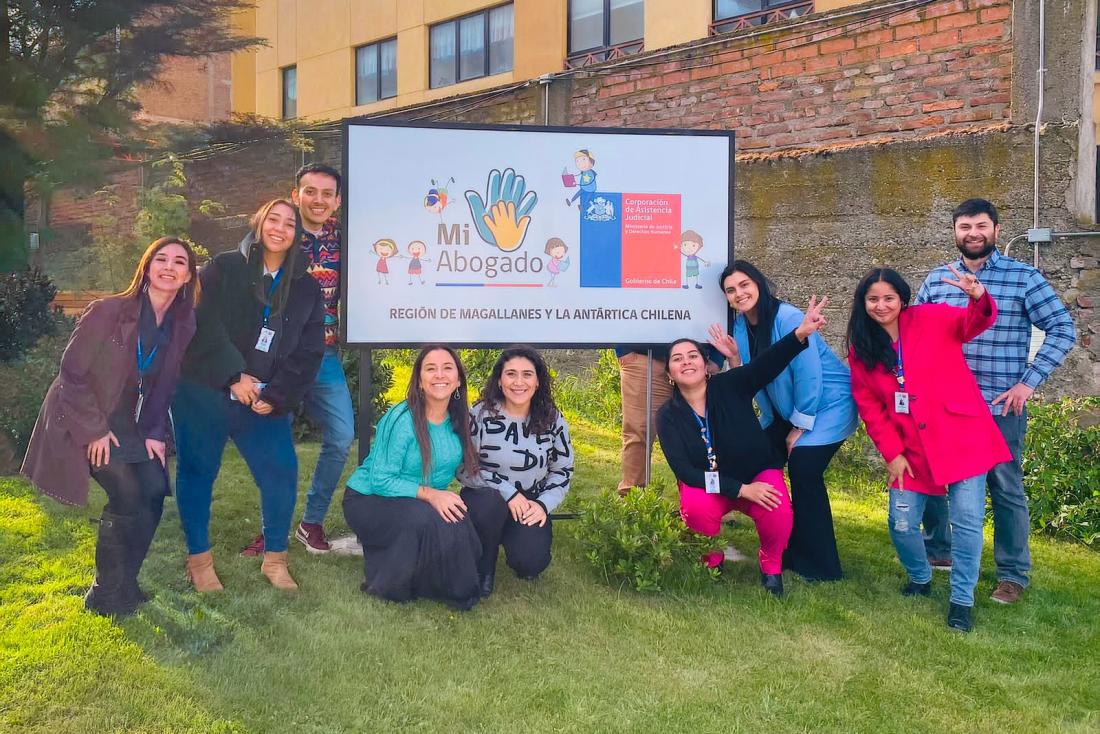
- Mi Abogado group (683 children): Children in this group were selected for entry into Mi Abogado, a program that gave each child support from a lawyer, a psychologist, and a social worker. The team aimed to protect children’s rights, help move cases toward family reunification or adoption, and connect children and families to services. In practice, the lawyer took the lead on court preparation and case follow-up, while the broader team assessed mental health and social needs, met with children, families, and residence staff, and continued monitoring children for 90 days after reunification. Lawyers in Mi Abogado also handled fewer cases than lawyers in standard practice.
- Comparison group (1,188 children): Children in this group continued with standard legal representation. They did not receive the dedicated psychologist and social worker or the more tailored case management provided through Mi Abogado.
After randomization, the Experimental Policy Initiative sent the list of selected children to Mi Abogado staff, which then asked family court judges to change legal representation. Researchers used linked administrative records from Chile’s child protection, justice, education, and Mi Abogado program systems to track living with family, child safety, criminal justice involvement, and school attendance and performance over time.
Optional ethical considerations:
Given the sensitive nature of the experiences studied, the evaluation measured child outcomes using existing administrative and registry data rather than collecting these outcomes through interviews with children. According to the research team, this approach avoided asking children to recall potentially painful experiences from their histories.
Resultados y lecciones de la política pública
Overall, children assigned to Mi Abogado spent more time living with family, had lower criminal justice involvement, and attended school more often, while researchers did not detect a decline in child safety. The program also appeared cost-effective for the child protection system.
Program participation: Assignment to Mi Abogado did not perfectly determine who received the program, as family court judges made the final participation decisions. Some children assigned to Mi Abogado did not enter, and some children in the comparison group later enrolled. Even so, assignment increased children’s exposure to Mi Abogado: children assigned to the program had an estimated 20 additional days of exposure per quarter, relative to 32 days per quarter among children in the comparison group (about 60 percent higher exposure).
Family reunification: Mi Abogado increased time living with family by 6.46 days per quarter, from a comparison group average of 21.7 days (a 30 percent increase). Children assigned to treatment were also 7.65 percentage points more likely to live with family in a given quarter, from a comparison group mean of 25.9 percent (a 30 percent increase). They also spent 4.6 fewer days in SENAME residences per quarter, from a comparison group mean of 54.4 days (a 9 percent decline). During the study period, these gains mainly reflected faster family reunification. Exits from foster care though adoption were relatively rare.
Child safety: Children assigned to the Mi Abogado program were no less safe than children in the comparison group. Researchers did not detect meaningful effects on new child protection investigations, reports of child victimization, foster care reentry, or hospitalization. This is notable because children assigned to treatment spent more time at home and remained under greater program surveillance after reunification.
Criminal justice involvement and school attendance: Children assigned to treatment were reported to the courts for fewer crimes: about 0.038 fewer reports per quarter, from a comparison group mean of 0.125 reports per quarter (a 32 percent decline). They also attended school 2.9 percentage points more often than children in the comparison group, from a comparison group mean of 58 percent (a 5 percent increase).
Mi Abogado combined support from a lawyer, a psychologist, and a social worker, so the evaluation could not isolate the effect of each component. Qualitative research suggest that lawyer-led legal work was the main channel for moving cases forward, while psychologists and social workers helped assess family needs, connect families to services, and support the conditions for reunification.
Taken together, the results suggest that strengthening interdisciplinary legal aid for children in residential care can reduce time in care and improve child well-being without measurably compromising child safety. The authors note, however, that these findings may not fully generalize to settings with different legal structures or higher-quality foster care systems.
Offering Mi Abogado increased legal aid costs by US$199 per child over 641 days of follow-up, but SENAME saved US$818 per child overall because children assigned to treatment spent fewer days in residential care. This implies that SENAME saved about US$4.5 for every additional US$1 spent on legal aid. When the authors included estimated social savings from reduced crime, total benefits rose to US$4,135 per child, although they caution that this broader estimate does not account for any additional social services children and families may have received through Mi Abogado.
Cooper, Ryan, Joseph J. Doyle, and Andrés Hojman. 2025. "Effects of Enhanced Legal Aid in Child Welfare: Evidence from a Randomized Trial of Mi Abogado." American Economic Review 115 (7): 2306–42.
It is now administered by Mejor Niñez, Servicio Nacional de Protección Especializado a la Niñez y Adolescencia.