

How Safe Spaces for Girls Impact Adolescent Pregnancy and School Enrollment in Sierra Leone During an Epidemic
- Children
- Women and girls
- Youth
- Enrollment and attendance
- Empowerment
- Sexual and reproductive health
- Violence
- Age of marriage
- Age of childbearing
- Fertility/pregnancy
- Take-up of program/social service/healthy behavior
- Coaching and mentoring
- Financial literacy
- Preventive health
- Soft skills
- Empowerment training
- Intergroup/social contact
- Vocational training (TVET)






Adolescent girls in low-income countries face heightened risks of sexual exploitation, early pregnancy, and school dropout during crises, yet little is known about how to protect them during these times. Researchers evaluated the impact of a club-based safe space and life skills program on girls' time use, pregnancy rates, and school enrollment during the 2014–2016 Ebola epidemic in Sierra Leone. While girls in the comparison group spent more time with men, had more pregnancies, and had lower school enrollment post-epidemic, girls who attended the program spent less time with men and had less out-of-wedlock pregnancies. In villages where girls faced the highest pregnancy risk, the program helped girls re-enroll in school after the epidemic ended.
Policy issue
School closures are a common response to crises including viral outbreaks, conflicts, climate shocks, and economic downturns. In places where adolescent girls are vulnerable to sexual exploitation and violence, removing the protective school structure can have lasting consequences. Without time in school, girls may become more exposed to sexual relationships with men and getting pregnant. This can link short-term school closures to longer-term setbacks to their education and economic independence.
Girls’ clubs may offer protection by creating a space where girls can gather and spend time away from men, potentially reducing exposure to risky interactions. At the same time, these programs often include additional components—such as life skills sessions, vocational training, or microfinance—that may shape whether girls stay in school or get pregnant by improving their aspirations, knowledge, economic prospects, or decision-making power. Can a club-based safe space program for adolescent girls during an epidemic affect the amount of time they spend with men, the likelihood of getting pregnant, and whether they re-enroll in school in Sierra Leone?
Context of the evaluation
This study took place in Sierra Leone and coincided with the Ebola epidemic, which began in May 2014 and ended in November 2016, infecting over 14,000 people in the country and causing nearly 4,000 deaths. The government responded with village lockdowns, travel bans, and the closure of all primary and secondary schools through the 2014-2015 academic year.
When schools reopened after the epidemic, the government banned visibly pregnant girls from re-enrolling. Adolescent fertility in the country is high relative to the average in Sub-Saharan Africa. Teen pregnancy is one of the leading causes of maternal death in the country, which has the highest maternal mortality rate of any country for which data exists. Many adolescent girls also face sexual exploitation and violence. Before Ebola, 51 percent of ever-married women aged 15–49 in the country reported experiencing physical, sexual, or emotional abuse by a husband or partner.
Within this context, adolescent girls aged 12–18 from four districts—Port Loko, Kambia, Moyamba, and Pujehun—participated in the study. About 30 percent of participants were in relationships, with 30 percent reporting intimate partner violence. Eight percent of participants were married, 20 percent had children, and 13 percent had children out of wedlock. For girls who were married, the average marital age was just below 15, while their husbands’ average age was almost double.
Girls faced significant pregnancy risk: 7 percent of all participants reported experiencing sex without consent in the year before the study. Half became sexually active before age 14 and spent over three hours per week with sexual partners. A minority of those who were sexually active used contraception.
Details of the intervention
Researchers partnered with the NGO BRAC to evaluate the impact of their Empowerment and Livelihoods for Adolescents (ELA) program, which offered girls a safe‑space, life skills training, vocational training, and microcredit. A prior evaluation of the ELA program in Uganda found that it reduced girls’ likelihood of early pregnancy and increased their control over their bodies. Building on these results, researchers replicated and evaluated the program in Sierra Leone.
They first randomly assigned 200 rural villages to one of four groups. Then, they randomly assigned 2,783 girls within each group, representing 27 percent of all girls eligible to participate in the program:
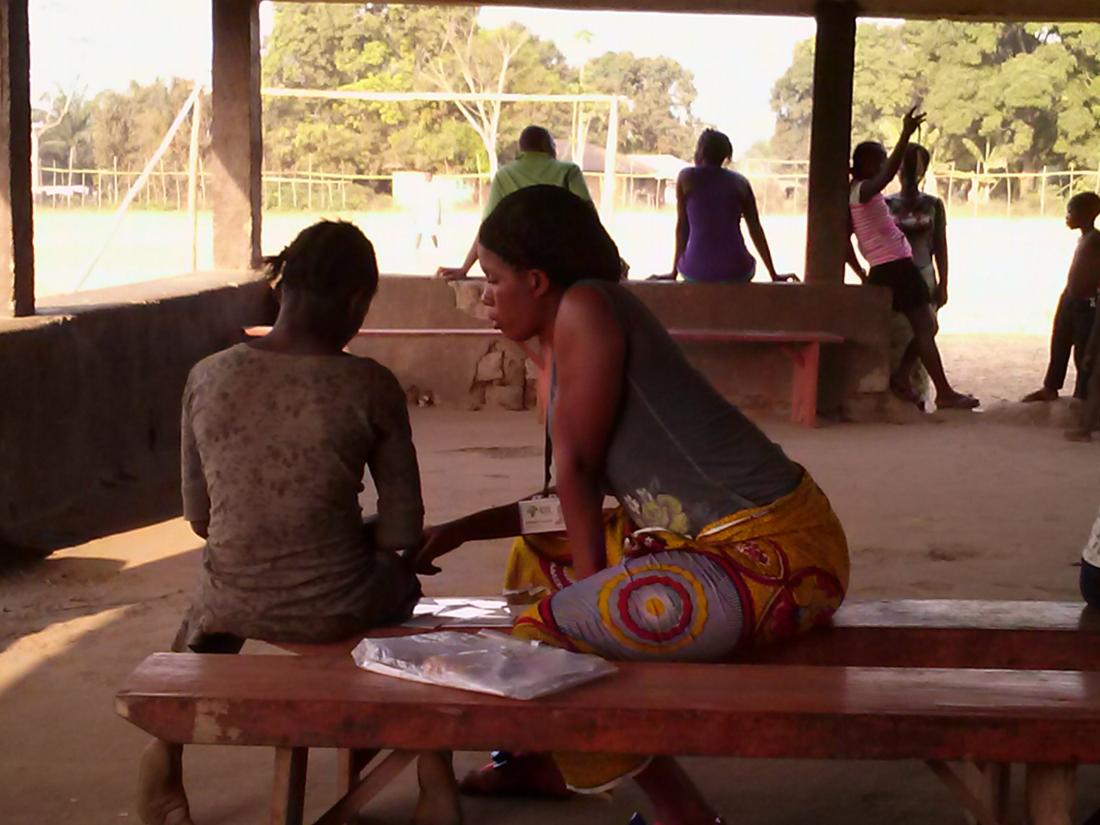
- ELA group (50 villages): Girls had access to BRAC's ELA program, which establishes a physical club space in each village that is open five days a week after school hours and designed to offer girls a venue to gather and socialize away from men. Each club was managed by a young woman from the village trained as an ELA mentor. At the clubs, girls were also offered life skills training, which covered topics like family planning, menstruation, STIs, and leadership.
- ELA + vocational training group (50 villages): Girls had access to the ELA safe space, life skills training, and a vocational training program in areas such as tailoring, soap making, and hairdressing, available for girls aged 17 and up. Vocational training courses were offered six hours per day, varying in length, and all included a financial literacy module. Upon completing their training, participants received basic business inputs, such as sewing machines for those who studied tailoring.
- ELA + vocational training + microfinance group (50 villages): Girls who were 18 and above had access to the ELA safe space, life skills training, vocational training, and were offered microfinance loans of up to US$100. Loans were repayable over one year on a weekly repayment schedule.
- Comparison group (50 villages): Participants were not provided access to the ELA program.
In total, 2,083 girls were assigned to the ELA groups and 696 were assigned to the comparison group. BRAC established the ELA program in Sierra Leone in August 2014. At that time, 29 percent of ELA clubs were not yet open due to the Ebola epidemic, though all opened by January 2015.
Researchers surveyed girls 1.5 to two years after they started the ELA program (February–May 2016), towards the end of the epidemic and after schools had reopened. They asked girls about their amount of time spent with men, if they were pregnant, and if they were still enrolled in school.
Researchers built a pregnancy risk metric for each village leveraging information on healthcare facility closures, economic activity and demographics—all factors that could increase girls' exposure to men and reduce their access to contraceptives and safe spaces. They compared outcomes in villages with pregnancy risks above and below 50 percent.
Results and policy lessons
The ELA program protected girls from higher pregnancy risk and subsequent school dropout sparked by the Ebola crisis, mostly by offering girls a safe space. These effects were strongest for girls at the highest risk of pregnancy before the program and crisis.
Participation: In each ELA group, about 66 percent of girls attended the clubs and about 54 percent took part in life skills training. The similar attendance rate suggests that the safe space and life skills components in all three groups may have driven attendance beyond the gains from specific activities. Among girls in the ELA, vocational training, and microfinance group, 23 percent participated in vocational training and 7 percent took out a microfinance loan.
Time use: On average, girls in the comparison group spent more time with men while schools were closed. In comparison group villages where girls were at higher risk for pregnancy, each one standard deviation increase in pregnancy risk led to an additional 0.81 hours per week spent with men (a 25 percent increase). The ELA program moderated these changes: girls in ELA groups spent 2.73 hours with men, a 16 percent decline from the baseline level of 3.27 hours. There were no differences in time spent at ELA clubs or time spent with men across the three ELA club groups.
Pregnancy: Girls in the comparison group saw pregnancy rates rise by nearly two-thirds during the epidemic as in the two years prior, rising from 13 percent to 21 percent. Girls in ELA groups were no more or less likely to become pregnant relative to the comparison group, but were 3.2 percentage points (23 percent) less likely to become pregnant out of wedlock. The ELA program had protective effects for girls in very-high pregnancy risk villages (1.74 standard deviations above average), completely offsetting the likelihood of getting pregnant.
School enrollment: On average, school enrollment did not differ between girls in the comparison group and ELA groups. However, in villages where girls faced higher pregnancy risks, girls in the comparison group were 9 percentage points (12.4 percent) less likely to re-enroll in school after the epidemic compared to before. Girls in higher pregnancy risk villages with ELA clubs returned to school at the same rates as before the epidemic. School enrollment did not differ across the three ELA groups.
Mechanisms: The reduction in out-of-wedlock pregnancies and increase in school enrollment appear to have been driven by the program’s safe space component rather than the life skills, vocational training, or microfinance. Girls' contraceptive use and pregnancy knowledge, taught in the life skills program, did not change regardless of whether they had access to ELA clubs. Girls in all three ELA groups were equally likely to become pregnant and equally likely to re-enroll in school, suggesting that vocational training and microfinance did not drive these changes. Rather, ELA clubs provided a safe social setting for girls to spend their time as an alternative to men with whom they were sexually active.
These findings suggest that when schools close during crises, providing adolescent girls with alternative safe spaces can help prevent lasting setbacks to their education and well-being. Discriminatory policies that bar pregnant girls from returning to school after crises amplify these harms, and eliminating them should be a priority for governments across the region.
Bandiera, Oriana, Niklas Buehren, Markus Goldstein, Imran Rasul, and Andrea Smurra. 2026. “Safe Spaces for Teenage Girls in a Time of Crisis.” Journal of the European Economic Association 24 (1): 122–66. https://doi.org/10.1093/jeea/jvaf026.