

Incentivizing Households to Save Energy in Hanoi, Vietnam
- Urban population
- Families and households
- Pollution
- Energy conservation
- Service provider performance
- Nudges and reminders
- Energy efficiency
- Monetary incentives
- Performance-based pay

During hot summer months, consumers tend to use more electricity than grids can support in many countries, which raises questions on how to best encourage energy conservation. In partnership with EVN Hanoi, the city’s state-owned and exclusive electricity utility, researchers conducted a randomized evaluation during the summer months of 2023 to test the impact of using contracts or contests to encourage energy savings and assess their cost-effectiveness. Researchers found that contests and contracts achieved similar levels of energy savings. However, contests were nearly twice as cost-effective compared to contracts.
Policy issue
In many countries, consumers tend to use more electricity than grids can support, especially during hot summer months. This leads to reliability issues and the need for additional, usually costly, high-emission energy sources. Energy conservation can help alleviate these problems. One possible way to encourage energy conservation is through individual contracts, which pay consumers for saving a certain amount of energy. A second way is contests that reward the consumer who saves the most energy relative to others. Do contracts or contests lead to more cost-effective energy savings?
Context of the evaluation
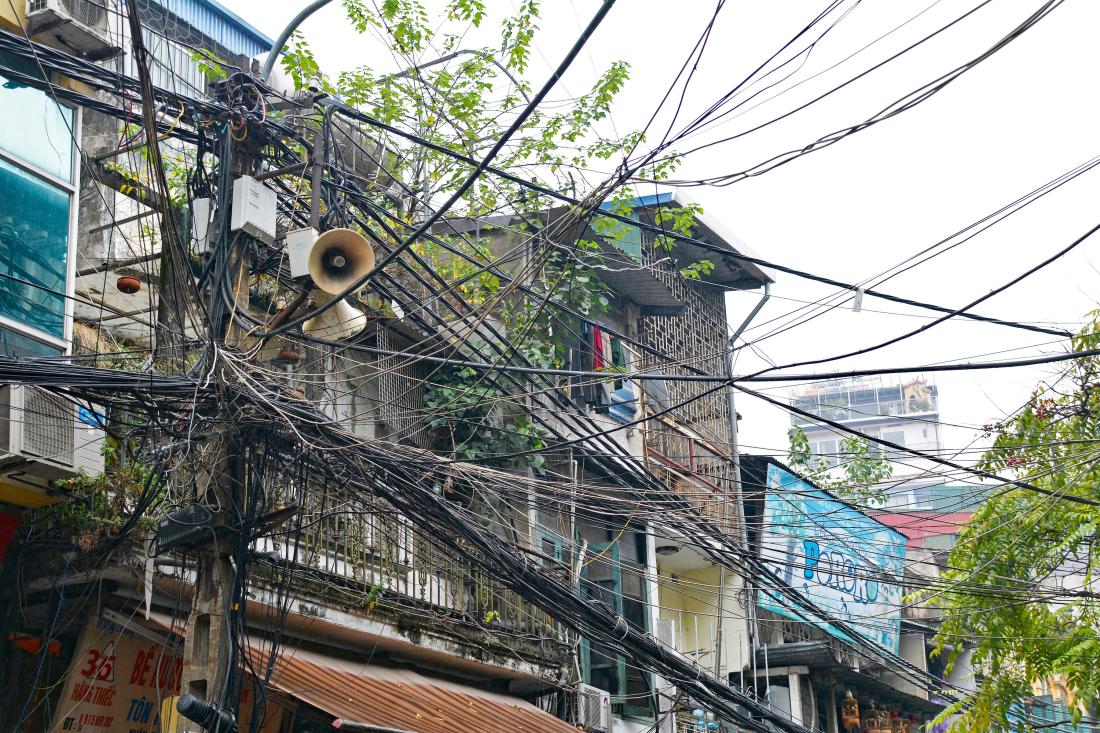
The evaluation took place in Hanoi, Vietnam in collaboration with Vietnam Electricity (EVN Hanoi), the city’s state-owned and exclusive electricity utility. During the hottest months of June–September, temperatures often exceed 35 degrees Celsius (95 degrees Fahrenheit), which can lead to increased demand for air conditioning and create complications for the utility. Since EVN Hanoi was not allowed to increase prices during times of higher demand, the utility had already implemented low-cost programs that encouraged less energy use during these months to avoid blackouts and additional excessive peak electricity procurement. However, these programs have been unable to achieve large-scale energy savings.
Details of the intervention
In collaboration with the energy utility EVN Hanoi, researchers conducted a randomized evaluation to study the cost-effectiveness of contracts and contests as tools for incentivizing energy conservation. The evaluation ran from 15 July–13 August 2023.
The majority of participating households used the utility's app to monitor their energy usage and pay bills. All households had access to their smart meter data through the app or the utility’s website, allowing them to track their electricity consumption. They also received personalized updates about the energy savings program through the app. All treatment groups received weekly text message reminders about remaining days left and to check their energy savings in the app.
The researchers randomly assigned 11,194 households into four groups:
1. Contract 1 Group with low threshold (2,795 households): This group was offered US$4.35 if they conserved five percent of electricity compared to their average daily energy use during the same period in the previous year, US$6.52 if they conserved ten percent, and US$10.87 if they conserved fifteen percent.
2. Contract 2 Group with high threshold (2,799 households): This group was offered US$6.52 if they conserved ten percent of electricity compared to their average daily energy use during the same period in the previous year, US$10.87 if they conserved fifteen percent, and US$15.22 if they conserved twenty percent.
3. Contest Group (2,799 households): Households were entered into contests of fifty households based on their average consumption in the period the year before, to ensure that they were competing against households with similar energy consumption. In every contest, the household that saved the most energy compared to their average daily energy use during the same period in the previous year received a prize of US$87.
4. Comparison Group (2,801 households): No contract or contest. This group received weekly text message reminders to check the app to see their energy savings.
EVN Hanoi provided data on daily electricity consumption by household, measured via smart meters installed in each home and informed participants about their results in the contracts or contest groups ten days after the end of the evaluation. All data were strictly protected, non-sharable, and handled in full compliance with customer data privacy obligations under Vietnam’s data protection framework.
Results and policy lessons
Researchers found that contests and contracts achieved similar levels of energy savings. However, contests were nearly twice as cost-effective compared to contracts.
Energy conservation: The effects on energy conservation among the contracts and contest groups were very similar. Households reduced their energy consumption by five to nine percent over the period of the experiment compared to the comparison group (approximately savings per day of between 0.65 and 1.17kWh, compared to an approximate average of 13kWh per day). The energy saving persisted for at least one week after the end of the experiment before returning to just below pre-experiment levels. While households consumed more energy on hotter days, the treatment saved energy relative to the comparison group even during the hottest days of the period, when the utility most needed to reduce consumption.
Contract design: Contract design played an important role in how much energy households saved. Households were more likely to save a specific percentage of energy if offered a payment for meeting that target. Providing contracts with different options made it more likely that households would take advantage of even small incentives, no matter the weather. Contracts that offered payments for reducing energy use also proved effective, showing that households did respond to incentives and were not limited to a fixed level of conservation effort.
Cost-effectiveness: Both incentive types led to similar reductions in energy use, but contests were more cost-effective. The average payout per household was US$3.14 for contract 1, US$3.21 for contract 2, and US$1.74 for the contest, making the contracts eighty to 85 percent more expensive. Despite the higher expected payment in the contract group, the effects were similar. The researchers emphasized that managing contracts and contests involve different administrative challenges. With contracts, the utility must define conservation targets and payments, which makes overall costs less predictable because they can shift with conditions such as weather. Contests, by comparison, are easier to budget for since the total prize money is set in advance.
Taken together, collaborating with utility partners and refining existing programs lead to energy savings. Nudge-based approaches alone did not leave to large energy savings, but could be well complemented with contests, since they are comparatively cheap to implement, and may therefore be a particularly cost-effective way to drive energy savings.
Use of Results: EVN Hanoi and the researchers plan to run a new randomized intervention in the summer of 2026 to explore the impacts of scaling this program. Specifically, the new intervention will explore:
- Whether the program delivers similar energy savings when offering the energy conservation incentives to a random set of households (as opposed to a set of households that opt in to the program).
- The change in energy savings delivered by the program when payouts per household decrease.
- The change in energy savings delivered by the program when households are repeatedly offered these energy conservation incentives.
The results of this new intervention will provide EVN Hanoi (and other energy utilities in Vietnam) with further information, as it assesses whether to continue with the program in future years.