

Growing Futures

Growing Futures is the next phase of J-PAL LAC and Universidad del Valle de Guatemala (UVG)’s collaboration to generate and use evidence with government, civil society, and academia in Guatemala.
Building on this previous work, the project supports partners to incubate innovations, test promising approaches rigorously, and use findings to inform policy decisions and potential scale-up. With early childhood development (ECD) at its core, Growing Futures adopts a multidimensional approach that emphasizes education, nutrition and health, social protection, family livelihoods, and service delivery so that programs more effectively reach intended populations.
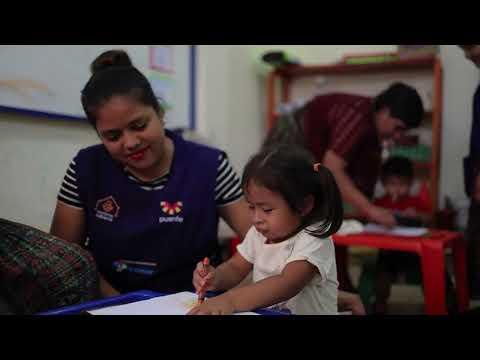
J-PAL LAC Video | Improving Lives in LAC: The Construyendo Futuros Initiative (Guatemala)
Our approach
Growing Futures brings together evidence generation, capacity building, and strategic partnerships. We do this through four mutually reinforcing pillars:

Promote innovation and strengthen capacities. Incubate high-potential ideas and support local government and practitioners through targeted technical assistance and training.

Evaluate and scale effective solutions. Run competitive calls and support impact evaluations to identify what works and inform scale-up efforts.

Strengthen partnerships and data systems. Work with government, civil society, and academia to improve data quality and availability, support better decision-making, and institutionalize evidence use.


Disseminate and adapt evidence. Synthesize findings and support the adaptation of research insights to new contexts so practitioners and policymakers can act on evidence.
Together, these pillars are intended to generate more locally grounded evidence, strengthen technical capabilities, and improve the design and implementation of social programs. Over time, Growing Futures aims to contribute to better developmental trajectories for children, greater economic well-being for families, and reduced intergenerational poverty in Guatemala.
Guatemala: Fertile soil for evidence-based policymaking
An urgent challenge, and a clear opportunity to act. Although Guatemala is a middle-income country, many children and families still face overlapping deprivations in nutrition, health, early stimulation, and access to quality services, with wide territorial and socioeconomic disparities. Strengthening the links between early childhood development, social protection, health, education, and livelihoods creates an important opportunity to improve how social programs respond to these challenges.
A foundation already in place. From 2023 to 2025, we implemented PROSA in partnership with UVG, establishing the foundations for our work in Guatemala and strengthening a culture of evidence use around early childhood development. PROSA strengthened local capacity, developed a research agenda, and created working relationships with government and civil society. Through this work, we trained more than 400 public officials and over twenty organizations, and supported the launch of new research projects on priority early childhood questions.
Strong partner demand and readiness to act. Guatemala is now part of J-PAL LAC’s Evidence to Policy Partnerships. In a short period, we have built sustained collaborations with the Secretary of Food Security and Nutrition (SESAN), the Ministry of Social Development (MIDES), and the Ministry of Education (MINEDUC). These partnerships respond to a strong demand for data, evidence, and technical support to improve social programs.
A contribution with regional relevance. Central America has been under-represented in rigorous, policy-relevant evaluation and evidence-to-policy work. A stronger presence in Guatemala creates an opportunity to generate locally grounded evidence and implementation lessons that can inform decisions across the region.
In short, Guatemala combines urgent policy challenges, strong partner demand, and clear opportunities to generate and use evidence to improve programs for children and families.
PROSA: Building the foundation for Growing Futures
PROSA, short for Screening and Launching Program, was the first phase of J-PAL LAC and UVG’s work in Guatemala. From 2023 to 2025, it helped build a culture of evidence use around early childhood development by strengthening local capacities, launching new research, and building partnerships with government and civil society. What began as PROSA has since evolved into Growing Futures, a broader platform that brings together strategic partnerships, capacity building, and applied research to address priority policy questions in Guatemala.
Our current work: Growing Futures
Building on PROSA, Growing Futures keeps early childhood development at the center of its work while adopting a broader, multidimensional approach to social policy in Guatemala. It supports better program design, incubates and pilots innovations, and, when appropriate, tests promising approaches so that evidence can inform adaptation and scale-up. This work also seeks to strengthen Guatemala’s broader evidence ecosystem and generate lessons with potential relevance across Central America.
Research questions in our agenda
- Education. Our research agenda seeks to generate evidence on how educational interventions can improve children's learning, socio-emotional development, and educational trajectories across different stages of childhood. We examine interventions that support children directly, strengthen parenting and the home learning environment, and improve school systems, with particular attention to the mechanisms through which they operate, the conditions under which they are most effective, and the factors that determine their scalability and long-term impact.
- Nutrition and health. We aim to learn which bundles of actions most effectively improve child nutrition in Guatemala’s diverse contexts, and which delivery channels sustain adoption of nutrient-rich diets over time. A core line of inquiry examines whether integrated approaches that combine nutrition with parenting support, preventive health care, or water, sanitation, and hygiene (WASH) interventions generate larger and more sustained improvements in children’s anthropometric, cognitive, and socio-emotional outcomes. We also want to understand how these approaches can be brought to scale while maintaining quality and cost-effectiveness.
- Social protection. We seek to understand how social protection systems can better support early childhood development by improving the design, targeting, and delivery of programs for vulnerable families. Our research examines how cash transfers, home-visiting programs, and other social services influence children's health, nutrition, learning, and development, with particular attention to the mechanisms through which they operate and the barriers that limit access and take-up. We also study how program design and implementation affect effectiveness, equity, and scalability, with the goal of informing social protection systems that reach the families who need them most.
- Livelihoods. We seek to understand how household livelihoods and community environments shape early childhood development and long-term human capital accumulation. Our research examines how improvements in income stability, employment, housing, infrastructure, environmental health, and access to public services influence children's nutrition, health, learning, and well-being, as well as the mechanisms through which these effects occur. We also study how multidimensional livelihood programs and interventions supporting vulnerable populations, including return migrant families, can strengthen household resilience and improve child development outcomes, with a focus on designing scalable and effective policies.
Policy projects and technical assistance
Growing Futures is already supporting a set of projects with government and partner organizations. Together, these efforts translate Growing Futures research agenda into concrete opportunities for program improvement, piloting, and future evaluation.
Technical assistance to Mano a Mano (MIDES):
Mano a Mano is a social program led by the Ministry of Social Development (MIDES) that reaches roughly 93,000 beneficiaries. We are supporting MIDES to develop a theory of change and a set of indicators for the program, helping establish a clear route for future evaluation efforts.
Redesign and piloting of Beca de Capacitación Productiva:
Beca de Capacitación Productiva is a national employability and empowerment program for women living in poverty and extreme poverty in rural areas. We are supporting the redesign and piloting of the program. A key innovation being tested is a Family Prosperity Pact, a simple agreement between the participating woman and her partner that seeks to build household support for the program, reduce conflict, and strengthen its effects.
Re-imagining national administrative data systems (SESAN):
In coordination with the Secretariat for Food Security and Nutrition (SESAN), we are exploring a collaboration to redesign a national data portal that integrates and standardizes data across ministries. This would strengthen the monitoring, evaluation, and use of nutrition-related administrative data across government.
Strengthening a national ECD program (UNICEF and MINEDUC):
Together with UNICEF, we are providing technical support to the Ministry of Education (MINEDUC) for revising and strengthening a national early childhood development program. This work draws on evidence from internationally evaluated programs, pilots innovations, and identifies pathways to scale effective solutions.
Testing program improvements before scale-up: MIDES SDI-Lab:
The MIDES SDI-Lab is being designed as an embedded innovation unit within the Vice Ministry of Policy, Planning, and Evaluation. With support from the Fund of Innovation in Development (FID), the lab will pilot evidence-based improvements to new and existing social programs, test operational changes, compare cost-effectiveness, and help create a permanent pathway for innovation, learning, and future scale-up.
Host university

|
| UVG Guatemala |
Program implementers
| 
| 
| 
|
| Ministry of Social Development, Guatemala | Mano a mano | Secretaría de Seguridad Alimentaria y Nutricional, Guatemala | Ministry of Education, Guatemala |
Donors
Growing Futures is supported by Amigos de J-PAL en Guatemala, Grupo IDC, and FID.
Project team
Co-Chairs
- Karen Macours, Co-Chair, Growing Futures; J-PAL Affiliated Professor; Professor, Paris School of Economics
- Mauricio Romero, Co-Chair, Growing Futures; J-PAL Affiliated Professor; Associate Professor of Economics, Instituto Tecnológico Autónomo de México (ITAM)
Staff
- Claudia Macías, Deputy Executive Director, J-PAL Latin America and the Caribbean
- Constanza Alarcón Cordón, Policy Manager for Early Childhood, J-PAL Latin America and the Caribbean
- Sandra Sandoval, Senior Policy Associate, J-PAL Latin America and the Caribbean
- Mónica García Salas, Policy Associate, J-PAL Latin America and the Caribbean
Scaling climate-resilient biofortified maize in Guatemala
This project examines the economic, cultural, and taste-related barriers to scaling climate-resilient biofortified maize among diverse smallholder populations in Guatemala. The research seeks to understand what limits adoption and what this implies for nutrition-sensitive agricultural policy and program design.
Team: Karen Macours (Paris School of Economics), Paola Malilla (Paris School of Economics) y Jessica Rudder (Oregon State University)
For Researchers
Request for proposals (RFP)
Growing Futures includes a competitive Request for Proposals (RFP) to support policy-relevant research aligned with priority questions in education, nutrition and health, social protection, and livelihoods in Guatemala. Through this mechanism, J-PAL LAC and UVG support selected projects with strong potential to generate policy-relevant learning, inform adaptation, and contribute to future scale-up efforts.
Details on the research agenda, eligibility, timeline, and application process are available on the RFP page.