

The role of a (digital) universal basic income in supporting pandemic resilience
COVID-19 and the resulting economic recession have disproportionately affected already vulnerable individuals. Governments across the world have responded with an unprecedented expansion in their social protection programming.
There is also a push towards digital transfers to be able to safely transfer cash while curbing the spread of the disease. While there is evidence on the efficacy of grants during non-pandemic times, we know little about the effect of transfers during large shocks.
For example, during COVID-19, cash grants might prove inadequate in stimulating the supply of goods and services as it is a demand-side intervention. So, are cash transfers helpful in responding to the pandemic? More specifically, to what extent could a pre-existing universal basic income build resilience to future shocks?
J-PAL Africa’s Digital Identification and Finance Initiative (DigiFI) was launched in 2019 to fund innovative research to help answer questions like this. In 2020, we funded follow-up surveys to a 2017 study on universal basic income in Kenya to identify whether the program helped recipients adjust to shocks resulting from the COVID-19 pandemic.
The study: The effects of a universal basic income (UBI) in Kenya
In 2017, Abhijit Banerjee, Michael Faye, Alan Krueger, Paul Niehaus, and Tavneet Suri, in collaboration with Innovation for Poverty Action (IPA) and GiveDirectly, launched a randomized controlled trial in Kenya to test the effectiveness of a UBI in eradicating extreme poverty.
A UBI is a specific form of social protection: an unconditional cash transfer large enough to meet basic needs and delivered to everyone within a community. One of the arguments put forth by advocates of UBI is that the transfers provide a form of insurance against uninsurable or unpredictable risks (read a more extensive discussion of the potential benefits of UBI here).
Responding to the need for rigorous large-scale experimental evidence to support the debate, researchers designed and launched a field experiment evaluating the impacts of UBI in 2017 in Bomet and Siaya counties of Kenya.
Participants in the study were randomly assigned into four groups, three of which received digital cash transfers with varying frequency and size:
- One group received a large lump-sum transfer at the beginning of 2018,
- One group was assigned a smaller long-term transfer scheduled to be received regularly for twelve years,
- One group was assigned a short-term transfer for two years that had largely been concluded prior to the COVID survey, and
- A final group was assigned not to receive any transfer and is the comparison group.
Assessing UBI in light of COVID-19
The COVID-19 pandemic unfortunately served as a unique opportunity to examine to what extent a UBI can mitigate the impact of a large shock.
Against this backdrop, the researchers conducted (and will continue to conduct) phone surveys in May 2020 to measure the effects of the pandemic and how they were mitigated by a UBI. To assess how outcomes in the COVID survey have changed since the onset of the pandemic, they compared this to data from the standard endline survey of households conducted between August and December of 2019.
It is unclear if the positive effects of social protection transfers found during “normal times” (Bastagli et al., 2019) will hold during the pandemic. Concerns around supply chain disruptions may limit the effectiveness of demand-side interventions such as a cash grant. In addition, when examining non-material outcomes such as depression, the negative psychological impacts may have been too great for the cash transfer to have had any meaningful effect.
Results from this project provide some of the first evidence of the impacts of social protection programs during the pandemic.
The UBI led to modest but statistically significant improvements in well-being
Reduced hunger and physical and mental illness
There were modest (though significant) impacts of the UBI on recipients’ personal well-being in all three groups that received cash transfers (lump-sum, long-term transfer, and short-term transfer).
Roughly two-thirds of households (68 percent) that did not receive the UBI experienced hunger. Recipients of the UBI were 4.9–10.8 percentage points less likely to report experiencing hunger during the last thirty days prior to the COVID survey.
Recipients of the UBI were also 8–13 percent less likely to have had a household member sick during the thirty days prior to the May 2020 survey. Given the very low prevalence of the coronavirus in the areas studied at the time of the surveys (twelve cases total), these illnesses were almost certainly not COVID-19 cases.
Finally, recipients were significantly less depressed in the short-term and long-term arm, though not the lump-sum arm.
No harmful impact of UBI on public health and some evidence that it was helpful
Recipients of the UBI were significantly less (10–16 percent) likely to seek medical attention in the last thirty days, as they were less sick. This would have resulted in a decreased burden on hospitals and could have been helpful in freeing up public health system capacity which is vital during the pandemic.
In addition, there is some evidence that the UBI reduced social interactions—such as visiting friends or relatives—which could reduce COVID-19 infections in the future.
Mixed effects on resilience to large aggregate shocks
Regular and long-term transfers are likely to affect investment decisions and hence resilience to large shocks. On one hand, a long-term transfer could allow the individual to buy assets to buffer against any income shocks. On the other hand, the long-term transfer may encourage recipients to increase their exposure to riskier choices, such as starting a business.
It is particularly interesting to compare the impacts of the UBI before and during COVID times to see how beneficiaries coped with the pandemic. An important caveat is that these results could be driven by seasonality and not the pandemic. As the researchers learn more, we will update the results.
-
No effect on incomes: Long-term, regular transfers led to an increase in risk-taking commercial activities. Pre-COVID, beneficiaries had diversified their income streams by creating new non-agricultural enterprises, which resulted in an increase in profits without substantial changes in labor or agricultural earnings.
However, when the pandemic hit these enterprises were not spared and the income gains they witnessed pre-COVID were wiped out but they did not close down.
-
Higher resilience to hunger in the agriculture lean season: The UBI provides households with a safety net and hence a reduced risk of hunger. This allows them to take on more income risk. As discussed above, beneficiaries of the UBI were more likely to not go hungry during the pandemic.
This was also seen prior to the pandemic during the lean season (the season between planting and harvesting), which saw a significant reduction in the number of households who experienced hunger in the UBI transfer group.
However, during the harvest season (August–December 2019), there were no significant differences in hunger between the groups that did and did not receive the transfers.
UBI: Unlikely tool of choice to respond to unanticipated shocks
While access to a UBI prior to and during a large shock improves well-being in the wake of said shock, it is an unlikely choice of tool to respond in such contexts. This is because the income gains from the UBI pre-pandemic are wiped out during the pandemic. This fits well with the theory that a UBI encourages risk-taking by providing a safety net. Hence, it is likely that recipients of a UBI have increased exposure to shocks.
Further, it would likely be more effective to use a targeted response tailored to protect those worst affected by a crisis. This is by no means a criticism of UBI but rather a remark on its appropriateness in different contexts.
Another key message from these results is the importance of supplemental income during large shocks such as the COVID-19 pandemic. These results highlight the need for infrastructure that allows cash grants to be provided universally or to a large proportion of the population in response to unanticipated crises.
To what extent do cash transfers cushion the blow to poor families during hard times? Taking advantage of a pre-existing large-scale evaluation of a universal basic income project in Kenya, researchers measured how different types of cash transfers impact recipients’ income, reported well-being, food security, mental health, and social interaction in the context of the COVID-19 pandemic and the accompanying agricultural seasonality. Researchers found that although the income gains from small businesses started before the pandemic were wiped out, transfer recipients experienced modestly better food security and physical and mental health than those who had not received transfers, along with some positive impacts on public health indicators. The results suggest that that cash helped hard-hit households weather a storm, but that UBI was not enough to shield households completely from the economic hit, in part because it had induced them to increase their risk exposure.
Policy issue
Universal basic income (UBI) is a specific form of unconditional cash transfer: enough to meet basic needs and delivered to everyone in a given community. In recent years the merits of UBI have been intensely debated in low-and middle-income and high-income countries, but rigorous evidence from representative populations to inform this debate has been lacking. One argument in favor of UBI is that it can provide a form of insurance, cushioning the blow for poor families when uninsurable or unanticipated events occur. Such arguments are typically difficult to test because they involve claims about rare or unforeseeable events. However, because the COVID-19 pandemic occurred a year into a large-scale evaluation of UBI in Kenya, researchers were able to shed light on this question as well as on other critical questions for social protection programming in the pandemic context, such as: how long should transfers last? Should they come in one lump sum or be disbursed in increments? If and how do transfers affect health-seeking behavior and social distancing? Overall the study provides some of the first evidence on the impacts of social protection programs during the pandemic. However, a universal basic income is a very specific type of cash transfer – long term, sized to be sufficient for basic needs, and given to all members of a society. While governments around the world, from Namibia to New Jersey, have piloted UBI, little rigorous evidence exists on the impacts of a long-term commitment to providing a UBI.
Context of the evaluation
The spread of COVID-19 and the restrictions on economic activity put in place to contain its spread have threatened the livelihoods of many of the poorest, most vulnerable families on the planet. To respond to this unprecedented global crisis, governments around the world have dramatically expanded their social safety net programs. Cash transfers make up a large share of this expansion, reaching 1.2 billion people. As the pandemic stretches on, policymakers are faced with difficult questions on how to design these programs.
This research took place in Siaya and Bomet Counties in Kenya, which have populations of 940,000 and 860,000, respectively1. Approximately 630,000 people in these counties are living below the Kenyan government’s poverty line2 defined as less than US$15 per household member per month for rural areas, and US$28 for urban areas3. At the time of the initial survey, households owned on average 1.7 acres of land, 86 percent had a phone, 13 percent had a bank account (including digital accounts), 73 percent had a farm enterprise, 21 percent owned a non-farm enterprise, and 85 percent experienced hunger in the year before.
The study was conducted with GiveDirectly, an international NGO that makes unconditional cash transfers to poor households in developing countries. IPA has partnered with GiveDirectly on a number of evaluations of unconditional cash transfer programs, and positive results have influenced global development priorities.
Details of the intervention
Researchers partnered with GiveDirectly to evaluate the effects of a universal basic income on economic outcomes, time use, risk-taking, gender relations, and life aspirations.
Adults over the age of eighteen from 295 villages, encompassing 14,474 households in two districts in Kenya, were randomly assigned to one of four groups:
- Comparison group: In 100 villages (approximately 11,000 people), participants received no additional resources.
- Long-term UBI: In 44 villages (approximately 5,000 people), participants received payments sufficient to cover the most basic needs (about US$0.75 per adult per day) for 12 years.
- Short-term UBI: In 80 villages (approximately 8,800 people), participants received payments sufficient to cover basic needs (about US$0.75 per adult per day) for two years. These payments were ongoing at the time of the main endline survey in late 2019 but had largely stopped by the time the researchers conducted phone surveys in May-June 2020.
- Lump sum UBI: In 71 villages (approximately 8,800 people), participants received one-time payments of about US$500, equivalent to the total short-term UBI transfer amount.
Researchers also contrasted the effects of the lump sum payments to the short-term and long-term UBI (“stream” payments). This contributes direct evidence to current conversations about the relative impacts of capital and asset transfers.
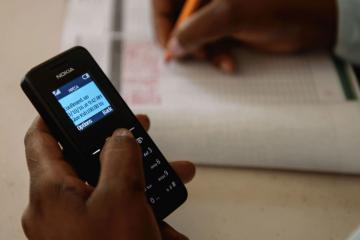
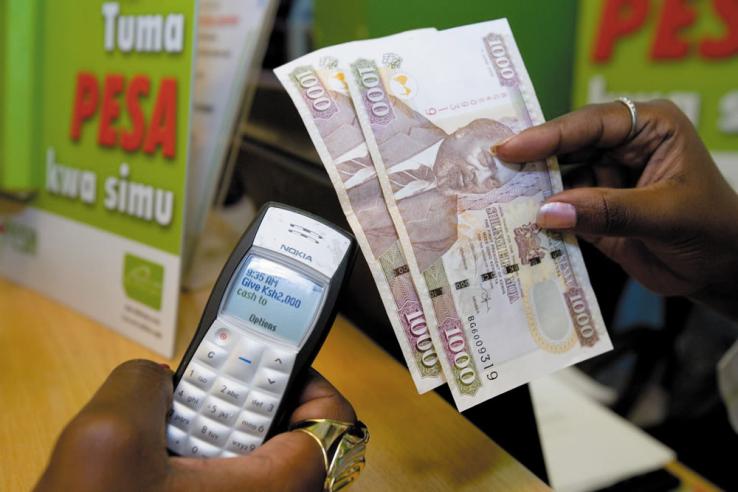
GiveDirectly began delivering transfers in 2018 digitally through M-PESA, a mobile money service used widely throughout the country. The research team gathered follow-up data from August 2019 to December 2019, before the pandemic hit, then in May and June 2020 (by phone survey), in the midst of the strictest phase of Kenya’s lockdown to date, focused on the issues most directly related to the pandemic. This allowed researchers to examine pre/post COVID-19 changes in several key areas including earnings, food security, mental health, and social distancing.
Results and policy lessons
Overall, the study found that transfer recipients experienced better food security and physical and mental health than those who had not received transfers, along with some positive impacts on public health indicators. Small businesses that recipients had started prior to the pandemic remained operational, but income gains from these businesses were wiped out.
Income: Transfers, and the long-term transfers in particular, led to an increase in risk-taking commercial activities and also exposure to shocks. Before the pandemic hit, recipients had diversified their income streams to new non-agricultural enterprises and saw a large corresponding increase in profits from these enterprises, without much change in earnings from wage labor or agricultural work. After the pandemic, the enterprises largely remained open but earnings were flat, as new enterprises appear to have suffered along with the old (in the comparison group, non-agricultural enterprise earnings fell 71 percent from before the pandemic to after). However, it’s important to note that drops in income (accompanied by changes in other economic outcomes) typically happen during this time of year as part of the usual agricultural cycle, and the study wasn’t able to isolate the pandemic’s impacts from these usual “lean season” drops.
Hunger: In a context where hunger was widespread (68 percent reported experiencing hunger in the last 30 days in the comparison group), transfer recipients were 5-11 percentage points less likely to report experiencing hunger. This effect was significantly larger for the long-term arm that expected to continue receiving transfers, than for the others that did not.
Illness: Recipients were also 4-6 percentage points less likely to report a household member was sick during the last 30 days off (44 percent in the comparison group). Given its very low prevalence in Bomet and Siaya at the time of our surveys (12 cases total) these illnesses were almost certainly not COVID-19 cases.
Mental health: Transfer recipients were less depressed in the short-term and long-term groups, though not in the lump-sum group. Overall, transfers continued to have the kinds of impacts on basic measures of well-being typically seen in pre-pandemic research.
Health-seeking behavior and social interaction: Transfers generally made a small change or no change on behaviors related to public health. They reduced the probability that recipients had sought medical attention at a hospital in the last 30 days by 3-5 percentage points (29 percent had sought medical attention in the comparison group), potentially freeing up health system capacity. There is also some evidence that transfers reduced social interaction (specifically, visits to friends or relatives) which could lower the rate of contagion. Estimated impacts on interaction for commercial purposes such as shopping or work are not precise enough to support strong conclusions. In short, there was no evidence that transfers had harmful effects on public health, and some evidence that they helped.
In sum, the results suggest that that cash helped hard-hit households weather a storm, but that UBI is not enough to shield households from an economic hit of this level.
Kenya National Bureau of Statistics, “County Statistical Abstracts 2015”. https://www.knbs.or.ke/county-statistical-abstract/
Commission on Revenue Allocation, “Kenya County Fact Sheets“ (2011). http://siteresources.worldbank.org/INTAFRICA/Resources/257994-1335471959878/Kenya_County_Fact_Sheets_Dec2011.pdf
Kenya National Bureau of Statistics, “Basic Report on Well-being in Kenya”, 2007.
J-PAL Africa, based at the University of Cape Town, recently launched the Digital Identification and Finance Research Initiative (DigiFI Africa). Supported by the Bill and Melinda Gates Foundation, this USD$7 million research fund is designed to study the impact of innovative government and private sector payment systems and digital identification (ID) reforms on citizens and governments across Africa.
Policymakers across Africa are increasingly investing in large-scale digital identification and digital payment systems. Because these systems are so new, little rigorous research exists on how best to design and implement such systems in low-income contexts. How do these rapid changes affect the lives of citizens? How can they best be structured to lead to the most benefit? Are any groups adversely affected by these reforms?
DigiFI Africa will cluster research around these questions, supporting research that evaluates impacts on citizens and generating results that provide guidance on critical design questions as reforms go to scale.
Improving efficiency in public spending through digital finance and digital identification has the potential to have large impacts across Africa. For example, these technological innovations have the potential to enhance record-keeping and transparency by collating administrative data and automating transactions, decreasing the potential for delays and errors in payment systems. Digitizing payments can reduce both the need for travel to access financial services and the time burden of engaging with administrative processes. In addition, digitizing the process of business registration and firm regulation can bring more firms into the tax system and raise revenues for the government.
The DigiFI Africa framing paper lays out the research agenda for the initiative. DigiFI Africa promotes research to address the following questions:
-
From a government’s perspective:
-
How can digital ID systems assist with targeting and efficiency in public programs? Do digital ID systems assist or hinder in reaching marginalized populations?
-
Can digital ID systems and digital payments reduce rent-seeking? What are the generalized equilibrium effects of digital payments on rent-seeking?
-
How can digital ID systems and digital payments assist in building incentive systems to motivate public servants?
-
How can payment design (such as targeting a specific household member to receive the transfer or changing timing the payment) affect its impact?
-
-
From a citizen’s perspective:
-
How do government services linked to digital IDs affect citizens? What are the best ways to design these linked services for the greatest impact at the lowest cost? Do digital ID systems and digital payments encourage or dissuade take-up of government programs?
-
Do digital ID systems improve the overall efficiency of government programs? If so, do these efficiency gains reduce poverty?
-
How do digital IDs affect voter participation, the fairness of elections and electoral outcomes? Does increased enfranchisement affect policy decisions?
-
Can digital IDs promote further digitization in financial systems and thus enhance financial inclusion? How does this affect short- and long-term poverty outcomes?
-
Can digital payment schemes empower traditionally weaker household members or affect the allocation of household resources?
-
-
Fiscal capacity:
-
Can expanding the formal economy increase the tax base through incentives and simplified processes introduced by digital payments and digital IDs?
-
-
Externalities:
-
What is the impact of digital ID and digital payment systems on market-level general equilibrium effects? What are their impacts on wages and employment? Are there impacts on occupational choice or migration?
-
What are the spillovers on non-beneficiaries of digital ID and digital payment systems?
-
-
Private sector impacts:
-
Can digital ID systems encourage businesses to enter the formal sector? Do these reforms reduce entry costs to entrepreneurship and enable productive investment?
-
Can digital ID systems help strengthen law-enforcing institutions and in turn affect private investment?
-
DigiFI Africa will run a competitive research fund with requests for proposals (RFPs) twice annually through 2022. The initiative will support researchers in conducting two phases of work:
-
Formative research that includes pilots and high-frequency monitoring systems to assess the status and health of digital payments and digital ID programs at various stages of reforms.
-
Rigorous randomized impact evaluations to test the impact of roll-outs of promising digital payment and digital ID reforms.
Funding is open to J-PAL affiliates, invited researchers, researchers with a PhD based at an academic institution in Sub-Saharan Africa (details here), and PhD students who have a J-PAL affiliate on their dissertation committee. The Round 1 RFP closes on September 20, 2019. For more information, contact Aimee Hare.
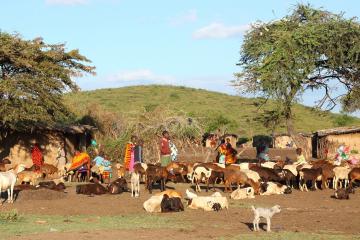
Pastoralism is a livestock production system that has been carried out for millennia in some of the world’s harshest environments, including the vast arid of East Africa. This post, written by Philemon Chelanga, Indira Tirumala, and CEGA affiliated professor Elizabeth Lyons, explains how the coronavirus pandemic is affecting pastoralists in Kenya.
This blog was cross-posted from the Center for Effective Global Action (CEGA) blog.
As has been the case for many of the world’s most vulnerable populations, the interventions required to reduce the spread of the COVID-19 pandemic have substantially disrupted the ability of pastoralists in Kenya to carry out their income-earning activities and threaten their economic security as a result. Kenyan pastoralists often inherit their livestock, or obtain their herds through breeding and exchanging. They maintain their livestock by herding them over many hundreds of miles before selling them in formal markets. Normally, these markets are vital for pastoralists — selling livestock is their primary way of earning income, and the markets also provide herders an opportunity to buy groceries. Unfortunately, formal markets also make pastoralists vulnerable to shutdowns during COVID-19. Unlike the informal, one-on-one livestock trade on which pastoralists have historically relied, formal markets bring many buyers and sellers together in one place, making markets a health risk during viral outbreaks.
In collaboration with the International Livestock Research Institute, and with funding from the Agricultural Technology Adoption Initiative (ATAI), CEGA and J-PAL’s flagship Agriculture program, we are using data from a crowdsourcing platform that collects information on the economic and health conditions of pastoral communities throughout Kenya to understand the effects of the crisis on this population. The platform was rolled out 5 months before the first case of COVID-19 was confirmed in Kenya and has allowed us to track how conditions have changed since the outbreak. While there are no confirmed cases of the virus in the approximately 100 pastoralist communities in our dataset, the pastoralists are majorly affected in other ways.
Consequences impacting pastoralists’ lives include:
Economic:
- Food prices: COVID-19 continues to disrupt global trade, increase transportation costs from the major port city, and lead to the closure of many local markets, which all contribute to a substantial increase in food prices.
- Food security: Pastoralists report significantly lower levels of milk consumption, an important indicator of food security in their communities.
- Closed markets: Pastoralists report that selling and buying livestock is much harder because formal markets have closed, so they increasingly rely on third-party brokers.
Mental health:
- Happiness levels: Pastoralists are almost 50 percent less likely to report being “very happy” post-COVID-19 than they were beforehand.
- Virus concerns: 85 percent of pastoralists state they are worried or very worried about the virus, citing the disruption to the livestock trade as the main threat.
Travel and conflict:
- Increased conflict: 45 percent of respondents state their region is less secure than it was before COVID-19.
- Increased travel: Pastoralists travel more to avoid conflict, even as they’re traveling less for other reasons.
There are interventions that can reduce the impact of COVID-19 disruptions while maintaining safe physical distancing, including, for instance, digital livestock marketing. While our data does not allow us to make conclusions about the optimal interventions for supporting pastoralists through the COVID-19 era, we do find that food-aid appears to be lessening household milk shortages, and pastoralists receiving cash transfers are not experiencing the same decline in happiness as those not receiving cash. As the COVID-19 outbreak in Kenya is not showing signs of slowing, and as the long dry season — which further threatens pastoralist well-being — is now well underway, we hope the evidence from our research can be used to ensure that sufficient aid is effectively delivered to these communities.