Agricultural productivity and labor: Evidence and open questions for researchers
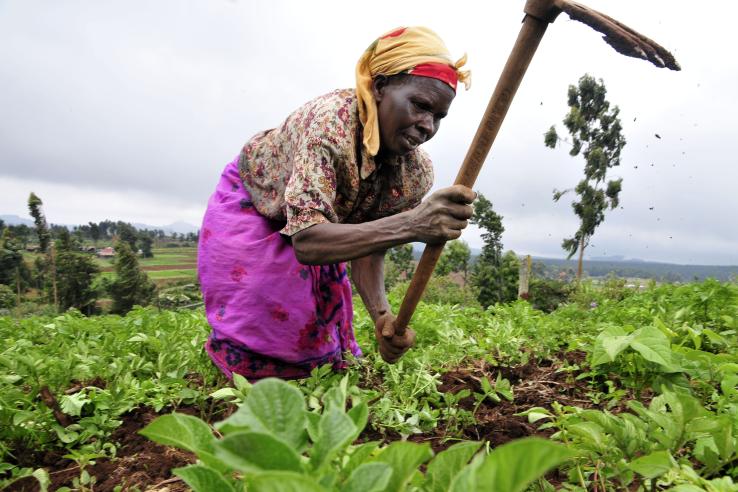
As farms become more productive, grow in size, or diversify into more lucrative crops, farmers require more labor hours and, often, more skilled labor. Labor needs may change with agricultural production practices, as commercial crops often require more labor than staples (e.g., horticulture requires additional weeding and regular harvesting in comparison to seasonal staple cultivation) and as farming practices change (e.g., regular irrigation requires consistent labor, and mechanization may displace labor at some stages of production). Despite being crucial to profitable farming systems, we know less about land and labor market failures than other constraints to agricultural technology adoption and productivity. Further evidence is required to understand important gaps in our knowledge of how farmers can best utilize household and hired labor, in addition to agricultural technologies.
Evidence from randomized evaluations on labor and agricultural productivity
The Agricultural Technology Adoption Initiative (ATAI), a collaboration between J-PAL and the Center for Effective Global Action (CEGA), was launched in 2009 to rigorously test programs that aim to increase farmers’ welfare through the broader use of technologies that help increase agricultural productivity in sub-Saharan Africa and South Asia. Since then, ATAI has funded randomized evaluations to answer critical questions around labor decisions and constraints to growth. This research has focused on how labor affects and is affected by gender and household dynamics, mechanization, and income diversification. But, there are a number of open questions yet to be rigorously tested.
Household labor and gender dynamics
Research has shown that there is a gender gap in agricultural productivity. Women, who make up nearly half of the agricultural labor force in Africa, produce less per hectare on average than men. This may be because women often have more limited access to productivity-enhancing resources and knowledge of improved practices. They also tend to have less agency in allocating their own time and labor. Gender equity among agricultural laborers and household members is therefore an essential piece in unlocking broader productivity and growth in sub-Saharan Africa, particularly.
Households often allocate labor along gendered lines—women may be more involved in planting, food processing, and ensuring dietary diversity, while men may be involved in field preparation, sales, managing non-household workers, or harvest. One ATAI-funded pilot study in Zambia looked at intra-household dynamics related to agricultural technology adoption and broader decision-making. Survey results suggested that a wife’s bargaining power in the household explained the most variation in yields between the plots cultivated by herself and her husband, even more so than the practices they used. More evidence is needed to understand these intra-household dynamics, as well as the broader market dynamics related to demand for male versus female labor, differences in wages and work conditions, and productivity based on levels of cooperation for both women and men.
Family labor versus hired workers
Boosting agricultural productivity calls for an increased focus on changing farming systems toward higher-value crops that make more extensive use of labor throughout the year. Approximately 75 percent of farms worldwide rely on household labor to remain viable. Whether laborers come from the household or are hired externally affects costs and demand for work in local markets.
Research has suggested that farmer profits can be improved by valuing work on agricultural activities done by household members the same as wages paid to hired labor. Intensive tasks require greater supervision, so households can cut costs by reallocating intensive activities to household members who may have an intrinsic motivation to do the job well, rather than seasonally hired workers. Similarly, supervision may be more difficult to allocate to hired labor so that farmers may need to prioritize family workers for certain tasks.
J-PAL affiliated researchers have conducted evaluations in Ghana, Mali, Niger, and Zambia using different interventions and policy levers to assess households’ decision making and pricing of family labor versus hired laborers.
For example, the ATAI-funded evaluation in Niger tested the impact of providing training for the construction of an environmental technology (demi-lunes or water collection pits) on household labor allocation among other outcomes. Constructing demi-lunes is labor-intensive, and adhering to certain technical norms increases their effectiveness. Therefore, increased adoption of and investment in demi-lunes led households to reallocate household labor in the short-term to facilitate the construction of demi-lunes. Specifically, farmers moved household members to lead the more skilled yet cumbersome work of building the demi-lunes and hired outside laborers to cover seasonal agricultural tasks, such as sowing and weeding.
Social norms and pressures additionally affect labor costs and patterns by influencing peoples’ willingness to accept various jobs and salaries. An ATAI-funded study in India found that workers may take jobs with wage cuts in private, but reject them in public due to fear of social stigma. Understanding the balance between household labor and hired labor is essential to accurately value labor force participation and estimate labor productivity, particularly among small-scale farms in sub-Saharan Africa and South Asia where household members play a larger role in smooth farm operations.
Agriculture mechanization: Labor-demanding and labor-saving technologies
Mechanizing farm operations can allow laborers to work on other important tasks rather than time-consuming or high-skill tasks, like tilling, reaping, and sowing seeds. Some technologies and practices are labor-saving (tractors and irrigation systems), while others are labor-demanding (transplanting seedlings to fields to improve germination rather than broadcasting seeds into a tilled field). Adopting innovations may allow households to reallocate their time spent on manual labor to higher-skilled roles, supervising hired labor, overseeing mechanized processes, and for non-agricultural economic activities. In an ATAI-funded evaluation in India, researchers found that vouchers and cash grants for machine rentals increased mechanization during land preparation, freeing up hired labor in other stages of production and freeing up household time, particularly from members engaged in farm supervision activities. They also found evidence of higher time engagement in off-farm activities from farmers that already participated in those markets. However following the successful introduction of new technologies, complementary investments in labor may be required to ensure that technology is working the way it was intended. More research is needed to better understand the effect of introducing technologies at different stages of agricultural production.
Promoting local economic diversification among agricultural households
Broader planning against the agricultural calendar is a critical step in households’ decisions to hire workers or seek off-farm employment for family members. Agricultural activities are seasonal, and demand and supply of labor for production and harvest ebb and flow depending on the time of year and skill of the worker. In many contexts, there is a lull in demand for labor after planting, often called a “lean season,” where households have less disposable income. Therefore, there is a need to generate economic opportunities or activities for farming households outside of agriculture in their local market or in nearby urban centers.
A randomized evaluation in Bangladesh looked at grants delivered to households who opted to migrate to urban areas for work during the lean season. Researchers found that the grants improved migrants’ income and made it less competitive to get work within the village, increasing wages and the number of work hours available in the market.
Future research could build on this and assess other ways to increase productive, local, and lucrative employment opportunities between peak planting and harvesting periods to ensure work is available throughout the year.
Open questions for new research on agricultural labor
As some of the evaluations cited here suggest, results may not always translate to other contexts. Therefore, researchers often call for more research to test the aforementioned interventions and relevant questions in different agricultural labor markets.
In addition to those highlighted above, there are a number of open questions at the nexus of labor and agriculture to develop a deeper understanding of wage setting, skill-building, and how households allocate labor to agricultural activities. Areas for further research include:
- assessing interventions that allow households to hire workers and take jobs in other sectors or allow them to more extensively use family labor throughout the year (through crop diversification, mechanization, role specialization, etc.)
- evaluating the effects of farm size, health of workers, contracting, and trust in the local labor market
- shifting from subsistence cultivation of staple crops to intensive cultivation of commercial crops through a process of agricultural transformation, where the former heavily utilizes female labor while the latter is traditionally a domain of male labor in many contexts; and understanding what complementary interventions can improve outcomes for women when labor demands and activities favor men
- improving access to productive assets, like machine rentals
- testing interventions designed to engage women and other vulnerable or marginalized groups, such as landless laborers, in more lucrative, appealing, or empowering work.
On February 21, ATAI released its newest call for proposals, and encourages more research that expands the body of evidence related to labor and agricultural systems. For information on eligibility, please review the ATAI call for proposals.
If you are a researcher or implementing organization interested in partnering with ATAI to evaluate a related program, please reach out to atai [at] povertyactionlab [dot] org. In addition to the general RFP, the initiative also specifically invites proposals that investigate approaches designed to benefit or empower women. Applicants with a gender-focused approach should choose the gender-focused application on the online portal.
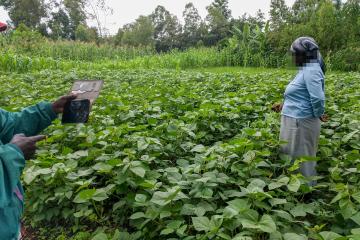
In states with a weak rule of law, the fear of crime can alter farmers’ production decisions and impose substantial costs to avoid increasing the risk of theft. In Kenya, researchers matched farmers with subsidized, trained watchmen to evaluate the effect of improved farm security on farmers’ decision-making, agricultural productivity, and conflict with neighbors. Security was shown to increase and in response, farmers made different cropping, time use, and investment decisions, had higher agricultural yields, and experienced less conflict with their neighbors. Further, farm theft within villages hosting watchmen was reduced even on farms without watchmen, with no evidence that crime shifted into nearby villages.
Policy issue
In states with a weak rule of law, the fear of crime can alter individual and firm-level production decisions. For farmers, this can mean planting crops with a lower theft risk or spending more time guarding crops for security instead of using that time for other productive activities. Improved farm protection could influence farmers’ cropping decisions, time use, investments in land improvements, and agricultural productivity according to the broader literature on property rights and crime.1 2 3 Greater farm security could also impact social relationships by reducing grievances, conflict, and suspicion between farmers and neighbors. Could providing farm protection through security guards (or “watchmen”) lead to more productive agricultural behaviors, all while reducing farmers’ disputes with their neighbors?
Context of the evaluation
In rural Migori County, Kenya, where the evaluation took place, small-scale subsistence agriculture is the primary economic activity. Most farmers grow maize, beans, and cassava, and crops are consumed locally by households. Other, more profitable crops, like tomatoes, are rarely grown, leaving opportunities to increase profits by adopting new crops. In the cases where crops are sold rather than consumed, farmers tend to sell products directly from their farms, even though they could receive higher prices from travelling to sell at local markets.
Farmers’ cropping decisions and their choices not to leave farms unguarded to visit markets reflect their security concerns. Migori farms are not well-secured by fences or other means, and opportunistic theft from within villages is a salient perceived fear. Further, farmers are largely unable to secure their property rights or punish thieves because local institutions are ineffective, thieves are difficult for farmers to identify, and there is a perceived social cost from reporting another villager for theft. This has caused unaddressed grievances, and related disputes among neighbors are common.
Farmers correctly believe that valuable crops, easily picked crops, crops with longer harvest windows, and crops available for harvesting before the main staple (maize) are more likely to be targeted by thieves. Farmers also perceive theft to be targeted towards those who undertake new or different activities, constraining farmers’ willingness to experiment with or adopt new technology including potentially more profitable crops.
Details of the intervention
Researchers conducted a randomized evaluation to test the impact of matching farming households to subsidized, trained watchmen on farmers’ decision-making, perceived security, and conflict with neighbors during the 2018-2019 farming season.
From 76 villages, researchers recruited 585 farmers through the Kenyan Agricultural and Livestock Research Organization (KALRO) network, which has relationships with local farming groups. Some villages were randomly assigned to receive watchmen and others to serve as comparison villages. The watchmen were all from the Maasai ethnic group and were recruited from Maasailand. In Migori, Maasai were perceived as particularly effective guards partly because they were not local to the Migori farming communities, limiting fears that watchmen would collude with potential thieves or avoid confronting thieves due to the social cost. Additionally, ethnic stereotypes around Maasai pastoralist traditions boosted perceived effectiveness, making the watchmen a reasonable security intervention without some of the complexities of other interventions, such as fencing which requires clear land ownership boundaries. Groups in Migori and Maasailand were also politically aligned, did not share ethnic hostilities, and were in close enough proximity that watchmen could be feasibly transported to Migori farms.
Two months before planting season, farmers from the villages assigned watchmen received three separate calls informing them that they were matched with a subsidized watchman they could hire and that the watchman was strictly for security work. This allowed for enough advance notice that famers could potentially change their cropping decisions in response to the opportunity.
Results and policy lessons
The watchmen increased security and, in response, the matched farmers changed their cropping decisions, spent more time off the farm, had higher agricultural yields, and experienced less conflict with their neighbors. Further, farm theft within villages hosting watchmen fell even on farms without watchmen, with no evidence that crime shifted into nearby villages.
The opportunity to hire watchmen was well-received. Of the matched farmers, 87 percent chose to hire a watchman at the subsidized rate. Fifteen percent of the non-matched farmers in the comparison group managed to hire a watchman during the study, usually after seeing the effectiveness of watchmen on other farms, despite none of these farmers hiring watchmen in the prior season. Further, being matched with a watchman or observing someone else with one increased how farmers valued security, with matched farmers reporting that security was more effective than previously expected.
Farmers matched with a watchman had higher perceived farm security and lower self-reported rates of theft. Compared to non-matched farmers, matched farmers were 39.4 percentage points (68 percent) less likely to report their farms had low security and 26.2 percentage points (47 percent) less likely to feel highly at risk of theft from growing more valuable crops than before the program. Moreover, matched farmers were 32.5 percentage points (56 percent) less likely to report experiencing any theft during the study period and were 37.1 percentage points (84 percent) more likely to report that theft had decreased from the prior year.
Improved security allowed farmers to adjust their cropping, time use, and investment decisions. Matched farmers were 13.9 percentage points (77 percent) more likely to report that they grew a new crop for the first time or expanded the planting area of a previously grown crop due to improved security. During the study period, the matched farmers were 11.5 percentage points (61 percent) more likely to have bought farm assets, with some evidence suggesting this change stemmed from unexpected yield increases and future plans to hire security, which reduced the perceived risk of owning valuable assets. The matched farmers also spent more time off the farm and sold more crops at off-farm markets than in prior years.
The changes in farmers’ production decisions led to more valuable agricultural yields. The total income per acre from agricultural production was 15 percent (5002 KES or about US$50) higher for matched farmers than non-matched farmers. This change was driven by a substantial increase in the value per acre of less-theft prone crops, likely because with farm security, farmers could spend less time protecting crops at risk of theft and more time tending less-theft prone crops, increasing yields.
The watchmen reduced disputes between matched farmers and their neighbors. In the last month before harvest, matched farmers recorded about 60 percent fewer disputes over farm interference with their neighbors and a similar reduction in the number of disputes involving threats or aggression, from an average in the comparison group of one dispute or 0.61 angry disputes. Matched farmers were also less suspicious that neighbors or strangers might steal from their farm while they were away and were nearly half as likely to have unexpressed grievances.
The security of matched farmers’ neighbors increased, without pushing crime into other villages. There was no evidence of crime shifting between villages or changes in perceived farm security from being in a comparison village near to villages assigned watchmen, suggesting criminal activity was not reduced in one area by pushing the activity into nearby areas. Further, a second sample of 65 farmers geographically close to the original participating farmers found that new farmers near to matched farmers were less likely to report any farm theft during the study period and more likely to believe theft had decreased from the prior year compared to those living near unmatched farmers.
A cost-benefit analysis found that the individual costs to farmers exceed their personal benefits. The costs to farmers from hiring a watchman outweighed the increase in agricultural production value and reduction in disputes. However, this individual-level cost-benefit analysis does not account for the positive security effects for nearby farms. This suggests that it may be preferable for policy interventions to improve farm security on a collective, rather than individual, basis.
Hornbeck, Richard. 2010. “Barbed Wire: Property Rights and Agricultural Development”, The Quarterly Journal of Economics 125(2): 767–810.
Goldstein, Markus and Christopher Udry. 2008. “The Profits of Power: Land Rights and Agricultural Investment in Ghana”, Journal of Political Economy 116(6): 981–1022.
Schechter, Laura. 2007. "Theft, Gift-Giving, and Trustworthiness: Honesty Is Its Own Reward in Rural Paraguay." American Economic Review 97(5): 1560-1582.
Providing better information to farmers about local agricultural conditions could enable them to make more informed and locally appropriate agricultural decisions, with potentially positive consequences for their income, food production, and the environment. This study in Western Kenya will test for failures in the market for local agricultural information and measure the impact of disseminating local information on farmers’ decisions to invest in agricultural inputs.
Policy issue
Across Africa, soil and agro-climatic conditions vary dramatically from place to place, and some researchers argue this high variability has hindered the continent’s ability to reap the benefits of the Green Revolution like Asia and Latin America have. After all, the effectiveness and/or profitability of specific agricultural inputs can be highly dependent on local conditions such as soil type, micro-climate, and local prices. Providing better information to farmers about local agro-climatic conditions may help them make more informed and appropriate agricultural decisions, with potentially positive consequences for their income, food production, and the environment. However, information has traditionally been difficult to sell: since information can be easily shared, it is hard for a producer of information to recover its costs. Failures in the market for local information might warrant the development of policies that would support the creation and dissemination of local information.
Context of the evaluation
In Western Kenya, soil tests that can determine what type and amount of inputs are suitable for a given area are rarely used. Most small-scale farmers have never formally experimented with different fertilizers on their own land. While soil tests and experimental plots might be too expensive for every farmer to implement (especially since farms are small), testing soils for some farmers in the area and sharing these results with neighboring farmers could potentially be a cost-effective way to produce locally-relevant information about soil conditions and appropriate inputs.
Details of the intervention
This study in rural Western Kenya aims to measure farmers’ demand for local agricultural information, evaluate the impact and cost-effectiveness of different information interventions, and explore the potential for institutional mechanisms to address market failures.
First, researchers will conduct a randomized evaluation among a group of 1,069 smallholder farmers to better understand how two types of information affect their decisions to purchase fertilizer. Eight-hundred respondents will be randomly assigned to receive soil tests or both soil tests and test plots on their land. The remaining 269 respondents will serve as a comparison group. During an initial survey, soil samples will be collected and sent to a lab for testing, to measure the soil’s acidity and nutrient composition, and to determine the best type of inputs to improve the soil quality.
Farmers assigned to receive test plots will receive fertilizer and technical assistance to set up plots using different types of fertilizer. After harvesting with the farmers, researchers will analyze the test plot yields to inform the farmers of which inputs are most profitable for their land. All respondents will also receive fertilizer coupons to measure the effect information has on decisions to purchase fertilizer.
Second, researchers will measure demand for local agricultural information from a new group of farmers’ identified in the first evaluation. To do so, the research team will elicit farmers’ willingness to pay for test plot and soil test results from other farmers in their area.
Third, researchers will also work with the second study sample to examine the relative effectiveness of two additional sources of agricultural information on farmers’ knowledge and investment decisions. In a partnership with the Kenya Agriculture and Livestock Research Organization, they will randomly divide the sample into three groups: one incentivized to attend open farmer field days, one to receive an SMS intervention, and a comparison group. The farmer field days will exhibit test plots and provide information about best farming practices. The SMS intervention will provide farmers with general tips about how to increase yields throughout the season.
Finally, once results from the endline surveys are in, researchers will compare all of the information inventions tested to identify the most cost-effective and scalable solutions.
Results and policy lessons
Study ongoing, results forthcoming.
Despite rapid and sustained growth of Kenyan agriculture exports to Europe, small farmers have largely failed to cash in on this opportunity. Researchers evaluated whether a package of services, designed to help link smallholder farmers to commercial banks, retail farm suppliers, transportation services, and exporters, could help small farmers in Kenya adopt, finance, and market export crops, and thus make more income. One year after the program began, individuals who received the program were more likely to be growing an export crop, but incomes did not significantly improve.
Policy issue
In much of the developing world, farmers grow crops only for local or personal consumption, despite export options which are thought to be much more profitable. There are several plausible reasons why farmers might choose to grow crops for local markets, forgoing the opportunity to make more money through export crops. There may be information gaps about profitability of export crops, lack of access to the capital needed to make the switch to export crops, inadequate infrastructure to bring crops to urban centers, concern over risky export markets, or misinterpretation by researchers as to the true profit opportunities.
Context of the evaluation
Kenya’s horticultural sector, which includes fruit and vegetable production, has received a great deal of attention over the past decade due to the rapid and sustained growth of its exports to Europe. Although Europe’s appetite for Kenyan agriculture exports has been great, small farmers have largely failed to cash in on this opportunity. Many farmers instead receive below-market prices for their crops by selling them at the local market or to intermediaries, who then resell the produce at regional market centers or to export firms. In the study sample, about half of the household income came from agriculture, and most owned the land they cultivated, which was usually about one acre. Farmers grew subsistence crops (beans, maize, potatoes, and kale) 50 percent of the time and cash crops (coffee, bananas, and tomatoes) 34 percent of the time. Only 12 percent of farmers grew any export crops.
Details of the intervention
In collaboration with DrumNet, a Kenyan NGO, researchers evaluated whether a package of services could help small farmers adopt, finance, and market export crops, and thus make more income. DrumNet tried to link smallholder farmers to commercial banks, retail farm suppliers, transportation services, and exporters. To be a member of DrumNet, a farmer had to be a member of a registered self-help group (SHG), express interest in growing export crops marketed by DrumNet (i.e., French beans, baby corn, or passion fruit), and have irrigated land.
In 2003, researchers randomly divided the 36 active self-help groups (SHGs) in the Gichugu area into three equal groups: the first treatment group received all DrumNet services; the second treatment group received all DrumNet services except for credit; and the third served as the comparison.
All individuals in the two treatment groups received a four-week orientation course, which explained the financing and selling process, and good agricultural practices. In addition, all treatment individuals opened a personal savings account with a local commercial bank to accommodate possible future business transactions. Individuals in the credit treatment group also contributed the equivalent of a week’s labor wages to an insurance fund, which would serve as partial collateral for a line of credit. After being organized into groups of five, which were jointly liable for individual loans taken out, individuals in the credit treatment group received an in-kind loan from a local agriculture supply store.
At harvest time, for individuals in both treatment groups, DrumNet negotiated prices with an exporter and arranged a produce pickup. Once the produce was delivered to the exporter, the exporter payed DrumNet who, after deducting any loan repayments, credited the remainder to the individual savings accounts that each farmer opened when they registered.
Results and policy lessons
Impact of the DrumNet Program: One year after the program began, treatment individuals were 19.2 percentage points more likely to be growing an export crop, but there were no significant gains in income for the full sample. However, among first-time growers of export-oriented crops, program participation led to a 31.9 percent increase in income.
Out of the twelve SHGs in each treatment group, ten decided to take advantage of DrumNet services when credit was offered, compared to only five of twelve when it was not, implying that farmers perceived credit as an important factor for cultivating export crops. However, access to credit had no effect on income gains compared to no-credit SHG groups.
Long-term Consequences: Unfortunately, one year after the evaluation ended, the exporter refused to continue buying from the DrumNet farmers since none of the SHGs had obtained EU export certifications. This led to DrumNet’s collapse as farmers’ export crops were left to rot and loans went into default. Farmers returned to growing for local markets, underscoring the original concerns over export market risk.