
Image

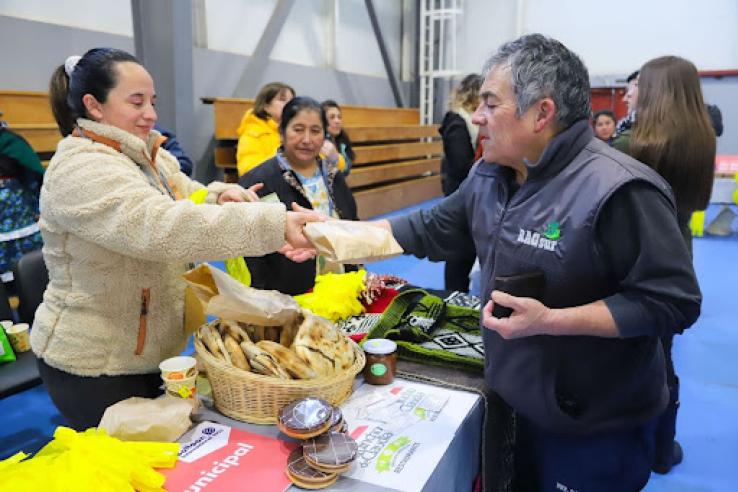
In rural Chile, microentrepreneurs face unique challenges in building sustainable businesses. Balloon Latam’s Trafkintunkimun program was designed to address these challenges by fostering business and social networks that can generate and benefit from environmentally sound economic opportunities. That is, to promote entrepreneurship with a triple impact: bringing economic, social, and environmental benefits.
Based on a recent randomized evaluation conducted in collaboration with Balloon Latam, Fundación MC, and J-PAL LAC, academic Martin Valdivia (GRADE) sheds light on the program’s impact and the lessons it offers for future initiatives.
Trafkintunkimun—meaning “Exchange of Knowledge” in Mapudungun, the language of one of the largest Indigenous populations in Chile— is an entrepreneurship program aimed at strengthening the business capabilities of rural microentrepreneurs in the country. Beyond basic business knowledge, the program also promotes the development of interpersonal skills and the creation of a community of entrepreneurs, while encouraging participants to launch ventures with economic, social, and environmental impact.
The program has two stages:
The evaluation, led by Martin Valdivia, randomly assigned participants to receive both stages of the program, only the first stage, or no stage at all, in order to measure its effects on business practices and performance, household economic well-being, community participation, and environmental awareness.
The findings uncovered a nuanced picture of the program’s impact across three key dimensions: business performance, household well-being, and community engagement.
In terms of business outcomes, participants showed encouraging progress in the short term. On average, entrepreneurs adopted better practices in marketing, inventory management, and the use of digital platforms to promote and manage their businesses. However, they did not lead to meaningful changes in sales or profits, and the momentum on the adoption of recommended business practices did not last. In the medium term, these gains had faded, raising questions about the best way to sustain effects over time.
At the household level, the story was the opposite. While there were no immediate increases in household income following the program, researchers observed a positive shift in the medium term, with monthly household income rising by about USD$92 (15%).
Interestingly, this rise in income did not come directly from the businesses supported by the program. Instead, it was driven by the independent economic activities of other household members. This suggests that the program may have indirectly influenced household dynamics. Additionally, households reported increased savings, although their consumption (spending) patterns remained largely unchanged.
When it came to community and environmental impact, the program fell short of generating changes. Despite its emphasis on building community ties and raising environmental awareness, the evaluation found no sustained improvements in these areas. This points to the challenge of embedding deeper cultural and ecological shifts within short-term training programs, especially in contexts where such values may already be under pressure.
The research team also investigated whether there were different effects for certain groups. They found that female entrepreneurs experienced more pronounced short-term improvements in sales, which increased by about USD$84 (45%), and in profits, which rose by around USD$41 (43%), linked to their adoption of business practices. Their households also saw greater medium-term income gains compared to those of male participants.
Using machine learning techniques, the research team identified that the most significant medium-term income increases in the households occurred among entrepreneurs with younger businesses, higher initial sales and profits, and stronger soft skills.
These findings suggest that households with a stronger entrepreneurial orientation—reflected in better-positioned businesses from the outset—benefited the most, even though their initial household income was similar to others. Also, although the analysis found that larger firms experienced greater gains in sales and profits, suggesting that the intervention tended to exacerbate pre-existing disparities, it also revealed larger benefits for participants who displayed stronger entrepreneurial attitudes (such as higher personal agency, grit), which suggests the relevance of measurable personality traits when defining a program’s targeting strategy.
The evaluation also explored the impact of receiving only the first stage of the program, involving the core business training and initial networking events, without the more community and sustainability-oriented training or the additional networking opportunities. In this case, no significant effects were found across any dimension. However, they conclude that this lack of impact was not the result of delivering only stage 1.
Although the evaluation was originally designed to make the two groups as comparable as possible, logistical restrictions affected the implementation. The two groups were trained in different years: while the group assigned to the full program started almost immediately, those assigned to only Stage 1 were invited to participate a year after recruitment. During that extra year, many factors, such as motivation, participation, and the broader training environment, could have shifted, which is consistent with the lower participation rates observed for the later group. The implementation of the two stages over two years added to the concerns about long waiting periods, as Stage 2 took place around a year after Stage 1, which resulted in much lower participation in that second stage.
The evaluation found some short-term effects, but the lack of sustained medium-term effects—a common finding in similar studies—highlights the need for innovations that build the capacity to continuously adapt to ever-changing business conditions and maintain improvements over time. Soft skills emerge as a promising area for future program design.
Recent literature has advanced best practices for developing these skills in entrepreneurship training, offering an opportunity to enhance interventions for rural entrepreneurs. Incorporating these approaches could lead to more durable business outcomes and broader benefits for households and communities.
The observation that short-term effects in supported businesses transform into improved self-employment initiatives of other household members in the medium-term underscores the importance of examining intra-household dynamics, particularly in the case of female entrepreneurs. Understanding these patterns may reveal how traditional gender roles influence the distribution of entrepreneurial gains within the household.
The path to sustainable rural entrepreneurship is complex, but with deeper inquiry and thoughtful innovation, we can design programs that not only spark change—but help it endure.