HAPIE’s Strategic Partners

HAPIE, which stands for the Hub of Advanced Policy Innovation for the Environment, is part of J-PAL’s network of Air and Water Labs (AWLs) with Community Jameel. AWLs collaborate with government agencies to tackle critical air and water issues through evidence-based policymaking.
HAPIE, like its regional AWL counterparts in India and South Africa, works closely with government partners to co-generate evidence-based solutions for the most pressing air and water challenges. HAPIE is made possible with support from its founding partners, Community Jameel and the Sawiris Foundation for Social Development.
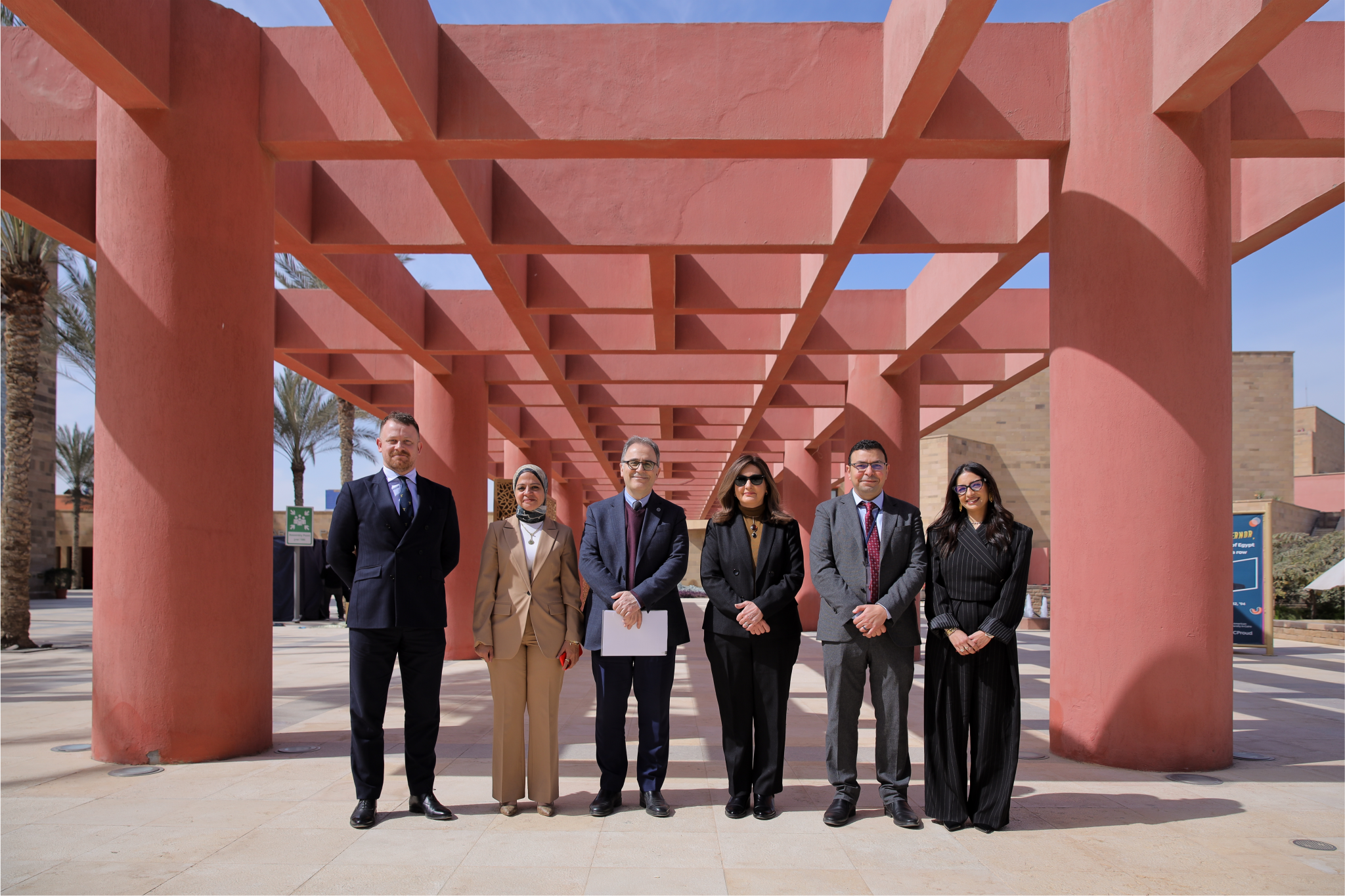
HAPIE represents the Egypt Impact Lab's (EIL) extension into the environment, energy, and climate change sectors. Established through a partnership between J-PAL MENA and the Ministry of Planning and Economic Development, the EIL has played a vital role in embedding evidence-based policy approaches across various development sectors in Egypt.
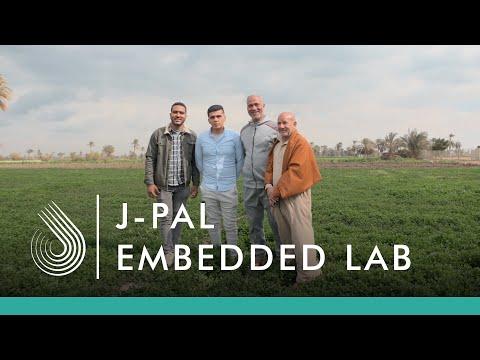
HAPIE works with government partners to:
- Co-identify the most pressing air and water challenges and opportunities for policy innovation.
- Expand access to and the use of high-quality air and water data.
- Co-design potential solutions informed by existing evidence, design more targeted policies, and use data to monitor progress.
- Co-generate evidence on promising solutions through pilots and randomized evaluations and determine which ones should be scaled up.
- Provide technical assistance to scale effective air and water policies and programs.
Current projects
Climate adaptation and resilience in agriculture
Sustainable Transformation for Agricultural Resilience in Upper Egypt (STAR)
In partnership with the Ministry of Agriculture and Land Reclamation and with support from the International Fund for Agricultural Development (IFAD), HAPIE is leading its first government-requested independent evaluation. As part of a scaled-up effort to strengthen rural institutions, expand market access, and build smallholder farmers’ resilience, the Lab will assess the impact of microcredit provision and enhanced agricultural extension services. The one-year evaluation includes a pre-intervention needs assessment and a pilot randomized controlled trial to generate early insights.
Bundled services for climate-smart agriculture in Egypt with Mozare3
In partnership with Nasser Social Bank, the researchers will explore how bundling agricultural services, such as tailored credit, market access, and support for climate-smart practices, can improve the welfare of smallholder farmers in rural Egypt.
Adaptation to climate change in Egypt: Assessing the role of information frictions
In partnership with the Agricultural Research Center (ARC) and the Central Administration for Agriculture Extension, under the Ministry of Agriculture and Land Reclamation, researchers aim to assess whether providing farmers with targeted information on climate change, crop-specific adaptation strategies, and income diversification opportunities can improve their resilience and livelihoods. Learn more.
Water quality, access, and sanitation
Incorporating cultural context into safe-water interventions
In partnership with the Ministry of Planning and Economic Development, and through the “Decent Life” Initiative, the researchers aim to assess whether filtered water from treatment units, designed with local cultural preferences in mind, leads to higher adoption rates and improved health outcomes compared to conventional chlorinated water solutions. Learn more.
Air quality, emissions, and pollution control
Measuring farm-level environmental and economic benefits of carbon credits in Egyptian agriculture
In partnership with the Financial Regulatory Authority, HAPIE aims to measure the effects of the Economy of Love carbon offsets certification on farm-level carbon emissions, income, and the broader socioeconomic well-being of farmers. Learn more.
Recycling household cooking oil into biodiesel
In partnership with Delta Oil Egypt, HAPIE aims to evaluate the environmental and economic impact of used cooking oil collection through local partners in Egypt.
HAPIE aims to generate research to resolve the fundamental problems at the heart of the air and water crises in Egypt. Research funds are allocated to evaluate government priority policies and programs across different multi-sectoral aspects of clean air and water access through a Request for Proposals.
Learn more about hapie
Reach out to [email protected] to learn more about our work and discuss broader opportunities to collaborate.
If you are interested in applying to HAPIE’s RFP, please visit our RFP page for more information.
The team behind HAPIE

Kyle Emerick
J-PAL Affiliated Professor, Scientific Advisor for HAPIE
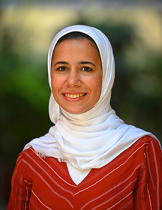
Nagla Al Khoreiby
Policy Manager

Mariam Youssef
Senior Policy, Training, and Communications Associate

Yassmine Lotfi
Policy, Training, and Communications Associate

Nour Moussa
Senior Policy Associate