

Evaluating the Impact of Graduation on Fertility and Child Health in Malawi
- Children under five
- Mothers and pregnant women
- Diarrhea
- Dropout and graduation
- Earnings and income
- Enrollment and attendance
- Food security and nutrition
- Immunization
- Malaria
- Mortality
- Non-communicable diseases
- Empowerment
- Household finance
- Self-employment
- Sexual and reproductive health
- Student learning
- Fertility
- Women’s/girls’ decision-making
- Self-esteem/self-efficacy
- Aspirations
- Gender attitudes and norms
- Age of childbearing
- Asset ownership
- Attitudes and norms
- Business investment
- Cognitive development
- Fertility/pregnancy
- Firm survival and sustainability
- Food security
- Gender-based violence
- Health outcomes
- Income diversification
- Maternal health
- Mental health
- Nutrition
- Profits/revenues
- Savings/deposits
- Social cohesion
- Socio-emotional development
- Stunting
- Take-up of program/social service/healthy behavior
- Livelihood interventions
- Cash Transfers
- Health
- Family Development
- Social Protection
- Cost Analysis
- Coaching and mentoring
- Savings
- Child care
- Graduation approach





While Graduation programs have successfully lifted households out of poverty in over twenty countries, few studies have examined their impact on women's fertility or their children’s early development. In partnership with Yamba Malawi, researchers conducted a randomized evaluation to test the impact of a Graduation-style program, integrating cash transfers, child health and business training, preventive health and fertility coaching, and village savings groups, on women’s livelihoods, empowerment, family planning decisions, and their children’s health in Malawi.
الموضوع الأساسي
In 2018, over 600 million women globally were unable to work because of unpaid domestic responsibilities such as childcare, compared to 41 million men.1 When women do start a business, they typically earn lower profits than men.2
This is one of the challenges that motivated the Bangladeshi NGO BRAC to develop the “Graduation” approach, which has successfully helped households gain a strong foothold toward lasting stability and wellbeing. The program combines cash or livestock, training, mentorship, and access to savings or healthcare to help women become self-reliant.
With higher incomes, women could potentially gain more say in their family planning choices; rather than having more children because they can afford them or fewer children because of work demands, women have the ability to choose what works best for their lives and act on those choices. Past research has shown that access to affordable childcare can improve women’s employment outcomes and their children’s health and development, but few studies have explored whether Graduation programs can have similar effects for mothers and their children. To what extent can Graduation programs, paired with child health and business training, fertility coaching, and village savings groups, impact women’s family planning choices, livelihoods, empowerment, and their children’s development?
سياق التقييم
This evaluation took place in Nankumba, a subdistrict in the Mangochi District of Southern Malawi. Within the subdistrict, 90 percent of households currently live on less than US$2.15 a day, most are small-scale farmers or laborers, and most do not have sufficient food sources. Many women in Malawi also lack equal access to property, credit, and formal employment opportunities.3 Among women in the study, nearly all are working in informal jobs.
Study participants are mothers with at least one child under five and have three children on average. Women are usually in charge of parenting decisions, while their husbands are in charge of financial decisions.4 About 75 percent of women use birth control (most commonly the shot or implant) and want over four kids, on average. Women are slightly more likely than their husbands to decide if and what kind of birth control they use, but husbands often determine when to have more children.
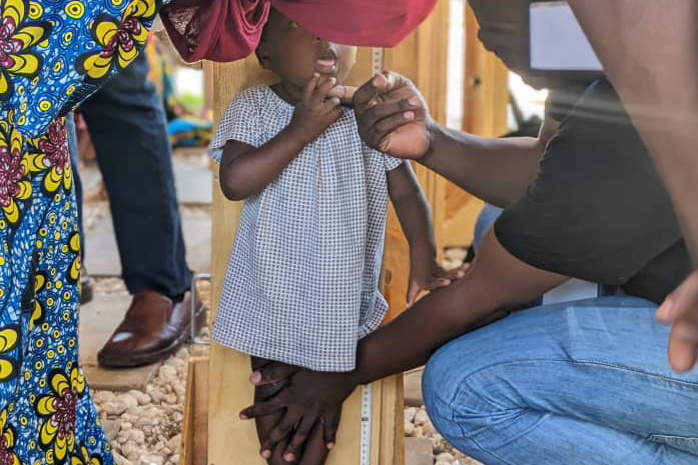
In Malawi, only 8 percent of children 6–23 months old eat enough nutritious meals each day: for instance, many of the participants’ under-five children lack access to enough food. Over one in three children are too short for their age because of malnutrition, illness, or lack of stimulation, which can harm brain development, school performance, and even future earnings.5
Yamba Malawi, the implementing partner in this evaluation, is a local NGO that supports early childhood development by helping families build sustainable livelihoods. The NGO works closely with the Malawian government to deliver a social protection program and share practical insights on reducing poverty through entrepreneurship to improve children’s quality of life.
معلومات تفصيلية عن التدخل
In partnership with Yamba Malawi, researchers evaluated the impact of a child-focused Graduation program—that integrated the BRAC-style model with child health and business training, fertility coaching, and village savings groups—in the Mangochi District of Southern Malawi on women’s family planning choices, employment and business outcomes, empowerment, and their children’s development. Each with a mother of a child under the age of five, 1,872 households were randomly assigned to one of two groups:
- Graduation program + early childhood development course group (936 households): Each household was offered US$20 each month for six months, weekly early childhood development and business and entrepreneurship training for four months, a US$300 business start-up grant, encouragement to join savings groups, one-on-one preventive healthcare coaching covering contraception, hygiene, nutrition, and resilience to economic shocks every two weeks for one year, and in-person monitoring visits every two weeks for two years. Monitoring visits asked mothers how they managed their money, health, and recent financial challenges they may have faced.
- Comparison group (936 households): Each household was offered fortnightly, in-person monitoring visits identical to those of the Graduation program group but no coaching occurred during these visits. They also did not receive cash transfers, training, or encouragement to form a savings group.
The program was delivered across three cohorts: one in January 2024, May 2024, and September 2025. Researchers gathered household survey data before the intervention started, twelve to thirteen months later, and 24–25 months later. Surveys included questions about women’s desired number of children, contraceptive use, perceived pressure from husbands to use birth control, employment and business decisions, and their children’s development. A companion paper will compare the three cohorts which were timed for participants to receive their large cash grants during the planting, harvest, or lean season.
Potentially sensitive questions were only asked to women participants if they were alone during the interview. Participants could skip any questions they did not wish to answer without consequence. They were also provided with a toll-free, anonymous complaint hotline to use if staff behavior made them uncomfortable that was broadly advertised in all study villages using signposts.
النتائج والدروس المستفادة بشأن السياسات
Research ongoing; results forthcoming.
“Strengthening Childcare Models to Advance Women’s Economic Power.” 2023. Gates Foundation Global Grand Challenges. Accessed July 15, 2025. https://gcgh.grandchallenges.org/challenge/strengthening-childcare-models-advance-womens-economic-power.
Delecourt, Solène, and Anne Fitzpatrick. 2021. “Childcare Matters: Female Business Owners and the Baby-Profit Gap.” Management Science. Accessed July 15, 2025. https://ssrn.com/abstract=3830932.
“International Women’s Day Statement: All Women and Girls: Rights, Equality, and Empowerment.” 2025. United Nations in Malawi. Accessed July 15, 2025. https://malawi.un.org/en/290428-international-womens-day-statement-all-women-and-girls-rights-equality-and-empowerment.
Roughly 75 percent of fathers of children in the study are involved in raising their kids.
World Health Organization. 2015. “Stunting in a Nutshell.” November 19, 2015. Accessed September 29, 2025. https://www.who.int/news/item/19-11-2015-stunting-in-a-nutshell.