



The Impact of Remote Health Outreaches on Women's Contraceptive Use and Employment in Uganda
- Rural population
- Women and girls
- Adults
- Communicable diseases
- Diarrhea
- Earnings and income
- Employment
- HIV/AIDS
- Immunization
- Malaria
- Non-communicable diseases
- Provider attendance
- Self-employment
- Sexual and reproductive health
- Provider Performance
- Fertility
- Age of marriage
- Women’s/girls’ decision-making
- Age of childbearing
- Attitudes and norms
- Business investment
- Fertility/pregnancy
- Firm survival and sustainability
- Maternal health
- Mental health
- Productivity
- Profits/revenues
- Take-up of program/social service/healthy behavior
- Health
- Information
- Health care delivery
- Preventive health
- Community health workers




Making primary healthcare and contraception more accessible to women can improve their health and expand their opportunities to work, yet evidence from rural areas is limited. Community health outreach offers a promising approach to closing the rural and urban health access gap by bringing family planning services closer to women who need them most. In partnership with Health Access Connect, researchers conducted a randomized evaluation to measure the impact of a community-led primary healthcare outreach program on women’s contraceptive choices, healthcare use, and work decisions in rural Uganda.
الموضوع الأساسي
Globally, people living in rural areas often have less access to healthcare, including contraception,1 compared to people in urban areas.2 Previous studies have found that making it easier for women to get contraception can help them choose the number of children they want and when, improve their health, and support their ability to work, but there is little related evidence from rural areas.
Community-based health outreach programs have become a popular way to expand access to healthcare, including contraception, for people living in rural areas. Does establishing regular, community-led outreach for primary care affect women’s contraceptive use and choices, their use of healthcare services, and their employment and earnings?
سياق التقييم
People living in rural Uganda, where this study took place, generally experience poorer health compared to people living in urban areas. One reason for this gap is because many Ugandans living in rural areas cannot easily reach or afford healthcare services, leaving them to turn to traditional remedies, care for themselves, or sometimes go without any treatment. Healthcare options can often be limited to the occasional mobile clinic or short-term medical mission that may lack continuity and operate outside the public health system. For instance, 44 percent of women in rural areas report distance and 48 percent cite cost as barriers, compared to 19.2 percent and 33.9 percent of women in urban areas, respectively.
As a result, as many as 37 percent of women in rural Uganda want to use contraception but do not have access to it, making them 23 percentage points less likely to use contraception compared to women in urban areas. Consequently, women in rural areas have more children on average (5.9 births per woman) compared to women in urban areas (4.0 births per woman).
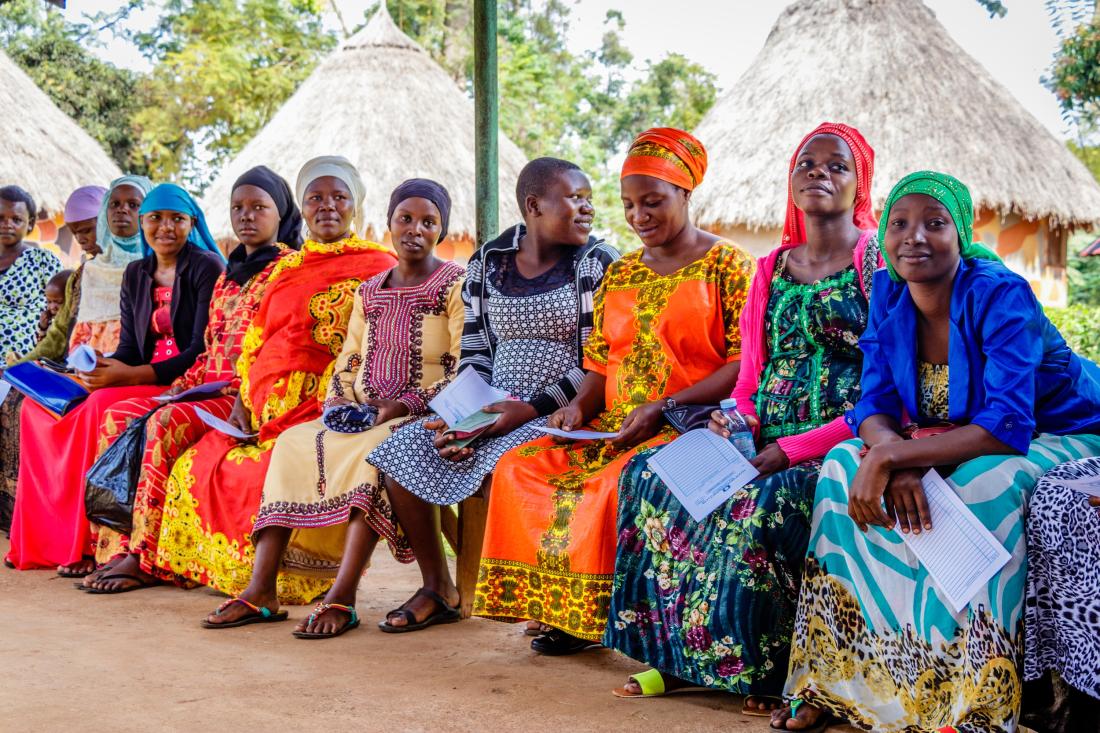
Study participants are women of childbearing age (18–35) living in rural Uganda who are not pregnant and are at least six months postpartum. They have a high demonstrated need for health services, including contraception, and primarily earn money through self-employment or agriculture.
Health Access Connect (HAC), the implementing partner for this evaluation, is a local NGO that partners with health clinics across rural Uganda to organize monthly outreach visits by clinical staff to communities located more than five kilometers from the nearest health facility. These visits are fully integrated with the public healthcare system.
معلومات تفصيلية عن التدخل
Researchers partnered with HAC to test the impact of community-led primary healthcare outreach on women’s contraceptive use, their use of healthcare services, and their ability to work in rural Uganda. Among 64 government health facilities in eight districts of Uganda, 2,560 women from 128 remote villages more than five kilometers away from their nearest health clinic were assigned to one of two equal-sized groups:
- Healthcare delivery program group: Each woman is offered a one-year family planning and integrated primary care program from March 2026 to March 2027. HAC health workers travel from partner clinics to remote villages to deliver services such as contraception, vaccinations, malaria treatment, perinatal and pediatric care, antiretroviral therapy, HIV testing, and health education. Most visits provide family planning or antiretroviral therapy services. Women pay an average of US$0.53 per visit to help cover HAC’s transportation costs, which is less than the price of a regular bus ticket to the nearest health facility.
- Comparison group: Women are not offered the family planning and integrated primary care delivery program.
Researchers also tested whether HAC outreach, or lack thereof, in neighboring villages influenced the healthcare decisions of 1,280 women from 64 nearby communities who weren’t eligible for HAC outreach because they lived within five kilometers of a health clinic. These women were split evenly into two groups:
- Nearby outreach group: Women lived in areas served by a health clinic that was part of the outreach program.
- Nearby non-outreach group: Women lived in areas served by a health clinic that was not part of the outreach program.
Researchers surveyed all participating women and HAC health clinic workers from March to May 2026. One year after the HAC outreach program finishes, researchers will ask participating women about their healthcare use in the past thirty days, contraceptive preferences and use (including duration), and whether they and other household members engage in paid or unpaid work. Researchers will also survey HAC health clinic workers and use administrative records to track the services provided by health clinics one year after the program.
النتائج والدروس المستفادة بشأن السياسات
Research ongoing; results forthcoming.
United Nations Population Fund. 2016. Universal Access to Reproductive Health: Progress and Challenges. New York: UNFPA. https://www.unfpa.org/sites/default/files/pub-pdf/UNFPA_Reproductive_Paper_20160120_online.pdf
The Lancet. 2015. “Rural health inequities: data and decisions.” The Lancet 385 (9980): 1803. https://doi.org/10.1016/S0140-6736(15)60910-2