

Improving Youth Employment with Job Information during Vocational Training in India
- Job seekers
- Parents
- Rural population
- Youth
- Earnings and income
- Employment
- Enrollment and attendance
- Take-up of program/social service/healthy behavior
- Information
- Training
- Media
- Parental engagement


Vocational training programs can connect young people to jobs, but many participants drop out and stay unemployed. One reason for this may be the gap between youth expectations and the jobs available to them. Researchers conducted a randomized evaluation to test whether giving vocational trainees richer information about potential jobs improved their employment outcomes. Informed trainees were more likely to stay in the jobs they were placed in. Researchers provide suggestive evidence that with the information, trainees made better decisions on whether to continue the training: those who saw the program as a poor fit for their job ambitions dropped out, while those who valued the training’s job opportunities stayed.
الموضوع الأساسي
Youth unemployment and underemployment rates are high in many low- to middle-income countries. In 2024, youth had an unemployment rate around 1.7 times that of adults, totaling an estimated 65 million unemployed youth globally.1 Governments often tackle youth unemployment through vocational training, but results are mixed. Many young people drop out or struggle to find jobs, held back by poor information and mismatched expectations about what work is actually available. Can better information about available jobs improve the effectiveness of vocational training programs?
سياق التقييم
In India, youth unemployment reached 15.7 percent in 2021.2 In particular, rural youth from low-income states like Bihar and Jharkhand have limited job opportunities. Although training programs target these job seekers, trainees often need to migrate to different states for their placement job, which could surprise trainees and lead to rejected placements.
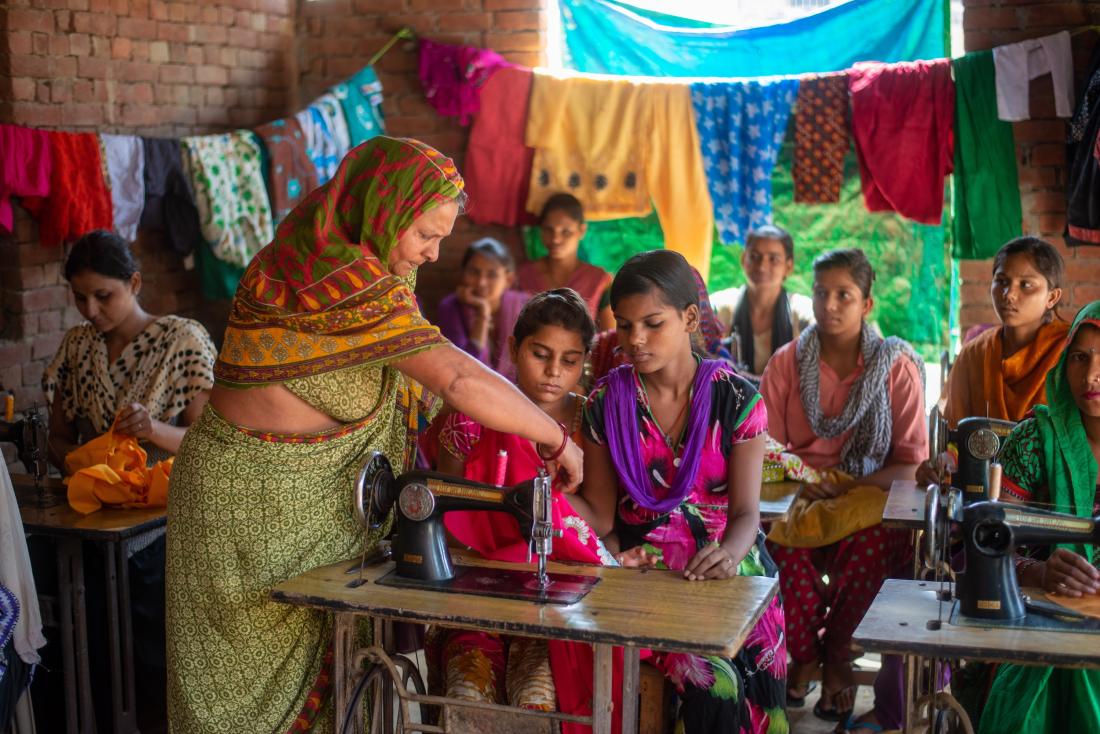
The Deen Dayal Upadhyay Grameen Kaushalya Yojana (DDU-GKY) in India is one of the largest vocational training programs in the world. Launched in 2014 by the Indian government, DDU-GKY provides vocational training and placement services through private providers for rural youth throughout India. The program is predominantly residential and provides a mix of classroom-based and on-the-job training to its participants. On average, trainees participated in 107 days of classroom training and 17 days of on-the-job training. Since 2014, more than 1.3 million students completed DDU-GKY training.
The DDU-GKY program targets unemployed rural youth from low-income backgrounds, aged 15 to 35 years, and with some secondary education. In the study sample, majority (79 percent) of trainees came from households below the poverty line, with median household earnings of US$122 (INR 9,000) per month in 2018. The study’s sample had more female trainees than male trainees (57.4 percent female) and 45 percent came from lower castes, due to program quotas.
The DDU-GKY program guarantees a job placement to all trainees, yet only 60 percent were placed between 2014 and 2023. In conversation with researchers, DDU-GKY implementers said one key issue is that many trainees turn down the jobs on offer. Early fieldwork suggested this was because trainees discovered too late that the placements did not match their interests, as neither recruitment nor the curriculum provided much information about the jobs.
معلومات تفصيلية عن التدخل
Researchers partnered with the Bihar Rural Livelihoods Promotion Society, the Jharkhand Rural Livelihoods Promotion Society, and the Ministry of Rural Development to conduct a randomized evaluation to test the impact of information sessions about potential and actual placements for DDU-GKY trainees on training completion and post-training job placement.
Students train in “batches” of around thirty students. The study sample includes 86 batches, or 2,488 total students, from training centers located throughout Bihar and Jharkhand. Randomization was conducted at the batch level, and each batch was assigned either to receive two information sessions along with the training or to receive the standard training, which formed the comparison group.
- Information sessions group (42 batches, 1,260 students): Trainees received two information sessions along with the standard classroom and on-the-job training: one within the first two weeks and another about ten days before classroom training ended. In the first session, implementers gave trainees a list of potentially available placement jobs. In the second session, implementers gave trainees a list of jobs that were actually available, information about the need to potentially migrate, job title, company name, location, and compensation package. Placement officers were available to answer questions in both sessions.
- Comparison group (44 batches, 1,320 students): Trainees participated in standard classroom and on-the-job training but did not participate in either of the information sessions.
To measure the impact of the information sessions, researchers collected data from trainees in four rounds of surveys. The baseline survey (December 2018 to October 2019) and midline survey (March 2019 to January 2020) were conducted in person. The two end-line surveys (May 2019 to April 2020 and August 2019 to May 2020) were conducted over the phone two months and five months after the end of the training, respectively. The surveys focused on trainees’ change in expectations due to the training, training completion, job placement, and job tenure.
النتائج والدروس المستفادة بشأن السياسات
Overall, the information sessions did not impact dropout; however, informed, trainees were more likely to stay in their placement jobs relative to the standard trainees. Researchers suggest this is because informed trainees were better at deciding whether the DDU-GKY training provided the best opportunities for them.
Job retention: Trainees that participated in two information sessions on placement opportunities were 11 percentage points (18 percent) more likely to stay in the jobs in which they were placed through the DDU-GKY program for at least five months, conditional on job placement, relative to the comparison group average of 62 percent. Researchers hypothesize that this impact is likely due to trainees’ improved self-selection into the DDU-GKY training. Information about prospective jobs may have led some over-optimistic trainees who had better outside options to drop out earlier and may have motivated those over-pessimistic trainees for whom the job opportunities were more valuable to complete the training.
Additionally, while women were more likely than men to be placed and still work in their DDU-GKY job, the training information sessions only affected male trainees’ retention. Researchers hypothesize that men are more likely to face a mismatch between expectations and the placement job, because they have a broader range of outside job options than women.
Job placement and drop out: Overall, the information sessions did not impact program dropout nor placement quality. However, the information sessions may have affected some youth more than others. Higher-educated trainees (12th grade or above) were 4.5 percentage points (45 percent) more likely to drop out when they had information sessions; whereas, according to suggestive evidence, less-educated trainees were 3.9 percentage points (21 percent) less likely to drop out. Researchers hypothesize that higher-educated youth have better outside options than the jobs offered to DDU-GKY trainees and would be less likely to stay in the DDU-GKY job.
Based on these results, researchers recommended to DDU-GKY that incorporating information sessions on placement opportunities could improve the effectiveness of vocational training programs. DDU-GKY included information sessions as part of a guided classroom intervention within the DDU-GKY curriculum. After the researchers trained implementing partner staff, the information sessions were scaled across all training centers in Bihar and Jharkhand. DDU-GKY also began to offer more in-state jobs, in an effort to better align placements with the candidates’ preferences. Lastly, the implementing partners and the researchers are currently collaborating on a new randomized evaluation that seeks to understand if online job portals can improve job awareness and help in matching the candidates with jobs that are aligned with their preferences.
Statistica. “Estimated employment-to-population ratio worldwide from 2000 to 2024, by major age groups.” 2024. https://www.statista.com /statistics/1337137/global-employment-rate-age/.
International Labor Organization (2024). “Number of youth not in employment, education, or training (NEET) a cause for concern, despite falling jobless rate.” Global Employment Trends for Youth, ILO.