Building Forward with Digital Agriculture
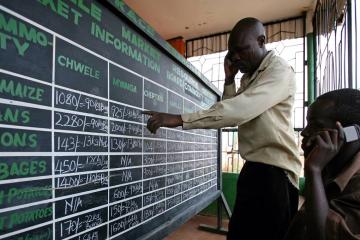
J-PAL affiliate and Nobel laureate Michael Kremer argues that increasing investment in technologies to help small-scale farmers will yield far-reaching benefits long after the COVID-19 pandemic has passed.
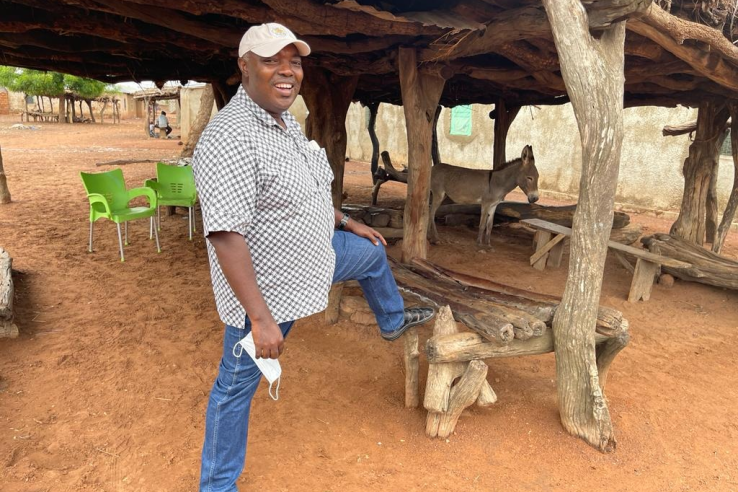
Robert Darko Osei is an associate professor at the Institute of Statistical, Social and Economic Research and Dean for the School of Graduate Studies at the University of Ghana. Robert also serves as co-chair of the Digital Agricultural Innovations and Services Initiative (DAISI), a joint initiative between J-PAL and the Center for Effective Global Action (CEGA), which funds research to identify solutions to challenges faced by smallholder farmers around the world.
While Robert Darko Osei was initially interested in science, he joined his brother in studying economics after he saw how he could draw parallels between his life in Ghana and what he was learning in the classroom. Robert said it felt good to follow in the footsteps of his brother, whom he looked up to—and as he excelled in the subject, he was thrilled by how much there was to learn.
When Robert returned to Ghana after completing his PhD in economics at the University of Nottingham in the United Kingdom, he became increasingly interested in applying what he had learned to issues related to poverty and the effectiveness of development assistance. In particular, Robert identified a key contradiction: while there was “plenty of development investment in agriculture,” the productivity of small scale farmers in sub-saharan African countries, relative to other regions, remained low. According to Robert, “agriculture is at the heart of poverty.”
Robert became a J-PAL affiliate in 2018. He was immediately drawn to the mission of J-PAL’s Digital Agriculture Innovations and Services Initiative (DAISI). “Technology is not going anywhere, so it is critical that we understand how to leverage it in agriculture, especially the impact of technology on smallholder farmers,” Robert explained. “And in sub-Saharan Africa, it is even more timely.”
Outside of DAISI, Robert enjoys tackling other policy questions related to agriculture. With coauthors, he recently conducted a randomized evaluation in Mali on the use of mobile phone voice message reminders for farmers trained in grain-management practices. They found that farmers who received the additional reminders adopted timely harvesting practices and improved grain storage technology, leading to less grain loss on their farms. However, they did not find any effect on yields or revenues, which is partially due to the timing of the survey, as most of the grains were still in storage. For Robert, this evaluation represented just one of the many important lessons to be learned about the role of technology in improving access to information for farmers.
Robert continues to be motivated by his interest in better understanding the effectiveness of development assistance and in influencing policy decisions. In a randomized evaluation funded by J-PAL, he and his coauthors tested the impact of a two-year program that combines training, cash transfers, savings accounts, and more on the lives of those living in extreme poverty in northern Ghana. Robert noted that the results of this study helped inform the Government of Ghana’s decision to continue the program and build out their payment delivery system more efficiently.
When considering the most pivotal and influential moments of his research career, Robert recalls his time speaking with farmers. According to him, “No development economist should write a paper without going to the field.” Robert explained that one “needs to understand the psyche of poor households to design good policy. You can’t understand smallholder farmers just by reading the literature and staying at home.”
Robert also emphasized the need to fund more randomized evaluations led by African economists. To Robert, empowering African researchers will lead to “a richer and more locally-grounded evidence base that can be used by policymakers.” To that end, with DAISI co-chair Tavneet Suri, Robert helped establish the Regional Scholars Program, which sets aside funding exclusively for researchers from Africa.
Robert has been a J-PAL affiliate since 2018. For more information about J-PAL and to read about his research, visit https://www.povertyactionlab.org/person/osei. To hear more from Robert and other researchers based in Africa, watch the following video:

The challenge: More than one-fifth of the world’s population lives on less than US$1.25 per day. Support for livelihoods programs has spurred interest in evaluating whether a combination of direct cash assistance and indirect support, like technical skills training or health education, may create a higher standard of living that would “graduate” the poorest members of the population. Researchers conducted six randomized evaluations of this program, known as the Graduation Approach, in Ethiopia, Ghana, Honduras, India, Pakistan, and Peru.
The research: In Ghana, from 2011 to 2013, Robert and his coauthors considered how a multifaceted approach to poverty reduction would fare long-term when compared to singular, one-off interventions. The program offered productive asset transfers, such as goats or hens, technical skills training, health and nutrition education, creation of savings accounts, and household visits to ensure accountability. Participants could receive all of these interventions or a combination of a few. This represented a clear divergence from the government’s prior single-component approach.
The results: After one year, average total monthly consumption among households in the intervention group increased by 11 percent, alongside a 91 percent increase in non-farm income and a 50 percent increase in livestock revenue compared to the comparison group. Overall, the results of the project demonstrated that the multifaceted graduation program had meaningful and sustainable economic impacts in the region, especially for the poorest households.
Research to action: Insights from the evaluation of this program helped to reshape the rollout of Ghana’s national payment delivery system for beneficiaries, reaching over 80,000 households nationwide. This evaluation represents one of the early evaluations of the Graduation Approach to poverty alleviation, and, over several years, governments and development agencies launched initiatives to expand this program. There are also new initiative plans to scale-up the Graduation Approach to reach half a million refugee and host-community households in 35 countries over five years, from 2020 to 2025. Read the evaluation.
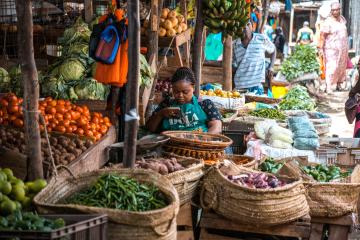
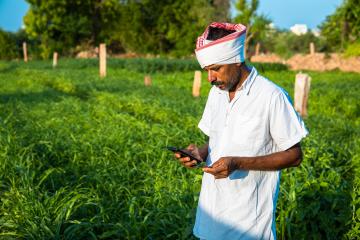
As the reach of digital agricultural services has grown rapidly within the last few years, building an evidence base on how these services should be designed, implemented, and scaled to best align with the priorities of small-scale producers is an important and timely issue—and one that J-PAL's Digital Agricultural Innovation and Services Initiative (DAISI) is well-positioned to address. After months of research, conversations, and brainstorming, we are launching a robust research agenda that will guide DAISI’s activities and investments.
In December 2021, we announced the launch of the Digital Agricultural Innovations and Services Initiative (DAISI), jointly managed by J-PAL and UC Berkeley’s Center for Effective Global Action (CEGA) and supported by the Bill & Melinda Gates Foundation. Chaired by Jennifer Burney (UC San Diego), Robert Darko Osei (University of Ghana), and Tavneet Suri (MIT), DAISI supports innovative, policy-relevant research on the availability, quality, and reach of bundled digital agricultural solutions and services for small-scale agricultural producers.
As the reach of digital agricultural services has grown rapidly within the last few years, building an evidence base on how they should be designed, implemented, and scaled to best align with the priorities of small-scale producers is an important and timely issue—and one that DAISI is well-positioned to address.
After months of research, conversations, and brainstorming, we are launching a robust research agenda that will guide DAISI’s activities and investments over the next few years.
Digital:
Digital services are platforms and solutions that leverage digital hardware and/or software to deploy agricultural services for farmers, middlemen, co-ops, and other actors to improve their access to information, financial services, markets, or equipment/machines, among others, for use in agricultural activities.
When we think of digital agricultural services under DAISI, we categorize them into two tracks:
Fully digital, where all services are delivered through a digital technology, or hybrid, where there is partial digitally-enabled delivery of at least one service in a package of services (e.g., text message reminders for timely information during planting followed by in-person field visits by a government extension agent before harvest).
Bundles:
Farmers face a myriad of constraints to adopting new technologies that increase agricultural productivity and farmer welfare, like access to credit, savings, inputs, information, infrastructure, institutions, externalities, risk, labor, land, and gender-specific barriers. Alleviating any one of these constraints can help improve the adoption of technologies, but research has shown that increases in adoption from alleviating any single constraint seem to be quite small.
Under DAISI, a bundled program should connect farmers to agricultural services or products that simultaneously relax two or more constraints they face. When characterizing services as a bundle, we consider the number of constraints targeted by the service rather than the mechanism or structure of the service itself.
DAISI’s research agenda features six main topics with three cross-cutting themes: gender, youth, and climate resilience.
Digitalizing agricultural services creates opportunities for bundling because of the possibility of reducing implementation and delivery costs while also expanding the reach of the program. Building an evidence base on what types of bundles are most effective in alleviating binding constraints, and how they are effective, will be critical to realizing the full potential of digitalization and bundling.
An important part of this process is gaining an understanding of which bundles farmers and other actors in an agricultural value chain are willing to adopt, and why. For example, what models of integrated or bundled digital and non-digital services drive high rates of adoption and use of agricultural technologies by small-scale producers? Or, do incentives impact the take-up and use of bundled and digital services?
When discussing the effectiveness of bundled, digitally-enabled agricultural services, we consider and encourage researchers to address a range of outcomes: agricultural productivity, agricultural production and profitability, farmer welfare, expansion of opportunities for women and women’s empowerment, and resilience to both extreme weather shocks and longer-run climate and environmental changes.
DAISI will prioritize evaluations that address whether and how bundled and digital services contribute to improved agricultural outcomes. For example, which bundles are most effective at relieving constraints and for which farmers, providers, or agents in a value chain? Or, how cost-effective is the bundle relative to the individual components?
Little to no rigorous evidence exists to show how bundles of agricultural services perform relative to individual components that make up the bundles.
In theory, there are various reasons to expect that bundles may be more effective than the individual components themselves; in addition to their focus on multiple constraints, there could be strong complementarities (in terms of the benefits to the farmer) among the different components of a bundle that may lead to outsized impacts. Moreover, if the services are digital, a common platform could lower the users’ costs of accessing and learning about the components of the bundle.
DAISI is, therefore, interested in understanding how these complementarities of bundling and digitalization interact to impact agricultural outcomes. For example, what factors facilitate the take-up and use of bundled services relative to the individual components? Or, does the use of one service on a platform incentivize the use of other services available on the same platform for an individual user?
While DAISI will fund research to examine the direct effects of bundled and digital services, we are also interested in capturing and assessing any unforeseen impacts of these programs on people and markets that are not receiving the service directly—spillovers, externalities, or general equilibrium effects. Some examples of these effects would be information transfer from participating farmers to neighboring farmers, learning externalities as a result of technology adoption, or market-level changes in credit provision as a result of a cash transfer or mobile money platform, respectively.
There has been little research on this in low- and middle-income economies, especially in agriculture, so DAISI encourages cross-discipline research partnerships to study these effects. For example, does the use of one (or multiple) service(s) on a platform incentivize other users in the household or community? Or, does one service serve as an on-ramp for access and use of other non-agricultural services (e.g., the expansion of mobile money creating opportunities for other digital services)?
While gender is also a cross-cutting theme to be considered (see below for more), there are substantial opportunities to design and evaluate programs that target women and dive deeper into the dynamics that affect women in agricultural value chains. Specifically, women farmers face constraints that men farmers in their same communities do not, ranging from differential access to inputs and information to decision-making barriers around production and profit use. Gender is often incorporated into analysis after an evaluation is complete, primarily by estimating impacts based on gender of the household head. However, DAISI will prioritize research that takes a structural and intentional approach to gender in both design and implementation.
For example, will the bundle relax constraints uniquely faced by women farmers to allow them access to higher productivity technologies and ultimately improve their empowerment and livelihoods? Or, are there specific combinations of services that, when offered together, have a greater likelihood of unlocking barriers and constraints for women, particularly women who seek to be more integrated into commercial agricultural markets?
To scale appropriately and effectively, policymakers and researchers must account for local conditions and implementation capacity, and then adapt programs to that new context accordingly. Scaling can include increasing the reach of an existing program in the same context; innovating, replicating, and expanding a successful evaluated program to similar contexts; or innovating, testing, and reassessing a program that was evaluated and found to be ineffective or not cost-effective.
Given the potential of digitalization to scale programs across geographies, DAISI will encourage researchers to apply for path-to-scale grants as well as consider scale and sustainability of programs in randomized evaluations of existing services and bundles. For example, what are the feasible business models for service provision to replicate and cost-effectively scale these services? Or, can the digital reach of the bundled interventions lower the costs enough to effectively reach farmers at scale?
DAISI’s cross-cutting themes highlight an opportunity to generate research with previously understudied groups or of understudied topics. For example, agricultural gains for women and youth farmers in sub-Saharan Africa represent untapped potential for digital, bundled services since youth make up about 60 percent of the population and agriculture is the main livelihood for women, though their productivity lags behind that of men’s. Similarly, agriculture and resource use are intertwined, so building farmers’ resilience to weather-based shocks and climate change will be critical to ensuring farmer welfare as well as agricultural productivity and sustainability.
DAISI encourages researchers applying for funding to speak to at least one of these themes in their study. For example, what role do bundled digital services play in improving women’s welfare and empowerment? Through what channels are these impacts realized? How engaged are youth with bundled, digital agricultural services and platforms as entrepreneurs? Does the bundle result in land use or land cover change? Does the bundle change the impact of a climate shock on the production system or farmer welfare?
Through these thematic areas and open questions, DAISI will generate a rigorous evidence base on the impact of digital tools and bundled approaches on improving small-scale farmers’ outcomes, bolstering farmers’ resilience to climate change, connecting farmers to markets, and expanding commercialization in sub-Saharan Africa and South Asia.
Through strong partnerships between researchers, the private sector, service providers, and policymakers, DAISI will address outstanding questions, help providers to evaluate their services and models, and share results relevant to policy and practice in sub-Saharan Africa and South Asia. DAISI’s first call for research proposals opens today, July 14, 2022. Researchers in the J-PAL and CEGA networks are eligible and invited to apply. Learn more about the competition, grant types, eligibility, and guidelines.
For interested resident African and South Asian scholars, learn more about DAISI's Regional Scholars program, eligibility, proposal types, and guidelines for submission.
If you are interested in partnering with DAISI to evaluate your bundled program, digital service, and/or business model, please contact us at daisi [at] povertyactionlab [dot] org.
Through generous support from the Bill & Melinda Gates Foundation, J-PAL and UC Berkeley’s Center for Effective Global Action (CEGA) launched the new Digital Agricultural Innovations and Services Initiative (DAISI) to support innovative, policy-relevant research on the availability, quality, and reach of bundled digital agricultural solutions and services for small-scale agricultural producers.
Agriculture remains central to improving standards of living in low- and middle-income countries and reducing extreme poverty and hunger. A large body of research, some of which was funded through our Agricultural Technology Adoption Initiative, documents the importance of agricultural productivity for improvements in farmer welfare as well as longer-term development outcomes, a process often referred to as agricultural transformation.
Although these links between agricultural productivity, poverty reduction, and long-run economic development have been widely studied, agricultural productivity remains stagnant in sub-Saharan Africa and parts of South Asia. What is preventing the use of new agricultural technologies that would enable productivity increases? If multiple constraints bind, what products can alleviate these constraints at once? And, how can we leverage digital technology to do this, as well as to, more broadly, improve access options and service delivery?
Through generous support from the Bill & Melinda Gates Foundation, J-PAL and UC Berkeley’s Center for Effective Global Action (CEGA) launched the new Digital Agricultural Innovations and Services Initiative (DAISI) to support innovative, policy-relevant research on the availability, quality, and reach of bundled digital agricultural solutions and services for small-scale agricultural producers.
Chaired by researchers from both J-PAL and CEGA, including Jennifer Burney (UC San Diego), Robert Darko Osei (University of Ghana), and Tavneet Suri (MIT), the Digital Agricultural Innovations and Services Initiative (DAISI) will fund research to generate a rigorous evidence base on the impact of digital tools and bundled approaches on improving smallholder farmer outcomes, bolstering farmers’ resilience to climate change, connecting farmers to markets, and expanding commercialization in sub-Saharan Africa and South Asia.
In tackling this agenda, we will prioritize partnership development with commercial providers, private sector technology and fintech firms, telecommunications firms, governments, NGOs, and others to evaluate the impact of their services. DAISI will also focus on generating a body of gender-intentional agricultural research. In addition to social and cultural barriers, we aim to fund studies that address unique constraints for women, such as access to timely information and financing for agricultural investments, financial and digital literacy, control over agricultural income, market linkages and networks, and more. Reducing barriers that limit women’s agency, influence, and decision-making power will be critical to improving economic and welfare outcomes for participating women farmers.
In an effort to further diversify our research network, DAISI will host a Regional Scholars program—similar to the African Scholars programs from DigiFi Africa and JOI—offering dedicated funding and capacity building opportunities for researchers who have completed a PhD in an empirical discipline and currently hold an academic or research position at a university based in a South Asian or African country.
In addition to full-scale randomized evaluations, pilots, and proposal development or travel grants, DAISI will also fund two new proposal categories to respond to the rapid learning needs of private sector providers—rapid A/B product tests and scaling grants to adapt a program for scale or to pilot a scalable, evidence-informed solution. In these and many other ways, DAISI will push our agricultural work into new areas and expand our ability to engage with stakeholders across sub-Saharan Africa and Asia.
Bundled models and digital platforms that connect farmers to multiple services at once reduce barriers to access both for farmers seeking services, and service providers reaching farmers. When we refer to digital services, we mean platforms that leverage mobile phones, the internet and other digital tools to connect farmers and other actors in a value chain.
Implementers are increasingly using these digital technologies to deliver information, financial services, insurance, trading platforms, local market connections, among others. Often these services are bundled or integrated under the same program, which can be a timely and lower-cost way to reach a large number of farmers. It could also be an effective way to address the multiple constraints farmers face in these environments.
Despite rapid development and growth of implementers in this space, the evidence base on which digitally-enabled services, service targeting mechanisms, and delivery models are effective at improving smallholder farmers’ welfare remains limited. There is even less evidence available on how to reach, benefit, and empower women through such services.
Much as bundled digital agricultural services are starting to appear on the landscape, often provided by the private sector, we still have a lot to learn about bundling. Which bundles are most effective, and for which farmers? How does shifting farming households’ production and marketing decisions (specifically through digital services) affect intra-household decision-making, women’s welfare, and empowerment? And, what are the feasible business models to deliver affordable, scalable solutions to small-scale producers? DAISI will focus on answering these, and many more, critical questions to push our collective understanding of how to best design tools and connect farmers with the services they need in an increasingly digital world.
Through strong partnerships with researchers, the private sector, a variety of service providers, and policymakers, DAISI aims to address outstanding questions relevant to policy and practice in sub-Saharan Africa and South Asia. Stay tuned over the next few months as we share more information on our work and opportunities for funding research on key questions related to bundled and digital agricultural services!
If you’re interested in partnering with us, please contact [email protected].
J-PAL affiliate and Nobel laureate Michael Kremer argues that increasing investment in technologies to help small-scale farmers will yield far-reaching benefits long after the COVID-19 pandemic has passed.