

January 2026 LAC Quarterly Newsletter
Letter from Executive Director Paula Pedro
As a new year begins, we look back at 2025 and see one constant that stands out: governments across Latin America and the Caribbean are increasingly turning to evidence to guide their decisions. Last year, we engaged with ministries and government teams from all over the region, all under the pressure to deliver results with limited resources. These are not governments looking for abstract ideas; they are looking for tools that can help them select what really makes a difference. Evidence has helped anchor innovation, inform trade-offs, and support them in doing more with less.
This experience reinforces that low- and middle-income countries are proven innovators. Many initiatives come from public teams working close to communities, often learning from other countries or from NGOs. J-PAL LAC's role has been to stay present, build trust over time, and support teams in these learning cycles. Embedded policy labs and long-term partnerships have made it possible to test, adapt, and scale solutions based on rigorous evidence and cost-effectiveness.
In 2026, we intend to continue strengthening the link between research, training, and policy. First, we have the launch of a new partnership with the Lemann Foundation under the leadership of J-PAL co-founders Esther Duflo and Abhijit Banerjee, that connects the University of Zurich, Insper, and J-PAL LAC. We will also continue to expand training in evidence-informed policymaking through programs such as the Diplomado en Evaluación de impacto de programas y políticas públicas and strategic Alliance for Data, Evaluation and Policy Training (ADEPT) partnerships.
Deepening our focus on scale, we will build on the model of projects like Pathways to Preschool, developed to test implementation directly with governments to expand what works through continuous integration of research and public systems. In parallel, we will be supporting better delivery through embedded labs, such as a new Payment for Ecosystem Services Delivery Lab and a new lab in Guatemala’s Ministry of Social Development supported by the Fund for Innovation in Development (FID).
All of this reflects our main priority for the year: including J-PAL LAC in all parts of the learning cycle, from supporting needs assessment to sharing relevant evidence, to helping design evaluations, to scale. We invite you to follow our work through our newsletter, social media, and website, learn from these experiences, and stay connected as we share how governments across the region are using evidence to shape better policies.
Promoting evidence-informed policymaking on key areas
COP30 in Belém: J-PAL LAC drives evidence for climate action in 2025
J-PAL LAC wrapped-up a dynamic year advancing its environmental agenda, highlighted by a strong presence at COP30 led by Nobel laureate and J-PAL co-founder Esther Duflo alongside key partners. Major milestones include collaborations with Brazil’s Federal Government on two national initiatives: early plans for a carbon compliance market and enhancements to Bolsa Verde, a nature conservation program linked to social protection. In partnership with The Nature Conservancy (TNC), we are supporting governments in applying evidence to strengthen Payment for Ecosystem Services (PES), including technical assistance to Guatemala’s Ministry of Environment to design a PES scheme. Our environmental work will intensify in 2026—learn more about J-PAL LAC’s efforts on PES »
Early Childhood Education
In 2025, through Pathways to Preschool, J-PAL LAC, Fundação Bracell and Itaú Social identified two preschool programs that will be piloted next year, focusing on children’s socioemotional and early math skills. We also held seminars that brought together state and municipal secretaries of education and school leaders to discuss curriculum, equity, and quality.
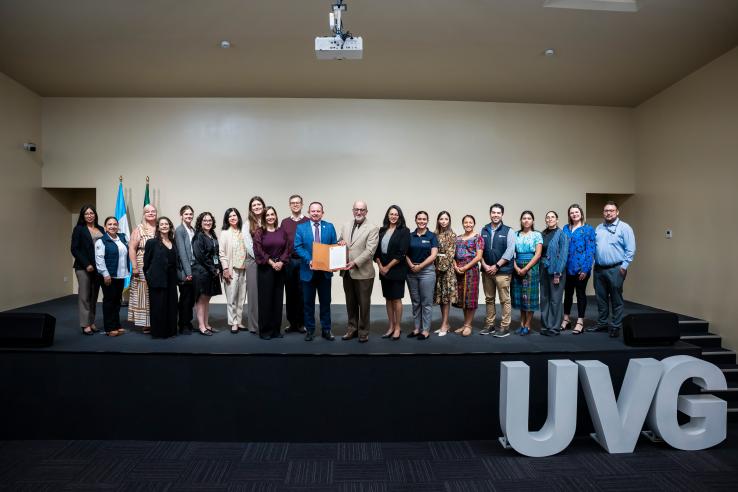
In Guatemala, after two years, we completed Programa de Sondeo y Arranque (PROSA), in partnership with Universidad del Valle de Guatemala (UVG), fostering a culture of evidence around early childhood development by training organizations and public officials, incubating programs, and launching research. Building on these achievements and expanding the scope to later stages of development to encompass education, livelihoods, and social protection, in 2026 we will continue to collaborate with Guatemala’s Ministry of Social Development and the Secretariat of Nutrition, alongside other governmental and non-governmental organizations, through a new program called Growing Futures.
Livelihoods
In 2025, J-PAL LAC deepened its support for evidence-informed labor market policy through the Jobs and Opportunities Initiative (JOI) Brazil, co-hosting two workshops with the National Confederation of Industry (CNI). In partnership with the Inter-American Development Bank (IDB), the initiative also released two briefs of the series Evidence on Labor Market Policies and Implications for Brazil, on informality and the future of work.
The office is also supporting the launch and institutionalization of Cuida!Lab, a government initiative to promote innovation and evidence-informed care policies in Brazil. We are contributing to the design of evaluation plans for pilot programs led by the National Secretariat of Care and Family Policy, including initiatives developed in partnership with SMA and the Inter-American Development Bank (IDB), focused on women’s productive inclusion and educational outcomes. Our work also includes advancing the care research agenda through IDB-funded diagnostic evaluations, fundraising for a regional review paper, and J-PAL-led evidence-generation projects.
Strengthening governments and systems
In 2025, we expanded our support to governments and civil society to use evidence. We delivered over ten trainings in Guatemala, Brazil, Argentina, Peru, and Mexico for government agencies and NGOs on using evidence from randomized evaluations, interpreting data, and incorporating evidence into social program design. As the regional host of CLEAR-LAC, the Global Evaluation Initiative center at UC Chile, we provided capacity building and evidence use support to institutions, helping them strengthen monitoring and evaluation systems. We signed a new agreement with the evaluation office of the Caribbean Development Bank to deepen this support in the Caribbean. We launched two communities of practice on gender equality and on payment for ecosystem services, creating spaces for peer learning around evidence use.
Forming the next generation of researchers and policymakers
Launched a decade ago, the Diploma in Impact Evaluation of Public Programs and Policies (DEIPPP), offered by J-PAL LAC and UC Chile, has trained over 287 professionals from more than 20 countries. In 2025, 43 students from 13 countries developed evaluation proposals for real-world social programs being implemented in Latin America. The DEIPPP also joined the global Alliance for Data, Evaluation, and Policy Training (ADEPT), expanding access to high-quality training in evidence-informed policymaking in the region.
Insper also joined the alliance, integrating the Data, Economics, and Design of Policy (DEDP) MicroMasters credentials into its academic structure. As part of this collaboration, Insper also hosted a Master Class by Esther Duflo for students and faculty later in the year. Learn more about ADEPT and apply for the DEIPPP »
Pushing the research frontier
Since 2019, J-PAL LAC has directly funded 33 research projects in the LAC region, including 15 full RCTs, leveraging resources from at least eight international funders across sectors such as early childhood development, education, labor markets, social protection, and climate. In parallel, J-PAL LAC works with a regional network of 68 affiliated professors and 85 invited researchers, who strengthen the pipeline of evaluations and connect findings to policy questions in the region. In the last months of 2025, we hosted meetings with researchers at two major economic conferences in LAC: the 30th Annual Meeting of the Latin American and Caribbean Economic Association (LACEA) in Recife, and a side meeting during the 47th Meeting of the Brazilian Econometric Society (47º Encontro da Sociedade Brasileira de Econometria) in São Paulo. These gatherings enabled participants to discuss ideas, troubleshoot implementation challenges, and connect research to policy questions relevant to J-PAL’s work in the region.
EVIDENCE IN LAC
What strategy helps people save more?
A study by Abhijit Banerjee (J-PAL affiliated professor, MIT), Claudia Martínez Alvear (J-PAL affiliated professor, Pontificia Universidad Católica de Chile), and Esteban Puentes (Universidad de Chile) tested three different approaches to encourage savings in Chile: automatic deposits, monthly reminders, and a “rule-of-thumb” guide for spending less. They found that both automatic savings and the rule-of-thumb approach increased savings for at least one year, while reminders unexpectedly reduced account balances and debt. Read the study »
Do job recruiters penalize migrants in hiring decisions and salary offers, even when they are equally qualified to natives?
A study by Raissa Fabregas (J-PAL affiliated professor, University of Texas at Austin) and Wladimir Zanoni (Inter-American Development Bank) tested how job recruiters in Ecuador evaluate Venezuelan migrants compared to equally qualified natives. In a randomized experiment, recruiters reviewed matched candidate profiles for formal jobs and proposed salaries and hiring decisions. Migrants received systematically lower evaluations across all outcomes, and penalties were larger for jobs requiring local knowledge or public interaction. Read the study »
Can anti-corruption audits reduce clientelism?
A study by Gustavo J. Bobonis (J-PAL affiliated professor, University of Toronto), Paul J. Gertler (J-PAL affiliated professor, UC Berkeley), Marco Gonzalez-Navarro (J-PAL affiliated professor, UC Berkeley), and Simeon Nichter (University of California, San Diego) evaluated whether Brazil’s anti-corruption audits affect political clientelism in rural areas. Using survey data, the researchers found that audits reduced campaign handouts, citizen demands for private goods, and the number of fulfilled requests. Audits also lowered citizens’ willingness to trade votes for personal favors. Read the study »
MEDIA HIGHLIGHTS
Em aula magna no Insper, Esther Duflo propõe novo pacto global por justiça climática
Seminário no CEU Ponte Alta debate o brincar como linguagem da infância
Casal Nobel de Economia deixa os EUA, sob o efeito Trump, para liderar Centro Lemann na Suíça