

July 2026 North America Newsletter
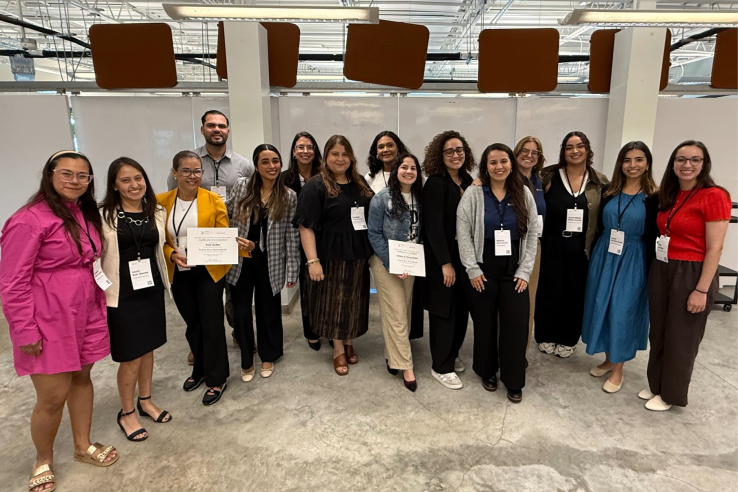
During the past nine years of working in Puerto Rico, we've learned that strong, long-lasting partnerships are the foundation of meaningful research and evaluation on the island. Yet, as we deepened our relationships in Puerto Rico, we kept hearing the same question: When is the right time to evaluate? Organizations wanted to understand their program’s effectiveness, but many weren't sure how to begin. This question became our goal for the AprendeLab.
In November 2025, we brought together a cohort of five agencies working in the areas of public health, economic mobility, and education and launched the AprendeLab, a series of J-PAL trainings, customized technical assistance, and peer-to-peer learning to build evaluation capacity. Over the past seven months, we supported these agencies in developing theories of change and measurement plans to serve as the groundwork for future evaluation efforts. What made this work possible and unique was our focus on flexibility: we created space for genuine peer learning while providing tailored support to each agency, grounded in the local Puerto Rico context. The participants' commitment to this program and willingness to learn and share knowledge among themselves created a true community of practice to advance evaluation and strengthen programming.
We celebrate the important work that the AprendeLab participants are driving forward, and we remain committed to supporting them in launching randomized evaluations and providing ongoing opportunities for connection and learning. As we work to advance J-PAL's mission across all US states and territories, AprendeLab has shown us that the most powerful catalyst for change is community—built patiently, adjusting to local realities and language needs, and rooted in trust.
Sincerely,
Daniela Gomez-Treviño, Sara van Nes, Laura Romero-Ayala, and Laura Ruiz-Gaona
The Puerto Rico team, J-PAL North America
Celebrating our AprendeLab cohort in Puerto Rico
Last fall, J-PAL North America launched the AprendeLab, a learning lab in Puerto Rico designed to support leaders from five government agencies and nonprofit organizations focused on supporting youth, economic mobility, education, and health on the island. Over seven months, participants received customized training and support to build capacity in data use and rigorous evaluation. The next phase of programming will focus on strengthening this community of practice and supporting participants as they design and launch randomized evaluations of their programs. Learn more »
New publication
The impact of case management programs on housing stability in North America
People who are at risk of or currently experiencing homelessness often face many compounding challenges at once, including housing insecurity, unemployment or underemployment, difficulty affording basic necessities, and more. Case management programs provide holistic support to help individuals navigate these barriers by providing resources and plans tailored to an individual’s specific needs. A new J-PAL North America policy brief synthesizes results from evaluations of case management programs in North America, finding that it can improve housing outcomes when combined with other services or delivered intensively during periods of transition. Read the brief »
ARTEMIS Summer Institute welcomes inaugural cohort
This summer, J-PAL North America welcomed the inaugural cohort of participants to Advanced Research Training in Evaluation, Methods, and Impact Studies (ARTEMIS), a new professional development program for early-career researchers. During the five-day Summer Institute, participants strengthened their skills in designing rigorous randomized evaluations, integrating qualitative methods, and conducting policy-relevant research through lectures, applied learning, and mentorship from J-PAL affiliated professors and staff. The Summer Institute marks the beginning of six months of continued programming, including webinars, office hours, and individualized support as participants refine their research ideas into proposals for randomized evaluations addressing poverty in the United States. Learn more »
NEW Evaluation Summary
The impact of pre‐arraignment legal representation on pretrial release and criminal case outcomes in Santa Clara County
Providing legal representation before arraignment can meaningfully improve outcomes for low-income defendants. Researchers evaluated the County of Santa Clara's Pre-Arraignment Representation and Review (PARR) model and found that defendants’ early access to counsel increased pretrial release, reduced their time spent in detention, and improved case outcomes by decreasing convictions and increasing case dismissals. Read more »
Featured Research Resource
Design and iterate an implementation strategy
During the design phase of a randomized evaluation, researchers and implementing partners should work closely together to create a feasible implementation strategy. This research resource provides a framework for researchers making study design decisions with their partners. The steps covered in the resource include identifying collaborators in the community, getting buy-in and feedback on study design decisions, and iterating design decisions with an implementing partner.