
Image
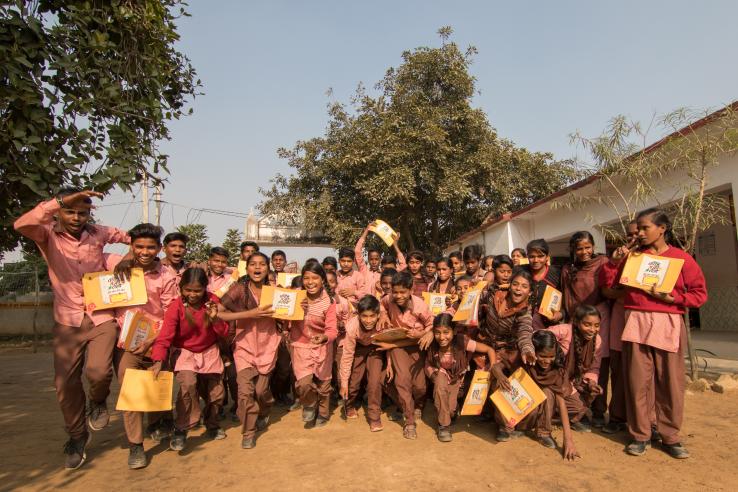
Smart policies and programs can reshape the lives of women and girls around the world. An effective program may enable more girls to stay in school, more women to control their income, or more survivors of violence to receive support. But how do we know which policies will make that difference?
Rigorous research helps leaders identify solutions that work, adapt them to their contexts, and scale them with confidence. This International Women’s Day, we are highlighting stories of evidence-informed programs transforming the lives of women and girls globally.
They offer a glimpse of what rigorous evidence can achieve, and a call to place it at the center of efforts to advance gender equality.
In some communities, delaying a daughter’s marriage is seen as a sign that she is “too modern” or not aligned with local norms, creating pressure on families to marry girls in their teens. In Bangladesh, researchers tested whether providing families with a regular financial incentive if their daughters stayed unmarried until they turned 18 helped counter this pressure. It worked: the incentive offered families a socially acceptable reason to wait, reducing early marriage by 17 percent.
Researchers worked with BRAC, a longtime J-PAL partner, to integrate similar incentives into its Social Empowerment and Legal Protection Initiative. Today, 5,000 girls have been reached through the program.
Social stigma around menstruation and lack of knowledge of hygiene practices can limit girls’ learning by increasing stress and discouraging school attendance during menstruation. In Madagascar, researchers worked with CARE to study a program that improved school hygiene facilities, expanded menstrual hygiene supplies, trained teachers on hygienic behaviors and practices, and supported “Young Girl Leaders” to act as ambassadors for menstrual hygiene. This combination increased girls’ learning by reducing stress and creating a better psychosocial environment at school.
Madagascar’s Ministry of Education is scaling the program to 1,747 secondary schools and aims to reach 550,000 girls before 2030, with J-PAL Africa as a knowledge partner. The researchers are also exploring adapting the intervention to schools in India and Morocco.
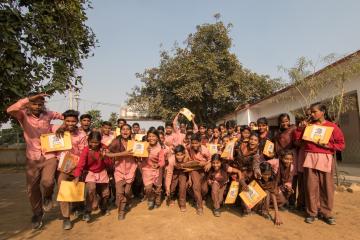
In the Indian state of Haryana, an interactive curriculum in schools is helping adolescent students, especially boys, adopt more gender equitable attitudes and behaviors. The curriculum, developed by Breakthrough and evaluated by J-PAL-affiliated researchers, involves facilitated discussions on gender norms and homework like discussing gender with family members.
Two more Indian states are weaving adapted versions of the curriculum into nearly 30,000 schools, and it is set to reach 4 million students each year. J-PAL South Asia is supporting the scale-up with rigorous evidence and real-time learning, working with state governments, who are leading implementation, and Breakthrough, who is adapting the curriculum and training teachers.
In partnership with the Government of Madhya Pradesh, J-PAL-affiliated researchers have found that when women in India’s public works program (MGNREGS) could receive wages directly in their bank accounts and were trained to use them, they worked more, gained financial autonomy, and expressed more progressive norms about women's work.
Motivated by these results, the state government is helping about 200,000 more women link their bank accounts to MGNREGS. They are also providing training to nearly 260,000 additional women on how to enroll in MGNREGS and navigate direct deposits, in collaboration with PRADAN.
A follow-up study of the program at scale is currently underway, also co-led by researchers in the J-PAL network. Both studies have been co-funded by J-PAL.
Accessible care services may empower women by freeing up their time for work and by creating more care jobs, which are typically held by women. Brazil’s National Secretariat of Care is working to expand these services nationwide and partnered with J-PAL Latin America and the Caribbean to bring evidence to the center of this agenda.
Together, we have helped integrate research insights into Brazil’s first National Care Plan, develop a diagnostic of care provision in the country, and will collaborate on the design of two flagship programs: an after‑school care program inspired by a rigorously evaluated Chilean model, and a professional training program for domestic workers that will benefit about 10,000 vulnerable women.
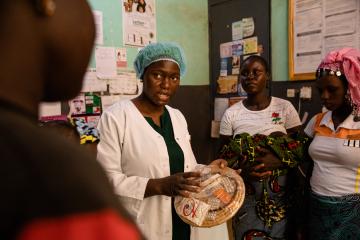
In Burkina Faso, many women want to stop or delay childbearing but do not use contraception, citing concerns about side effects or infertility. J-PAL affiliated researchers worked with Development Media International (DMI) to test if a radio campaign designed to address these concerns could improve listeners’ knowledge about contraception and shift attitudes toward family planning. The campaign reduced common misconceptions, increased the use of modern contraception, lowered births, and improved women’s reported well‑being.
DMI scaled the approach nationwide, reaching 16 million people with the campaign and empowering an estimated 225,000 additional women to use modern contraception. Adapted versions of the program have now reached more than 120 million people across seven African countries.
Police are often not trained or equipped to handle reports of gender-based violence (GBV), leading to under-registration of GBV cases and preventing women from accessing justice. To help change this, researchers partnered with the Madhya Pradesh Police Department to evaluate the impact of women’s help desks—dedicated spaces within stations where women could seek support and register cases. Stations that had the desks registered more cases of domestic violence and other crimes against women, and survivors reported feeling respected and supported.
Madhya Pradesh scaled the model to 950 stations. The approach is also informing national guidance across India on women’s help desks, including an implementation guide developed by J-PAL South Asia, the Madhya Pradesh Police Department, and the researchers.
Violence against women in Mexico is a significant threat to human rights and public health throughout the country. Mexico City’s Women’s Secretariat (SEMUJERES) partnered with J-PAL and affiliated researchers to strengthen its programs for women facing violence, and design brand-new solutions.
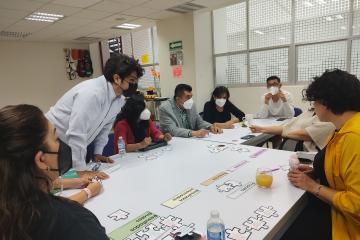
Drawing on global evidence, the team improved the city’s conditional cash transfer program to help empower women with financial resources. They also piloted Acá Entre Compas, a group‑based program offered in community centers for men that focused on shifting harmful norms and preventing violent behaviors.
SEMUJERES continues to adopt more evidence-informed policies into its response to gender-based violence, and has since expanded its cash transfer program from 500 to 1,100 women and embedded empowerment surveys into its operations.
These stories show what is possible when evidence is built into gender policy. In each example, rigorous learning helped policymakers navigate complex challenges, refine their approach, and design programs that better meet the needs of women and girls. We hope they spark ideas for your own efforts to advance gender equality—whether by applying existing evidence to strengthen programming, evaluating a program in collaboration with researchers, or funding new research.
Our Evidence to Policy resources offer practical frameworks and guidance for adapting evidence from one context to another, assessing whether a program is ready for scale, understanding the value of evaluation in scaling policies, and more. Our Policy Insights in Gender also provide accessible syntheses of what we are learning about gender policy across countries and themes. We suggest these as starting points if you are beginning your evidence‑use journey.
And if you are looking for partners to conduct or support new research, we’d welcome the conversation. Contact our Gender sector at [email protected].