


Building personal connection in an online learning community
Online learning has the power to democratize access to education. J-PAL and MIT’s Department of Economics developed the MicroMasters program credential in Data, Economics, and Development Policy (DEDP) to increase access to high-quality training in development economics.
However, online learning doesn’t come without challenges: students can feel a sense of isolation and disconnection from the broader learning community.
J-PAL Africa learned from focus groups in Ghana that lack of local connection and learning with peers is one of the biggest challenges experienced by students. As a response, J-PAL Africa developed a course representative system. The course representative system was designed to promote an organic sense of community in online learning.
The DEDP program
The DEDP program is designed to equip learners with the practical skills and theoretical knowledge to tackle some of the most pressing challenges facing developing countries and the world’s poor. Through a series of five online courses and in-person exams, learners gain a strong foundation in microeconomics, development economics, and probability and statistics, while engaging with cutting-edge research in the field.
The program is unique in its focus on designing and running randomized evaluations to assess the effectiveness of social programs and its emphasis on hands-on skills in data analysis. The courses are free to audit. Those interested in earning credit from the courses can pay a personalized price according to their income level.
Course representatives help students engage
Despite making the course content accessible to students, there are multiple challenges that students face in order to complete online courses: chief among these is a sense of community.
The course representative system is an innovation the J-PAL Africa team is trialling to proactively address some of the challenges that students face in accessing and completing the DEDP MicroMasters program. We piloted this system over the summer term of 2020, in Kenya and Nigeria for two courses: Data Analysis for Social Scientists (14.310x) and Designing and Running Randomized Evaluations (JPAL102x).
We had four rockstar course representatives kickoff the program, and were really encouraged to see the level of passion for the course content from these course representative students.
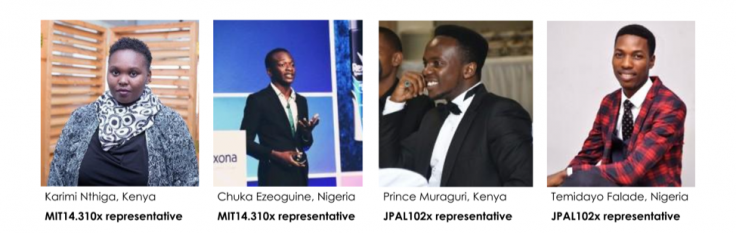
The course representatives organized several support activities for students including small online study groups, reminders for important deadlines, and hosting guest sessions to see course content applied in the real world.
Students overwhelmingly felt that the course representative system brought them closer together, in spite of their physical distance:
“The course representative system brought MIT closer to us. The small unit system helps coordination and better engagement.”
“Initially, the course representative system provided an avenue to discuss strictly course material only. Over time, the bond grew stronger and we were able to forge good friendships, which enabled us to be there for one another, encouraging each other during the difficult COVID times. We would often have video calls simply to hang out and have small talk.”
Thank you to Karimi, Chuka, Prince and Temidayo for your contributions as course representatives during the summer term!
The fall session of the DEDP MicroMasters program starts September 8. The J-PAL Africa team will continue piloting the course representative system during the fall term. Course representatives will receive a reference letter from J-PAL Africa recognizing their efforts.
If you are planning on taking MITx14.310x or J-PAL102x in Kenya or Nigeria and would like to be a course representative, please complete this application form.
If you are planning on taking MITx14.310x or J-PAL102x in Kenya or Nigeria and would like to join the local learning community, sign up here.
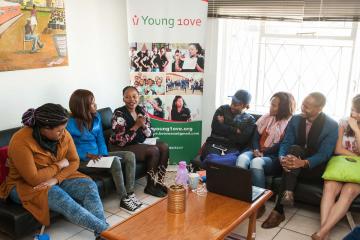
This is a guest post from Hannah Blair and Efua Bortsie at Young 1ove, a youth-focused NGO that scales evidence-based programming in health and education in Botswana.
Young 1ove was born out of evidence.
Our first program, “No Sugar,” was inspired by a 1-hour class that a randomized trial by a J-PAL affiliate showed could significantly reduce teenage pregnancy—also a proxy for unprotected sex and HIV—by 28 percent.
We keep testing our programs to ensure they work as we adapt and scale. From 2015 to 2016, we partnered with J-PAL, Baylor University, and the Ministry of Basic Education in Botswana to run a randomized trial to ensure the “No Sugar” program from Kenya still worked in our context. Now, we are using the lessons learned from this second RCT to implement an adapted version of the “No Sugar” program, in order to maximize its impact in Botswana. We take evidence seriously.
But the J-PAL/MITx MicroMasters in Data, Economics, and Development Policy (DEDP) has given us an opportunity to take this commitment to the next level—ensuring that all staff not only get an introduction to "good evidence" (which is part of our onboarding process), but also that everyone at Young 1ove, not just our research team, is connected to the evidence. This enables all decisions at Young 1ove, from public relations to nudges for office productivity, to have a link to evidence.
Thus, this past spring, a group of seven of us decided to take a DEDP online course on The Challenges of Global Poverty together, so that we could discuss the weekly lessons and brainstorm how to apply them in our context—and hold each other accountable for completing the assignments!
Out of the seven team members from Young 1ove who enrolled in the course, none work in our Research and Innovation Department. We come from diverse backgrounds: administration, social work, education, international relations, and communications. These are essential skills for our respective positions, but prior to this course we had little experience in understanding the complex issues that our beneficiaries face from an economist’s point of view.
Our individual reasons for persevering and completing the course were largely intrinsic; we approached it as an opportunity to develop ourselves and engage with familiar topics from a new perspective.
For example, I (Hannah), a Princeton in Africa Media Fellow at Young 1ove, spend much of my time writing about and explaining our research methods for various stakeholders, supporters, and collaborators. Taking the course makes my job easier because I have a deeper understanding of the history and importance of running RCTs.
Similarly, Dorothy Okatch, the Development Manager for Young 1ove, found the course helped her justify our work as part of a global movement.
“It has assisted me, when meeting with stakeholders, to reference other programs similar to ours, and validate that we are working as part of a greater movement towards evidence-based development interventions across the world.” -Dorothy Okatch, Young 1ove
Neo Molefe, the Senior Human Capital Officer, echoed this sentiment, finding that the MicroMasters courses not only helped her learn about new programs but also allowed her to better understand current programs being implemented by Young 1ove.
“The module on Teaching at the Right Level really helped me understand that program in a more in-depth fashion. It helped me understand the relevance of education in the real world in terms of economic empowerment, and showed how the program was developed by Pratham in more detail than I knew beforehand.” -Neo Molefe, Young 1ove
The experience was not without its challenges, however. We navigated low-quality Wi-Fi, international travel, and tight schedules.
At first, when the opportunity was presented to the Young 1ove team to enroll in the course, a number of our colleagues jumped at this opportunity to acquire new skills and knowledge. We did not anticipate the challenges that we would face in juggling our workload with course work.
Many of our peers snuck in lecture videos during lunch time or came to the office on weekends to access the internet. Those of us who traveled abroad for work had to find enough time and quality internet to complete the weekly assignments, which was not always possible. We initially had scheduled a weekly discussion session to discuss the course material together in more detail, but finding time when our schedules aligned was more difficult than we anticipated.
Despite tight schedules, we engaged in informal discussions around the weekly lessons. These discussions sparked interesting conversations and debates, which helped bring useful context to our answers to course exercises and homework.
Having a group of peers with whom to take the online courses was similarly encouraging—we helped each other stay on track and were motivated to keep up with the course so that we could fully engage in the group conversations. The MicroMasters website notes that each online course is equivalent to a full-semester course at MIT, requiring a commitment of about 12 hours per week, and we’ve found this to be true. The course certainly was not easy, but the skills we gained are already incredibly useful for both our day to day work and for developing a more long-term vision of Young 1ove and our impact.
As much as we learn on the job, it has been enormously helpful to take a course that details the evolution and use of RCTs across the world. Another program we work on, Teaching at the Right Level, was even referenced in the Education module of the MicroMasters course. We have a newfound appreciation for the decades of refining and testing that has gone into the programs Young 1ove has adapted from randomized trials.
“At the heart of all we do, every decision that we make, from the age of the facilitators implementing a program to the duration of a training, is evidence.”
This is a phrase every member of our team has repeated hundreds, if not thousands of times. Thanks to the MicroMasters in DEPD, this phrase now has an even deeper meaning, as we are able to place our work as part of a historical, international movement to learn, apply, and hone evidence into effective action.
The next MicroMasters semester begins September 11, 2018—sign up here. Applications for the new blended online and in-person Master’s program in Data, Economics, and Development Policy will open in December of this year.
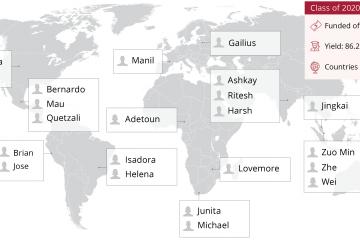
Twenty-one new students are due to arrive on MIT’s campus in January 2020. They are the first cohort of the new Master’s in Data, Economics, and Development Policy, the first master’s degree to be offered by MIT’s Department of Economics.
These impressive students come from 16 countries (more than half of which are middle- and low-income) and a diversity of backgrounds, from ages 16 to 34. They are the realization of J-PAL and MIT’s efforts to make higher education more accessible to students across the globe.
The MicroMasters in Data, Economics, and Development Policy
The fight against poverty is more data-driven than ever before. Increasingly, understanding and producing rigorous evidence is critical for those seeking to affect change. But opportunities to acquire these skills remain extremely limited.
In order to meet rising demand and equip professionals worldwide with the necessary tools to make effective decisions on some of the world’s most difficult questions, J-PAL worked with MIT to launch the MicroMasters credential and blended master’s program in 2016.
The credential combines five online courses and in-person proctored exams to provide learners with the opportunity to gain a strong foundation in microeconomics, development economics, probability and statistics, and engage with cutting-edge research in the field.
The online MicroMasters courses are priced according to learners’ ability to pay, to minimize the financial constraints many learners face. To date 217 learners from 60 countries have earned the full credential.
Learners who have earned the credential can apply to MIT’s new blended Master’s in Data, Economics, and Development Policy. Applicants to the master’s program are not required to have any prior university-level training, nor submit GRE/GMAT scores. This offers all students, no matter their background or where they live, an equal opportunity to prove their ability and motivation through their performance in MicroMasters courses.
Accepted students in the blended master’s program have already earned nearly half of their academic credit before arriving on campus through the MicroMasters program, so they are able to earn a master’s degree from MIT in about eight months.
The first cohort
The first application period for our blended master’s program closed in January 2019. We were thrilled to see 86 eligible students apply - nearly half of credential holders at that time. Thanks to generous support from foundations and individuals, we were able to extend funding to nearly 30% of the incoming class. (Interested in sponsoring one of our dedicated students? Contact us at [email protected].)
During their time here at MIT, students will complete four courses in data analysis and development economics, as well as electives like energy economics. They will participate in weekly department research seminars, and a weekly lunch seminar exclusive to the blended master’s cohort.
Following their spring semester on campus students will also complete a summer internship and capstone project.
Program staff and professors will work with students to identify opportunities that not only allow them to apply what they've learned in the program, but also that align with their interests and help expand their professional network. Students will have the opportunity to work at J-PAL’s partner organizations around the world, or return to their previous employer to put their new skills into practice.
Join us!
We’re excited to meet the new cohort in January and welcome them to our MIT community. Interested in joining the program? The next application cycle opens in December 2019. In the meantime, interested applicants should start completing the MITx MicroMasters in Data, Economics, and Development Policy - our upcoming semester begins September 3. Enroll today!