

Preparing for shocks through Universal Basic Income: Evidence from Kenya
This post was originally published on African Arguments on January 20, 2022, and is part of an ongoing series. Read the other blogs in the series on obstacles to accurately identifying those in need of social assistance; the benefits and challenges of digital IDs; increasing girls’ enrollment in school; and how different electricity billing systems may impact energy access.
Covid-19 pushed an additional 100 million people into extreme poverty, according to the World Bank. The pandemic has not only caused a global health crisis, but also has led to major economic disruptions. The disease has claimed millions of lives globally, including thousands dying of starvation, lack of access to medical care due to income losses, and illness because of exposure due to inability to isolate as people need to work to sustain their household.
Governments and civil society, realizing the effect the pandemic and recession are having on people, have responded with a large increase in the number and reach of social protection programmes, including cash transfers, in-kind grants, subsidies and school feeding programmes. As climate change becomes an increasingly scary reality, it is important to explore to what extent and how we plan for large shocks. Do the effects of pre-existing social assistance programmes persist during a health and economic shock? What about a universal basic income – could that be a solution to unanticipated shocks?
What is a universal basic income (UBI)?
A universal basic income (UBI) is a specific form of social protection: an unconditional cash transfer large enough to meet the basic needs of individuals and delivered to everyone within a community. The idea of a UBI has been around for decades and of late has been gaining traction globally, with pilots launched in several countries including India, Finland, and the US among others. A poll conducted in Europe last year found that 64 percent of those surveyed were in favour of a UBI and this increased to 68 percent if respondents consider the current pandemic in their response.
The narratives for a UBI are slightly different depending on the context. High income countries see a UBI as a means to deal with the disruption caused by automation and allow for more leisure. On the other hand, in lower income countries a UBI is seen as a way to effectively reach all those in need of support and reduce poverty.
In the developing world, there are many arguments for and against a UBI. For one, UBI does not rely on targeting (i.e. identifying specific individuals within a community to receive the transfer) which in practice can be difficult due to lack of accurate, holistic, and/or frequently updated data. The lack of suitable data could result in exclusion of a large number of deserving beneficiaries, particularly in lower income countries. Further, targeting creates potential for cronyism by those in power at the cost of those who might be more deserving.
Another argument put forth by advocates of a UBI is that it provides a form of insurance against unpredictable risks with unknown effects (such as an unanticipated global pandemic or natural disaster). As the pandemic, and likely other large natural shocks, affect people across income groups and location, in addition to the broader economy, one could argue that non-targeted transfers may be more appropriate and could also kickstart the economy through increased investment, spending, and demand for products.
Further, universal schemes include a larger group of citizens than targeted schemes, who often have greater bargaining power than the poorest citizens. Since this affects everyone, it could be more politically acceptable. Also since a larger group – including those with more bargaining power than the poorest – is invested in the outcomes of a UBI, it could be held more accountable.
However, on the other hand, it is unclear if the positive effects of social protection transfers found during “normal times” will hold during the pandemic. Concerns around supply chain disruptions leading to lack of access to food and other necessities may limit the effectiveness of cash grants. Hence, any social protection measure including a UBI might be ineffective in the absence of other support such as food rations. Further, universal schemes will likely be costlier due to the increased number of people being covered. This is particularly true in cases where universalization is not coupled with self-targeting mechanisms and a reduction in expenditure on other social programmes. However, universalization could also reduce administration costs as targeting is not required. Finally, universalization could shift away the focus from the poorest and their needs.
Evaluating UBI in Kenya
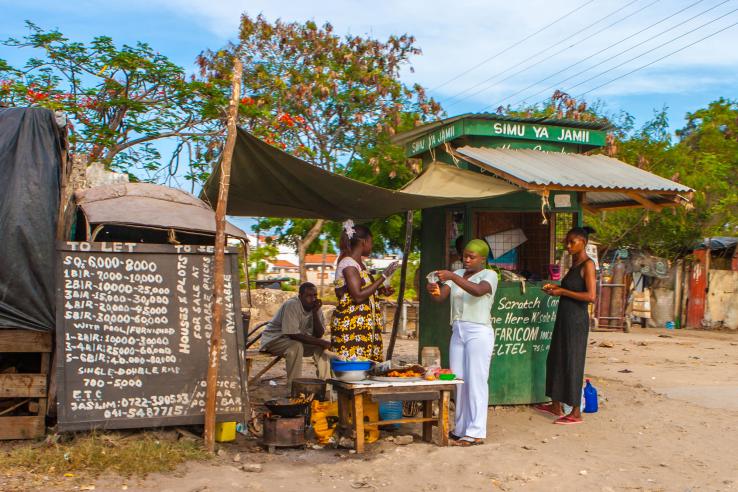
In 2017, Abhijit Banerjee, Michael Faye, Alan Krueger, Paul Niehaus, and Tavneet Suri, in collaboration with Innovation for Poverty Action (IPA) and GiveDirectly, launched a randomized evaluation in Kenya to test the effects of a digitally transferred UBI in two of Kenya’s low-income counties. The research took place in Siaya and Bomet Counties in Kenya, which have populations of 940,000 and 860,000 respectively. Approximately 630,000 people (roughly 35 percent of the population) in these counties are living below the Kenyan government’s poverty line.1
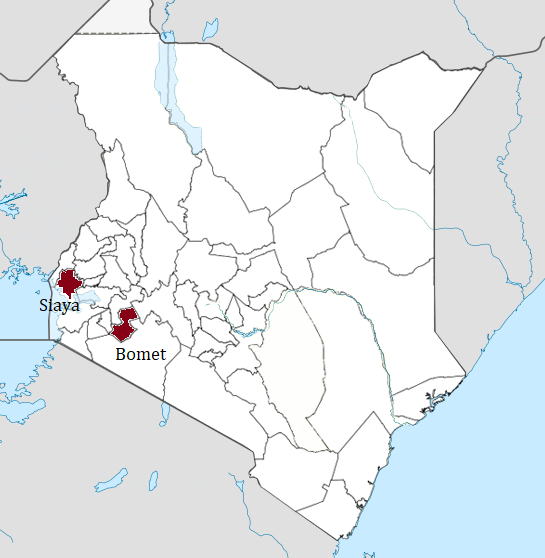
Participants, in the study, consisting of 14,474 households from 295 villages, were randomly assigned into one of four groups, three of which received digital cash transfers with varying frequency and size:
- Lump sum UBI: In 71 villages, approximately 8,800 people received a large lump-sum transfer (~US$500) at the beginning of 2018.
- Long-term UBI: In 44 villages, approximately 5,000 people received a smaller long-term transfer (US$0.75 per adult per day) scheduled to be received regularly for 12 years. This amount covered basic food and maybe some basic health and education related expenses.
- Short-term UBI: In 80 villages, approximately 8,800 people received a short-term transfer (US$0.75 per adult per day) for two years that had largely been concluded prior to the Covid survey.
- Comparison group: In 100 villages, approximately 11,000 people do not receive any transfer and make up the comparison group.
The Covid-19 pandemic unfortunately served as a unique opportunity to examine to what extent a UBI can mitigate the impact of a large shock. Against this backdrop, the researchers, funded by J-PAL Africa’s Digital Identification and Finance Initiative (DigiFI), conducted phone surveys in May and June 2020 to measure the effects of the pandemic on households and to assess whether the negative effects of the pandemic were mitigated by receipt of a UBI grant. To assess how outcomes have changed since the onset of the pandemic, they compared the data from the Covid survey to data from the pre-pandemic survey of households conducted between August and December of 2019.
In the absence of a UBI
During the pandemic and in the absence of a UBI, people (in the comparison group) experienced widespread hunger, sickness, and depression (measured using the standard Center for Epidemiological Studies Depression Scale (CES-D)). Sixty-eight percent of adults who did not receive any UBI in this study reported experiencing hunger in the past 30 days. Forty-four percent of households had at least one member fall ill during the last 30 days, indicating a fairly unwell population. Given Covid-19’s very low prevalence at the time of the surveys (12 cases in total in Bomet and Siaya) these illnesses were almost surely something else. Twenty-nine percent of adults had been to a hospital and 44 percent were depressed. This highlights the condition of people during the pandemic in Siaya and Bomet counties in Kenya.
It is important to note that the hunger, illness, and depression, reported above, could be driven by agriculture seasonality and/or Covid-19. Kenya experiences a lean agriculture season, in which food is scarcer and more expensive in May–June, which coincided with one of the most severe lockdowns of the pandemic. This lean season could have led to the decreased income effects seen across both UBI beneficiaries and non-beneficiaries. The researchers were not able to isolate the effects of the pandemic from effects of the lean season. However, the lean season is also a major shock as is Covid-19. As an argument for a UBI is that it protects against shocks, it is important to understand the effects of UBI against the shock experienced in May–June 2020 whether this shock was the agriculture lean season or the pandemic or a combination of both.
Effects of receiving a UBI: welfare, public health, and resilience
The UBI led to modest but significant effects on welfare. Beneficiaries of the UBI experienced less hunger, sickness and depression, both before and during the pandemic. However, prior to the pandemic, the UBI also led to increased investment in enterprises, earning of which fell during the pandemic and economic restrictions. The effects of the UBI are summarized below:
Hunger: 57–63 percent of beneficiaries that received a UBI were likely to experience hunger. This is a 7–16 percent reduction in experiencing hunger as compared to those that did not receive a UBI. The reduction was around twice as large for the long-term UBI beneficiaries and significantly different from those in the short-term and lump sum arms. Recipients of a UBI were also more likely to have a diverse diet, including eating meat/fish. That said, even in the long-term, the reduction in hunger is modest with the rate of hunger falling from 68 to 57 percent.
Illness: 38–42 percent of adults who received a UBI were physically ill. This is a decrease of 9–14 percent or 2–6 percentage points as compared to those that did not receive a UBl. Recipients were also significantly less depressed in the long-term and short-term. UBI recipients were 7–10 percent less depressed than non-recipients. Non-recipients scored an average of 16.05 on the CES-D scale and 44 percent were depressed.
Public health: The UBI appears to have impacted public health behaviours. Receiving a UBI led to reduced meetings among friends and relatives, though it did not change commercial interactions. Further, UBI beneficiaries were 3–5 percentage points less likely to seek medical attention, as compared to 29 percent who had sought medical attention in the comparison group. This is interesting and puzzling as evidence shows that transfers in “normal” times increase utilization of health services. However, these are not usual times. The decrease in seeking medical attention could be driven by households’ preference to reduce medical interactions during a pandemic and households with more financial resources being better able to do so. It may also reflect actual lower incidence of illness among households receiving a UBI or be driven by lower levels of depression among UBI recipients. Although not measured directly, the lower likelihood of seeking medical attention would have resulted in a decreased burden on hospitals, which could have been helpful in freeing up public health system capacity which has been crucial during the pandemic.
Income: Prior to the pandemic, some beneficiaries of a UBI diversified their income streams by starting non-agricultural enterprises. This is consistent with the idea that transfers induced beneficiaries to undertake relatively risky income-generating activities knowing that they had additional income to meet their basic needs. These beneficiaries saw large corresponding increases in profits from these enterprises before the pandemic. But when the pandemic and economic lockdowns hit, non-agricultural enterprise earnings fell by 71 percent from December 2019 to June 2020. While these non-agriculture enterprises remained operational for the most part, the income gains witnessed pre-Covid were wiped out. On net, UBI recipients thus saw their incomes fall more when incomes in general fell between late 2019 and early 2020, but saw hunger increase less.
UBI as a tool against unanticipated shocks
Access to a UBI before and during a large unanticipated shock, such as Covid-19, helped recipients’ well-being. However, UBI is unlikely to be a stand-alone tool of choice in such contexts. A UBI is likely to encourage risk-taking, as observed in Kenya with recipients’ pre-Covid investments in non-agricultural enterprises, and hence, may increase exposure to negative shocks. This is not a failure of a UBI – as by design it encourages risk to increase returns while providing a cushion for basic needs.
These results highlight the importance of access to income supplements, particularly to reduce hunger, exposure to the disease, and illness during a large shock. The results strengthen the case for social protection programmes and building infrastructure for cash transfer systems that can be activated at short notice and be used to deliver income support, in response to unanticipated crises.
End Note
1 Defined as less than US$15 per household member per month for rural areas, and US$28 for urban areas.
About the series:
The Abdul Latif Jameel Poverty Action Lab (J-PAL) and Debating Ideas collaborative blog series – Unpacking the evidence of social programmes in Sub-Saharan Africa – seeks to contribute evidence-informed perspectives to debates around key questions in the fight against poverty. The material published as part of this blog series is based on J-PAL’s research network and is anchored by more than 225 affiliated researchers at universities around the world who are united in their use of randomized evaluations to identify the most effective approaches to reducing poverty and improving lives.
To what extent do cash transfers cushion the blow to poor families during hard times? Taking advantage of a pre-existing large-scale evaluation of a universal basic income project in Kenya, researchers measured how different types of cash transfers impact recipients’ income, reported well-being, food security, mental health, and social interaction in the context of the COVID-19 pandemic and the accompanying agricultural seasonality. Researchers found that although the income gains from small businesses started before the pandemic were wiped out, transfer recipients experienced modestly better food security and physical and mental health than those who had not received transfers, along with some positive impacts on public health indicators. The results suggest that that cash helped hard-hit households weather a storm, but that UBI was not enough to shield households completely from the economic hit, in part because it had induced them to increase their risk exposure.
Policy issue
Universal basic income (UBI) is a specific form of unconditional cash transfer: enough to meet basic needs and delivered to everyone in a given community. In recent years the merits of UBI have been intensely debated in low-and middle-income and high-income countries, but rigorous evidence from representative populations to inform this debate has been lacking. One argument in favor of UBI is that it can provide a form of insurance, cushioning the blow for poor families when uninsurable or unanticipated events occur. Such arguments are typically difficult to test because they involve claims about rare or unforeseeable events. However, because the COVID-19 pandemic occurred a year into a large-scale evaluation of UBI in Kenya, researchers were able to shed light on this question as well as on other critical questions for social protection programming in the pandemic context, such as: how long should transfers last? Should they come in one lump sum or be disbursed in increments? If and how do transfers affect health-seeking behavior and social distancing? Overall the study provides some of the first evidence on the impacts of social protection programs during the pandemic. However, a universal basic income is a very specific type of cash transfer – long term, sized to be sufficient for basic needs, and given to all members of a society. While governments around the world, from Namibia to New Jersey, have piloted UBI, little rigorous evidence exists on the impacts of a long-term commitment to providing a UBI.
Context of the evaluation
The spread of COVID-19 and the restrictions on economic activity put in place to contain its spread have threatened the livelihoods of many of the poorest, most vulnerable families on the planet. To respond to this unprecedented global crisis, governments around the world have dramatically expanded their social safety net programs. Cash transfers make up a large share of this expansion, reaching 1.2 billion people. As the pandemic stretches on, policymakers are faced with difficult questions on how to design these programs.
This research took place in Siaya and Bomet Counties in Kenya, which have populations of 940,000 and 860,000, respectively1. Approximately 630,000 people in these counties are living below the Kenyan government’s poverty line2 defined as less than US$15 per household member per month for rural areas, and US$28 for urban areas3. At the time of the initial survey, households owned on average 1.7 acres of land, 86 percent had a phone, 13 percent had a bank account (including digital accounts), 73 percent had a farm enterprise, 21 percent owned a non-farm enterprise, and 85 percent experienced hunger in the year before.
The study was conducted with GiveDirectly, an international NGO that makes unconditional cash transfers to poor households in developing countries. IPA has partnered with GiveDirectly on a number of evaluations of unconditional cash transfer programs, and positive results have influenced global development priorities.
Details of the intervention
Researchers partnered with GiveDirectly to evaluate the effects of a universal basic income on economic outcomes, time use, risk-taking, gender relations, and life aspirations.
Adults over the age of eighteen from 295 villages, encompassing 14,474 households in two districts in Kenya, were randomly assigned to one of four groups:
- Comparison group: In 100 villages (approximately 11,000 people), participants received no additional resources.
- Long-term UBI: In 44 villages (approximately 5,000 people), participants received payments sufficient to cover the most basic needs (about US$0.75 per adult per day) for 12 years.
- Short-term UBI: In 80 villages (approximately 8,800 people), participants received payments sufficient to cover basic needs (about US$0.75 per adult per day) for two years. These payments were ongoing at the time of the main endline survey in late 2019 but had largely stopped by the time the researchers conducted phone surveys in May-June 2020.
- Lump sum UBI: In 71 villages (approximately 8,800 people), participants received one-time payments of about US$500, equivalent to the total short-term UBI transfer amount.
Researchers also contrasted the effects of the lump sum payments to the short-term and long-term UBI (“stream” payments). This contributes direct evidence to current conversations about the relative impacts of capital and asset transfers.
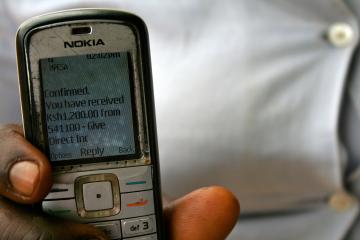
GiveDirectly began delivering transfers in 2018 digitally through M-PESA, a mobile money service used widely throughout the country. The research team gathered follow-up data from August 2019 to December 2019, before the pandemic hit, then in May and June 2020 (by phone survey), in the midst of the strictest phase of Kenya’s lockdown to date, focused on the issues most directly related to the pandemic. This allowed researchers to examine pre/post COVID-19 changes in several key areas including earnings, food security, mental health, and social distancing.
Results and policy lessons
Overall, the study found that transfer recipients experienced better food security and physical and mental health than those who had not received transfers, along with some positive impacts on public health indicators. Small businesses that recipients had started prior to the pandemic remained operational, but income gains from these businesses were wiped out.
Income: Transfers, and the long-term transfers in particular, led to an increase in risk-taking commercial activities and also exposure to shocks. Before the pandemic hit, recipients had diversified their income streams to new non-agricultural enterprises and saw a large corresponding increase in profits from these enterprises, without much change in earnings from wage labor or agricultural work. After the pandemic, the enterprises largely remained open but earnings were flat, as new enterprises appear to have suffered along with the old (in the comparison group, non-agricultural enterprise earnings fell 71 percent from before the pandemic to after). However, it’s important to note that drops in income (accompanied by changes in other economic outcomes) typically happen during this time of year as part of the usual agricultural cycle, and the study wasn’t able to isolate the pandemic’s impacts from these usual “lean season” drops.
Hunger: In a context where hunger was widespread (68 percent reported experiencing hunger in the last 30 days in the comparison group), transfer recipients were 5-11 percentage points less likely to report experiencing hunger. This effect was significantly larger for the long-term arm that expected to continue receiving transfers, than for the others that did not.
Illness: Recipients were also 4-6 percentage points less likely to report a household member was sick during the last 30 days off (44 percent in the comparison group). Given its very low prevalence in Bomet and Siaya at the time of our surveys (12 cases total) these illnesses were almost certainly not COVID-19 cases.
Mental health: Transfer recipients were less depressed in the short-term and long-term groups, though not in the lump-sum group. Overall, transfers continued to have the kinds of impacts on basic measures of well-being typically seen in pre-pandemic research.
Health-seeking behavior and social interaction: Transfers generally made a small change or no change on behaviors related to public health. They reduced the probability that recipients had sought medical attention at a hospital in the last 30 days by 3-5 percentage points (29 percent had sought medical attention in the comparison group), potentially freeing up health system capacity. There is also some evidence that transfers reduced social interaction (specifically, visits to friends or relatives) which could lower the rate of contagion. Estimated impacts on interaction for commercial purposes such as shopping or work are not precise enough to support strong conclusions. In short, there was no evidence that transfers had harmful effects on public health, and some evidence that they helped.
In sum, the results suggest that that cash helped hard-hit households weather a storm, but that UBI is not enough to shield households from an economic hit of this level.
Kenya National Bureau of Statistics, “County Statistical Abstracts 2015”. https://www.knbs.or.ke/county-statistical-abstract/
Commission on Revenue Allocation, “Kenya County Fact Sheets“ (2011). http://siteresources.worldbank.org/INTAFRICA/Resources/257994-1335471959878/Kenya_County_Fact_Sheets_Dec2011.pdf
Kenya National Bureau of Statistics, “Basic Report on Well-being in Kenya”, 2007.
J-PAL affiliated researchers supported the Government of Chile in designing a cash transfer program during the Covid-19 pandemic, which reached almost 3 million households.
The Covid-19 pandemic has imposed unprecedented social and economic challenges. For example, business closures have pushed an estimated 176 million people into extreme poverty in 2020 alone. Around the world, low-income populations have been disproportionately impacted by the crisis, facing higher job losses, increased health risks, and reduced access to support services, with little or no resources to help maintain their livelihoods. Social protection programs have therefore become crucial for providing income to vulnerable groups, particularly informal workers, throughout the crisis.
In Chile, J-PAL affiliated researchers Francisco Gallego and Claudia Martinez were part of a team of economists and policy experts from the Pontificia Universidad Católica de Chile (PUC Chile), who, along with staff from the J-PAL Latin America & the Caribbean (LAC) office, supported the government in designing a cash transfer program for workers who were not formally employed or previously registered in the government’s database of beneficiaries. Based on findings from 24 randomized evaluations looking at the effectiveness of different types of transfers and delivery schemes, the team drafted a proposal that helped inform the design of Chile’s Ingreso Familiar de Emergencia (IFE) program. Since implementation began in May 2020, the US$830 million program reached over 3 million households in the first five months.1
The Problem
Covid-19 has disproportionately impacted low-income populations, leading to questions on how best to target and deliver social protection programs to vulnerable households.
The outbreak of the Covid-19 pandemic has underscored the key role of governments in supporting the most vulnerable during times of crises. With the implementation of lockdown measures around the world, low-income populations have been disproportionately impacted by the resulting economic crisis, facing higher job losses, increased health risks, and reduced support services, with little or no resources to maintain their livelihoods.
Social protection programs, such as cash or food transfers, have been crucial for these groups to cope with the economic and health vulnerabilities caused by this health crisis. One of the main challenges associated with social assistance policies, however, is the issue of targeting—i.e. how to identify the individuals who most need this support?
In early 2020, even prior to the start of the Covid-19 pandemic, Chile was experiencing a serious economic crisis, which put strong pressure on the government to deal with issues of inequality and welfare improvements. The onset of the pandemic in mid-March led to additional economic and social challenges, such as increased unemployment and economic vulnerability resulting from lockdown measures. A survey by the UNDP and the Chilean government showed that, before the pandemic, 16.5 percent of households declared that their income was “not enough” to finance their expenses. By July 2020, this figure had increased to 48.8 percent of households.
The Chilean government decided to respond to the crisis through a series of policies aimed at mitigating the negative impacts of Covid-19. The first wave of announced measures included cash transfers to the most vulnerable households (Bono de Emergencia Covid-19) who were already enrolled in social protection programs, as well as a series of policies aimed at supporting formal workers and small business owners.2
However, these policies did not include individuals who were not formally employed or previously registered in the government’s database of beneficiaries (Registro Social de Hogares), which represented over 26 percent of the workforce in Chile by the second quarter of 2020. This became an important concern for the government, given that informal workers were particularly affected by the lockdown measures, as most of their activities and income came from working on the streets in close person-to-person contact. The government needed, therefore, to find the most effective way to identify and reach this population and provide them with the kind of support they needed.
The Policy Advice
Based on evidence from randomized evaluations, J-PAL affiliated researchers developed a cash transfer program proposal for the Chilean government.
At the start of the pandemic, the Minister of Finance reached out directly to J-PAL LAC’s Co-Scientific Director, Francisco Gallego, for advice on how best to provide economic support to vulnerable households during the Covid-19 pandemic. Specifically, they sought out evidence to help solve the following challenges:
- Identify and define the population to receive the transfers.
- Create a list of beneficiaries leveraging administrative data or other strategies, while being careful to avoid including ineligible people and in-person contact.
- Define the type of transfer (conditional, unconditional, cash, in-kind, vouchers, etc.), amounts, frequency, delivery systems, and overlap with other state subsidies, respecting the overall fiscal constraints of the public budget.
- Consider potential unexpected incentives or unwanted behaviors that a transfer or subsidy may generate (e.g. incentives to stay in the informal sector to avoid losing the subsidy).
To respond to this request, Gallego created a working group composed of Chilean economists and policy experts from the Pontificia Universidad Católica de Chile (PUC Chile), including J-PAL affiliate Claudia Martinez.3 Simultaneously, J-PAL LAC prepared two evidence briefs on the impacts of different social protection programs. These materials were first shared by Gallego with the Minister in a series of meetings, and then included as an appendix in the final program proposal presented by the group of experts to the government.
The evidence briefs included a review of 24 randomized evaluations (twenty of which had been conducted by J-PAL affiliates) looking at the effectiveness of different types of transfers, delivery schemes, durations, amounts, and conditionality. The brief highlighted the importance of unconditional monetary transfers to provide households with greater flexibility on their consumption decisions, allowing them to spend according to what they themselves identify as the most pressing needs.4 5 The evidence also suggested that, given social distancing measures, mobile transfers could be most effective in addressing logistical challenges for program implementation.6
Another important discussion focused on the relative effectiveness of different targeting strategies, such as identifying eligible people through administrative data, self-targeting, or community-targeting.7 8 9 Finally, the evidence highlighted the importance of providing the public with clear information on the benefits of social protection programs to improve program delivery and empower households to receive the benefits to which they are entitled.10 Overall, the evidence pointed to the potential of cash transfers to reduce poverty,11 improve educational outcomes,12 13 14 and increase access to health services.15 16 17
In parallel, Gallego and Martínez were also involved in a series of conversations around government spending and economic response to contain the virus. As part of different advisory commissions, both affiliates provided technical support to help policymakers design a fiscal plan that would reserve enough resources for a social protection program in the long-term. These inputs were essential to help accelerate the political process and guarantee a timely implementation of the program.
From Research to Action
Informed by recommendations from J-PAL affiliated researchers and staff, the Government of Chile designed and implemented a social protection program to improve economic welfare for households adversely affected by Covid-19.
In May 2020, the Chilean government created the Ingreso Familiar de Emergencia (IFE) cash transfer program, built off evidence and advice shared by the expert working group. The law was approved on May 16, 2020 (full text here) and the first transfer was initiated on May 29. Households that received informal income were eligible to receive the transfer for a maximum of six months, with the last two transfers reduced by 70 percent and 55 percent, respectively. The amount of the transfer depends on the size of the household, with households receiving 100,000 Chilean pesos (US$136) per member for up to four members, and declining gradually after the fifth member.
The guidance provided by the working group, with support from J-PAL LAC, helped in defining and identifying the target population, as well as in selecting the amount and duration of the transfers. As recommended in the proposal, IFE focused on delivering assistance to the 60 percent most vulnerable households with informal incomes and used administrative data from the Registro Social de Hogares to identify eligible households. The program also includes a mechanism to allow potential beneficiaries not identified through administrative data to apply individually and have their cases assessed—a measure that the proposal identified as necessary due to the imperfect nature of the existing administrative data.4 Finally, as advised in the proposal, the government chose to roll out the transfer using electronic payments and direct deposits to bank accounts of beneficiaries, avoiding creating crowds in banks or other offices.
Chile needed urgent responses to support families and subsidize employment associated with the pandemic. This required great agility and inventing, in the broadest sense of the word, policy designs that we were not used to. Not only was there an intellectual, theoretical and applied contribution of high level, but Francisco Gallego and J-PAL were able to summon the best minds of the PUC-Chile, who, with great commitment and systematic support, gave strength and confidence to what we were doing. I am sincerely grateful for the opportunity and for this work since I believe that this is how public policies are built, in a collaborative way.
— Ignacio Briones, former-Minister of Finance of Chile
This experience highlights how evidence from randomized evaluations, combined with knowledge and understanding of the local context, can play a powerful role in informing governments’ decisions around the design of social protection programs. According to the World Bank, social protection programs like IFE helped mitigate some of the effects of the economic crisis caused by Covid-19. Prior to the pandemic, 3.3 percent of Chileans were living below the poverty line (less than US$5.50 per day). Despite grim early predictions that the pandemic would drive nearly one million Chileans into extreme poverty, the social assistance measures implemented by the government helped to keep Chile’s poverty rate nearly unchanged.
References
Aker, J.C., R. Boumnijel, A. McClelland, and N. Tierney. 2016. “Payment Mechanisms and Anti-Poverty Programs: Evidence from a Mobile Money Cash Transfer Experiment in Niger.” Economic Development and Cultural Change 65 (1).
Alatas, V., A.V. Banerjee, R. Hanna, B.A. Olken, R. Purnamasari, and M. Wai-Poi. 2016. "Self-Targeting: Evidence from a Field Experiment in Indonesia." Journal of Political Economy 124(2).
Alatas, V., A.V. Banerjee, R. Hanna, B.A. Olken, and J. Tobias. 2012. "Targeting the Poor: Evidence from a Field Experiment in Indonesia." American Economic Review 102(4): 1206-1240.
Attanasio, O., E. Battistin, E. Fitzsimons, and M. Vera-Hernandez. 2005. “How Effective are Conditional Cash Transfers? Evidence from Colombia.” London, U.K: Institute for Fiscal Studies Briefing Note.
Banerjee A.V., R. Hanna, J. Kyle, B.A. Olken, and S. Sumarto, 2018. "Tangible Information and Citizen Empowerment: Identification Cards and Food Subsidy Programs in Indonesia," Journal of Political Economy 126, (no 2): 451-491.
Fiszbein, A., and N. Schady. 2009. Conditional Cash Transfers: Reducing Present and Future Poverty. World Bank Publications, Washington D.C.
Gertler, P. 2000. “Final Report: The Impact of Progresa on Health.” International Food Policy Research Institute (IFPRI): Food Consumption and Nutrition Division.
Gertler, P. 2004. “Do Conditional Cash Transfers Improve Child Health? Evidence from PROGRESA’s Control Randomized Experiment.” American Economic Review 94 (2): 336–341.
Glewwe, P., and P. Olinto. 2004. “Evaluating the Impact of Conditional Cash Transfers on Schooling: An Experimental Analysis of Honduras’ PRAF Program.” University of Minnesota Unpublished Manuscript.
Hanna R., and B.A. Olken. 2018. “Universal Basic Incomes versus Targeted Transfers: Anti-Poverty Programs in Developing Countries”. Journal of Economic Perspectives, 32(4):201-226.
Haushofer, J., and J. Shapiro. “The Short-Term Impact of Unconditional Cash Transfers to the Poor: Experimental Evidence from Kenya.” The Quarterly Journal of Economics, accepted manuscript, July 19, 2016. Haushofer, J., and J. Shapiro. “The Long-Term Impact of Unconditional Cash Transfers: Experimental Evidence from Kenya.” Working Paper, January 2018
Maluccio, J. A. 2007. “The Impact of Conditional Cash Transfers in Nicaragua on Consumption, Productive Investments, and Labor Allocation.” ESA Working Paper No. 07-11.
McIntosh, C., and A. Zeitilin. “Benchmarking a Child Nutrition Program against Cash: Experimental Evidence from Rwanda.” Working Paper, 2018.
Schultz, P. 2004. “School Subsidies for the Poor: Evaluating the Mexican Progresa Poverty Program.” Journal of Development Economics 74 (1): 199–250.
As of August 31, 2020.
The Bono Covid consisted of a one-time unconditional cash transfer to individuals and/or households of 50,000 Chilean pesos (US$70). In addition, new laws were enacted to allow access to unemployment insurance benefits to employed individuals in the formal sector who had their jobs impacted by the Covid-19 pandemic, as well as the postponement of tax payments by small and medium enterprises.
The group also included PUC professors Josefa Aguirre and Andrés Hojman, specialists from PUC’s Centro de Políticas Públicas Humberto Jimenez and María de los Angeles Morandé, as well as J-PAL LAC staff Paula Pedro and Edoardo Trimarchi.
As mentioned before, starting in October 2019, Chile went through a period of strong social unrest and economic crisis, which led to increased vulnerability among low-income households in specific areas of the country. The administrative data available at this time did not account for these recent socio-economic changes and, therefore, was no longer perfectly representative of the Chilean population.
Haushofer, J., and J. Shapiro. “The Short-Term Impact of Unconditional Cash Transfers to the Poor: Experimental Evidence from Kenya.” The Quarterly Journal of Economics, accepted manuscript, July 19, 2016. Haushofer, J., and J. Shapiro. “The Long-Term Impact of Unconditional Cash Transfers: Experimental Evidence from Kenya.” Working Paper, January 2018
McIntosh, C., and A. Zeitilin. “Benchmarking a Child Nutrition Program against Cash: Experimental Evidence from Rwanda.” Working Paper, 2018.
Aker, J.C., R. Boumnijel, A. McClelland, and N. Tierney. 2016. “Payment Mechanisms and Anti-Poverty Programs: Evidence from a Mobile Money Cash Transfer Experiment in Niger.” Economic Development and Cultural Change 65 (1).
Hanna R., and B.A. Olken. 2018. “Universal Basic Incomes versus Targeted Transfers: Anti-Poverty Programs in Developing Countries”. Journal of Economic Perspectives, 32(4):201-226.
Alatas, V., A.V. Banerjee, R. Hanna, B.A. Olken, R. Purnamasari, and M. Wai-Poi. 2016. "Self-Targeting: Evidence from a Field Experiment in Indonesia." Journal of Political Economy 124(2).
Alatas, V., A.V. Banerjee, R. Hanna, B.A. Olken, and J. Tobias. 2012. "Targeting the Poor: Evidence from a Field Experiment in Indonesia." American Economic Review 102(4): 1206-1240.
Banerjee A.V., R. Hanna, J. Kyle, B.A. Olken, and S. Sumarto, 2018. "Tangible Information and Citizen Empowerment: Identification Cards and Food Subsidy Programs in Indonesia," Journal of Political Economy 126, (no 2): 451-491.
Fiszbein, A., and N. Schady. 2009. Conditional Cash Transfers: Reducing Present and Future Poverty. World Bank Publications, Washington D.C.
Schultz, P. 2004. “School Subsidies for the Poor: Evaluating the Mexican Progresa Poverty Program.” Journal of Development Economics 74 (1): 199–250.
Glewwe, P., and P. Olinto. 2004. “Evaluating the Impact of Conditional Cash Transfers on Schooling: An Experimental Analysis of Honduras’ PRAF Program.” University of Minnesota Unpublished Manuscript.
Maluccio, J. A. 2007. “The Impact of Conditional Cash Transfers in Nicaragua on Consumption, Productive Investments, and Labor Allocation.” ESA Working Paper No. 07-11.
Gertler, P. 2000. “Final Report: The Impact of Progresa on Health.” International Food Policy Research Institute (IFPRI): Food Consumption and Nutrition Division.
Gertler, P. 2004. “Do Conditional Cash Transfers Improve Child Health? Evidence from PROGRESA’s Control Randomized Experiment.” American Economic Review 94 (2): 336–341.
Attanasio, O., E. Battistin, E. Fitzsimons, and M. Vera-Hernandez. 2005. “How Effective are Conditional Cash Transfers? Evidence from Colombia.” London, U.K: Institute for Fiscal Studies Briefing Note.