

Image
Agriculture is central to improving living standards, food security, and nutrition outcomes across sub-Saharan Africa and South Asia. Large shares of the population—approximately 50 percent of the labor force—are engaged in agricultural activities, and agriculture is overwhelmingly characterized by small-scale producers who cultivate small amounts of land. However, the productivity of farmers in these regions remains low, hampering gains in incomes and livelihoods.
The rapidly expanding practice of delivering services digitally may be an effective strategy to combat constraints small-scale producers face in adopting more productive technologies, such as access to information, financial institutions, and markets. Digitalization may also help service providers better target a bundle of these constraints within a single delivery mechanism, such as by providing weather advisory information through a mobile app that also connects users to loan providers or a bank. However, rigorous evidence is needed to understand how digital services can be effectively leveraged to improve outcomes of small-scale producers.
J-PAL and the Center for Effective Global Action’s (CEGA) Digital Agricultural Innovations and Services Initiative (DAISI) was launched in 2021 to rigorously evaluate programs that increase the availability, quality, and reach of these bundled, digital agricultural solutions and services for small-scale agricultural producers. DAISI’s research agenda is oriented around six main themes which aim to shed light on what drives farmers’ adoption of digital services, the impacts of these bundles on agricultural outcomes, and which element(s) of a bundle are key to its success, as well as implications for indirect impacts. DAISI also prioritizes research which generates evidence on three cross-cutting themes of empowering women farmers, engaging youth in agriculture, and increasing the resiliency of small-scale producers against climate change.
However, the funding needed to carry out high-quality research on these important priorities is not always widely accessible, which is why DAISI—along with a growing list of J-PAL initiatives—offers funding, mentorship, and training opportunities for researchers who are based in and are interested in conducting research in sub-Saharan Africa and South Asia through its Regional Scholars program.
Applicants eligible for DAISI’s Regional Scholars funding submitted 60 percent of the proposals received in its first funding competition, and make up four out of the seven research teams who were awarded funding. These seven projects, featured below, span the breadth of our priority research themes, and also endeavor to answer critical questions on our cross-cutting themes.
Investing in adaptive crops and seed varieties that can withstand weather shocks, like flood and drought, is critical to boosting food security and stabilizing agricultural production as climate change intensifies the frequency and intensity of these events. Some resilient crops have even attained celebrity status: the UN declared 2023 the International Year of Millets to promote interest and research in the class of stress-tolerant cereals, which include crops like sorghum and finger millet.
DAISI Regional Scholar Aparna Krishna (Indian Institute of Technology), with co-investigator Bharat Ramaswami, is conducting exploratory work in Maharashtra, India, on how to increase the production and profitability of finger millets. In partnership with a local NGO, they are exploring how digital extension services and access to post-harvest technologies can reduce both post-harvest crop losses as well as the amount of time women farmers spend on labor-intensive tasks.
In addition to increasing adoption of crops which can withstand climate shocks, ensuring that farmers have access to accurate, timely weather information is an important component of increasing their ability to adapt to increasingly erratic rainfall patterns. In Nigeria, where farmers’ livelihoods overwhelmingly depend on rainfed agriculture, DAISI Regional Scholar Toyin Olowogbon (Centre for Sustainable Agricultural Empowerment), and co-investigators are exploring how a bundle of seasonal climate advisory information and access to weather-index insurance can impact maize farmers’ decision-making and, ultimately, profits.
In Ghana, DAISI Regional Scholars are working with a digital provider of veterinary services to pilot a drone delivery service of livestock vaccines and medication that will reach farmers in inaccessible locations, especially during the wet season when land travel is disrupted due to flooding. Abdul-Basit Abukari and Mohamed Tanko (University of Development Studies) are studying the feasibility and efficiency of the mobile application to understand factors driving takeup of the service by farmers, including its reliability and impact on farmers using it.
While productivity-enhancing technologies and inputs are important levers to improve farmers’ profits and boost livelihoods, they may also carry negative environmental costs. Identifying strategies to facilitate improved resource management can lead to dual benefits for the environment and for farmers, such as through decreasing erosion or bringing degraded land back into production.
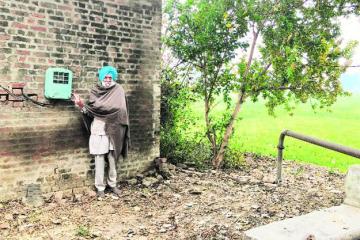
J-PAL invited researcher Ram Fishman (University of Tel Aviv) and his team are conducting a pilot study in Gujarat, India to gauge the impact of water meters and smart irrigation technologies on groundwater depletion and efficient irrigation practices. If farmers do not know appropriate levels of irrigation or are disincentivized to conserve water because they have free access to it, they may not adopt efficient irrigation practices. In this study, researchers will install water meters, smart irrigation technologies, and compare a combination of the two strategies on a small scale to measure outcomes like water usage and agricultural productivity.
In Rwanda, J-PAL affiliated professor Rocco Machiavello (LSE) and co-investigators are conducting a full-scale randomized evaluation of a digitally-enabled intervention which bundles a labor subsidy and a loan for farmers to use toward adopting crop rejuvenation practices on coffee farms. Tree rejuvenation practices such as stumping, uprooting, and replanting increase yields down the line, but they have high upfront costs and require intensive labor, so not many farmers engage in these practices despite the long-term benefits of having healthy trees. This impact evaluation was designed with gender-based constraints in mind to help address the gender gap that exists in accessing information and key resources, and which often contributes to lower yields for women coffee farmers.
Women make up nearly half the agricultural labor force in Africa, but on average produce less per hectare than men. Women farmers face an additional suite of constraints than their male counterparts, ranging from social norms limiting decision-making power and ability to control resources to uneven access to digital devices. While past studies have typically addressed gendered constraints by comparing impacts of interventions between men and women farmers, DAISI is particularly interested in funding research that is intentionally designed to target barriers uniquely faced by women.
DAISI Regional Scholar Frejus Thoto (ACED) and his co-investigators are conducting exploratory work in Benin on a digital, bundled service that provides farmers with information as well as facilitates access to input and output markets. They will hold discussions with a private-sector partner to identify how to incorporate gender-specific barriers such as limited access to inputs and credit in a future randomized evaluation.
In Kenya, J-PAL invited researcher Teresa Molina Millán (University of Alicante) and her team are using gender-responsive approaches in their evaluation of an agricultural app that provides tailored digital extension services to help farmers diagnose and treat plant pest and disease. Traditional in-person extension often may not reach small-scale producers, and especially women farmers, so digital platforms may increase accessibility of information. Researchers are introducing the app, specifically targeting women members, to understand whether financial constraints are a barrier to adoption of the app.
As digitalization rapidly spreads and expands to more services and products, DAISI aims to play a critical role in ensuring that digital solutions are designed, implemented, and scaled in alignment with the priorities of small-scale producers.
DAISI recently launched its second call for proposals, which will continue to support projects at all stages of the research pipeline which identify and test cost-effective and policy-relevant digital and bundled solutions that bolster the productivity and incomes of small-scale producers across sub-Saharan Africa and South Asia. DAISI will also help advance proven interventions along the pathway to policy impact. Starting in this funding round, DAISI is offering funding to researchers working alongside policy and implementation organizations to adapt evidence-informed solutions to a new context or at a larger scale, ultimately expanding the reach of the most successful programs and policies.
We encourage partners who are interested in evaluation to contact us; and to read more about exciting developments from past and ongoing research on our website.