

Using alternative data and artificial intelligence to expand financial inclusion: Evidence-based insights
Photo: Nurul Fadilah | J-PAL
In Indonesia, many micro, small and medium enterprises (MSMEs) face challenges in accessing credit to grow their business, with only 12.7 percent of MSMEs borrowing from banks and other sources in 2021. These constraints are partially due to MSMEs' lack of collateral or historical credit information, leading lenders to view them as high risk or charge high interest rates.
In response, firms using innovative credit-scoring (ICS) have emerged to help banks and peer-to-peer lenders predict potential borrowers’ likelihood to repay a loan. In contrast to traditional credit scoring models that use credit history, ICS uses artificial intelligence (AI), specifically machine learning algorithms, to evaluate data unrelated to a borrower’s credit history—what we refer to here as “alternative data”—to make predictions. These data could be digital transaction data, mobile phone and social media usage, or bills and tax payment history.
Machine learning algorithms analyze large sets of the alternative data to identify patterns that can be useful in making credit risk assessments, which traditional models may overlook. For example, research shows that the presence of a financial app on an individual’s phone can be an indicator of financial sophistication and therefore, a useful variable for predicting credit worthiness. The accuracy of these algorithms increases over time as new historical data are added to the model.
Adoption of ICS is a promising approach to increase credit access, especially for those who are unbanked or lack collateral. The Government of Indonesia has announced that they are exploring implementing a credit scoring system that uses alternative data to help more MSMEs gain access to lending. However, several questions remain: How can ICS effectively assist governments and lenders in increasing credit access? How accurate is the information generated by ICS, considering the diverse demographic of Indonesia? Are there risks associated with using ICS?
These were some of the key questions explored during the recent “Learning Collaborative: Innovation for MSME Development” event hosted by J-PAL Southeast Asia and the Directorate of MSME and Cooperative Development of Indonesia’s Ministry of National Development Planning (Bappenas) on 11 December 2023. During the session, representatives from government, the private sector, academia, and non-governmental organizations discussed the opportunities and challenges of using alternative data and AI in credit scoring by drawing from existing research and their experience.
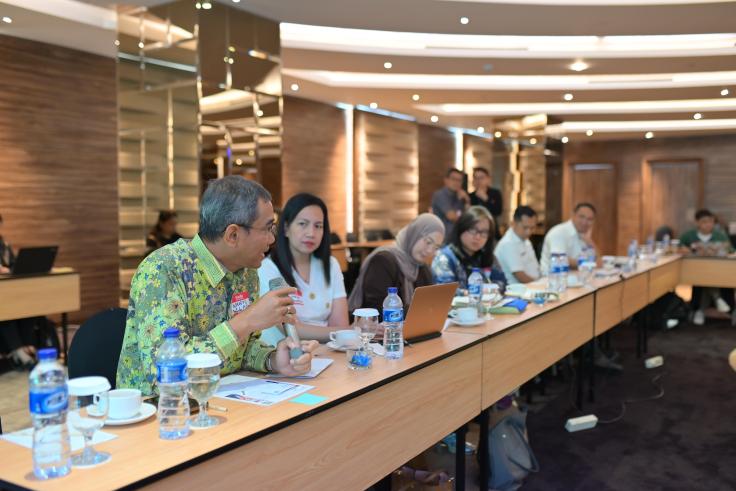
Photo: J-PAL
Opportunities and challenges of using AI and alternative data
Alternative data, such as mobile and social footprints, may enhance traditional credit scoring models and improve financial inclusion. A study in India by Agarwal et al. (2019) found that machine learning models using mobile and social footprint variables (e.g. types of apps installed, presence of social apps) can predict loan defaults more effectively than models that only use credit scores as they capture unique insights into credit risk that are not easily captured by earnings, education, or credit scores. The study also suggested that using alternative data can improve credit access for individuals without a credit score who would have been rejected by the traditional credit screening model.
While alternative data may be used to predict loan default, participants at the Learning Collaborative event raised the challenge of data integration and transfer that may affect the performance of ICS, which highly depends on the quality and quantity of data. Currently, acquiring high-quality alternative data remains a challenge in Indonesia, due to hesitancy from data owners to share information, a lack of understanding of the methods to share data safely (i.e. protecting personal information), and the absence of a standardized data collection protocol among firms.
At the moment, the government of Indonesia is creating an integrated MSME database that could facilitate data standardization and sharing and has developed the Personal Data Protection Law and AI code of ethics to govern safe AI use. Moving forward, participants also highlighted the importance of strengthening the regulatory landscape to enhance data management practices. Aligned with these concerns, the Financial Services Authority of Indonesia (OJK) recently issued OJK Regulation No.3/2024 to support financial technology innovations, whilst ensuring consumer and data protection.
Machine learning algorithms may be able to work alongside human agents and improve credit assessments. A study by Bryan et al. (2023) found that loan officers may not accurately assess potential clients, leading to suboptimal lending choices. In the study, loan officers incorrectly perceived clients predicted by machine learning as top performers to be more likely to default than those predicted as low performers. These studies suggest that loan officers may benefit from better identification methods, such as machine learning to make better credit decisions.
However, while machine learning algorithms may be used to measure creditworthiness, there are biased risks associated with it. A study in Pakistan by Kisat (2021) revealed that including gender in machine learning’s dataset led to the algorithm selecting fewer women and thus, suggested that not revealing gender information may boost more equitable credit allocation. Similarly, a report by the Center of Indonesian Policy (CIPS) also cautions against biased risks.
In Indonesia, biases may arise due to women’s underrepresentation in training datasets, as men are more likely to own smartphones and have household bills associated with their names. Therefore, it emphasizes that ICS firms must ensure that gender does not affect credit scores.
Research questions to move forward
Despite the increasing interest in ICS methods, there is limited research on AI’s application in MSME credit evaluations, especially in Indonesia. Further research can help guide ICS firms in developing algorithms that can boost financial access for MSMEs and minimize biases. It can also assist governments in creating policies and regulations that can facilitate credit allocations safely, efficiently and equitably.
Areas for further research may include:
Mapping out alternative data for credit risk assessment
- Which types of alternative data are most effective for assessing the creditworthiness of entrepreneurs with varying socioeconomic backgrounds?
Evaluating the implementation, performance, and cost-effectiveness of ICS
- How can financial service providers effectively integrate the assessment of ICS with those made by loan officers?
- How does the predictive accuracy of machine learning compare to that of loan officers?
- Is using machine learning more cost-effective than employing loan officers? How can ICS and human judgments be effectively combined?
- What strategies can increase MSME owners’ awareness about ICS to help them dispute unfavorable credit decisions and take corrective actions?
Understanding the discriminatory risks in credit scoring
- How do machine learning algorithms and loan officers respond differently to diverse demographic profiles?
- How can the discriminatory risks of machine learning be mitigated?
J-PAL SEA’s Innovation for MSME Development Initiative (IMDI) funds policy-relevant research and promotes knowledge-sharing among practitioners and policymakers who champion the use of rigorous evidence in the MSME sector. The IMDI team is open to discussing existing evidence, policy lessons and potential research questions and brainstorming ideas to advance MSME growth. To get involved, reach out to Rizka Diandra Firdaus (Policy and Communications Manager).
The digital financial services (DFS) sector is among the fastest-growing: the number of financial technology (“fintech”) companies in Indonesia more than doubled from 130 in 2017 to more than 320 in 2019. In addition to this rapid growth in the private sector, the Indonesian government is increasingly moving towards digital delivery of social assistance programs in the public sector. J-PAL Southeast Asia, based at the Faculty of Business and Management at the University of Indonesia, is launching the Inclusive Financial Innovation Initiative to answer important policy questions now at the forefront of the region’s economic growth.
Indonesia’s digital economy has quadrupled since 2015—reaching an approximate value of USD$40 billion in 2019. Much of this growth is driven by the country’s e-commerce sector, which recorded 88 percent growth from $1.7 billion in 2015 to $21 billion in 2019.
The digital financial services (DFS) sector is among the fastest-growing: the number of financial technology (“fintech”) companies in Indonesia more than doubled from 130 in 2017 to more than 320 in 2019. In addition to this rapid growth in the private sector, the Indonesian government is increasingly moving towards digital delivery of social assistance programs in the public sector.
J-PAL Southeast Asia, based at the Faculty of Business and Management at the University of Indonesia, is launching the Inclusive Financial Innovation Initiative to answer important policy questions now at the forefront of the region’s economic growth. With the support of the Bill and Melinda Gates Foundation, the three-year initiative aims to ensure that digital financial services can drive economic development while lifting up women, low-income groups, and marginalized communities.
While growth in e-commerce and DFS represents a promising opportunity to advance financial inclusion, use of DFS is currently concentrated among young, urban, and higher-income populations. As digital technologies continue to improve and costs of service provision decline, there is a growing opportunity to expand the reach of DFS and leverage it as a tool for broad-based financial inclusion.
The Inclusive Financial Innovation Initiative will build on existing global evidence to understand how DFS can be used to accelerate financial inclusion and broad-based economic development within Indonesia and beyond.
The Initiative will include three intersecting workstreams to provide actionable evidence to members of Indonesia’s DFS ecosystem, including policymakers, practitioners, and non-profit organizations:
- Policy research and analysis: Under the Initiative, J-PAL staff and researchers will review the existing global evidence base to offer evidence-based policy recommendations for how to leverage DFS to improve government anti-poverty programs and benefit marginalized groups, and to identify knowledge gaps where new research is needed to answer important questions.
- Creation of a Learning Collaborative: To encourage collaboration, the Initiative will facilitate a learning and communication platform where relevant stakeholders in the financial inclusion and digital finance sector can connect, share knowledge and best practices, and formulate strategies to answer priority research and policy questions.
- Research collaboration: The Initiative will develop innovative pilot studies and randomized evaluations to answer policy-relevant questions. It will build partnerships to ensure that the evidence produced by these studies can directly contribute to policy decisions.
Why focus on financial inclusion?
Financial products and services are designed to help individuals build resilience to unexpected events and take advantage of opportunities, and are often viewed as key tools for improving families’ welfare and economic mobility.
Existing evidence suggests that improving access to savings accounts can have positive effects on household welfare, and that digital financial tools like mobile money may offer users significant benefits. For example, studies in Chile and Kenya have found that access to basic bank accounts allowed households to better manage fluctuations in income, increase business investment, and increase private expenditure levels. Meanwhile, offering mobile phone-based savings accounts to parents in Kenya whose children were about to enter high school increased enrollment by 5 to 6 percentage points.
Digital financial services can also be a tool for boosting women’s economic engagement and empowerment.
For example, a study in India found that linking earnings from a government workfare program to women’s bank accounts (rather than household-level accounts), coupled with a basic account training, led to increased female employment both within the workfare program and the private sector, especially for those women whose husbands expressed the most opposition to women working.
In Niger, disbursing cash transfers via mobile money improved diet diversity during the 2009-2010 food crisis relative to cash-in-hand transfers. Women who received mobile transfers were more likely to travel to weekly markets, be involved in selling household grains, and spend more on children’s clothing than those in the other groups.
Why focus on Indonesia?
Indonesia’s DFS providers are developing tech-based innovations to increase financial inclusion among households that are currently underbanked or unbanked altogether. For example, micro, small, and medium enterprises (MSME) now have access to digital payment services designed to boost transactions, improve bookkeeping, and build better credit scores.
Women’s savings collectives, called arisan, also have opportunities to go digital through MAPAN arisan. Digitized arisan groups can collectively purchase goods online without disrupting their household cash flow.
Finally, online peer-to-peer lending such as Amartha and TaniFund offer access to credit for farmers, fishermen, and micro-merchants who have been largely ignored by formal banking institutions. While these and other innovations are promising, we know little about their real causal impacts on the lives of the poor.
To push the frontier further, we need more evidence on what types of DFS work within the context of Indonesia’s regulatory and business environment, infrastructure, and demographics; why they work; and how they can be deployed to maximize impact.
Working alongside a diverse set of collaborators, the Inclusive Financial Innovation Initiative aims to contribute to an inclusive, impact-driven digital finance ecosystem in Indonesia.
For more information, contact Aliyyah Rusdinar.
Women’s agency, or their ability to make and act on their choices for their lives, is an important concept in research and policy related to gender equality. Many policies aim to increase women’s agency, which could be a means for them to improve their health, economic security, and decision-making power within their household and community. While there are several validated long survey measures of women’s agency, in many cases, researchers seek a short measure. In a new research project, the goal was to design a validated short measure of women’s agency through an innovative method for survey module design.
In this post, J-PAL Gender sector chair Seema Jayachandran summarizes her recent paper with Monica Biradavolu and Jan Cooper.
Introduction
Women’s agency, or their ability to make and act on their choices for their lives, is an important concept in research and policy related to gender equality. Many policies aim to increase women’s agency, which could be a means for them to improve their health, economic security, and decision-making power within their household and community. In addition, increasing women’s agency is typically viewed as an end in itself.
Unlike physical characteristics such as height, women’s agency is a psychological construct, and it cannot be directly observed. For these reasons, it is challenging to measure quantitatively.
While there are several validated long survey measures of women’s agency, in many cases, researchers seek a short measure. The goal of this project was to design a validated short measure of women’s agency, suitable for north India and perhaps applicable elsewhere, through an innovative method for survey module design. The new method combines machine learning and semi-structured interviews, and we refer to it as MASI.
Richer ways to capture women’s agency, such as semi-structured interviews or real-stakes choice experiments, are not practical for most large studies. They are time-intensive, skill-intensive, logistically complex, or expensive. While these techniques can provide in-depth, nuanced data, a shorter, simpler survey module would allow more researchers to measure women’s agency across various contexts, particularly if agency is a secondary focus of the study. In our project, we used these richer ways to measure women’s agency as a “gold standard” to guide the choice of the best five quantitative, or close-ended, survey questions to use.
Approach
Preparing the long questionnaire and semi-structured interview guide
We identified the five best questions for measuring women’s agency—specifically agency within her household—from a large set of candidate questions. We constructed the set of candidate questions by combining close-ended questions from longer, existing surveys of women’s agency, and removing redundant questions. Questions were drawn from the Demographic and Health Surveys, Relative Autonomy Index, a J-PAL toolkit on measuring women’s agency, and the Sexual Relationship Power Scale. In total, we included 63 questions.
Next, we developed an interview guide for the semi-structured interviews. The questions covered six domains of women’s agency: education, fertility, mobility, health, employment, and household expenditures. Trained qualitative researchers conducted the interviews. We then applied qualitative coding methods to score each woman in each agency domain. We averaged these scores to arrive at an overall agency score. In the data analysis, we used this qualitative score as the benchmark against which we assessed the candidate quantitative questions.
Study sample
The study took place in Kurukshetra district in Haryana, India, a context with sizable gender gaps. For example, both overall in Haryana and within our sample, the female employment rate is below 20 percent.
Our sample of 209 women from 21 villages completed a semi-structured interview and close-ended survey module between February and May 2019. The average age of study participants was 30, and they had on average 10 years of education. All women in the study were married and had a child under the age of 10. This allowed us to compare women’s answers to similar questions, for example about their relationships with their husbands or decisions over children’s health. Note that this choice of a sample means that the measure of women’s agency is appropriate for partnered women with children, and not adolescents or other groups.
Data analysis: Narrowing down 63 questions to a five-question module
Which survey questions best predicted a woman’s “true” agency, as measured by her qualitative score? To find out, we used two statistical methods techniques to select the best ones. The primary method is LASSO stability selection. By running many LASSO regressions on random subsets of the data, this algorithm selects the five questions that correspond most closely with the qualitative score. (As a brief primer, LASSO is a “supervised machine learning” technique that differs from a standard regression in that the estimator sets some coefficients to zero to avoid the model over-fitting the data. From a full set of explanatory variables, only a subset are selected for inclusion in the statistical model). The proposed index of women’s agency combines the five questions into an index (by normalizing each to have a standard deviation of 1 and then averaging them).
To understand how sensitive the selected questions were to the statistical method, we also used a second method, called backward sequential selection. This method starts with the full list of survey questions and iteratively drops the one question that causes the smallest decrease in explanatory power over women’s agency when the included questions are combined into an index. The procedure stops when five questions remain in the index. These statistical methods for variable selection are similar to standard machine learning techniques except that the number of questions chosen is constrained to be five.
Results
We find that both LASSO and backward selection arrived at an index of women’s agency that is strongly correlated with the qualitative score derived from the semi-structured interviews. Table 1 reports the best set of survey questions to measure women’s agency, chosen based on their correspondence with the qualitative score. LASSO stability selection (column 1) is the preferred statistical technique. Overall, both of the statistical methods used selected a similar set of five questions that correspond quite closely to the qualitative score, with a correlation over 0.5.
| Question | (1) LASSO stability selection |
(2) Backward selection |
| Opinion heard when expensive item like a bicycle or cow is purchased? | 1 | 2 |
| Need permission from other household members to buy clothing for self? | 2 | 1 |
| Allowed to buy things in the market without asking partner? | 3 | |
| Permitted to visit women in other neighborhoods to talk with them? | 4 | 4 |
| Who do you consult with for decisions regarding your children’s health care? | 5 | |
| Allowed to go alone to meet your friends for any reason? | 3 | |
| Who in household decides to pay school fees for a relative from your side of family? | 5 | |
| Five-Question Index R2 | 0.289 | 0.287 |
Notes: The table lists the top five survey questions selected. The numbers in the cells in columns (1) and (2) indicate the selection order, with 1 referring to the best or most predictive question.
Three out of the five questions selected by LASSO stability selection (among 63 candidates) were also chosen by backward selection. When we consider ten-question versions of the modules, seven of the chosen questions overlap between the methods. This suggests that the results are quite robust to the specific method used. Moreover, the best fourth to tenth questions perform reasonably similar, so the biggest gains are from identifying and using the best three questions plus identifying the best ten questions and drawing the rest of the module from this set.
The five-question index is much more correlated with the “truth” than if one chose five questions randomly. More strikingly, the five-question index has more explanatory power than indices constructed from all 63 candidate questions, by averaging them or using principal component analysis to combine them. When we used the methods to choose the best N-question module, the performance of the LASSO stability index peaked at N=15 questions. Thus, when deciding whether to include three or ten questions, there is a tradeoff between survey length and quality of the measure, but after a certain point, adding more questions is not helpful. What is key is to identify the best survey questions, those that are information-rich, rather than adding more.
Interestingly, none of the general questions that ask a woman to assess her overall agency or perception of her power were selected. The top three questions chosen by LASSO stability selection ask about the woman’s role in specific purchase decisions: large household purchases, clothing for the woman, and items in the market. The other two questions pertain to agency over her physical mobility, specifically whether she can visit women in her neighborhood without permission, and her children’s health care.
Real-stakes choice experiment inadequate for measuring women’s agency
In addition to the qualitative interviews, we tested a “lab-in-the-field” game to measure women’s agency over household income. The game entailed a series of real-stakes choices a woman makes between money for herself or her husband. A potential advantage of a real-stakes choice is that it might be less susceptible to bias from respondents giving disingenuous answers they deem to be socially desirable.
The game did not work effectively in our study. The premise of this game is that a woman with less agency will more often choose money for herself because she would not have influence in how money given to her husband is spent. The key assumption is that women with low agency want more agency. However, some women with very low agency never want money for themselves out of a belief that money is men’s domain or fear of their husband’s reaction. This made behavior in the lab game a noisy measure of women’s agency. While we do not draw general conclusions about the effectiveness of lab games versus qualitative interviews, in our study, the qualitative approach proved superior. Its other advantage is that it covers more domains of agency than financial agency.
Implications and Recommendations
Benefits of the module
The five-question module of women’s agency, validated against semi-structured interviews, is a valuable new resource for measuring women’s agency. Some of the questions, for example on the ability to influence household purchases, seem fairly universal and conceivably would apply in contexts outside north India. Others related to the ability to visit friends might be more relevant in India than contexts with fewer restrictions on women’s mobility. Two of the questions are specific to married women, or women with children, the population for whom we designed the measure.
A natural direction for future work is to replicate the study to create short modules appropriate for other contexts and to assess the extent to which the same questions are selected elsewhere. One could also apply our method to design a “universal” module based on how robustly it predicts qualitative interview scores across multiple contexts. Widespread adoption of a common five-question module would allow for better comparisons of women’s agency across data sets; researchers, of course, could add many other questions tailored to their needs.
Another next step is to apply the five-question measure in impact evaluations to assess if it captures changes in agency that come about through policy interventions.
Benefits of the methodology
The study introduces a novel, mixed-methods way of developing a survey measure by using statistical methods to choose quantitative questions benchmarked against a qualitative measure. This new method, called MASI, could be applied to create survey modules for other complex concepts besides women’s agency. Many concepts—financial insecurity, cultural assimilation, trust in authority—are best measured with open-ended questions, yet there is a practical need for close-ended measures of them. Future research could apply the new MASI method to create survey modules for other nuanced constructs.
Lessons Learned
- Using qualitative interviews as a statistical benchmark can be valuable when designing short modules to measure complex concepts like women’s agency.
- More specific survey questions were more correlated with women’s agency as expressed in the qualitative interviews than were women’s overall assessments of their power.
- For measuring women’s agency through surveys, the key is to choose the right survey questions. Our analysis finds that after using the best 15 questions, adding more questions does not improve the measure. (With fewer than 15 questions, there is a tradeoff between a shorter survey module and a richer measure.)
- Lab games or other measures that assume that women with low agency have a desire to increase their agency might not work well in some contexts, such as north India.
Read the full paper for more information on this study and a list of all references.
Small and medium enterprises are seen as promising engines of job creation and economic development in low- and middle-income countries, but they often fail to live up to their potential because of barriers to growth, such as limited access to credit. Banks might be unwilling to lend to small enterprises if assessing the riskiness of loan applicants is too costly or difficult. Researchers used a randomized evaluation to measure the impact of introducing credit scores on lending to small enterprises in Colombia. The adoption of credit scores increased productivity in the loan approval process and improved credit allocation.
Policy issue
Small and medium enterprises (SMEs) are considered an important source of growth and employment in low- and middle-income countries. However, small entrepreneurs face a number of barriers to expanding their businesses and employing more workers, including limited access to loans.1 These credit constraints may result from the high costs of assessing the riskiness of small loan applicants—when such costs outweigh the financial returns of lending, banks become reluctant or unable to offer loans to SMEs.2
High-income countries have responded to this problem through the adoption of credit scores—a statistic that summarizes a client’s payment ability in a single number. By making information simpler and easier to monitor, credit scores are expected to reduce the costs of assessing the risk of loan applications. Yet, relevant information may be lost in score-based lending, either because information may be difficult to quantify and include in a credit score, or because bank employees might feel encouraged to only rely on the credit score and disregard other pieces of information.
It is therefore unclear whether scores will always lead to better credit allocation, especially in lower-income contexts, where information about individuals’ financial history is scarce. Understanding if credit scores indeed make it easier for banks to assess the riskiness of applications is important to determine if they might be effective in improving access to lending and SME growth in low-and middle-income contexts.
Context of the evaluation
Researchers evaluated the effects of credit scores through a partnership with BancaMia, a for-profit bank that lends to micro and small businesses in Colombia. Until 2010, BancaMia made lending decisions for each loan application based on information collected by loan officers in the field, the borrower's past credit history in BancaMia, and any available third-party information (e.g., the borrower's credit score from a private credit bureau).
Field information consisted of officers’ descriptions and estimates of business information, such as business sales. Officers also decided which applications would be brought to the bank for consideration and advised prospective borrowers on how to fill out the application, potentially encouraging riskier borrowers to request smaller amounts to improve the chances of approval.
Loan applications were reviewed by a credit committee, which could approve, reject, or make modifications to the loan’s amount and maturity, and interest rates were determined by the bank’s headquarters based on the type of loan (e.g., first-time versus repeat borrower, urban or rural loan).
In difficult cases, the committee could also refer the application to upper-level managers or postpone their decision until the loan officer collected more information. This overall review process was very expensive due to the high number of referrals and additional rounds of information collection, both of which imposed substantial staff costs. For a rough idea of referral costs, the base fixed wage of a regional manager was four to eight times that of a loan officer. Further, managers incurred communications costs to access information not reflected in the application, and their busy schedules often delayed loan processing.
In an effort to improve this process, BancaMia developed its own credit scoring model, which produced a score based on client information collected by loan officers. The scoring model incorporated both quantitative (e.g., gender, age, number of years in business) and qualitative (e.g., business income stability, as judged by field officers) information about applicants.
Details of the intervention
In collaboration with BancaMia, researchers evaluated the impact of introducing credit scores on the loan approval process and loan outcomes. They randomly assigned 1,422 loan applications from micro and small enterprises with new credit scores to one of three groups:
-
Comparison (335 applications): The credit committee assessed applications as it did before the adoption of credit scores, without observing the score.
-
Early disclosure (563 applications): Scores were revealed to the committee at the beginning of the application review process for a loan.
-
Late disclosure (524 applications): Scores were disclosed after the committee had finished an initial review of an application and made an interim decision about whether or not to offer a loan. Committee members knew that a score would be revealed once they reached a decision, and that they could change their decision after seeing the score. This allowed researchers to measure whether anticipating a credit score affected committee members’ behavior. For instance, committee members may refrain from overstating the creditworthiness of applicants who are their family and friends if they know a credit score will be revealed. Committee members might also shy away from sharing valuable private information before a credit score is revealed if they think this information would lead to a decision that would not be supported by the score.
To evaluate whether early or late disclosure of credit scores affected credit committees’ decisions and performance, researchers collected information about various aspects of the loan approval process (e.g., committee time spent evaluating an application, the applications’ approval status, whether the approved applications were issued, etc.) as well as loan characteristics and default rates.
Results and policy lessons
The adoption of credit scores, whether revealed earlier or later during the review of applications, increased productivity in the loan approval process and improved credit allocation.
Credit committee effort: Committee effort increased with both interventions. When provided credit scores either earlier or later into the review process, committees spent 16.2 percent more time evaluating the loan applications—a 0.76-minute increase relative to the average 4.7 minutes spent in the comparison group. Most of the additional time was spent on difficult cases (e.g., applicants that requested larger loans), indicating that committees took longer due to an increase in effort instead of a decrease in productivity.
Credit committee need for additional information and resources: Disclosure of credit scores reduced committees’ need to collect additional information from applicants or to resort to upper-level management to make a decision on an application. Observing a score decreased the probability of referring the application to the manager by 2.3 percentage points from a base of 4.8 percent (a 48 percent decline) and reduced the probability of collecting additional information by 1.7 percentage points from a base of 6.3 percent (a 27 percent reduction).
Credit committee output: Higher effort and a lower need for additional information or help from managers translated into more output, measured as the fraction of applications in which the committee made a decision (i.e., accepted or rejected an application). Revealing credit scores either earlier or later into the application review process made the committee 4.6 percentage points more likely to reach a decision—a 5.2 percent increase relative to a base probability of 89 percent.
In particular, the anticipation of seeing a score in the late disclosure group increased the probability of committees making an interim decision by 3.9 percentage points and of reaching a final decision by 5.2 percentage points. Based on these estimates, 75 percent of the increase in output in this group occurred before observing the score. This suggests that committees might have already been sufficiently informed in the decision process without seeing any credit scores, and simply anticipating a score incentivized them to use this information more effectively to make more decisions.
Loan characteristics and allocation: Disclosing credit scores improved credit allocation towards better-performing loans. Branches saw a 1.2 percentage point decrease in default probability (a 12.6 percent decline from the comparison probability of 9.5 percent), a 1.5 percentage point increase in the ratio of the amount collected and the amount borrowed, and this same rate of repayments became more similar across loans.
However, these loans did not have a higher credit score, which means that improvement in loan performance is not due to a better selection of applicants based on their observable characteristics. This again implies that committee members’ decisions changed not because of new information from credit scores, but because the availability of credit scores encouraged committee members to use their information more effectively in the decision process.
Considered together, these results suggest that information technology solutions such as credit scores can increase lending productivity in low- and middle-income countries. Since this study, credit score-based lending for SMEs has continued to grow worldwide, and BancaMia has continued to use the loan selection process studied in this paper.
The World Bank. “Understanding Poverty” Topics. Small and Medium Enterprises (SMEs) Finance. Accessed in September 2021 at https://www.worldbank.org/en/topic/smefinance
Wendel, Charles and Matthew Harvey. 2006. “SME Credit Scoring: Key Initiatives, Opportunities, and Issues.” The World Bank Group Access Finance Newsletter, March 2006. Accessed August 27, 2021.