In conversation with Norwegian Church Aid: Understanding the catalyzing effect of J-PAL humanitarian trainings
Photo credit: TEK Production
Africa is currently home to an estimated 40.4 million forcibly displaced individuals, including internally displaced persons, refugees, and asylum seekers—more than twice the number recorded in 2016 and nearly one-third of the global refugee population.
Since 2023, J-PAL and Innovations for Poverty Action (IPA), supported by the IKEA Foundation and the United Kingdom (UK) international development funding, have been conducting Humanitarian Action Research Incubators under the Displaced Livelihoods Initiative (DLI) and the Humanitarian Protection Initiative (HPI) to support project development across various regions. These incubators help organizations that are implementing humanitarian programs develop rigorous impact evaluations. Their programs typically involve the promotion of sustainable livelihoods for forcibly displaced individuals and host communities or programs that enhance protection outcomes in conflict settings. After hosting incubators focused on Europe, Latin America, and the MENA region, this November, the focus shifted to Sub-Saharan Africa, with an incubator held in Nairobi, Kenya, to bring together stakeholders from East Africa.
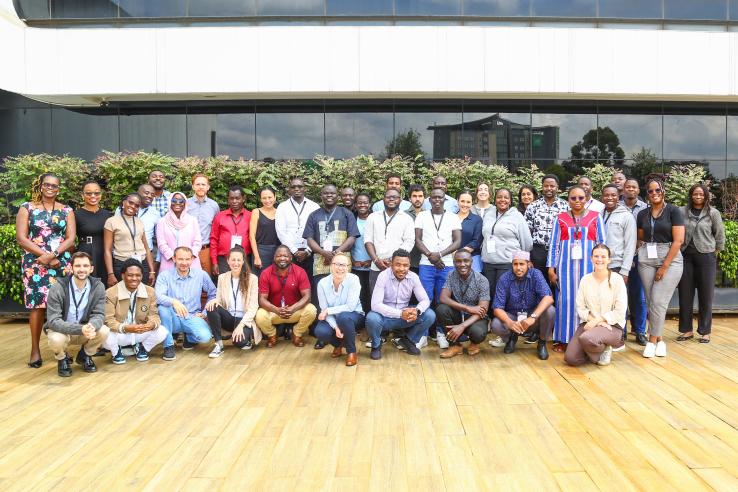
The incubator in Nairobi hosted ten implementing organizations, including evaluation staff, program implementers, and decision-makers. Over four days, participants deepened their understanding of ethical program evaluation in humanitarian contexts and acquired the knowledge and tools to design and evaluate their own programs. Local researchers were also invited to participate in the workshop to offer technical insights and foster collaboration.
Introducing Norwegian Church Aid (NCA) Somalia & the Center for Research and Integrated Development (CeRID)
On the third day of the incubator, J-PAL had the privilege of speaking with Norwegian Church Aid (NCA) Somalia and one of its key implementing partners in the country, the Centre for Research and Integrated Development (CeRID). NCA was represented by Deputy Country Director Ebulu George William along with Assad Osman, an M&E officer from CeRID. We engaged with the NCA team to understand their experience joining J-PAL's humanitarian trainings online and at the incubator, and how both have shaped their program evaluation goals. The NCA team shared the catalytic effect of joining the incubator, how it deepened their understanding of the complexities of randomized evaluations, and outlined their next steps to put this knowledge into action.
Somalia has long faced the challenge of being one of Africa's most conflict-affected countries. Since establishing its presence there in 1993, NCA has been committed to both emergency relief and long-term development solutions. Its mission is to foster a cohesive, peaceful, and resilient Somalia by empowering communities to participate in shaping public policies. In collaboration with local partners, such as CeRID, NCA aims to tackle these challenges by providing programs like vocational training for unemployed youth and survivors of Gender Based Violence (GBV), climate-smart economic empowerment projects, WASH (Water, Sanitation, and Hygiene) programs, safe spaces for women and girls who are or are at risk of becoming victims of violence, and peace building initiatives.
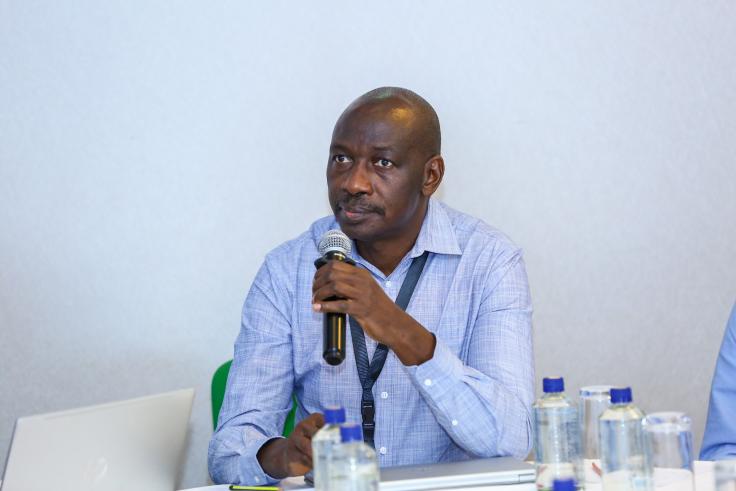
Photo: TEK Production
NCA’s motivations for joining the incubator
In our conversation, George and Assad stated that their primary goal in coming to the incubator was to work, in part, towards one of NCA’s key organizational goals for the next five years: to have a better sense of the impact of its programming by learning how to produce and use quality evidence. According to George, the best way to start down this path was to collaborate with organizations with the right expertise, like J-PAL.
George noted that he had been aware of J-PAL for some time and kept abreast of its work via social media. By doing so, he found out about an online Evaluating Social Programs workshop hosted by the Humanitarian Initiatives (HI) team which targeted organisations with programs aiming to improve protection outcomes. By joining this training, he was able to identify and present one of NCA Somalia's key learning goals: understanding the impact of a recurring vocational training program on livelihoods and protection outcomes. The opportunity enabled him to stay in touch with the HI team, who encouraged his team, along with Assad and CeRID, to apply to the in-person incubator in Nairobi to further workshop their evaluation idea. At the incubator, George took stock of the progression of his project’s collaboration with J-PAL:
“We are happy to see that the idea that we started with is now growing into a seed that will translate into projects that will feed into our long term goal of enhancing our capacity to produce quality evidence around the work that we do.”
George also noted the importance and relevance to the field of undertaking this work in Somalia: “There is not much mentioned in terms of studies in Somalia, despite all the work going on in the Horn of Africa. Somalia offers a very good context for studies like this, due to the protracted crises there. There is a lot to learn from these protracted situations.”
The incubator was particularly impactful for Assad at CeRID, a research organisation, in terms of encouraging more rigorous evaluation in Somalia: “It has motivated me to become a researcher because I know in Somalia, there are no researchers in our area of operation, and I think this is a field that has a lot of gaps to be filled. I hope that through our collaboration with J-PAL we can get the skills and exposure [to fill these gaps].”
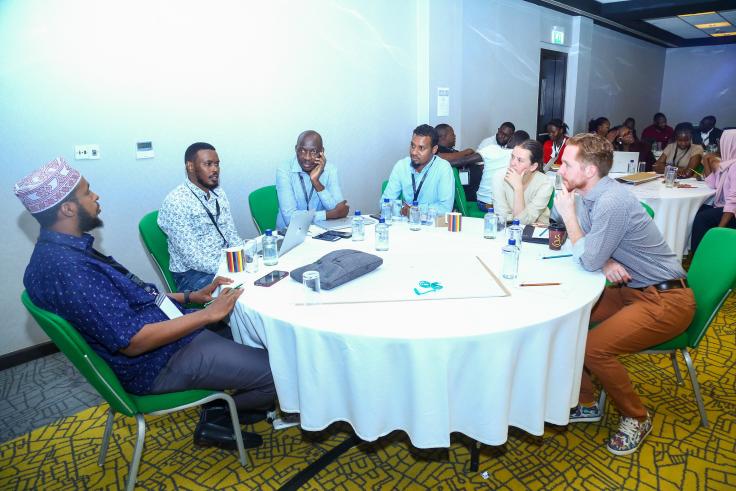
Photo credit: TEK Production
Working with experts to tackle the most complex aspects of randomized evaluation design
Research incubators aim to combine theory and practice, as well as allow projects to directly collaborate with researchers and experts in the field. Specifically, project teams have the opportunity to attend lectures on developing a research question, mapping a solid theory of change, selecting the right indicators to measure impact, identifying different approaches to randomization, and undertaking power calculations, among other topics. After each lecture, project teams work in small groups with researchers and J-PAL staff to apply what they learned to their own evaluation ideas—and receive feedback in real time.
As put by Assad, “I’ve appreciated the lectures given by experts in the field. They have been able to simplify such complex topics so well. It has also been great to have the opportunity to directly apply that knowledge to our own projects in the workshops dedicated to thinking through our own randomized evaluation design.”
When asked about the lecture sessions that were particularly salient to them, Assad and George agreed that the most technical sessions on randomization methods and determining sample size through power calculations were the ones that stuck with them the most. According to Assad, “Personally, the lecture presented by one of the researchers on randomization, in addition to the discussion with the researchers, has given me a clear direction of what we should do in the future to really capture the impact of our project.” George agreed, sharing, “I also appreciated the lecture on randomization as well as the session on power analysis because these are the technical areas that, if not handled well, could give you results that may or may not be accurate.”
At the end of our discussion, George reflected on his view of the pedagogical aspect of the incubator, the ability to interact with researchers and initiative staff directly, and the follow up needed to keep moving, saying, “Our questions are being answered at every step of the training, and we’re getting clarity on the methods and the approach, and with further collaboration and follow up, we hope to master it.”
Sharing knowledge to make a difference: NCA’s collaborative approach
As part of the global ACT Alliance, George highlighted NCA’s collaborative approach, working with national partners, including CeRID, to build local capacities for leading humanitarian responses and contributing to sustainable development. The ACT Alliance brings together national and international member organizations to form country-specific alliances and implement joint projects, much like a consortium working collaboratively to address humanitarian aid, gender and climate justice, migration, displacement, and peace.
For NCA and its partners, a central question drives their work: Are we making a difference in what we are doing? As a member of ACT Somalia, George is committed to sharing insights gained from the incubator with fellow alliance members. “It is our responsibility to learn together,” says George, emphasizing the importance of collective learning. Participants in J-PAL research incubators can play an important role in disseminating what they have learned on rigorous impact evaluation to colleagues and partners.
When it comes to evaluating impact, Somalia presents a unique context, especially given its protracted crises; however, impact evaluations of humanitarian programs in Somalia remain limited. Nonetheless, George sees great potential for change through increased collaboration and shared research efforts. By working together, NCA and its partners aim to not only address immediate needs in humanitarian crises but also build a foundation for long-term, evidence-based solutions.
What’s next?
The NCA team will continue collaborating with the HI team to be matched with a team of J-PAL affiliated researchers that will help evaluate one of NCA’s flagship programmes: improving economic opportunities for displaced youth in Somalia. The project design plans to explore long-term outcomes such as enhanced economic resilience and improved wellbeing for youth enrolled in a series of vocational and entrepreneurship skills training. The impact evaluation would produce learnings on a couple of different program modalities and delivery mechanisms, and assess the impact on long term outcomes.
Our next incubator is taking place in April 2025 in the Philippines in collaboration with IPA Philippines. This event will bring together implementing organizations from South Asia and Southeast Asia, with applications opening soon. In the face of complex humanitarian challenges, using evidence to guide decisions is more vital than ever. By integrating rigorous impact evaluations into humanitarian work, we not only measure what is effective but also uncover ways to maximize our impact and design cost effective programs. Impact evaluation isn’t just a tool—it’s a commitment to making every effort count.
Follow J-PAL Europe on LinkedIn to stay up-to-date on training and other opportunities and events through our humanitarian initiatives.
Today, the Abdul Latif Jameel Poverty Action Lab (J-PAL) and Innovations for Poverty Action (IPA) launch the Humanitarian Protection Initiative (HPI). The core of this initiative is a research fund dedicated to generating rigorous evidence to inform policies and programs that protect conflict-affected populations from harm and mitigate the effects of conflict where harm has occurred.
This piece is also posted on the Innovations for Poverty Action blog.
Today, J-PAL and Innovations for Poverty Action (IPA) launch the Humanitarian Protection Initiative (HPI), with support from the United Kingdom (UK) international development funding from the UK Government. The core of this initiative is a research fund dedicated to generating rigorous evidence to inform policies and programs that protect conflict-affected populations from harm and mitigate the effects of conflict where harm has occurred.
As conflicts flare up around the world, protection risks are increasing in complexity and severity. The United Nations Office for the Coordination of Humanitarian Affairs projects that nearly 300 million people will need assistance and protection in 2024. These risks range from increased attacks on civilians, rising sexual- and gender-based violence, continued recruitment of child soldiers, exacerbated psychological abuse and distress, to restricted access to deliver humanitarian assistance. Faced with budget constraints, humanitarian actors require evidence to make informed and timely decisions to improve protection outcomes.
Yet there is limited rigorous evidence on the comparative effectiveness of protection interventions, or on the mechanisms that drive effective protection programming. In response, HPI will equip humanitarian actors with a greater understanding of cost-effective, scalable, and context-sensitive solutions to prevent and remedy physical, psychological, social, and legal harm against conflict-affected populations.
Learning about effective strategies to prevent and mitigate violence and harm in conflict
HPI will foster partnerships for and fund randomized impact evaluations. These evaluations aim to inform the design of policies and programs to protect conflict-affected populations from violence, coercion, and deliberate deprivation, and ensure their dignity, safety and respect for their rights–with a particular focus on acute conflict settings.
Research and learning priorities identified in consultations with policymakers and practitioners generally relate to two objectives: the prevention and mitigation of harm. Humanitarian actors pursue these objectives through a variety of interventions that can be evaluated with funding from HPI, as further detailed in the initiative’s first Request for Proposals:
- Preventing physical, psychological, social, and legal harm. This objective includes the evaluation of interventions to encourage armed actors to adhere to International Humanitarian Law and exercise restraint, to curb sexual- and gender-based violence in conflict settings, and to eliminate abuse and exploitation in peacekeeping missions and humanitarian operations.
Other priority questions include whether activities such as tailored information dissemination, case management, or training can bolster communities’ self-protection capabilities and empower individuals to make informed decisions to effectively reduce exposure to violence and improve their legal situation. Additional areas of interest concern the protective effects of humanitarian actors’ presence and what measures can be taken to avoid that assistance inadvertently fuels conflict. - Mitigating physical, psychological, social, and legal harm. Evaluations that fall into this category can include family reunification programs, effective support to the families of the missing, or medical, psychological, and psychosocial support to address the repercussions of conflict-induced violence and abuse. Meaningful accountability to affected populations through existing measures such as client feedback channels as well as new, innovative solutions can equally benefit from rigorous evaluation to identify effective solutions to uncover and address abuse and exploitation.
HPI’s research and learning priorities will also include advancing on intersecting questions spanning both prevention and mitigation of harm. These questions may involve effective targeting mechanisms and spillover effects of humanitarian protection interventions, as well as refining and harmonizing measurement strategies for concepts including dignity, restraint, and self-reported measures.
Fostering accountable, inclusive, and actionable research
While adherence to the “do no harm” principle is essential in all contexts, it becomes critically important in humanitarian settings, necessitating a heightened investment in ethical research design and measurement (see Chapter III of J-PAL’s broader Learning Agenda for Humanitarian Action), a sophisticated understanding of the drivers of conflict, and uncompromising prioritization of the safety and security of research participants and staff.
Recognizing the importance of being accountable to affected populations and the risks associated with working in conflict settings, HPI is committed to upholding high standards of protection and inclusion of study participants throughout the implementation of the research project. HPI further encourages researchers and implementing organizations to invest in building strong, transparent, and equitable partnerships.
HPI seeks to identify scalable, generalizable, and cost-effective programs and policies that have significant and tangible impacts on the communities they target. In a context where many programs struggle to reach significant numbers of people or the most vulnerable segments of the target groups, research that supports overcoming barriers to scalability and broader impact will be particularly valuable. Recognizing that communities affected by violence are actively developing these solutions, HPI will aim to assist in advancing and quantifying the impact of their work.
In addition, HPI is committed to fostering greater opportunities for research led by academics from traditionally underrepresented groups. Through the HPI Scholars Program, funding and mentoring opportunities are available to researchers from or based in low- and middle-income countries (LMIC) who are interested in developing and conducting randomized impact evaluations that fall within the initiative’s scope.
What’s next?
For researchers: HPI will run Requests for Proposals (RFP) twice a year—the first of which opens today—to award research funding to promising projects around the globe. Research teams should carefully read the RFP to determine the eligibility of their project in terms of scope and team composition. Researchers from or based in an LMIC with research interests that fall into HPI’s scope are encouraged to consult the HPI Scholars Program webpage and register for a webinar on Wednesday, March 6, 2pm GMT/9am ET, to learn more about HPI’s scope and support available for proposal development.
For policymakers and practitioners: Organizations interested in evaluating the impacts of their humanitarian protection programming are invited to participate in one of the forthcoming evaluation design workshops. Applications for the next research incubator, which will take place in Bogotá, Colombia, on April 8-10, are currently open and will close on February 21, 2024. Forthcoming incubators will be organized in the MENA region, East Africa, and Asia.
To stay informed about HPI’s work, sign up for J-PAL’s newsletter and select “Humanitarian action” as an interest area here, and sign up for IPA’s newsletter here. For any questions or to discuss your project ideas, please don’t hesitate to reach out to [email protected] (J-PAL) and [email protected] (IPA).
This blog post provides an overview of the evolving policy narratives in humanitarian work, emphasizing J-PAL’s initiatives to address evidence gaps. It also highlights the establishment of a dedicated portfolio at J-PAL MENA, aimed at supporting localized actions and ensuring that humanitarian efforts are informed by rigorous and contextual research.
Displacement worldwide has reached unprecedented levels, with over 117 million people at the end of 2023, 16.4 million of whom are hosted in or displaced from the Middle East and North Africa (MENA). The main driver of displacement, including internally displaced persons (IDP), refugees, asylum seekers, and returnees, is conflict, followed by natural disasters, some of which are climate change-induced. The political unrest in the MENA region and ongoing conflicts have designated the region as having the second highest concentration of displacement, following the sub-Saharan Africa region.
While conflict settings may dominate the narrative of humanitarian action, host communities and countries offer another perspective, where they experience different sets of challenges as they handle the long-term impacts of displacement. In MENA, most refugees are hosted in low- and middle-income countries: Turkey, Sudan, Lebanon, Jordan, and Egypt are the top refugee-hosting countries in MENA. The pre-existing economic and political crises—combined with the sheer scale of arrivals—strain public resources in ways that exacerbate “host community fatigue.” An integrated approach to humanitarian action recognizes the needs of displaced populations in complementarity with host communities’ welfare, which can help alleviate barriers to the social and economic integration of displaced populations in MENA.
This blog post provides an overview of the evolving policy narratives in humanitarian work, emphasizing J-PAL’s initiatives to address evidence gaps. It also highlights the establishment of a dedicated portfolio at J-PAL MENA, aimed at supporting localized actions and ensuring that humanitarian efforts are informed by rigorous and contextual research.
From rapid response to sustained livelihoods
Humanitarian efforts have evolved in the last few decades in response to displacement trends and associated vulnerabilities. While immediate relief is a common response to conflict, with declining aid in the early 2000s due to prolonged conflicts, prioritizing livelihood interventions that promote long-term self-sufficiency has become imperative.
Recent funding cuts to operations in the MENA region are likely to increase the vulnerabilities of displaced people and host communities. In MENA, UNHCR received only 11% of its required funding to support refugees in 2024, which has led to significant budget cuts in several countries, in addition to other austerity measures in host communities. Nevertheless, in the past few years, there has been a more pronounced shift to improve global and localized policies to support displaced peoples, driven in part by the Global Compact on Refugees, which was established in 2018. This shift has been accompanied by a surge in efforts rooted in data-driven, evidence-based approaches, and evaluating their impacts. The need for rigorous impact evaluation is all the more pressing in contexts of limited funding, where resource allocation has to prioritize effective interventions.
Humanitarian initiatives at J-PAL
Leveraging its twenty years of expertise in randomized evaluations worldwide, J-PAL has launched two humanitarian initiatives in collaboration with Innovations for Poverty Action (IPA). These initiatives aim to establish a humanitarian action research portfolio that informs humanitarian actors of relevant impact evaluations, funds research in the humanitarian space, and facilitates research partnerships between civil society actors, governments, and researchers. The Displaced Livelihoods Initiative focuses on generating new evidence on programs that foster sustainable livelihoods for displaced and host communities. Building on an initial humanitarian learning agenda, the Humanitarian Protection Initiative focuses on generating new evidence to improve protection outcomes for people affected by conflict. Among the activities under the humanitarian initiatives supported by J-PAL is the curation of randomized evaluation design workshops, which facilitate research partnerships and help develop research projects from preliminary research questions to fully-fledged causal evaluations.
Launching the Humanitarian Action Research Portfolio at J-PAL MENA
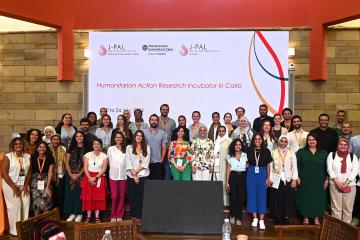
In July 2024, J-PAL MENA co-hosted the Humanitarian Action Research Incubator in Cairo, at AUC Egypt, marking the launch of the humanitarian research portfolio in MENA. In collaboration with J-PAL Europe and IPA, this incubator workshop invited key implementing organizations to workshop impact evaluation ideas. Eight organizations operating in Egypt, Iraq, Yemen, Lebanon, and Afghanistan participated in the incubator, including UNHCR, UNICEF, Uplift Afghanistan, Save the Children, WFP, and the Egyptian Food Bank.. Over the course of three days, participants were introduced to the principles of randomized evaluations, how to evaluate their programs in ethical and statistically sound ways, and how to answer key questions through rigorous evaluation methods. This incubator is the first step of many taken by J-PAL MENA to facilitate localized research partnerships and generate evidence on displaced livelihoods and host communities relevant to Egypt and the region.
The contributions of the participating organizations, in turn, enriched the contributions of J-PAL staff and lecturers by providing hands-on perspective from their experiences in the field—often dealing with the scientific and ethical complexities that come with balancing designing an impact evaluation and handling pressing humanitarian needs. The discussions underscored the importance of collaborating with researchers to evaluate programs in humanitarian settings, and create research designs that meet programmatic obligations in ever-changing environments. This approach aims to bridge the gap between theory and practice, addressing the unique challenges encountered in humanitarian settings.
Key learning questions were explored during the incubator to support humanitarian action in the region and guide evidence generation at J-PAL MENA, including:
Can bundling interventions broaden impacts? More evidence is needed to understand the impact of complementing cash-based programs with livelihood interventions, similar to the Graduation Approach, to promote self-reliance of refugees. Respectively, participating organizations expressed interest in evaluating the impact of coordinating their programs, using a bundled approach, to promote resource efficiency and maximize impacts. Building cost-effectiveness analysis into evaluations of projects that deliver packages of complementary activities will be a key area of learning as this may help isolate the aspects that drive impact the most, and ensure informed decision.
How can livelihoods programming be designed to maximize social cohesion, in addition to economic inclusion? A growing learning area to foster resilience and self-reliance is aligning strategies that can be employed to foster a sense of belonging among displaced people, especially for returnees and host communities, with economic inclusion programming. J-PAL affiliated researchers have conducted multiple studies on social cohesion studying the model of perspective-taking for school children in Turkey and Finland, in addition to intergroup contact in Iraq, which highlight the potential to foster acceptance and improve relationships among different social groups
How can programs and services be optimally delivered where accessibility is challenging due to insecurity or violence? Food delivery mechanisms and targeting to optimize food distribution strategies for displaced people were also examined. Food security is a critical concern in crisis settings and host countries. Randomized evaluations have strengthened our general understanding of the different modalities of assistance for nutrition and food security, but more research is needed to understand the broader cross-sectoral outcomes, including educational attainment and psychological integration.
In addition, digital delivery of education, health awareness, and information on employment opportunities can improve access to essential services in conflict settings, where women's and children’s access is especially challenged. Recent evidence in Afghanistan shows preliminary evidence of the success of digital delivery. More research is needed to explore the effectiveness of such delivery in varying contexts, driven by the guiding principle of giving beneficiaries as much agency as possible in making their own economic and nutritional choices (e.g., using vouchers rather than boxes of food assistance).
Establishing a Humanitarian Action Research Portfolio for MENA
J-PAL’s humanitarian initiatives aim to generate evidence to inform policies and programs that promote sustainable livelihoods and protection outcomes. J-PAL MENA has launched its humanitarian action research portfolio building on a decade of research and policy partnerships in the region, and more than 40 completed and ongoing projects across eight sectors in seven countries in the MENA region. Anchored by J-PAL’s network of over 1000 researchers, the office can facilitate research partnerships for humanitarian actors working in the region. By identifying learning priorities and co-designing interventions with researchers, our partners can be positioned to address critical knowledge gaps and evaluate their programs facilitated by DLI’s and HPI’s research funding. The establishment of this portfolio at J-PAL MENA encourages humanitarian actors to evaluate their programs, and yield valuable insights for the MENA region to support displaced populations.
For more information on partnering with J-PAL MENA to generate and use evidence to support humanitarian action in MENA, please contact Nagla Al Khoreiby, Humanitarian Action Research Portfolio Lead at J-PAL MENA, at [email protected].
Today, we announce the launch of the Displaced Livelihoods Initiative (DLI), jointly managed by Innovations for Poverty Action (IPA) and the Abdul Latif Jameel Poverty Action Lab (J-PAL), with generous support from the IKEA Foundation. DLI is the world’s first research fund dedicated to generating rigorous experimental and quasi-experimental evidence to inform policies and programs that can foster sustainable livelihoods for displaced and host communities.
This piece is also posted on the Innovations for Poverty Action blog.
Today, we announce the launch of the Displaced Livelihoods Initiative (DLI), jointly managed by Innovations for Poverty Action (IPA) and the Abdul Latif Jameel Poverty Action Lab (J-PAL), with generous support from the IKEA Foundation. DLI is the world’s first research fund dedicated to generating rigorous experimental and quasi-experimental evidence to inform policies and programs that can foster sustainable livelihoods for displaced and host communities. In addition, DLI will provide investment in research infrastructure and public goods, including panel datasets, software, and measurement innovations that can contribute to future impact evaluations.
Today, over 100 million people have been forcibly displaced. In other words: more than one percent of the world’s population have fled their homes to escape violence, conflict, or persecution. Projected to continue growing, displacement is also intertwined with broader development challenges such as poverty, food insecurity, and climate change.
The scale and complexity of displacement have pushed the international donor, practitioner, and research communities to seek more cost-effective, durable solutions to displacement. A key feature of this effort focuses on strengthening economic inclusion and self-reliance through livelihoods and other programming that support pathways towards economic inclusion.
There is limited evidence, however, about the impact of such programs on displaced populations and host communities. To meaningfully support displaced people in rebuilding their lives, it is necessary to understand what kinds of interventions can help them access employment, integrate into local labor markets, and become self-reliant—as well as learning how these policies and programs impact host communities.
Contributing to durable solutions with evidence that shapes effective policies and programs
DLI will fund innovative research which can inform the design of policies and programs that empower refugees, internally displaced persons, asylum seekers, and others in refugee-like situations to achieve self-reliance. DLI will support collaborations between researchers and leaders in government, NGOs, and the private sector, with a particular view to the participation of persons with lived experience of displacement.
Livelihoods interventions typically aim to increase food security, income, employment, and asset ownership. DLI seeks to invest in efforts that go even further and address the social and economic ability of an individual, household, or community to meet their needs sustainably, meaning they can cope with and recover from the stress and shocks of changing circumstances. Building on existing evidence and in close consultation with researchers and practitioners, DLI’s research and learning priorities therefore encourage research in five broad areas:
- Resilience: Accelerating or augmenting livelihood outcomes by supporting individuals and households to recover from displacement as a multidimensional shock and adapt to their new context.
- Wage employment: Overcoming barriers to employment like legal restrictions, discrimination, or lack of social networks to achieve steady income and opportunities for skills and career development.
- Entrepreneurship: Building sustainable livelihoods and long-term economic inclusion for displaced populations through entrepreneurship support.
- Social cohesion, inclusion, and norms: Fostering social cohesion, inclusion, positive social norms, and networks as potential pathways for persistent livelihood outcomes.
- Rights and regulations: Testing the effectiveness of programs facilitating full enjoyment of rights, like legal status or the right to work, as they relate to designing laws and policies that maximize economic opportunities and wellbeing for displaced and host communities.
Foster responsible, inclusive, and actionable research
DLI will support generalizable, policy relevant, and innovative impact evaluations and related research on programs for displacement-affected populations. Acknowledging the imperative of accountability to DLI’s target population as well as their particular vulnerability, we will emphasize the participation of persons with lived experience in displacement across all of the initiative’s activities and pay particular attention to ethical research design and measurement, which both IPA and J-PAL place at the centre of their activities.
To help ensure that emerging evidence translates into action, we will closely work with researchers, policymakers, and practitioners and make non-technical briefing notes and summaries of research results publicly available, including cost-effectiveness analyses. Academic oversight is provided by Sule Alan (European University Institute), Jeannie Annan (Airbel Impact Lab, International Rescue Committee), Luc Behaghel (Paris School of Economics), and Mushfiq Mobarak (Yale University).
What’s next?
IPA and J-PAL will run bi-annual Calls for Proposals—the first of which opens today—to award research funding to promising projects around the globe. Organizations interested in unpacking the impacts of their flagship or innovative new programs are invited to participate in one of five evaluation design workshops, with applications for the first such research incubator opening in June 2023.
To learn more about these opportunities for collaboration and research funding, please register for one of our webinars:
For policymakers and practitioners: Register here for the webinar on Wednesday, May 10, 1pm GMT/9am ET
For researchers: Register here for the webinar on Wednesday, May 17, 1pm GMT/9am ET
To stay informed about DLI’s work, sign up for J-PAL’s newsletter and select “Humanitarian action” as an interest area here, and sign up for IPA’s newsletter here.
Please also feel free to reach out to [email protected] (IPA) and [email protected] (J-PAL) with any questions.