African Scholar Spotlight: Nneka Osadolor
This post is part of our ongoing series showcasing the work and perspectives of economists from the African continent who are leading randomized evaluations. Through our African Scholars Program, we hope to help create more opportunities for African researchers to advance the research agenda on the continent through randomized evaluations.
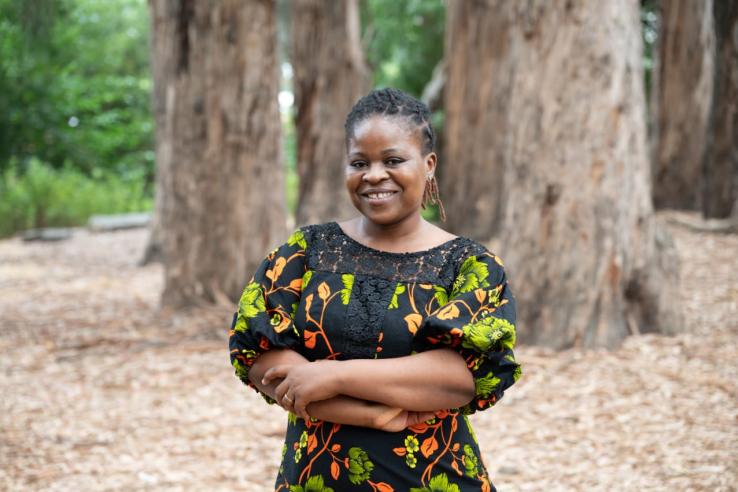
In this spotlight, we speak with Nneka Esther Osadolor, a PhD candidate in economics at the University of Ibadan, Nigeria. Nneka’s primary research interests are broadly in development economics and applied microeconomics, including labor markets, financial inclusion, poverty, inequality, and gender issues.
What drew you to the field of development economics and working with impact evaluations in particular?
Growing up in a developing economy, I directly experienced the challenges of poverty and inequality and I was driven to seek solutions for these pressing social issues. As an undergraduate, I immersed myself in the study of economics and pursued a range of courses related to development and international relations. These academic pursuits motivated my keen interest in the field of development economics.
Limited access to resources was a significant hurdle, forcing me to rely on outdated textbooks in classes. To expand my knowledge, I turned to online self-study which led me to the discovery of impact evaluations—a research methodology that has gained popularity among African researchers. The appeal of impact evaluations became evident as I delved deeper into their potential as a robust research approach.
While navigating the complexities of the subject matter was not easy, I was motivated to explore other learning avenues, which led me to J-PAL’s Evaluating Social Programs and the MicroMasters programs offered through MIT.
What are you using initiative funds to do? What research question are you trying to answer and how does it relate to your context?
In a grant through the Digital Identification and Finance Initiative in Africa (DigiFI), my coauthors Evans Osabuohien (a fellow African Scholar!), Michael Mba, Owen Omorogbe, Obianuju Nnadozie, and I are assessing the potential for digital payments and flexible payment options to increase health insurance take-up amongst informal workers in Nigeria. The grant will allow us to establish relationships with implementation partners, conduct a needs assessment of the program, and meet with health insurance providers. Our hope is that this project will further our understanding of health insurance markets, the needs of informal sector workers, and the reasons behind why they are unable to access health insurance.
What are the big unanswered research questions in your context that RCTs may be able to help answer? Do you think this relates to any projects you are excited to work on in the future?
Randomized evaluations hold the potential to address numerous research questions. One such question is tackling the size and challenges of the informal work sector, which is particularly significant in Africa. Workers in this sector face suboptimal conditions. Unfortunately, only a small percentage can access the formal labor sector, leaving many struggling in the informal sector, necessitating a systemic solution.
Multiple factors drive people to choose informal work, including limited education, opportunities, or a skills gap. These reasons sparked my interest in our current proposal development grant. We have found that despite the availability of health insurance since 2006, uptake remains below 20 percent. Our goal is to increase uptake while also raising awareness about the importance of health insurance for those in the informal sector.
Randomized evaluations can also be used to answer key questions in the education space, such as improving school attendance and enhancing teaching quality. I'm particularly enthusiastic about J-PAL’s Learning for All Initiative as it will help generate the evidence that can replace intuitive decisions when it comes to education policy, leading to more efficient use of government funds. The ability to craft evidence-based policies is one of the main reasons that randomized evaluations appeal to me.
How has the support from J-PAL assisted you in your career? How can organizations like J-PAL continue to build on the support they provide to local researchers in running randomized evaluations?
Being connected to J-PAL has been transformative. Resource constraints are a significant hurdle for scholars in Africa, and J-PAL's support in providing access to resources like online courses, books, and mentorship—J-PAL connected me to Nathan Fiala for mentoring—has been crucial in shaping my career. The network of scholars within J-PAL has enabled me to seize various opportunities and progress in my research and career. Looking back, exposure to these opportunities several years ago paved the way for my current position. I strongly believe that organizations like J-PAL can continue to assist local researchers by maintaining their current efforts and incorporating feedback from scholars. By offering financial support, mentorship, and access to opportunities, organizations like J-PAL can help unlock Africa's potential. It's encouraging to note that outreach to universities across Africa can yield positive feedback from both students and faculty.
In the second half of 2023, I will be interning with IPA Nigeria through the support of J-PAL Africa. I am hoping to dive more deeply into randomized evaluations, including taking courses, learning from colleagues, and gaining hands-on experience in this field of research. Working with an organization like IPA and with local policymakers will allow me to take what I have learned and apply it practically.
Do you have advice to offer other young aspiring African scholars interested in an academic career?
My advice would be to take a leap and get involved—there are a lot of opportunities out there. I've been on a journey to find my own voice, aiming to support those who need encouragement. Perseverance is key; make the most of online resources and keep nurturing your curiosity. Being in Africa doesn't mean staying in the background; the opportunities are there, waiting to be discovered through active searching. Don't hesitate to connect with others, even if it feels daunting. As an introvert myself, I understand the feeling, but that shouldn't hinder you from seeking mentors: there are people eager to help. Remember, you won't know until you try. Starting with self-education and tapping into the internet is a solid beginning; the sky is not the limit but just the beginning.
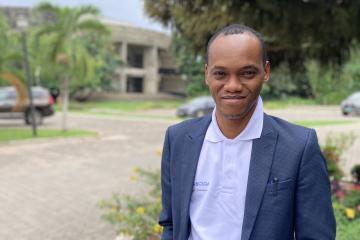
In this spotlight, we speak with Dr. Evans Osabuohien, Professor of Economics and Head of the Department of Economics and Development Studies at Covenant University in Nigeria. Evans’s primary research interests relate to international economics, institutional economics, agricultural economics, and the economics of land use.
This post is part of our ongoing series showcasing the work and perspectives of economists from the African continent who are leading randomized evaluations. Through our African Scholars Program, we hope to help create more opportunities for African researchers to advance the research agenda on the continent through randomized evaluations.
In this spotlight, we speak with Dr. Evans Osabuohien, Professor of Economics and Head of the Department of Economics and Development Studies at Covenant University in Nigeria. Evans’s primary research interests relate to international economics, institutional economics, agricultural economics, and the economics of land use.
What drew you to the field of development economics and, in particular, working with impact evaluations?
Growing up in a small town in Delta State, Nigeria, I witnessed firsthand the development challenges and needs that my community faced. My parents (of blessed memory) worked as small-scale farmers, and although my upbringing was not impoverished, I saw the struggles that many households in my community faced.
While pursuing admission for higher education, I spent two years teaching kindergarten, primary and secondary school. This experience ignited my interest in academia and research, and ultimately led me to complete my PhD at Covenant University. Prior to the conclusion of my PhD, I had the opportunity of being hosted at Lund University in Sweden as a Guest Doctoral Fellow funded by the Swedish Institute. Following the completion of my doctoral studies, I was fortunate to secure a postdoctoral fellowship in Germany funded by the Alexander von Humboldt Foundation.
During my time in Germany, I delved into impact evaluation for the first time, gaining valuable experience conducting research in agriculture using quasi-experimental methods such as difference-in-differences and propensity score matching. This experience solidified my dedication to research and inspired me to continue exploring ways to improve development outcomes in African communities.
You and your coauthors have recently been funded by J-PAL’s Digital Identification and Finance Initiative. What research question are you trying to answer through this project and how does it relate to your research interests?
Our project titled “Assessing the Effect of Digital and Flexible Payment Options on the Uptake of Health Insurance by the Nigerian Informal Sector” is related to institutional economics as we are investigating the issue of health insurance enrollment among informal sector workers. In Nigeria, most formal sector workers are enrolled into a health insurance program with fees being deducted from their pay. However, for informal sector workers, both health insurance and pension contributions are voluntary and organized by the workers themselves, resulting in low take-up rates.
We are working with the Edo State Health Insurance Commission (EDHIC). We are still in the initial phases of this project but our plan is to leverage local trade unions to encourage take-up of health insurance products among informal workers who are members of the union. We will offer two different payment methods: digital payments (using the EDHIC web portal and dedicated Point of Service) and a flexible option (paying at regular intervals).
What do you think are the big unanswered research questions in your context that RCTs may be able to help answer? Does this relate to any projects you are excited to work on in the future?
One of the open questions relates to my current project, namely how to bring informal sectors into the mainstream with sufficient coverage for their health and retirement needs. In Nigeria and other similar countries, a large portion of the working population is in the informal sector, yet most government policies leave informal sector workers uncovered, so many people remain outside of the social safety net.
In the agricultural sector, a big unanswered question that is well-suited to the RCT method is how we can best use technology to enhance value at each stage of agricultural production and reduce post-harvest losses, which are crucial for food security.
How have organisations like J-PAL and others supported you in your career?
The success I have had in my career owes much to the support I received from various organizations. For instance, my postdoctoral research in Germany funded by the Alexander von Humboldt Foundation gave me time for research, experience with impact evaluation, and exposure to a global network of researchers. Funding from renowned organizations including J-PAL, the African Economic Research Consortium, the United Nations Conference on Trade and Development, and the International Food Policy Research Institute, among others, has made my research more credible. It has also provided a valuable network, helping me advance rapidly in my career. Now, I am eager to mentor aspiring researchers and provide them with the kind of support that was crucial to my success.
Do you have advice to offer aspiring African scholars thinking about a career in economic research?
The road to success is not an easy one; it can be rough and tough. To achieve your goals, you will need to have courage, patience, and persistence. It is not a sprint but a marathon that requires endurance and determination to keep on keeping on. Rejection is also part of the process, and it is essential to develop a thick skin to have a high threshold for it. For example, when I submit a paper for publication or a proposal for funding, until it is rejected up to 70 times, I do not give up on the idea!
One must also learn to tailor research proposals to match the requirements of funding organizations. Thus, targeting research efforts appropriately and deciding where to publish papers are essential decisions that impact success. By directing efforts towards the appropriate organizations and publications outlets, the likelihood of success can increase significantly.
As part of our ongoing series showcasing the work and journey of economists from the African continent who are leading randomized evaluations, we spoke with Dr. Khadijat Busola Amolegbe, a lecturer in the Department of Agricultural Economics and Farm Management at the University of Ilorin, Nigeria.
This post is part of our ongoing series showcasing the work and journey of economists from the African continent who are leading randomized evaluations.
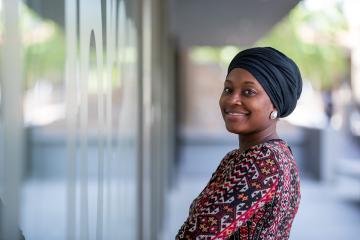
In this post, we speak with Dr. Khadijat Busola Amolegbe, a lecturer in the Department of Agricultural Economics and Farm Management at the University of Ilorin, Nigeria. Khadijat’s primary research interests include food security, labor markets, agricultural development, and poverty alleviation.
What drew you to the field of development economics and, in particular, working with impact evaluations?
I studied agriculture for my undergraduate degree, which is where I was first exposed to its intersectionality with development economics. After my undergraduate studies, I interned at the Central Bank of Nigeria, where I worked in the agricultural credit services division on projects related to commercial agricultural credit schemes and risk management for agricultural lending.
My practical experience from these government-run agricultural projects motivated me to pursue a PhD in agricultural economics and conduct research in the field. I was subsequently introduced to impact evaluations through a rigorous analytical fellowship at the University of Cape Town—in partnership with the World Bank and the African Economic Research Consortium (AERC)—focused on land economics and governance.
What are your broad research interests?
My primary research interests relate to food security, agriculture, rural development, poverty, and inequality. This is in line with one of my current projects, studying the impact of a digital literacy intervention on rural farmer access to output markets. This is particularly relevant given the fast-growing digital divide between rural and urban communities in Nigeria, even as digital technologies or platforms continue to increase and transform the country’s economy overall.
Apart from this, increasingly many of my projects also focus on women’s empowerment as a cross-cutting theme in agricultural economics, especially as it relates to household decision-making power and ownership of assets. For instance, I am currently working on a project that is evaluating the gendered effects of rainfall shocks and crop diversification strategies on food security among rural farming households.
One of your current projects was recently funded by J-PAL’s Digital Identification and Finance Initiative. What research question are you trying to answer through this project?
I am working on a proposal development project related to the enrollment of rural farming households in digital identification payment systems in Nigeria. My focus at the moment is quite broad, as I am trying to understand some of the general constraints rural farming communities face in the adoption of these digital tools through farmer interviews and focus group discussions.
I have already gathered a lot of contextual knowledge through the proposal development process, and I am hoping to apply for a pilot grant to test interventions that can help governments or NGOs effectively target beneficiaries for their programs and facilitate an equitable distribution of services.
What do you see are the big unanswered research questions in Nigeria that randomized evaluations may be able to help answer, and how does this relate to any projects you are excited to work on in the future?
There is a large disconnect between what governments are trying to achieve through digital platforms, and the accessibility of these platforms at the grassroots level. This was especially evident through leakages in government payments to rural households during the Covid-19 pandemic.
Speaking to farmers in rural communities, it is understandable that many households do not see the value of engaging in digital interventions given that they often do not receive the payments or federal benefits that are promised. I am interested in working with digital providers and the government to test products catered to low-income communities (such as risk management tools or credit access), and study how to best prevent these types of leakages in payment systems or other services.
How can organizations like J-PAL continue to build on the support they provide to researchers based in Africa?
In addition to access to research funding from J-PAL, which continues to be one of the biggest barriers for African scholars, I have particularly benefited from the research resources, training opportunities, and mentorship components of the African Scholars program. My mentor from J-PAL has supported me beyond my DigiFi-funded project and continues to provide feedback on new research ideas, share relevant opportunities, and guide me to conduct stronger research in the field of economics.
Credibility from access to J-PAL’s network and funding has also assisted me in my career. African researchers often fight for credibility and my participation in the African Scholars program has not only strengthened my skills, but has also encouraged others to recognize my research in this field.
One of the challenges I continue to grapple with is facilitating connections with other African researchers. Organized conferences or networking events could be a great way to meet other development economists working in Africa and spark collaborations.
Another area where J-PAL could continue to expand its support is to extend resources and funding opportunities to graduate students working under local researchers. I have many students who are interested in learning more about randomized evaluations and I think that building a support system for this could be useful for other academics based at African institutions as well.
Do you have advice to offer other young aspiring African scholars thinking about a career in economic research?
The majority of the research done in Africa and about Africa is not done by African researchers. However, we need to recognize the unequal playing field we face in terms of access to facilities or human capital and learn to leverage our strengths and contextual knowledge to drive policy research forward.
Don’t be afraid to take advantage of the growing number of opportunities targeting local African researchers. Make the most of the free resources available online about conducting policy evaluations, attend online lectures, read papers, and reach out to other scholars, so that we can continue to grow together and be successful researchers in the field of development economics.
Dr. Khadijat Busola Amolegbe is a lecturer at the Department of Agricultural Economics and Farm Management at the University of Ilorin in Nigeria. Previously she was a visiting research fellow at Cornell University under the Structural Transformation of African Agriculture and Rural Spaces fellowship program. Khadijat holds a PhD and MSc in Agricultural Economics from the University of Ilorin. Her fields of specialization include food security, agricultural development, poverty, labor markets, and development economics. Dr. Amolegbe received funding from the Digital Identification and Finance Initiative (DigiFi) in 2020 for her project,“Rural Households' Enrolment in Digital Identification and Payment Systems.”
Over the course of 2022, J-PAL will publish a series of blog posts that highlight the research interests and ongoing evaluations of researchers who are working on issues related to poverty and economic growth. Each post will also showcase topics or unanswered questions researchers view as high-priority in their countries and regions, and highlight their advice for aspiring African researchers seeking a career in economics.
Dr. Faith Masekesa joined J-PAL Africa as a postdoctoral research fellow to support our administrative data partnership with the City of Cape Town. Her research interests span development economics, econometrics, experimental and behavioral economics, social protection and social policy.
The African Scholars Spotlight series highlights the work and journey of economists from the African continent who are working on issues of poverty and using experimental methods.
Dr. Faith Masekesa joined J-PAL Africa as a postdoctoral research fellow to support our administrative data partnership with the City of Cape Town. Before joining, she worked as a senior research manager at The Asian Banker and as a research associate at the Southern African Social Research Institute. Faith holds a PhD in development economics from the National Graduate Institute for Policy Studies in Tokyo. Her research interests span development economics, econometrics, experimental and behavioral economics, social protection and social policy.
Could you tell us about what led you to J-PAL and why you want to pursue a career in academia?
I value the opportunities academia offers for cross-disciplinary thinking and research. I’ve also always wanted to play my part in contributing to Africa’s sustainable development, which I believe can only be achieved through evidence-driven policies. I enjoyed the behavioral and experimental courses I took during my studies, and when a professor pointed me in the direction of J-PAL, it seemed like a natural fit. My goal is to become an effective policy practitioner and eventually a professor so that I can share my skills and knowledge with a wider audience of aspiring researchers.
What has the path to an academic career been like for you? Were there any challenges you faced along the way?
Getting into academia was by no means easy. Starting right at the beginning, finding funding for postgraduate studies was incredibly difficult, and figuring out which programme to choose took me quite some time. Putting together research proposals and finding a suitable supervisor willing to cover my topic were daunting tasks, not to mention the challenging requirements of obtaining high GRE and GPA scores.
The journey into academia can often feel like an endless series of hoops one has to jump through unassisted, and I think this has a very real chance of putting aspiring scholars off the idea of pursuing an academic career. This is especially true considering that many students struggle with confidence issues and, despite being interested in academia, may feel too nervous to attempt the jump into PhD programs.
What or whom had the most impact on your career journey so far?
I was lucky to have a very supportive PhD supervisor and sub-supervisor who helped me during and after my PhD studies. It was also very fortunate that the National Graduate Institute for Policy offered a course in experimental economics, as it helped build my confidence in pursuing behavioral/experimental research. I think there is a significant gap in terms of support provided to students in the pre-PhD stage, though, and more students would consider pursuing research as a career if they were better guided into it.
Do you have advice to offer other young aspiring African scholars thinking about a career in economic research?
It can be a fulfilling career because your work will play a part in improving the welfare of the poor and the advancement of developing countries. There are many problems in the world which you can play a part in solving by either doing individual research or collaborating with other researchers across the globe. Also, the beauty of research is while you are conducting a study, you will also be learning more about that particular case as there is no one size fit all when it comes to policies for development. Furthermore, with a career in economic research you have the ability to focus on activities that you find to be interesting.