Affiliate Spotlight: Kelsey Jack
To read the full profile, please download the PDF version here.
Kelsey Jack is an associate professor at the University of California, Santa Barbara and serves as a member of the Executive Committee of J-PAL’s Board of Directors and co-chair of J-PAL’s Environment, Energy, and Climate Change sector and King Climate Action Initiative. Through her research, Kelsey is leading a movement of climate-focused research within development economics and poverty alleviation.
J-PAL affiliate Kelsey Jack’s interest in studying the intersection of development and environmental economics goes back to her childhood. While on a family trip at age fourteen, Kelsey saw the hillsides of Madagascar burning. She was witnessing the practice of slash-and-burn agriculture, which involves cutting down and burning vegetation in order to create land for farming.
This experience was pivotal for Kelsey, and the juxtaposition of competing needs has stuck with her to this day. “On one hand, preserving these natural environments that are so unique felt essential, but at the same time, these households needed to feed their families. It was the first time I had encountered a situation where I didn’t have a clear sense of what was right and what was wrong,” Kelsey explained.
Kelsey went on to work for two years in the Lao People's Democratic Republic, gaining hands-on experience working in contexts facing these challenges. Hands-on experience has been a theme in Kelsey’s career. Throughout her extensive experience conducting field research, Kelsey has found her informal conversations with people help shape her research.
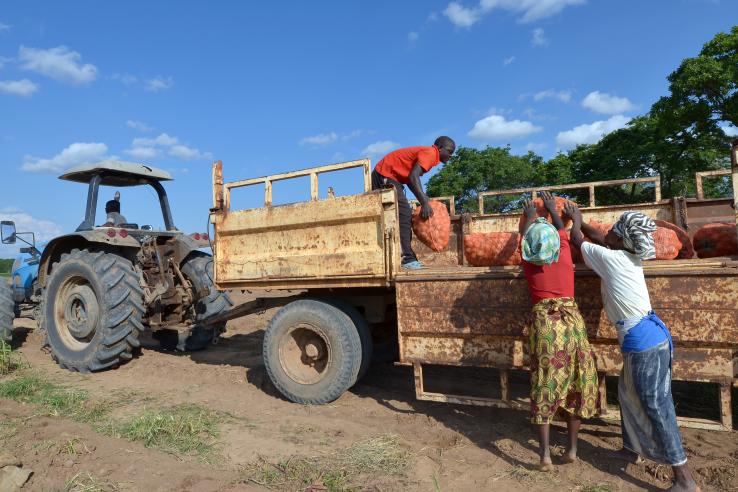
On a research project in Zambia, farmers explained to Kelsey that because they only receive harvest income once a year, many households rely on family labor off the farm for income between harvests to help cover consumption needs. This problem was not fully explored by existing economics research, and Kelsey and her coauthors transformed these anecdotes into a multi-year randomized evaluation. “A lot of the inspiration for projects ultimately comes through these more informal interactions, whether with farmers or with policymakers,” Kelsey said.
Kelsey has conducted research with J-PAL for several years, dating back to her time as a post-doctoral researcher with J-PAL and UC Berkeley’s Center for Effective Global Action’s joint Agricultural Technology Adoption Initiative. Kelsey views her experience at J-PAL as having come full circle. In addition to her current roles at J-PAL as a member of the Executive Committee of the Board and co-chair of the Energy, Environment, and Climate Change sector, Kelsey is also co-chair of J-PAL’s King Climate Action Initiative (K-CAI).
Launched in 2020, K-CAI is dedicated to generating evidence and catalyzing the scale-up of high-impact policy solutions at the nexus of climate change and poverty alleviation. Kelsey says the $25 million initiative is long overdue and is hopeful for the impact it will have on the industry at-large. She explained, “It’s a space where there’s such a pressing need for more rigorous evidence.”
By devoting funding to research at the intersection of development and environmental economics, Kelsey hopes K-CAI will steer development economists to consider how climate change will affect their area of study. “One of my biggest goals is to attract researchers who are not necessarily thinking about the relevance of climate to their area of study, whether it’s education, health, or labor markets,” she said. Likewise, she hopes environmental researchers will be encouraged to evaluate how climate change will disproportionately affect poorer populations and low-income countries.
Kelsey noted there is also great potential for K-CAI to help create a movement of evidence-informed climate policy. Here, Kelsey advocates for a shift in thinking among policymakers. “We really need to open up people’s minds to the idea that you can have rigorous evidence and that it’s the right input to decision making.”
Kelsey’s work is motivated by seeking to understand trade-offs and alleviating the barriers households face in aligning their short-term and long-term interests. She explains, “For policy interventions to be effective, you need to understand the decisions that people are making.” This question is key as Kelsey guides a growing body of rigorous evidence and scalable climate solutions through her own research and as co-chair of K-CAI at J-PAL.
Kelsey has been a J-PAL affiliate since 2013. She was a post-doctoral researcher with J-PAL from 2010-2011. For more information about J-PAL and to read about Kelsey’s research, visit povertyactionlab.org/person/jack.
Today, in partnership with King Philanthropies, we announced the launch of the five-year $25 million King Climate Action Initiative (K-CAI) at J-PAL. The initiative will support innovative research and policy engagement to combat climate change and poverty around the world.
While climate change affects everyone, its impacts are highly inequitable. It disproportionately harms people living in poverty, people of color, and people in low- and middle-income countries, who are more exposed to its negative impacts and often have fewer resources for adaptation.
Climate change also threatens to reverse decades of progress in global poverty alleviation, continuing the disturbing trend of the COVID pandemic, with the World Bank estimating that climate change could push an additional 130 million people into poverty by 2030.
J-PAL’s mission is to reduce poverty by ensuring that policy is informed by scientific evidence. The climate crisis threatens global progress on poverty, and is deeply in need of its own evidence revolution.
While we have essential, substantial, and growing scientific evidence about how humans are changing Earth's climate and how climate change will affect our planet and societies, another important kind of evidence is lacking. In most cases, policymakers don’t have evidence on the impacts of potential climate solutions in the real world, often having to rely on projections of costs and benefits from desk- or lab-based studies.
K-CAI is among the first major climate change initiatives dedicated to 1) generating evidence on the real-world impacts of potential climate solutions using cutting-edge randomized evaluations, 2) working with decision makers to translate evidence on effective solutions into large-scale action, and 3) identifying climate solutions that benefit people in poverty.
Fighting climate change and poverty with evidence on potential solutions
K-CAI will support collaborations between researchers and leaders in government, NGOs, and the private sector to design, pilot, evaluate, and scale evidence-informed climate change solutions that reduce burdens on and increase opportunities for people living in poverty.
Our research and policy agenda will focus on the four pillars of the global climate and energy challenge:
-
Mitigation: Reducing carbon emissions to slow the pace of climate change and its damaging effects;
-
Pollution reduction: Reducing harmful carbon co-pollutants and thereby improving public health, without reducing critical access to energy;
-
Adaptation: Building communities’ abilities to adapt to the economic, social, and environmental impacts of climate change, particularly in settings threatened by rising sea levels, changing rainfall, extreme weather, and shifting disease vectors, among others factors; and
-
Energy access: Increasing access to affordable and reliable energy for low-income families and communities around the world, and shifting energy systems to cleaner sources.
Over the next 10 years, K-CAI aspires to improve the lives of at least 25 million people living in poverty, reduce carbon emissions and carbon co-pollutants equivalent to $125 million or more, and raise significant additional resources to build a movement for evidence-informed policy at the nexus of climate change and poverty.
Building a movement
K-CAI will accelerate and transform J-PAL’s work in climate change across our research network, all seven of our regional offices, and across our ten sector teams—work that has been ongoing since 2010.
To date, J-PAL affiliated researchers have already evaluated more than forty innovative environment, energy, and climate programs in collaboration with policy partners in over a dozen countries, including off-grid solar, emissions trading schemes, better enforcement of existing regulation, residential and industrial energy efficiency programs, stress tolerant crops, social protection for climate change adaptation, and programs to reduce deforestation and agricultural burning. Effective innovations have been scaled by government partners in Chile and India, among others.
Through K-CAI, our vision is to vastly expand this work to help build a movement of researchers and policymakers working toward evidence-informed policy to mitigate climate change and reduce poverty, similar to the movement that the J-PAL network and our many partners have helped build in global development.
Testing and scaling effective solutions
K-CAI will take a two-track approach to inform climate policy, working together with leaders in government, NGOs, and the private sector, and with climate and social scientists around the world:
1) Design, pilot, and evaluate innovations: In addition to testing promising policies and technologies in the real world using randomized evaluations, K-CAI will bring together leading researchers and implementers to test strategies to change behavior, address market failures, and improve the effectiveness of policy and regulation in the transition to low-carbon economies, recognizing that policy innovation is as critical as technological innovation in solving the climate crisis.
2) Scale effective solutions: K-CAI will catalyze the scaling of interventions that already have evidence of effectiveness by funding technical assistance to decision makers in government, NGOs, and the private sector. Under the initiative, we will build a cadre of fellows seconded to policy partners to implement evidence-informed climate and poverty solutions.
Recognizing the need to dramatically reduce carbon emissions in the next decade to avoid the worst climate scenarios, K-CAI will work to speed up the path from research to policy. The initiative will prioritize funding evaluations that work to generate results more quickly, including by making use of satellite, sensor, and administrative data, and evaluations conducted in partnership with policymakers to scale effective solutions.
K-CAI is chaired by J-PAL affiliated researchers Michael Greenstone (University of Chicago) and Kelsey Jack (University of California, Santa Barbara), who will shape the initiative’s research and policy agenda and provide academic leadership. Claire Walsh will serve as K-CAI’s first Project Director.
K-CAI will issue its first call for proposals to J-PAL affiliated and invited researchers in early August 2020 and will announce the first funded research and scaling projects before the end of the year.
We know we cannot achieve our ambitious goals alone. To learn more about partnership opportunities, please contact us at [email protected].
To stay informed about K-CAI’s work, sign up for the J-PAL newsletter and visit our new initiative page.
Christopher Knittel is the George P. Shultz Professor and a professor of applied economics at the MIT Sloan School of Management. In this J-PAL affiliate spotlight, Chris sheds light on the research questions he’s pursuing to inform policies on greenhouse gas emissions and carbon co-pollution reductions.
What first drew you to study economics, and why did you choose to focus much of your research around environmental economics and how firms and consumers respond to policies?
I expected to be a lawyer when I entered undergrad, but then I took my first economics class and fell in love with it. I was interested in firm behavior and consumer behavior around firms. My PhD work was in industrial organization. I was doing a lot of work on banking and finance, but when my son was born, I started worrying more about environmental issues. That drew me toward research on local pollution and climate change, and I’ve focused on this ever since.
What research questions are driving your current research agenda?
The overarching question driving my research is how consumers and firms respond to policies and changes in market conditions: whether this is energy prices or policies that impact prices, or policies more generally. I like to come full circle and ask what those responses mean for policy effectiveness and efficiency. I try to understand what firms and consumers do around the energy space and what products lead to pollution, and then write papers to help policymakers design better policies. We’ve focused on energy efficiency because that has been a bipartisan focus for many policymakers. Going forward, I hope that policymakers will enact broader measures around climate change. Much of my work aims to understand climate policies that aren’t on the map today but hopefully will be considered in the future.
What is an example of a randomized evaluation measuring the impact of an environmental or energy policy program that particularly resonated with you? Why did you choose to do this evaluation?
I am wrapping up a study on industrial energy efficiency. Energy efficiency policies have bipartisan support, and a lot of that work focuses on residential consumers—yet questions remain about commercial and industrial facilities and what the impacts of energy efficiency policies might be for them. Catherine Wolfram, Michael Greenstone, and I are finishing an experiment in California that outfitted one hundred industrial facilities with sub-metering. We measured how much energy the compressed air systems were using.
Compressed air might sound boring, but it’s an important consumer of electricity: twenty percent of industrial electricity is used by compressed air. We worked with large firms whose monthly electricity bills were tens of thousands of dollars. To conduct the study, we teamed up with a startup that installs sub-meters and uses data analytics to understand what’s going on. Sometimes, savings were as simple as a notification from the startup saying: “did you know your compressed air machines are running on the weekends, even though you’re not here on the weekends?” Right now, we’re analyzing the data. I don’t want to give away the results, but it’s one of the first experiments that I’m aware of in the industrial space, and we’re excited about this.
What have been some of the most meaningful results or outcomes of your work so far?
Hunt Allcott and I ran a randomized evaluation about how consumers think about fuel costs when buying a car. If you look at the cost-benefit analysis of fuel economy standards, it assumes consumers are myopic (shortsighted), and standards try to correct this. The belief that consumers make mistakes is often conventional wisdom among policymakers. The ideal evaluation to illuminate whether this is accurate would be randomizing loan rates and seeing whether consumers invest more in fuel economy when offered lower interest rate loans. Although we could not do that, we instead asked how consumers respond to information about fuel economy and costs. One reason why consumers might be myopic is if they don’t have such data easily available.
We teamed up with Ford and developed an iPad app about fuel economy and randomly assigned customers walking into seven dealerships across the country to either use the app or see some unrelated information. The app asked what car they drive, what they think gas prices will do in the future, and what car they’re considering. The app took that information and showed them what would happen if they switched to a more fuel efficient car. It translated savings into more tangible terms, such as how many iPads or pairs of jeans they could buy with that money. We then observed what cars those consumers bought.
The results showed that this information does not have an effect on purchases. This is consistent with the idea that consumers were already making accurate assessments of fuel savings, at least on average. We saw both overestimates and underestimates of fuel costs. On average, the information isn’t affecting them, although there is likely to be heterogeneity in these effects (variation in how the treatment affects people), and we were under-powered to test that.
How have your research findings been received and used by the non-academic community?
Questions about how consumers think about fuel economy and the best ways to decarbonize transportation are front and center in the minds of many firms and policymakers. I am fortunate to run a research center at MIT that connects with industrial affiliates and policymakers about research. I’ve heard this study cited in DC and Sacramento and have presented it to policymakers and the Auto Alliance. I think it is one more piece of information for an important policy question.
I think that policy in DC and Sacramento is like a huge boat that takes a long time to turn. The focus on fuel economy standards is going to take a long time to turn towards a focus on something like carbon taxes or alternative policies. I can’t say I’ve seen “the end result” of my work, but I think this work has at least made some policymakers question conventional wisdom, in terms of how consumers make decisions. On the margin, I think my work has helped move them away from what economists have found to be inefficient policies toward more efficient policies.
Technology adoption often requires investments over time. As farmers realize new information about the costs and benefits of investments, they may abandon the newly adopted technology shortly after. Researchers partnered with the non-governmental organization Shared Value Africa and Dunavant Cotton Ltd to investigate the effects of subsidies and follow-through rewards on the adoption of an agroforestry tree species. Researchers show that agricultural technology subsidies had some effect on the take-up of the technology but did not ensure that adoption was followed through with, while rewards for follow-through had a positive effect on adoption one year later. When adopters experience uncertainty around how and when a new technology will benefit them and ongoing costs to maintain the investment, rewards for follow-through may be more effective than take-up subsidies.
Policy issue
Even though agricultural technology and innovation can be beneficial to farmers, adoption rates often remain low. Subsidies are usually tied to the price at which farmers purchase the technology. However, benefits often come from usage and continued investment (‘follow-through’) in the technology rather than from initial adoption (‘take-up’). Thus, subsidizing a new technology can encourage its initial take-up but may not help to encourage follow-through investments and longer-term usage. Researchers studied technology adoption subsidy structure and timing by providing subsidies to farmers in rural Zambia for the take-up of a new tree species along with rewards for follow-through determined by longer-term tree survival. How do farmers respond to these incentives, and how can policymakers optimally design subsidies for agricultural technology adoption?
Context of the evaluation
Across Zambia, cotton farming is an important source of income for many smallholder farmers. Introducing the tree species Faidherbia albida can help cotton farmers increase their yield, effectively acting as a fertilizer since the trees fix nitrogen in their roots and leaves, a nutrient that otherwise hinders cotton growth. Agroforestry studies found that planting Faidherbia albida trees between crops may lead to a yield increase between 100 to 400 percent compared to crop production without fertilizer. However, the benefits of planting the trees are not immediately obvious. Tree cultivation initially takes farmers’ time and effort, including weeding, watering, and protecting the trees from pests and other threats for seven to ten years until the trees reach their full potential. Since around 10 percent of surveyed households state that soil fertility poses a major challenge chemical fertilizers are unaffordable for many farmers, introducing agroforestry trees may fill a gap in soil fertility needs.
Introducing the trees requires an initial investment in planting inputs like seedlings, and subsequent investment in tree cultivation. Thus, introducing the agroforestry trees lends itself to a two-phase model of technology adoption with farmers having to first make a decision on whether or not to take-up the technology and later on whether or not to follow through with investments in tree cultivation. In collaboration with Dunavant Cotton Ltd., a large cotton-growing company in Zambia, and the nongovernmental organization (NGO) Shared Value Africa, groups of cotton farmers in Chipata, Zambia were provided with subsidies and reward payments of different amounts in order to study the effect of such external factors on the take-up of and long-term care for the trees.
Details of the intervention
Researchers conducted a randomized evaluation to test the effects of subsidies and follow-through rewards on the adoption of Faidherbia albida trees. 1314 farmers received and were compensated for attending a day of training which provided instructions on planting and caring for the trees, information about the private fertilizer benefits, and public environmental benefits of the trees. At the training, groups of farmers were randomly assigned take-up subsidy amounts for the initial adoption stage. Each individual farmer then drew from bucket a financial reward amount based on tree survival one year after take-up. There were no penalties for farmers who chose to abandon tree cultivation within the year of study.
Subsidies to Take Up the Tree Technology
Farmers who drew a subsidy of US$ 0 would have to pay the full price for the tree seedlings of ZMK 12,000 (equivalent to US$ 2.60 at the time of study) which researchers approximate to be equivalent to one day of farmers’ wages. Other possible subsidies were ZMK 4,000 (US$ 0.87), ZMK 8,000 (US$ 1.73), and ZMK 12,000 (equivalent to a full subsidy of US$ 2.60).
Rewards for Tree Care and Cultivation Follow-Through
In addition to subsidies, the program offered rewards conditional on follow-through (tree survival) after one year. The size of the reward if at least 70 percent of trees were alive after one year was varied in increments of ZMK 1,000, ranging from ZMK 0 (no reward) to ZMK 150,000 (US$ 32.5). Farmers received the reward if they kept 70 percent of the trees – corresponding to 35 trees - alive after one year. At the end of the one-year study period, all farmers who had purchased seedlings the year before were visited in order to check the trees’ condition.
After farmers learned about the subsidy amount and the amount of their reward payment if 70 percent of trees were alive after one year, they chose whether or not to purchase a fixed number of fifty Faidherbia albida seedlings. This is enough to cover approximately half a hectare of farmland. By recording farmers’ choices on whether to purchase the seedlings, researchers studied the effect of subsidies and rewards for follow-through on farmers’ initial take-up decision. Subsequently, observing how many trees were alive after one year allowed researchers to study the effect of longer-term follow-through rewards on farmers’ decisions to follow through with the investment in the tree technology. Farmers face a lot of uncertainty during the agricultural growing season so they might change their mind about whether to continue cultivating the seedlings even after take-up; this is a relevant factor for many subsidized technologies that can be abandoned after take-up.
Results and policy lessons
Farmers who were offered larger subsidies took up the technology more often while overall follow-through rates remained low after one year. Yet, rewards for follow-through had a positive effect on tree survival.
Take-up Decision
Farmers were more likely to take up the new technology when offered larger subsidies. However, a rather large proportion of farmers took up the technology even without any subsidy to purchasing the seedlings. 71 percent of farmers who were given no subsidy at all adopted the technology compared to 76 percent of farmers who adopted it with a subsidy of ZMK 4,000 (US$ 0.87). When offered a ZMK 8,000 (US$ 1.73) subsidy, 86 percent of farmers adopted the technology, while 97 percent adopted it when the cost of seedlings was fully covered.
Follow-Through Decision
On average, follow-through rates among farmers were low even for those who paid full price for the technology without any subsidies. Only 25 percent of farmers who adopted the technology reached the reward threshold of 35 trees being alive after one year, and take-up subsidies were not associated with tree survival . However, higher rewards for follow-through led to increased tree survival: 32 percent of those who were assigned to receive a larger reward between ZMK 70,000 and 150,000 (US$ 15.2 and US$ 32.5) met the tree survival threshold.
These results suggest that uncertainty around the costs and benefits associated with adopting new technologies can contribute to high take-up rates, but also lead to low levels of follow-through. While subsidies may increase the take-up of a technology, they don’t outweigh uncertainty around long-term benefits and initial costs, and thus may not ensure that adoption is followed through past the initial take-up stage. This uncertainty can play an important role in the adoption of technologies that require costly investments over time and have a substantial impact on the performance of subsidies designed to increase adoption. In particular, where adopters face uncertainty and can abandon a technology after take-up, subsidizing take-up may be less cost effective. The findings suggest that, in conditions of high uncertainty related to the ongoing costs and benefits of adopting a new technology, rewards for follow-through may be more effective than take-up subsidies. However, more research is needed to test optimal subsidy design.
Results were shared with policy makers and other agrobusinesses in Zambia, and led to follow up research collaboration with the partner cotton company.