



New Displaced Livelihoods Initiative will help advance sustainable livelihoods for displaced and host communities
This piece is also posted on the Innovations for Poverty Action blog.
Today, we announce the launch of the Displaced Livelihoods Initiative (DLI), jointly managed by Innovations for Poverty Action (IPA) and the Abdul Latif Jameel Poverty Action Lab (J-PAL), with generous support from the IKEA Foundation. DLI is the world’s first research fund dedicated to generating rigorous experimental and quasi-experimental evidence to inform policies and programs that can foster sustainable livelihoods for displaced and host communities. In addition, DLI will provide investment in research infrastructure and public goods, including panel datasets, software, and measurement innovations that can contribute to future impact evaluations.
Today, over 100 million people have been forcibly displaced. In other words: more than one percent of the world’s population have fled their homes to escape violence, conflict, or persecution. Projected to continue growing, displacement is also intertwined with broader development challenges such as poverty, food insecurity, and climate change.
The scale and complexity of displacement have pushed the international donor, practitioner, and research communities to seek more cost-effective, durable solutions to displacement. A key feature of this effort focuses on strengthening economic inclusion and self-reliance through livelihoods and other programming that support pathways towards economic inclusion.
There is limited evidence, however, about the impact of such programs on displaced populations and host communities. To meaningfully support displaced people in rebuilding their lives, it is necessary to understand what kinds of interventions can help them access employment, integrate into local labor markets, and become self-reliant—as well as learning how these policies and programs impact host communities.
Contributing to durable solutions with evidence that shapes effective policies and programs
DLI will fund innovative research which can inform the design of policies and programs that empower refugees, internally displaced persons, asylum seekers, and others in refugee-like situations to achieve self-reliance. DLI will support collaborations between researchers and leaders in government, NGOs, and the private sector, with a particular view to the participation of persons with lived experience of displacement.
Livelihoods interventions typically aim to increase food security, income, employment, and asset ownership. DLI seeks to invest in efforts that go even further and address the social and economic ability of an individual, household, or community to meet their needs sustainably, meaning they can cope with and recover from the stress and shocks of changing circumstances. Building on existing evidence and in close consultation with researchers and practitioners, DLI’s research and learning priorities therefore encourage research in five broad areas:
- Resilience: Accelerating or augmenting livelihood outcomes by supporting individuals and households to recover from displacement as a multidimensional shock and adapt to their new context.
- Wage employment: Overcoming barriers to employment like legal restrictions, discrimination, or lack of social networks to achieve steady income and opportunities for skills and career development.
- Entrepreneurship: Building sustainable livelihoods and long-term economic inclusion for displaced populations through entrepreneurship support.
- Social cohesion, inclusion, and norms: Fostering social cohesion, inclusion, positive social norms, and networks as potential pathways for persistent livelihood outcomes.
- Rights and regulations: Testing the effectiveness of programs facilitating full enjoyment of rights, like legal status or the right to work, as they relate to designing laws and policies that maximize economic opportunities and wellbeing for displaced and host communities.
Foster responsible, inclusive, and actionable research
DLI will support generalizable, policy relevant, and innovative impact evaluations and related research on programs for displacement-affected populations. Acknowledging the imperative of accountability to DLI’s target population as well as their particular vulnerability, we will emphasize the participation of persons with lived experience in displacement across all of the initiative’s activities and pay particular attention to ethical research design and measurement, which both IPA and J-PAL place at the centre of their activities.
To help ensure that emerging evidence translates into action, we will closely work with researchers, policymakers, and practitioners and make non-technical briefing notes and summaries of research results publicly available, including cost-effectiveness analyses. Academic oversight is provided by Sule Alan (European University Institute), Jeannie Annan (Airbel Impact Lab, International Rescue Committee), Luc Behaghel (Paris School of Economics), and Mushfiq Mobarak (Yale University).
What’s next?
IPA and J-PAL will run bi-annual Calls for Proposals—the first of which opens today—to award research funding to promising projects around the globe. Organizations interested in unpacking the impacts of their flagship or innovative new programs are invited to participate in one of five evaluation design workshops, with applications for the first such research incubator opening in June 2023.
To learn more about these opportunities for collaboration and research funding, please register for one of our webinars:
For policymakers and practitioners: Register here for the webinar on Wednesday, May 10, 1pm GMT/9am ET
For researchers: Register here for the webinar on Wednesday, May 17, 1pm GMT/9am ET
To stay informed about DLI’s work, sign up for J-PAL’s newsletter and select “Humanitarian action” as an interest area here, and sign up for IPA’s newsletter here.
Please also feel free to reach out to [email protected] (IPA) and [email protected] (J-PAL) with any questions.
In response to the current crisis in education and the increasing demand for actionable evidence, and with the generous support of the Bill & Melinda Gates Foundation, Douglas B. Marshall Jr. Family Foundation, and Echidna Giving, J-PAL is launching the Learning For All Initiative to identify education solutions for parents, schools, and governments.
In response to the current crisis in education and the increasing demand for actionable evidence, and with the generous support of the Bill & Melinda Gates Foundation, Douglas B. Marshall Jr. Family Foundation, and Echidna Giving, J-PAL is launching the Learning For All Initiative to identify education solutions for parents, schools, and governments. LAI will generate research in key open areas related to foundational literacy and numeracy and holistic skills, and summarize lessons for policymakers to incorporate into their decisions.
Pre-pandemic, more than half of children in low- and middle-income countries were unable to read a simple story by age 10. In the poorest countries, this figure was as high as 80 percent.
School closures, which affected over one billion children during the pandemic, have exacerbated low learning and inequity in education systems. In addition to disrupting learning, school closures deprived students of social interactions and upset routines, limiting their development of social and emotional skills.
While many countries have pursued online learning, less than half of households in low- and middle-income countries have internet access. Data also shows that school closures, reduced financial resources, and other effects of instability can disproportionately impact women and girls.
Global demand for evidence in education has rapidly increased during the pandemic recovery. In 2020, UNICEF, along with J-PAL and other partners, launched the Foundational Numeracy and Literacy Initiative to make the evidence more accessible to policymakers, while a joint effort by the World Bank, FCDO, and Building Evidence in Education (BE2) synthesized “smart buys” in education through the Global Education Evidence Advisory Panel. Post-pandemic school openings offer an ideal window for research and evidence-based action as governments develop recovery plans to ensure high-quality and equitable education for all children.
Launching the Learning for All Initiative
LAI seeks to improve global learning outcomes by uncovering the next generation of promising evidence-based approaches that can be tested, replicated, and adapted by policymakers to their local contexts. The initiative is chaired by Rachel Glennerster (University of Chicago), Karen Macours (Paris School of Economics) and Karthik Muralidharan (University of California, San Diego).
In addition to evaluating new innovations, the Initiative will also evaluate evidence-based interventions at a larger scale and in new contexts in order to better understand their generalizability, mechanisms of change, and pathways to scale.
The Initiative will achieve this through two core activities:
- Generating high-quality, rigorous studies across pre-primary, primary, and lower-secondary ages, with a focus on improving foundational literacy and numeracy and holistic skills for children in low- and middle-income countries, especially marginalized children.
- Bridging the gap between research and policy by summarizing research insights and supporting policymakers to use evidence when designing and scaling innovative education reforms to meet SDG 4 by 2030.
LAI will fund evaluations led by researchers in the J-PAL network across early childhood, primary, and lower secondary education that aim to improve student attendance or learning in five thematic areas. Priority will be given to research in sub-Saharan Africa and South Asia for thematic areas 1-4, whereas all low- and middle-income countries (LMICs) will receive equal priority for thematic area 5.
- Foundational literacy and numeracy: LAI will encourage interventions focused on improving children’s foundational literacy and numeracy. Children across low- and middle-income countries often lag below grade level in literacy and numeracy skills, and once children are far behind, it can be very difficult to catch up. Though children’s enrollment and attendance in school has improved in recent decades, more research is needed on how to best develop children’s foundational literacy and numeracy skills in and outside the classroom.
We hope to see interventions that intersect the development of foundational literacy and numeracy skills with innovative pedagogies (per thematic area 2), as well as holistic skills development (per thematic area 5). - Pedagogy: LAI seeks to understand what instructional practices are most effective for developing foundational literacy and numeracy skills in children of all ages. LAI will emphasize pedagogy as a key priority area and will prioritize research teams with experience and/or training in evaluating teaching-and-learning programs.
Pedagogical innovations may include well-known approaches such as structured pedagogy and Teaching at the Right Level (as detailed in Cost-effective Approaches to Improve Global Learning by the Global Education Evidence Advisory Panel), as well as other interventions to improve teaching and learning, including play-based learning, remedial programs, distance learning, teacher professional development, and integration of technology into curriculum. - Gender and Social Inclusion: Education inequality and marginalization appears across a range of demographic factors, including but not limited to gender, income level, location, ethnicity, race, language, citizenship status, disability, and at the intersection of those factors. The COVID-19 pandemic has exacerbated the global learning crisis for all children, with adolescent girls and other marginalized groups, such as students with disabilities, at particularly high risk of not returning to school.
Even in locations that have achieved gender parity in educational attainment and learning, research suggests that girls must often achieve higher education than boys to attain equal labor outcomes and that educating girls can yield greater positive social externalities than educating men, according to the Center for Global Development’s report, Girls’ Education and Women’s Equality (2022).
We are particularly interested in supporting evaluations that aim to address how exclusion and inequality manifest locally. For example, proposals may seek to answer key open questions in girls’ education, as highlighted by the Population Council’s Girls’ Education Roadmap, including: Does engaging communities improve girls’ enrollment, attainment, and/or learning on its own? What are effective strategies to reduce school-related gender-based violence and does that improve girls’ participation and learning? How can schools address gender-inequitable environments or barriers related to menstruation, and do these interventions improve learning outcomes? Proposals may also aim to answer key questions related to other marginalization factors, such as: Which interventions designed to improve school participation and learning are most effective for students with different types of disabilities? What combination of interventions is most effective at improving education outcomes for children in extremely remote areas? - Scale-relevant work: LAI is focused on supporting projects that have carefully considered the potential implementation of a proposed intervention at scale. This includes cultivating active partnerships with governments, developing connections with local researchers and practitioners, and using these partnerships to gauge the compatibility of interventions with pre-existing in-country structures to bring ideas to scale.
- Breadth of skills: LAI will fund some projects related to a wider range of skills beyond standardized test scores in math and reading, such as cognitive thinking, creativity, and socio-emotional skills, as described in the LEGO Foundation’s white paper on Learning through play at school.
What’s next?
J-PAL is hosting a webinar to introduce LAI to policymakers, program implementers, and practitioners interested in learning how randomized evaluations could benefit education programs and about potential research partnerships with J-PAL affiliated researchers.
If you are interested in learning more about J-PAL and LAI, please register for our webinar on Wednesday, February 1, at 2:00 pm UTC.
LAI plans to work closely with a diverse group of researchers, practitioners, service providers, and policymakers that seek to improve student learning by addressing foundational literacy and numeracy, and breadth of skills. Over the next few months, we will share additional opportunities to learn more about LAI—stay tuned!
We are launching a brand new sector and initiative at J-PAL to generate rigorous evidence on the effectiveness of social protection programs and to help partners apply evidence to high-level decision-making.
This week, we are launching a brand new sector and initiative at J-PAL to generate rigorous evidence on the effectiveness of social protection programs and to help partners apply evidence to high-level decision-making.
Social protection refers to policies and programs that provide financial assistance to low-income families, insure against shocks, and break poverty traps. Over the past few decades, these programs, such as cash transfers, “workfare” programs that require those receiving benefits to participate in work or job training, and social insurance programs like unemployment benefits, have become widespread tools to reduce poverty and inequality. After the Covid-19 crisis hit, these programs gained even more traction. As of May 2021, 222 countries or territories had planned or implemented a total of 3,333 social protection measures in response to the pandemic.
Low- and middle-income countries have become a significant part of this story as they increasingly adopt social protection schemes. Designing programs for these contexts, however, entails challenges that differ from those faced in higher-income economies. For example, some standard approaches used to target benefits in wealthier countries are not feasible in lower-income contexts, where informality and self-employment are widespread and information about people’s need for assistance is limited.
There have been recent advances in social protection research within low- and middle-income countries. However, as governments around the world continue to develop their social protection systems, more robust and rigorous research on the most effective forms of program design and implementation is needed to answer key questions, such as:
- How can governments design systems that provide assistance both in non-crisis times and when emergencies hit?
- Will the rise of digital technology and mobile payments change options for reaching those in need of assistance and program implementation?
- Can the type of assistance delivered be customized to the different needs of different beneficiaries?
- Do social protection programs promote social cohesion and connect low-income households to state institutions?
- What design features of social assistance programs promote gender equality?
- How can social insurance help individuals cope with risks related to climate change?
J-PAL and EPoD’s Social Protection Initiative
In response to this need, J-PAL will foster the generation of rigorous evidence on social protection through the new Social Protection Initiative (SPI), a collaboration with Evidence for Policy Design (EPoD) at the Harvard Kennedy School.
Through a competitive research fund, SPI will support randomized evaluations of social protection programs in low- and middle-income countries and engage decision-makers to share policy lessons from completed research.
SPI is co-chaired by Rema Hanna and Ben Olken and supported by the Australian Government through the Department of Foreign Affairs and Trade. The initiative will work to identify and evaluate innovations in social protection by:
- Reviewing evidence on social protection: J-PAL and EPoD will produce an evidence review on social protection in low- and middle-income countries to not only synthesize existing research but also identify important evidence gaps.
- Rigorously evaluating innovative programs to improve social safety nets: SPI will host funding competitions open to the combined network of over 260 J-PAL and EPoD affiliated professors and their collaborators to support rigorous impact evaluations of social protection programs.
- Supporting policymakers in using research results to inform investments in social protection: J-PAL and EPoD’s policy and research teams seek to work with governments, multilaterals, companies, and funders to ensure that effective approaches are promoted and scaled.
Launching the Social Protection sector
SPI will be managed within J-PAL’s new Social Protection sector. Sector co-chairs, Rema Hanna and Ben Olken, and staff will work to identify policies effective at providing financial assistance to low-income families, insuring them against shocks, and breaking poverty traps.
In addition to funding randomized evaluations of innovations in social protection through SPI, the team will synthesize general lessons emerging from the research and support scale-ups of the most promising and effective approaches.
The establishment of the Social Protection sector builds on the important contributions of J-PAL affiliates to research in this field over many years. Some examples of such work include:
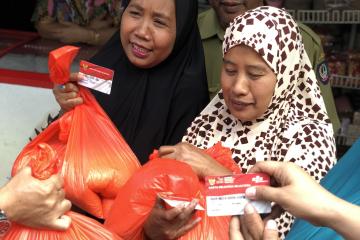
- In Indonesia, J-PAL affiliates Abhijit Banerjee, Rema Hanna, and Ben Olken, with coauthors Elan Satriawan and Sudarno Sumarto, evaluated the impact of changing the delivery of a food assistance program from in-kind transfers to electronic vouchers on household welfare. The reform increased the subsidies received by eligible households due to better targeting and decreased poverty by 20 percent among the lowest-income households.
- Several J-PAL affiliates have studied the impacts of cash transfers with variations in program delivery and design. For example, J-PAL affiliates Edward Miguel and Paul Niehaus, with coauthors Dennis Egger, Johannes Haushofer, and Michael Walker, found that unconditional cash transfers increased consumption for both recipients and non-recipients in Kenya, suggesting that transfers may foster local economies by impacting more than the direct beneficiary. Other studies have shown that the timing and type of cash transfer matter: in Colombia, J-PAL affiliates Marianne Bertrand and Leigh Linden, with coauthors Felipe Barrera-Osorio, Francisco Perez-Calle, and Juan Saavedra, found that postponing some payments of conditional cash transfers to a large lump sum paid at the time of school re-enrollment increased enrollment in both secondary and tertiary institutions.
- Evidence suggests that biometric authentication can also improve the delivery of social assistance programs. In India, J-PAL affiliates Karthik Muralidharan, Paul Niehaus, and Sandip Sukhtankar found that a biometric payment system reduced delays in social protection transfers and decreased leakages cost-effectively without excluding vulnerable households.
While these studies, and others from the J-PAL network, have made significant contributions to the design and delivery of social protection programs, evidence gaps such as those listed above remain. More research on social protection in lower-income economies will be critical as governments continue to develop these systems.
What’s next?
The Social Protection Initiative launched its first request for proposals (RFP) this month. We are excited to support rigorous research projects at a time when governments seem particularly open to improving their social protection systems. Learn more about our RFP and sign up to receive occasional updates on future publications and events.