Insights from the field: Exciting new work from aspiring researchers supported by the Agricultural Technology Adoption Initiative
This piece was originally published by the Center for Effective Global Action (CEGA).
Young Scholars Shaping the Future of Agricultural Policy
The Agricultural and Technology Adoption Initiative (ATAI) funds research to improve farmer welfare through evidence-based policies and programs. ATAI supports research projects conducted by graduate students with guidance from network researchers. In this blog, Karin Mason, former Agriculture Program Intern at CEGA, highlights three ATAI-funded projects led by graduate students Steven Brownstone (UCSD), Piyush Gandhi (UCSC), and Iacopo Bianchi (SU). Steven Brownstone is on the job market for 2024-2025; explore his work here.
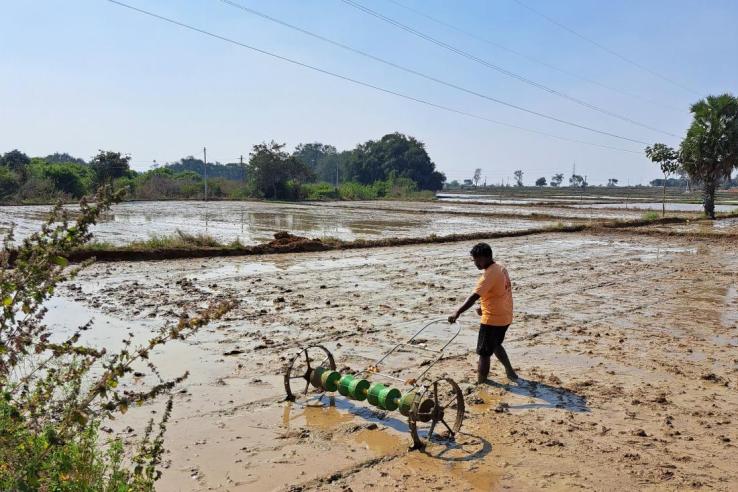
In Telangana, India, manual rice transplanting is typically performed by women, contributing to labor-intensive agricultural practices. Steven Brownstone’s ATAI-funded study investigates the implications of drum seeders, a labor-saving technology that eliminates the need for manual transplanting. The intervention reduced barriers to adoption, resulting in a tripled uptake of drum seeders among farmers. However, this technological shift led to lower wages for women laborers, indicating challenges in finding alternative short-term employment. Drum seeders not only impact local labor dynamics but also offer environmental benefits by potentially reducing methane emissions from rice cultivation, which currently accounts for half of all crop-related greenhouse gas emissions. This dual impact makes drum seeders a particularly compelling intervention to study, as they address both labor efficiency and environmental sustainability in rice production.
Crop residue burning is a common practice in Punjab, India that poses severe health and environmental risks. This practice accelerates hazardous air pollution and soil degradation while exacerbating greenhouse gas emissions. Building on his ATAI-funded proposal development project on bio-decomposer technology for stubble burning, Piyush Gandhi is now evaluating the impact of a program subsidizing Early Maturity Variety (EMV) seeds and technical training on sustainable residue management. EMV seeds and technical training could be a promising way to reduce residue burning by offering farmers viable alternatives to traditional practices, potentially addressing both the time constraints that lead to burning and and the knowledge gap in sustainable residue management techniques.
In Uganda, gender disparities in agricultural productivity are well-documented, but the role of labor markets in perpetuating these gaps remains understudied. Iacopo Bianchi, along with colleagues Cristina Clerici and Stefano Tripodi, is investigating gender disparities in Uganda’s rural labor markets. Their research unpacks the role of labor markets in the well-documented gender gap in agricultural productivity. The preliminary findings of this study highlight unique challenges faced by female farm managers when accessing and managing agricultural labor, suggesting potential avenues for addressing them. For instance, Bianchi notes that improved access to affordable third-party monitoring services or programs aimed at fostering worker accountability may offer promising ways to enhance productivity. This approach is particularly valuable as it targets the root causes of gender disparities in agriculture, potentially leading to more effective and sustainable solutions for improving women’s agricultural productivity in Uganda.
Leading evidence development in agricultural research
When asked about what excites them most about providing insights into critical problems in agriculture, the researchers shared diverse perspectives: Brownstone emphasized the interdisciplinary nature of agriculture, noting its intersection with technology, economics, and climate. He shared his enjoyment at “how collaborative and global the field is becoming.” Gandhi expressed enthusiasm for engaging and learning directly from farmers. Bianchi found motivation in contributing to meaningful solutions for challenges that have not yet been well-documented or fully explored. He emphasized the potential to inform interventions “that can improve equity and productivity” in agricultural communities.
Advice for aspiring researchers
Drawing from their experiences, the researchers offered valuable advice for those looking to enter the field:
- Engage directly with farmers: Brownstone stressed the importance of spending time “literally in the fields,” noting that it not only generates research ideas but also builds credibility with implementers.
- Plan ahead: Gandhi advised starting early, particularly given the time-sensitive nature of agricultural interventions and funding cycles.
- Start small and be adaptable: Bianchi recommended beginning with pilot studies, exploratory research, and/or focus groups to test ideas and develop a strong understanding of the context before scaling up.
- Prepare for challenges: All researchers acknowledged the unpredictable nature of field research, emphasizing the need for patience, flexibility, and creativity.
- Embrace the learning process: Despite the challenges, the researchers unanimously agreed that the experience was invaluable and rewarding. In Bianchi’s words, “field research rarely goes exactly as planned, but those unexpected challenges often lead to the most valuable lessons and insights.”
The work of these young researchers exemplifies the role of research in addressing critical global challenges. From reducing greenhouse gas emissions to gender disparities in rural labor markets, their projects are not only advancing academic understanding but also informing real-world policies and practices. As we face increasingly complex agricultural and environmental challenges, the insights and innovations emerging from this new generation of researchers offer hope for more sustainable, equitable, and productive agricultural systems worldwide. Their experiences underscore the importance of continued support for early-career researchers in agriculture, whose work today may shape the policies and practices of tomorrow.
References:
1. https://www.pnas.org/doi/full/10.1073/pnas.1809276115
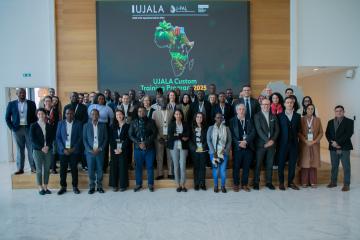
The UM6P-J-PAL Agricultural Lab for Africa recently hosted its Custom Training Program, bringing together 37 participants from thirteen countries, including OCP Africa staff implementing smallholder farming interventions across ten African nations, to develop the skills needed to evaluate their programs. Through interactive sessions on theory of change, randomization methods, and real-world case studies, participants explored how evidence-based decision-making can enhance the design and impact of farmer-centric initiatives.
Despite Africa’s vast agricultural potential, smallholder farmers continue to face persistent barriers to productivity, including limited access to essential farming resources such as fertilizers and seeds, financial services, and places to buy and sell their goods. While programs to help farmers overcome these barriers are widely implemented across the continent, rigorous impact evaluation remains underutilized in assessing their effectiveness. Without strong data and evidence, decision-makers risk scaling programs that may not work as intended and potentially overlook cost-effective, high-impact solutions.
Recognizing this gap, The UM6P-J-PAL Agricultural Lab for Africa (UJALA) hosted its Custom Training Program in Rabat, Morocco from January 20–22, 2025, in collaboration with J-PAL Global. The training brought together 37 participants from thirteen countries, including OCP Africa staff implementing smallholder farming interventions across ten African nations, to develop the skills needed to evaluate their programs. Through interactive sessions on theory of change, randomization methods, and real-world case studies, participants explored how evidence-based decision-making can enhance the design and impact of farmer-centric initiatives.
This blog post examines key takeaways from the training, the broader significance of impact evaluation in agricultural programs, and how strengthening evaluation capacity can contribute to more effective programs and policies in African agriculture.
Addressing a gap: Why rigorous evaluation matters for agricultural programs
One major challenge is the widespread reliance on observational data and anecdotal assessments, which can often misrepresent causal relationships. For example, a government program that distributes subsidized fertilizer may observe higher yields among participating farmers, but without a rigorous evaluation, it is hard to determine whether the fertilizer itself caused the increase.
This is where impact evaluation, and particularly randomized evaluations, play a crucial role. By randomly assigning who receives an intervention and comparing outcomes with those who do not, randomized evaluations help isolate the actual impact of a program—ensuring that policy decisions are guided by robust, credible evidence.
For OCP Africa and its partners, who work across multiple countries designing interventions for smallholder farmers, developing evaluation capacity is critical. Their programs, which range from soil health initiatives and ensuring farming supplies reach rural communities to helping farmers access credit and connect with buyers, have the potential to transform agricultural livelihoods, and even more so if they are designed, tested, and refined based on solid evidence. The UJALA Custom Training Program aimed to bridge this gap by fostering a culture of evidence-based evaluation. The training sought to ensure that OCP Africa and its partners on the ground are not just implementing agricultural programs, but continuously learning from them.
What participants learned
The UJALA Custom Training Program sought to introduce evaluation concepts and help practitioners apply these concepts to real-world agricultural challenges. A key first step is clearly defining how an intervention is expected to create impact. Participants learned to construct a theory of change for their own programs: identifying the assumptions that need to hold for the intervention to succeed. The training emphasized that without a well-defined theory of change, even well-designed evaluations can fail to produce useful insights. For example, in group discussions on climate insurance for farmers, participants considered what behavioral or financial barriers might prevent uptake and how interventions might be adjusted to improve effectiveness.
Some agricultural programs can report positive results, but without rigorous evaluation, it is often unclear whether those results are due to the intervention itself or other external factors. Participants examined how randomization allows for robust causal inference by ensuring that those receiving an intervention and those not receiving it are comparable. Case studies helped demonstrate how randomized evaluations have helped refine agricultural programs in Africa, including efforts to increase fertilizer adoption in Kenya. Discussions covered ethical considerations and practical constraints when implementing randomization in field settings. By the end of the training, participants understood when and how to randomize agricultural interventions to measure a program’s true impact.
Beyond designing evaluations, the training also tackled common challenges in field research, such as choosing the right sample size to detect meaningful effects without excessive costs, addressing threats to validity including spillover effects and selection bias, and balancing rigorous evaluation with operational feasibility to ensure that study designs remain practical.
The insights gained from this training reinforced a mindset of continuous learning and adaptation, ensuring that agricultural programs evolve based on data, not just intuition.
How these lessons can be applied
The value of impact evaluation in agriculture goes beyond academic research. It directly influences how policies and programs are designed, implemented, and scaled. The training highlighted ways in which evaluation tools can lead to more effective farmer-support interventions, ensuring that resources are invested in approaches that genuinely improve smallholder livelihoods.
For example, governments and organizations across Africa invest heavily in resource subsidy programs, but there is mixed evidence on their long-term impact. The training emphasized how evaluation can help answer critical questions such as whether subsidies lead to sustained adoption of improved resources, how they can be designed to target the farmers who will benefit most, and what complementary interventions—such as training or access to credit—enhance their effectiveness. By applying evaluation tools, agricultural agencies can fine-tune subsidy structures, ensuring that they promote lasting behavioral change rather than short-term gains.
Many programs rely on farmer training and advisory services, where experts provide farmers with guidance on best practices, to promote improved practices, but their impact also varies widely across contexts. The training encouraged participants to consider what information actually changes farmer behavior, how advisory services can be designed for wider reach adoption, and how to measure whether knowledge leads to real productivity gains. For organizations like OCP Africa, which provides agronomic guidance alongside fertilizer distribution, these insights can inform better outreach strategies and content customization.
One of the most main takeaways from the training was the need to embed evidence-based thinking into institutional decision-making. Instead of relying on assumptions or external studies, organizations would benefit from regularly testing their own programs. Investing in internal capacity can help staff interpret and apply evaluation findings effectively and foster collaboration between researchers and implementers to ensure that agricultural policies are grounded in real-world evidence.
Looking ahead
The UJALA Custom Training Program provided an important introduction to impact evaluation in agriculture, but it is only the beginning of a broader effort to build a culture of evidence-based decision-making in African agricultural development. Strengthening evaluation capacity at scale will require ongoing investment in training, mentorship, and research collaborations.
The UJALA partnership between Mohammed VI Polytechnic University and J-PAL will continue to expand training opportunities and research collaborations, working to ensure that agricultural programs across Africa are also rigorously tested and continuously improved.
Interested in finding out more about UJALA and collaborating with us? Visit our web page to learn more and get in touch with the team.
The Paris Peace Forum (PPF), a French nonprofit organization, launched a policy initiative in 2023 called "Mobilizing for Strong and Sustainable Food and Nutrition Systems in Africa" to promote sustainable agricultural transformation on the African continent through South-North dialogue on policy and practice. J-PAL’s Agriculture sector has joined the coalition of international organizations committed to this initiative, with the goal of supporting evidence-informed decision-making among partner organizations and countries.
Africa's agricultural potential is substantial. While the continent holds more than half of the world's fertile and yet-unused land, agricultural productivity lags behind other regions of the world. Unlocking this potential could increase food security across Africa, where 60 percent of the population has unstable access to food.
Policy change is an important component to enable this reality. The Paris Peace Forum (PPF), a French nonprofit organization, launched a policy initiative in 2023 called "Mobilizing for Strong and Sustainable Food and Nutrition Systems in Africa" to promote sustainable agricultural transformation on the African continent through South-North dialogue on policy and practice. J-PAL’s Agriculture sector has joined the coalition of international organizations committed to this initiative, with the goal of supporting evidence-informed decision-making among partner organizations and countries.
Mobilizing a coalition for Africa's agricultural development
Improving the agricultural productivity of small-scale farmers, who dominate Africa’s agriculture sector, is a critical policy objective in order to improve global food security. However, this is a complex task given low agricultural technology adoption rates across the continent coupled with evolving factors like changes in international market structures, trade disruptions under Covid-19 protocols, geo-political conflict, and the increasing impacts of climate change on farmers’ yields and welfare.
The PPF's initiative seeks to unlock Africa's potential as a major agricultural power by 2050 through North-South collaboration and learning. Comprised of international organizations and research institutions, such as the International Fund for Agricultural Development (IFAD), the Consultative Group on International Agricultural Research (CGIAR), the Mo Ibrahim Foundation, Special Envoy for Food Systems at the African Union, and the Mohammed VI Polytechnic University (UM6P) as well as companies and philanthropic organizations, the coalition seeks to build consensus and address the following topics:
- Improve soil health, for instance, by implementing comprehensive soil mapping and providing customized fertilizers to enhance soil fertility and crop yields
- Reduce postharvest losses by enhancing storage and transportation infrastructure to ensure more produce reaches the market
- Support sustainable intensification practices, such as precision agriculture, to help maintain high yields without expanding into new lands, preserving ecosystems, among others.
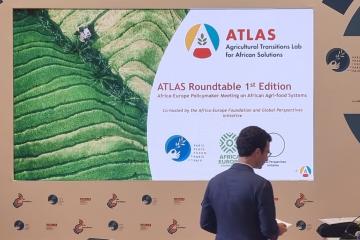
This year, the PPF held its Spring Meeting titled “Fair Transitions” on June 10, 2024, at UM6P in Benguerir, Morocco, convening heads of state to discuss the need for stakeholder cohesion and attracting financial investment. The coalition launched the Agricultural Transitions Lab for African Solutions (ATLAS), a platform for policy dialogue and collaboration between the Global North and South to identify impactful innovations for African agri-food systems and increase investments in African food systems.
Evidence-informed policy decisions and practice
J-PAL will play a critical role disseminating evidence from randomized evaluations in agriculture to inform policy conversations among members of the coalition. Bringing evidence into policy conversations is a powerful tool to enhance the efficiency and effectiveness of policies addressing global challenges.
As climate change continues to affect how farmers and governments make decisions about how to integrate markets to increase food security, among many other decisions, evidence can inform how they frame questions and problems, and understand possible solutions to address the changing policy, economic, and physical environment.
J-PAL’s network of researchers and Scholars have generated research across a number of important and relevant topics to the coalition’s agenda. To support ATLAS’s goals, J-PAL will leverage fifteen years of research generated through the Agricultural Technology Adoption Initiative and the Digital Agricultural Innovations and Services Initiative to disseminate relevant policy lessons on farmers’ constraints to adopting improved technologies. J-PAL will also leverage findings from new research funded through the UM6P-J-PAL Agricultural Lab for Africa, a lab with OCP Africa that will generate actionable evidence on enhancing small-scale farmers’ productivity, profitability, and food security in Africa.
Drawing from this evidence base and through the development of our Policy Insights, J-PAL has synthesized emerging lessons across multiple evaluations and contexts, highlighting the mechanisms that help policymakers make sense of research results.
Driving change through partnership
By bringing together governments, donors, implementing partners, think tanks, and research centers, this coalition creates space for building new links across the agricultural development ecosystem, forging new opportunities for evidence-informed decision-making and collaboration across countries, sectors, and regions. As a member of this coalition, J-PAL will harness rigorous research from the network to inform actionable policies in support of the coalition's mission to drive change through partnership and achieve sustainable agricultural development.
The Regional Scholars Program has taken center stage at the Digital Agricultural Innovations and Services Initiative (DAISI) nearly two years after its launch. The DAISI Regional Scholars Program is integral to DAISI and promotes research opportunities for scholars based in sub-Saharan Africa and South Asia.
This piece was originally published by the Center for Effective Global Action.
The Regional Scholars Program has taken center stage at the Digital Agricultural Innovations and Services Initiative (DAISI) nearly two years after its launch. The DAISI Regional Scholars Program is integral to DAISI, which is co-managed by the Center for Effective Global Action (CEGA) at the University of California, Berkeley, and the Abdul Latif Jameel Poverty Action Lab (J-PAL) at the Massachusetts Institute of Technology, and promotes research opportunities for scholars based in sub-Saharan Africa and South Asia.
In this blog, Abel Mkulama, Program Associate at CEGA, highlights the DAISI Regional Scholars Program’s successes since its launch in 2021.
Building bridges in research
Generating evidence that can positively impact policy decisions requires a deep understanding of the local context and relationships with policymakers. Though researchers from low- and middle-income countries (LMICs) often possess both, according to a UNESCO report, they only produce two percent of the world’s research output. This is mainly due to limited access to research funding and research tools. However, impact evaluation capacity in LMICs is now increasing, thanks in part to programs such as the CEGA’s Global Networks Program and the J-PAL Scholars Programs that provide direct research training, mentorship, and funding opportunities for researchers based in LMICs who are using innovative approaches for reducing poverty.
In 2021, CEGA and J-PAL launched the Digital Agricultural Innovations and Services Initiative (DAISI), which funds research to rigorously evaluate programs that increase the availability, quality, and reach of bundled digital agricultural solutions and services for small-scale agricultural producers in South Asia and sub-Saharan Africa. As part of DAISI’s activities, the DAISI Regional Scholars Program advances funding opportunities and fosters mentorship for researchers interested in impact evaluation methodologies who hold a PhD and are based at academic institutions in South Asia and sub-Saharan Africa.
Mentoring Scholars on the rise
DAISI’s success is closely tied to our partnerships, strong network of researchers, and collaborative culture. The DAISI Regional Scholars Program affirms that local researchers are uniquely positioned to leverage contextual knowledge of the regional policy landscape and stakeholders to identify and evaluate relevant topics that can translate into meaningful policy action for achieving their nation’s development goals.
The program includes mentorship activities, fostering collaboration by pairing a Scholar with a CEGA or J-PAL-affiliated researcher who is based in a leading university and has experience conducting randomized impact evaluations. The mentorship provides space to share knowledge, engage in meaningful discussions, and explore research ideas. Scholars also receive constructive feedback while gaining hands-on experience in impact evaluation methods. Additionally, DAISI intends to convene Scholars for targeted interaction, fostering connections with both CEGA and J-PAL staff. To date, we have organized one virtual convening and expect to host more gatherings in the future.
Embedded in the underlying framework of this program is an approach that invests in and nurtures talent through global academic collaboration. We believe that mentorship serves as a crucial lever for the next generation of researchers involved in the evidence-informed policy movement.
Project spotlights
One DAISI Scholar, Fréjus Thoto, explored the possible effects of a digital, bundled service on agricultural and farmer outcomes like access to inputs and credit in the Benin Republic. Reflecting on the impact of the DAISI mentorship, Thoto said,
"As someone who is new to impact evaluations, the mentorship aspect of the DAISI Regional Scholars Program has been beneficial. My mentor provided insightful guidance on impact evaluations and shared valuable knowledge for evaluating digital applications in the agricultural sector. DAISI isn't merely about submitting and closing projects; it's a collaborative, community-built effort where collective wisdom drives progress."
Another Regional Scholars project, Digital Climate Change Adaptation Services for Sustainable Agricultural Productivity in Nigeria, led by Toyin Olowogbon and Segun Fakayode, explored a digital advisory service bundled with weather-based index insurance for small-scale maize producers in Nigeria. Sharing their DAISI Regional Scholar experience, the team said,
“The mentorship program is the most valuable aspect of the DAISI Regional Scholars program; it helped us develop and refine our research concepts and methods. This mentorship approach is the fastest way for scholars to advance their research and career development goals.”
Impact evaluation resources
CEGA, J-PAL, and our partners offer various opportunities to drive inclusion in the social science and global development ecosystems. Click the links below to learn more about application and eligibility requirements.
- CEGA’s Fellowship Program invests directly in cultivating the talents of junior African researchers by providing residential (at UC Berkeley and Northwestern) and non-residential impact evaluation fellowships.
- J-PAL Scholars Programs provide funding, mentorship, and training opportunities to researchers from low- and middle-income countries. We currently have Scholars Programs in sub-Saharan Africa, South Asia, and the Middle East and North Africa.
Every month, the CEGA Global Networks Opportunities Newsletter publishes funding, events, and career opportunities for scholars from Africa and beyond. Sign up for CEGA’s Opportunities digest here (choose “Global Networks).
To check on the status of future DAISI Requests for Proposals, please visit our website.