


J-PAL Global is our head office and coordinates J-PAL’s worldwide research, policy, education, and capacity building work to promote our mission of ensuring that policy is informed by scientific evidence.
We provide research and policy expertise in each of J-PAL’s eleven sectors: Agriculture; Crime, Violence, and Conflict; Education; Environment, Energy, and Climate Change; Finance; Firms; Gender; Health; Labor Markets; Political Economy and Governance, and Social Protection. This includes publishing evidence summaries and policy insights, and building partnerships to help policymakers understand how and when to apply evidence from randomized evaluations to policies and programs.
We create research resources to help design and implement randomized evaluations and to promote research transparency. We manage funding initiatives that support new and innovative evaluations in agricultural technology adoption, crime and violence, governance, government innovation, and post-primary education, among other topics.
We also lead executive trainings and university-level online courses, including the MicroMasters® Program in Data, Economics, and Design of Policy (DEDP), that help build the capacity of researchers who produce evidence, policymakers and donors who use it, and advocates of evidence-informed policy.
J-PAL Global assists our Board of Directors and the Board’s Executive Committee in designing the strategy and policies that guide our operations worldwide. Our research, policy and communications, education, and training teams support the work of our seven regional offices at leading universities in Africa, Europe, Latin America and the Caribbean, the Middle East and North Africa, North America, South Asia, and Southeast Asia.

More about J-PAL Global
Explore the J-PAL website to learn more about who we are, what we do, where we work, and how to engage with the J-PAL Global team.


Policy Insight
Policy insight
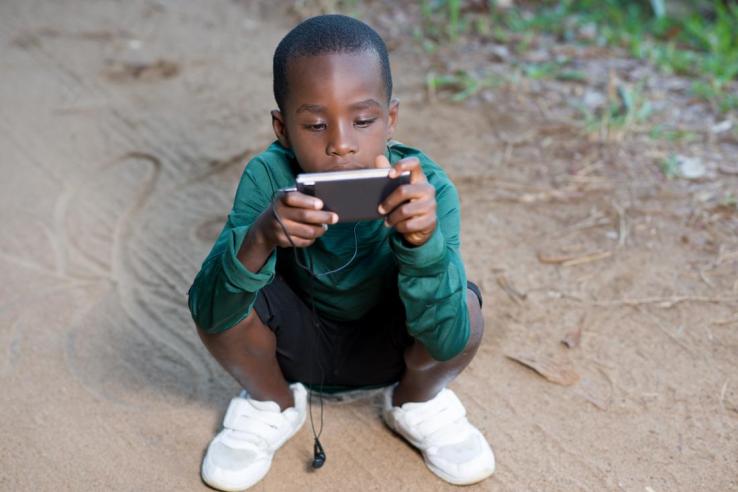
Leveraging mobile phones for learning
Mobile phones are a scalable, low-cost platform to improve learning by engaging students, teachers, and parents in hard-to-reach settings.

Blog
Blog
Test, learn, adapt: Impact evaluations are only as strong as their assumptions
Impact evaluations aim to answer a fundamental question: What is the causal impact of a program on an outcome of interest? To answer this, we need to try to understand what would have happened to program participants in the absence of the program.
Blog
Blog
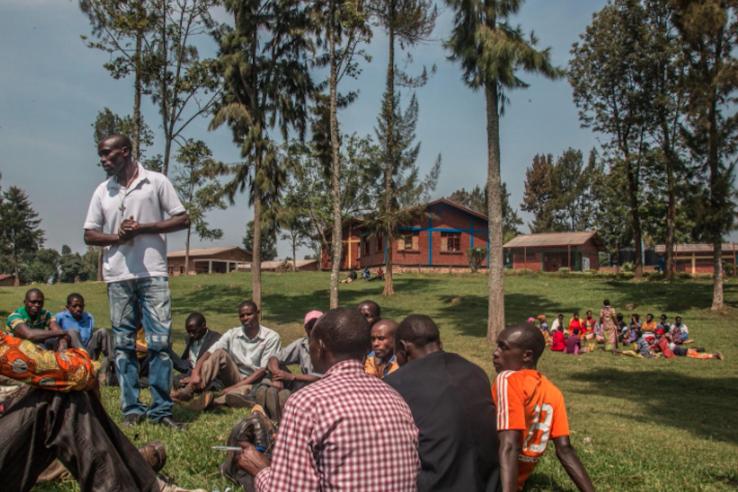
How can we reduce crime, violence, and conflict?: Insights from the latest GCCI Evidence Wrap‑Up
Researchers are studying programs like policing reforms, justice provisions, peacebuilding programs, and more. Over two decades, they’ve built a growing body of evidence on programs that work, and the conditions that maximize their potential.

Blog
Blog
What we heard—and learned—at the India AI Impact Summit
Our team had a whirlwind week at the India AI Impact Summit 2026 last month, the largest annual global gathering on AI. We hosted an official, day-long seminar: AI for Social Good: Impact that Works. We shared how measuring real-world impact is essential to realizing AI’s potential while avoiding...