Imagen

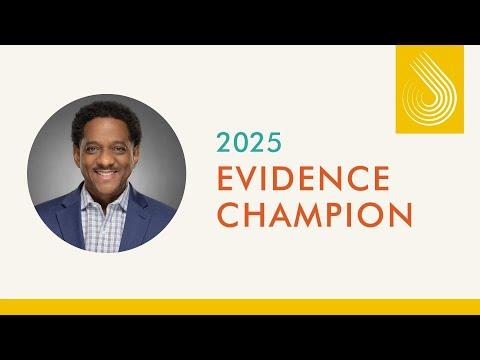
In our Evidence Champion series, J-PAL North America recognizes individuals in our network who have made extraordinary contributions to the field of evidence-based policymaking. This year’s partner recipient is Dr. Owen Garrick, a leader in clinical research, who seeks to find solutions to people’s unmet health needs. In this post, we highlight Dr. Garrick’s vision for addressing racial health disparities with bold solutions, how to embed community perspectives into research design to drive change, and the importance of maintaining reciprocal communication at every stage, including research dissemination.
Over a two-decade career as a clinical researcher, Dr. Owen Garrick has sought to improve health care delivery and health outcomes, particularly for those with the greatest unmet medical needs. Dr. Garrick is motivated by the belief that when we identify solutions for the people facing the greatest challenges, these solutions are often applicable to other groups and can strengthen health systems more broadly.
“I am a believer in the role of research—testing solutions to optimize existing strategies to impact health," notes Dr. Garrick. “Research, very broadly, affords us the chance to put forward, in a more structured way, the best solutions for subpopulations, all populations, or cross sections of patients. So for me, the basic tenets of research apply to health equity research as well.”
Dr. Garrick is a champion of bold solutions that go beyond small incremental changes. He shares, “we artificially limit how we frame health disparities.” He believes that the interventions we test in research should aim not only to meet what is currently considered “optimal” outcomes, but also to push the boundaries and explore how much further those outcomes can improve.
However, Dr. Garrick acknowledges that solutions that can fit into existing workflows are more likely to be implemented. Interventions that take multiple steps, or require more complicated coordination of teams, will have little take-up from decision-makers who have limited resources and competing priorities. Identifying practical approaches that can demonstrate impact is key to driving adoption among implementers and ultimately improving community outcomes.
While a tricky balance to strike, Dr. Garrick has managed to accomplish this throughout his career. Dr. Adam Milam, Professor of Anesthesiology at Mayo Clinic Alix School of Medicine and colleague of Dr. Garrick, shares “the research that Dr. Garrick conducts leads to changes that improve patient care and patient outcomes and systemic changes that are equitable, scalable, and sustainable.”
Dr. Garrick’s approach of identifying bold yet practical solutions is evident in his 2019 physician racial concordance study—conducted with J-PAL affiliated researcher Marcella Alsan (Stanford University) and Grant Graziani—that tested whether increasing representation among physicians of color would improve health outcomes for patients of color in Oakland, CA. The study was driven by calls from leading medical organizations to increase diversity among physicians, based on the idea that doctors who share similar backgrounds with their patients may build trust and communicate more effectively—ultimately leading to better health outcomes. The researchers were interested in designing a randomized evaluation that could generate causal evidence about the effects of Black physicians treating Black patients.
In the study, Black male patients were first shown a picture of the doctor they would be seeing that day and were asked what procedures they would like to receive. The picture was either of a Black or non-Black (white or Asian) male doctor, and the procedures they could choose to receive included proven preventative care measures such as diabetes screenings, cholesterol screenings, and flu vaccines. The patient then met in person with the doctor from the photo, and had the opportunity to adjust their preferences for what procedures they wanted to receive. When Black men were treated by a racially concordant physician, they were more likely to take up preventive care, especially more invasive procedures like a finger prick or injection.
This result indicated that better communication drove the increased take-up of preventative services. Dr. Garrick reflected, “the Black physicians were able to elicit important information like birth dates, job issues, and other social determinants from their patients.” He also noted that the patients were willing to discuss with their doctor how to adhere to medical recommendations while facing challenges such as having more than one job and other social determinants.
“Dr. Garrick helped lead a randomized evaluation for a question that could affect people in his community and did so with integrity and impartiality,” shares study co-author Marcella Alsan. “From small details to major decisions, Dr. Garrick was invaluable in carrying out the project.”

Dr. Garrick was instrumental in incorporating the community into the study. Most study team members were hired from the Oakland community, which provided the research team with a deeper understanding of the setting, informed logistical steps, and helped to refine the study design. Dr. Garrick and his team also engaged community members through focus group discussions that informed how to receive consent, integrate the study into existing workflows, and conduct participant recruitment—which was ultimately organized through barbershops and flea markets.
For Dr. Garrick, conducting research within the local context and structures—as identified by community members—allows for research results to be more applicable in the real world. He emphasizes that, “as academics and outsiders to a community, sometimes we have to take a backseat and understand the expertise and knowledge community members hold and include them as decision-makers in study design and logistics.”
The results from the racial concordance study were well received by the local community, academia, and mainstream media alike. This was, in part, attributable to the thoughtful communication strategy developed by Dr. Garrick that presented the results in an accessible way. The intentional focus to make the study as realistic as possible from the outset made the results easy for community members to understand.
But the results were not just relatable, they were impactful. The study has now been widely cited by others interested in understanding the health of diverse communities, including research identifying the impact of Covid-19 on hospital admissions, expanding the evidence base on physician race concordance, and unpacking racial bias in health algorithms. The research findings also gave people advocating for a more diverse health care workforce tangible evidence of its positive impacts, demonstrating that increasing diversity could be a cost-effective solution to improve patient care and the efficiency of health care delivery.
Dr. Garrick and his team partnered with the Alameda County Public Health Department, which had provided free vaccines for the study, to share the research results back to the community. The research team also prioritized thanking the participants for their engagement and participation. Thoughtfully sharing study results, Dr. Garrick explained, can increase the potential for change.
As an Evidence Champion promoting health equity, Dr. Garrick continues to push others to advance community-centered solutions that are bold and actionable. “In our daily lives, we can't track everything, so let's figure out what is the most efficient and impactful,” he notes. “You still need to maintain some percentage of your time for the unknown, the new discoveries. And a lot more studies focused on real-world challenges would be fantastic.”
Dr. Garrick would like to thank the patients that participated, the broad team of researchers, policymakers, practitioners, and community members who are partnering with him to make this work meaningful, including: Dr. Michael Lenoir, Wrist Action Barber Shop, National Public Radio, Stanford University, the National Medical Association, and Sinkler-Miller Medical Association.