

From Evidence to Action: Protecting People in Conflict
Partners:


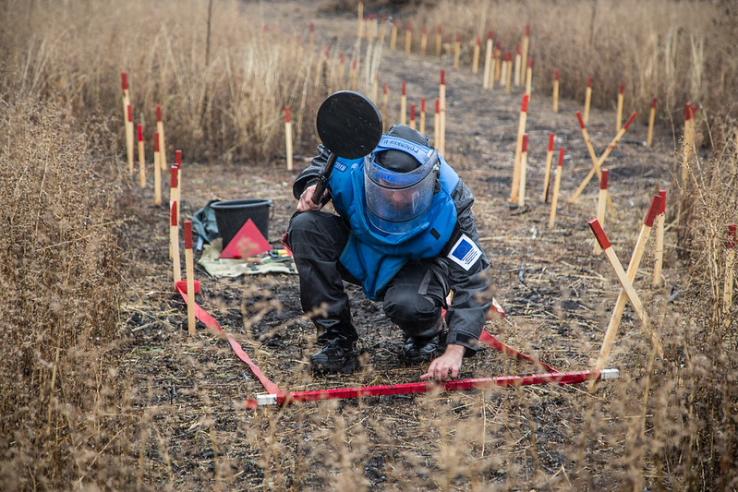
In 2025 the UN documented more than 37,000 civilian deaths across 20 armed conflicts, approximately one civilian killed every 14 minutes. Civilians continue to suffer alarming levels of harm through deaths, injuries and forced displacement, and through the systematic damage or destruction of the infrastructure they depend on, including housing, energy, water, health facilities and schools. Despite decades of humanitarian protection programming, the body of rigorous evidence on what works, under what conditions, and through what mechanisms remains thin. The Humanitarian Protection Initiative (HPI), a collaboration between the Abdul Latif Jameel Poverty Action Lab and Innovations for Poverty Action supported by UK international development assistance, was created to close that gap by funding impact evaluations of interventions that prevent and mitigate harm to individuals and communities in acute conflict settings.
In its first phase, HPI has shown that rigorous evaluation is possible in active conflict settings, a field where this seemed out of reach only a few years ago, generating evidence that allows the sector to act on the moral imperative to protect civilians with growing confidence that it does so effectively.
To mark the close of this first phase, the initiative will convene a high-level event on the sidelines of the Paris Peace Forum, whose agenda places peace and security at its centre. The event will showcase the evidence generated through HPI while building momentum around the next generation of research and investment in humanitarian protection.
The event will consist of two complementary parts. First, an evidence-to-practice workshop with practitioners and implementers will focus on translating evidence into practice, sharing findings from HPI-funded research alongside the broader evidence base and examining their implications for programme design and implementation. Second, a high-level reception will bring together policymakers, implementing partners and funders to highlight priority evidence gaps, shape future research priorities, and mobilise sustained investment in evidence generation for humanitarian protection.
Agenda
Afternoon workshop — 16:00–18:30, Salon Trocadéro
16:00 — Opening remarks
Welcome and framing from J-PAL Affiliated Professor, Luc Behagel (Associate Professor at the Paris School of Economics)
16:15 — Protecting civilians in active conflict
- Raúl Sánchez de la Sierra, Associate Professor, Department of Management, London School of Economics and Political Science — Civilian Protection by Direct Combatant Interventions: What works and What Doesn’t?, DRC
- Kathryn Falb, Assistant Professor, Center for Humanitarian Health, Johns Hopkins Bloomberg School of Public Health — Growing Stronger Together: a family-strengthening approach to prevent child recruitment, CAR
- Salimatou Traore, Protection Coordinator, International Rescue Committee
- Hannah Wild, MD, University of Washington — Layperson First Responder Trainings To Improve Trauma Care For Civilian Casualties Of Explosive Violence, Burkina Faso
16:55 — Mental health, child development and education in conflict
- Michael Callen, Associate Professor of Economics, London School of Economics and Political Science — Enhancing Resilience and Agency Through Remote Education For Afghan Girls: A Pilot in Providing Foundational Numeracy And Literacy
- Hila-Nawa Alam, Director of Humanitarian Relief, Uplift Afghanistan Fund
- María José Torres, Associate Researcher, Semillas de Apego — Caregiver Mental Health and Early Childhood Development in Conflict-Affected Settings: At- Scale Experimental Evidence from Colombia
17:35 — Protecting against gender-based violence
- Gloria Gennaro, Assistant Professor in Public Policy and Data Science, Department of Political Science, University College London — Online Ambulance – Empowering Women and Girls Against Technologically-Facilitated Gender-Based Violence (TFGBV) in Myanmar
- Oana Borcan, Associate Professor in Economics, University of East Anglia — Sextortion And Entrepreneurship: A Pilot Study Of Interventions To Prevent Sexual Exploitation Of Female Entrepreneurs
- Fanny Serre, Director, Empow’her
18:15 — Closing remarks
Evening reception — 18:30–20:00, Lordy’s Paris Club
Remarks by Senior representatives of the French and Spanish governments and of the UK Foreign, Commonwealth and Development Office, alongside Abhijit Banerjee, co-founder of J-PAL and co-recipient of the 2019 Nobel Prize in Economics, and Annie Duflo, Executive Director of Innovations for Poverty Action.
Spoken word performance