Building an effective COVID-19 response: Addressing the education crisis
The COVID-19 pandemic has resulted in significant reductions in the quality and quantity of schooling across the United States. With school closures, high school students received on average 3.9 hours of instruction versus the 6 hours per day required by most states. Reduced learning time and in-person instruction has resulted in learning loss that disproportionately harms students from low-income families and students of color.
J-PAL North America’s COVID-19 Recovery and Resilience Initiative aims to identify effective ways to support students, educators, and families in the face of COVID-19 related school closings, remote learning, and learning loss by evaluating strategies to improve educational outcomes.
Pre-existing inequity in education
In the United States, millions of students are behind grade level. In 2019, only 41 percent of fourth graders were considered “proficient” in math. This figure drops to 34 percent by eighth grade. For reading, only 35 percent of fourth graders and 34 percent of eighth graders met or exceeded the 2019 proficiency benchmark.
These numbers change drastically when examined by race and income level. Only 18 percent of Black fourth graders and 23 percent of Hispanic fourth graders met the reading “proficiency” benchmark, as compared to 45 percent of white fourth graders. Similarly, only 21 percent of students eligible for the National School Lunch Program––a proxy for students from low-income families––were considered proficient as compared to 51 percent of students who were not eligible.
Racial and economic disparities in educational opportunities start early and persist throughout school. Students from low-income families are more likely to begin school already behind their more affluent peers and face challenges catching up. Further, school districts that serve large populations of students of color and students from low-income families receive far less funding for student resources than those serving student communities who are predominantly white or affluent. The average Black or Hispanic student remains roughly two years behind the average white student, and low-income students continue to be underrepresented among top performers.
Falling behind early has long-term consequences. For example, students who are not reading proficiently in third grade are four times less likely to graduate high school than children with proficient reading skills. Further, while high school dropout rates are declining nationally, they are continuing to rise for students from families with low-incomes, and racial gaps persist.
These disparities are not limited to learning outcomes. The adoption of zero-tolerance and punitive disciplinary policies is more likely as the percentage of Black students in a school system increases. Compared with white students, Black students are less likely to be placed in gifted programs and subject to lower expectations from their teachers. These practices are linked to higher rates of dropouts and failure to graduate on time, as well as to the “school to prison pipeline.”
Education inequalities are perpetuated by the ways in which schools are funded in the US. The majority of funding for public schools comes from state and local taxes, which contributes to large resource disparities between schools in high- and low-income communities.
However, inequities span beyond school geography and community income. In 2019, researchers found that high-poverty districts serving mostly students of color receive about $1,600 less per student than the national average, while high-poverty school districts that are predominately white receive only about $130 less.
Differences in funding can affect all aspects of the K-12 education system, including per pupil expenditures, course offerings, access to counseling and other educational resources, teacher salaries, and availability of technology at school. Long-term impacts of school funding disparities include lower earnings and an increased annual incidence of poverty as children become adults.
Racial and income disparities in education are not limited to the K-12 system. Low-income, Black, and Hispanic students attend college at lower rates than their more affluent or white peers, and are also more likely to attend colleges of lower quality. For low-income students of color, attending lower quality colleges is related to their long-term earnings and lower representation in fields such as the physical sciences, mathematics and engineering.
The impact of COVID-19
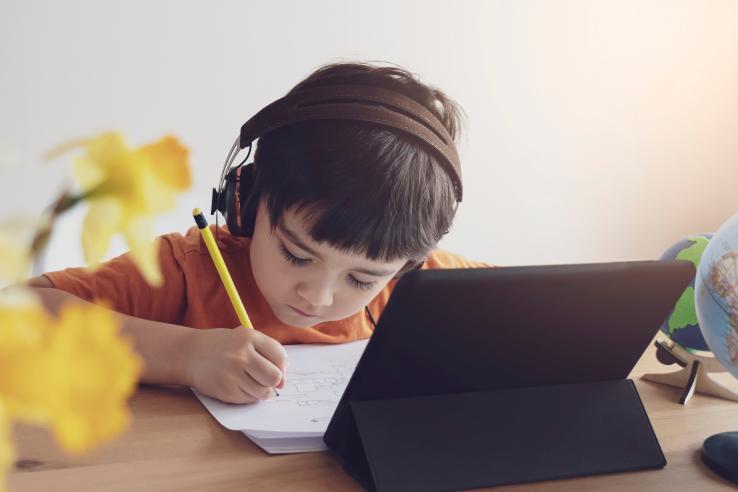
As a result of nationwide school closures, 55 million students completed the 2019-2020 school year from home, and approximately 9 million (16 percent) did not have access to the technology they needed for remote learning.
These school closures are likely to result in disproportionate learning losses for low-income students and students of color, and by September many students will be behind a full academic year. The World Bank suggests that foundational learning loss as a result of school closures could lead to lower learning trajectories for a whole generation.
COVID-19 has underscored the disparities in access to essential technology between high-income and low-income schools. An EdWeek Research Center survey found that 62 percent of leaders in districts with poverty rates under 25 percent said all families had access to home internet. For leaders in high-poverty districts where the poverty rates exceed 75 percent, just 31 percent of families had the necessary access. This suggests that a significant portion of students have no way to access learning at home. For this reason, lower-income parents are much more likely to say they are concerned about their children falling behind.
Access disparities are race-based as well––a 2020 survey conducted by Pew Research found that one-quarter of Black teens reported they often or sometimes cannot do homework assignments due to lack of reliable access to a computer or internet connectivity, compared with 13 percent of white teens and 17 percent of Hispanic teens. It is clear that districts, schools, state and local governments will first need to address the issue of access in order to implement equitable and effective programs to keep students learning during the pandemic.
The numbers of students impacted by school closures and disparities in access to learning are unprecedented. However, researchers are turning to existing evidence on missing school to understand the potential learning loss for students across the US. Examining the impacts of unique events like Hurricane Katrina and the more common summer slide, analyses suggest that while most students will see significantly smaller learning gains relative to a typical school year, students who were already struggling will fall further behind. Learning loss will likely be greater in mathematics relative to reading.
The unequal impacts of the pandemic also affect access to and success in higher education. Low-income students were 55 percent more likely to delay graduation than their more affluent peers as a response to the shut down. These educational setbacks at all levels will further exacerbate long standing inequalities in not only academic achievement but also employment opportunities, earnings, and intergenerational mobility.
Research to support students, teachers, and parents
The COVID-19 pandemic threatens to exacerbate stark opportunity gaps that persist throughout the US education system. Research is needed to demonstrate how best to adapt our education practices and policies to respond to and recover from the impact of the pandemic on schools.
Turning to the evidence on what works and testing new strategies to address education inequalities is paramount in order to stem the COVID learning slide. Researchers, working collaboratively with education leaders, have an opportunity to test programs and interventions and develop generalizable lessons to inform education policy and support recovery for all students.
How can districts use data to determine which students are most in need of additional support?
Before schools can determine if their online learning efforts are effective, educators need to identify which students are struggling to access and engage with online learning programs. District leaders, working to support online learning as schools closed in the spring 2020, learned that effective, equitable remote learning was almost impossible without a learning management system.
Researchers should work with districts and education technology platforms to improve data collection and data management systems. A data management system that provides robust and transparent data will allow schools to determine which students are doing well and which students’ needs have not been met.
Using passive data collection from digital education technology platforms, researchers and districts can potentially identify and track students who are not engaging with online learning in real time. This will enable educators to reach out and provide targeted resources to students who need them most.
How can educators combat learning loss and minimize the widening of the opportunity gap?
As a first step to minimizing the impact of the pandemic on student learning, states and districts need to ensure that all students have access to the technology they need to succeed. While evidence suggests that simply expanding access to technology on its own typically does not improve learning outcomes, providing students with these essential tools during the pandemic is critical to support remote learning. New research can seek to identify effective methods to expand access to vital technology to students who need it.
In addition to technology, new research can also explore innovative ways to expand access to evidence-based programs. For example, while a growing body of evidence points to both computer assisted learning programs and tutoring as effective educational tools, new research may explore how to effectively blend these programs to expand tutors’ capacity. Additionally, more evidence is needed on the effectiveness of online tutoring, particularly while students are unable to access face-to-face teaching due to COVID-19.
Researchers can work with districts to implement and test tutoring models that engage service corps such as AmeriCorps or college students who have delayed their studies, to deliver tutoring support via online platforms alone, or combined with in-person sessions.
Beyond tutoring, new research should explore other interventions to support students who have fallen behind and identify how these strategies can best function in the context of the COVID-19 pandemic. Potential topics for study may include extended school days, summer school, vacation academies, or credit recovery programs. For older students, new research should include efforts to increase graduation rates and college attendance. This may entail evaluations of remote college guidance interventions, credit mapping supports, or nudges for parents and students to complete necessary college tasks.
For all of the above strategies, research should focus on methods to ensure that resources are effectively targeted to reach students who need them most and advance equity in education.
How can we effectively help parents support student learning?
COVID-19 has further exposed significant weaknesses in schools’ ability to engage families in solutions and planning, or even communicate the most basic information. Schools need to invest in communication tools, systems, and training to ensure every family receives information they need to help their children.
With school closures in spring 2020 and uncertainty about how schools will reopen in the fall, many parents and caregivers are faced with the daunting task of supporting their children’s learning from home. While most parents lack experience as educators, approachable and simple interventions will be critical to help parents respond to this challenge.
Evidence suggests that short, actionable directions and suggestions for engaging activities can better equip parents to support learning at home. Researchers, program developers and educators recognize that parental engagement during the pandemic may look completely different from parental engagement prior to school closures. There is an opportunity to redesign programs to deliver content that supports student learning at home. And while many of these interventions have not yet been tested at scale, researchers can partner with districts or state departments of education to implement these family engagement strategies at scale and identify effective ways to support parents during and after the pandemic.
How can schools address student trauma and provide other non-academic supports?
Following COVID-19, many students are likely to face increased trauma from periods of isolation, loss of family income, or loss of a family member. Many schools, particularly those in low-income districts, are not adequately equipped to provide quality mental health services to students. Researchers should partner with schools and other organizations to identify effective interventions to expand access to mental health services and improve mental health outcomes for students in the wake of COVID-19.
This post is an installation in J-PAL North America's "Building An Effective COVID-19 Response" research guide blog series. The complete series highlights the interaction between COVID-19, research, and the policy areas of education, health care delivery, and jobs and the social safety net.
How can policy leaders best support their communities in the face of the joblessness, educational setbacks, and trauma inflicted by the COVID-19 pandemic? Rigorous evidence will play a critical role in helping us understand which policies and programs will truly work to help communities recover in the wake of COVID-19.
The COVID-19 pandemic has resulted in incalculable losses for millions of Americans, particularly among low-income communities and communities of color. As decision-makers focus on addressing the urgent public health threat presented by the virus, major questions remain on how to best support the country’s social and economic recovery after the immediate crisis has resolved.
How can policy leaders best support their communities in the face of the joblessness, educational setbacks, and trauma inflicted by the COVID-19 pandemic? Rigorous evidence will play a critical role in helping us understand which policies and programs will truly work to help communities recover in the wake of COVID-19.
The COVID-19 Recovery and Resilience Initiative
J-PAL North America’s COVID-19 Recovery and Resilience Initiative aims to create a playbook of evidence-based policies to help communities recover in the wake of COVID-19. As decision-makers grapple with an unprecedented new reality, rigorous evidence is perhaps more necessary than ever to understand which policies and programs work.
To begin this effort, J-PAL North America asked our network of academic researchers which research questions, if answered, have the potential to help significantly advance our understanding of how to respond to the COVID-19 crisis. Together, we’ve curated a learning agenda outlining where rigorous research has the potential to be most effective in supporting low-income workers, improving health care access and delivery, and advancing equitable education solutions in the face of the COVID-19 pandemic.
A blog series over the next three weeks will offer a deeper analysis of how the COVID-19 pandemic has exacerbated historical and structural inequities across the policy areas of education and youth; jobs, labor, and the social safety net; and health care delivery. It will also present specific examples of how rigorous research can help bring evidence to bear to advance truly effective policies and programs. This learning agenda is not intended to be an exhaustive list of questions, but rather a jumping off point for further research and consideration.
Motivation
While the COVID-19 pandemic is a national crisis, not all communities have been similarly impacted by this tragedy. The pandemic has laid bare structures that have long worked to benefit wealthy and white individuals and limit opportunity to people of color and low-income communities in the United States.
The failure of this country’s institutions to adequately protect and provide for low-income communities and people of color is starkly evident in the data across health, labor, and education. Black and Hispanic communities in the United States have been disproportionately harmed by the public health impacts of COVID-19, experiencing higher rates of both infection and death than white populations. Job and wage losses due to COVID-19 have hit low-income, Black, and Hispanic workers harder than white workers or workers with higher salaries. In education, widespread school closures are exacerbating pre-existing racial and economic academic achievement gaps between students, as students from low-income families and students of color are less likely to be receiving personalized instruction and accessing virtual supports during the pandemic.
Why rigorous research?
Policymakers and sector leaders are being presented with a new set of challenges that they’ve never encountered before. Rising to meet these challenges will require new research to look at the big picture questions on how to address multiple interconnected dimensions of the pandemic.
Some questions might challenge the viability of long-standing policy assumptions, just as the tragedies of the pandemic have raised questions about the efficacy of many of our current social systems to protect the communities who have been most impacted by COVID-19. However, in light of this crisis, policymakers have also been pushed to experiment with new policy ideas that were once considered out of reach or outside the political mainstream. For instance, universal basic income has long been considered by many in the United States to be a fringe and impractical policy consideration. Following the use of stimulus checks to reduce the financial strain of COVID-19, universal basic income has entered the public consciousness as a more palatable policy solution.
Researchers can rigorously pilot and test these innovative policies on small and large scales to help decision-makers understand which programs are most effective and why. As policymakers build longer-term policy plans to recover from the pandemic, results from rigorous evaluation will be critical to inform the process and keep policymakers from flying blind in this unprecedented policy territory. Local, state, and national decision-makers can turn to rigorous evidence to make informed decisions on whether to implement new policies or scale existing programs that have real-world benefits for communities.
The existing evidence
Despite the unprecedented reality of the COVID-19 pandemic, many of the policy challenges exacerbated by the pandemic are not new. Decision-makers can turn to existing evidence-based solutions to address some of the immediate challenges presented by COVID-19.
Our COVID-19 Evidence Portal provides guidance on how to increase access to the social safety net, expand access to health insurance and care, and improve online learning practices. However, while the existing evidence provides helpful lessons, there is still much more to learn about how to grapple with the longer-term impacts of the pandemic.
Research moving forward: where can research make an impact?
J-PAL North America aims to catalyze new, rigorous research to create a playbook of evidence-based strategies to address the multiple policy dimensions of the COVID-19 crisis. When discussing the research response to the COVID-19 pandemic, our academic network focused on the policy areas of labor, health, and education. The conversations centered on how rigorous research might be able to best support students, workers, and patients in the wake of the COVID-19 crisis. Some of the high priority questions identified include:
Education and youth
- How has virtual learning impacted students’ learning outcomes? Further, how can districts and education technology platforms improve data collection so that educators can better target personalized supports to individual students?
- If schools must bring students back to campuses, how might they go about re-opening safely? How can we target resources to students who most need support?
- How can schools address student trauma incurred during the COVID-19 pandemic and better support students’ mental health needs and socioemotional development?
- How can educators minimize the widening of the achievement gap?
Jobs, labor, and the social safety net
- How can policymakers support those who are unemployed?
- What programs can improve the job-search process?
- As jobs are reallocated post COVID-19, where will opportunities for workers arise, and how can we match low-income workers to new high-quality job opportunities?
Involvement in the criminal justice system is closely tied to individual labor market outcomes. High priority questions relating to criminal justice include:
-
- How can communities effectively support individuals who have been released from incarceration?
- Do decarceration strategies adopted during the pandemic have positive outcomes in a post-pandemic setting?
Health care delivery
- How can health officials improve access to health care for people who experience major health care barriers, including people who are uninsured or experiencing homelessness?
- How can health officials increase take-up of positive and preventative health behaviors?
- How can health officials increase trust in health institutions?
Better understanding and addressing the social determinants of health is critical to improving individual and population health and advancing health equity. J-PAL North America’s COVID-19 Recovery and Resilience Initiative aims to contribute to knowledge in this area by testing strategies to minimize the short and long-term public health impacts of COVID-19 and address inequities in access and care.
The COVID-19 pandemic has placed unprecedented strain on the American healthcare system, and in doing so has brought to light many of its most persistent shortcomings. Despite spending far more than any other country on healthcare, the United States has reported the highest number of coronavirus cases and the highest number of related deaths, causing many to question the underlying structures of the nation’s health care system. Gaps in health care access, coverage, and quality based on race, socioeconomic status, and geographic location are, in the midst of a global pandemic, rapidly widening and becoming more apparent than ever.
As nationwide protests against police violence and systemic racism continue across the United States, blatant disparities in COVID-19 infections and deaths point to the pressing need to address inequities in health and a myriad of other areas. Narrowing the significant socioeconomic gaps in health care access during the pandemic and post-pandemic context is an imperative undertaking.
Better understanding and addressing the social determinants of health is critical to improving individual and population health and advancing health equity; without taking an intersectional approach to addressing health, disparities will persist and communities will be left behind in the fight to mitigate the impact of COVID-19 and recover from the pandemic.
J-PAL North America’s COVID-19 Recovery and Resilience Initiative aims to contribute to knowledge in this area by testing strategies to minimize the short and long-term public health impacts of COVID-19 and address inequities in access and care. By teaching policymakers what programs and policies work to improve health equity and access, rigorous evidence can play a fundamental role in helping the nation respond effectively to COVID-19 while building a more equitable healthcare system in the long-run.
Pre-existing inequity in health care delivery and access
Communities of color have been hit the hardest by the COVID-19 pandemic, reflected in higher infection and death rates for Black, Hispanic, and Indigenous populations. These disparities in COVID-19 diagnoses and deaths are the result of pre-pandemic realities that have long limited access to health care and wealth. Structural factors—such as residential segregation and gentrification, workplace conditions, and economic security—have worked to reinforce and intensify health disparities by socioeconomic status, and contributed to rates of pre-existing health conditions that correlate with higher vulnerability to COVID-19.
Additionally, Black, Hispanic, and Indigenous communities in the United States often have less access to quality health care: even before the arrival of the novel coronavirus they were significantly more likely to be un- or under-insured. Immigrant communities are especially likely to be uninsured, as they are overrepresented in jobs that do not provide health insurance coverage, and undocumented individuals are explicitly barred from accessing most public and employer-sponsored plans.
There is also a history of distrust between these communities and the American health care system stemming from inaccessible care, disparities in health outcomes, a lack of Black, Hispanic and Indigenous physicians, and, for Black Americans, a longstanding history of medical exploitation and abuses dating to slavery.
Contact tracing, a public health tool that asks individuals to divulge personal, detailed information, inherently requires a degree of trust that our healthcare system has failed to earn from many communities of color. The combination of systemic distrust coupled with disparities in the quality of housing, jobs, and care available to communities of color has resulted in disastrous health outcomes for Black, Hispanic, and Indigenous communities during the COVID-19 crisis.
The impact of COVID-19
Amidst a global health crisis that has had catastrophic impacts on public health globally, the United States’ healthcare system has been hit particularly hard: the country has 4 percent of the world’s population, but about 24 percent of its COVID-19 cases and 22 percent of its COVID-19 deaths (as of September 1).
Overburdened hospitals serving the most hard-hit regions are struggling to pay for critical health services amidst rising equipment costs and declining revenues. They are also less able to provide quality primary care, mental health care, and care for chronic conditions in the struggle to funnel resources toward responding to COVID-19.
Deaths from noncommunicable diseases such as heart disease and diabetes have increased during the pandemic, possibly because individuals are afraid to seek emergency care out of fear of being exposed to the virus. On top of this, the United States is facing an unprecedented mental health crisis, with people experiencing higher rates of depression, anxiety, substance use, and suicidal ideation due to coping with the pandemic.
Nationally, Black and Hispanic populations have been disproportionately impacted by the virus, accounting for higher rates of infection and death than would be expected given their share of the national population. Of the 20 counties in the United States that have the highest level of COVID-19 deaths per capita, 11 counties have populations in which Black, Hispanic, or Indigenous people represent the largest racial group.
Adjusting for age, the coronavirus death rate for Hispanic populations is 2.5 that of white populations. For Black communities the numbers are even more harrowing, with Black populations dying at a rate of 3.6 times that of white populations. Part of the reason behind such disproportionate rates of infection and mortality stems from the fact that Black workers, Hispanic workers, immigrants, and women are disproportionately represented in essential, frontline jobs which dramatically increase one’s risk of exposure to the virus.
The economic impacts of the COVID-19 pandemic have had disastrous impacts on health inequities as well: the number of Americans living without health insurance has nearly doubled in size since late February, and families who have been financially impacted by the virus are struggling to pay for basic care. A disproportionate number of those losing employer-based coverage have been Black and Hispanic individuals. Without coverage, these families are likely to face more barriers to accessing quality care and may face significant negative health impacts as a result.
On top of this, the pandemic has negatively impacted families’ financial stability, which in turn has drastic implications for widening health disparities. As a result of job loss, financial shocks, and reduced income, a growing share of the population is struggling to afford nutritious food, access quality medical care, remain safe and stably housed, and pay for costs related to education—factors which serve as central determinants of health. As state moratoriums on evictions come to an end, an increase in the number of individuals experiencing homelessness and housing instability will leave more communities vulnerable to the virus, as well as vulnerable to long-term negative health outcomes.
Tenants of color are disproportionately impacted by evictions, and cities across the nation such as Boston, Los Angeles, and New York are preparing to see an increase in the rate of individuals experiencing homelessness among Black, Hispanic, and immigrant communities. Within this context, it is becoming more and more clear that addressing health disparities that stem from unequal social and economic conditions is of absolute necessity to fight and recover from COVID-19.
Research to improve health care delivery and expand health care access
The COVID-19 pandemic has already placed an indelible mark on nearly every aspect of the United States healthcare system. To deal with an unprecedented crisis, we need new research demonstrating what works to adapt our health care practices, programs, and policies to best respond to and recover from the pandemic as quickly and effectively as we can.
What are effective and equitable strategies to deliver quality health care given new constraints imposed by COVID-19?
Community health workers are frontline public health workers who are trusted members of the communities they serve. Better understanding how these workers can facilitate access to health, social, and community services in a pandemic setting may be a critical component in ameliorating the impact of COVID-19 on communities with specific health needs, such as Indigenous communities and other communities of color.
Additionally, in a time of social distancing, when many health care services are no longer provided in-person or in clinical settings, it is important to better understand how interventions such as telehealth can be used and adapted to meet the needs of different communities, especially those where health care access is limited.
How can health officials increase take-up of positive health behaviors?
The widespread adoption of positive health behaviors is necessary to minimize the spread of COVID-19. Researchers should work with public health authorities to identify ways to improve take-up of positive behaviors such as wearing a mask, avoiding unnecessary crowds, and, when it becomes possible, receiving the COVID-19 vaccine. Examples of interventions to increase take-up may include information campaigns, direct encouragement to take-up services, or increased access to free masks.
What can health care delivery organizations do to provide accessible and impactful mental health care?
In a period of increased social isolation, uncertainty, and financial stress, accessible and impactful mental health services are more critical than ever. Loneliness and social isolation are linked to poor health and mental health outcomes.
Due to the closure of clinics, provision of mental health services and counseling are more difficult for individuals to access, and for many, accessing counseling is cost-prohibitive. It is critical to have data on the efficacy of innovative strategies to deliver mental health care in this new context, including telehealth and app-based mental health services.
How can health officials address the unique health needs for those experiencing major barriers to health care, including those who are uninsured, incarcerated, or experiencing homelessness?
People without insurance in the United States often minimize their use of health care due to the high cost of seeking care, and may be hesitant to seek out critical COVID-19 testing or treatment. Further, individuals who are incarcerated and those experiencing homelessness represent two groups who are at high-risk of COVID-19 infection, lack access to adequate health care, and are unable to practice the positive health behaviors recommended to limit the spread of COVID-19.
Researchers should work with community agencies and health officials to identify effective ways to encourage the take up of health care for groups who largely lack access to care opportunities. Programs to broaden the reach of mental and physical health care service (such as mobile or telehealth platforms), increase trust in health systems and services, and connect individuals with social safety net programs may be important.
This post is an installation in J-PAL North America's "Building An Effective COVID-19 Response" research guide blog series. The complete series highlights the interaction between COVID-19, research, and the policy areas of health care delivery, jobs and the social safety net, and education.
As the new school year begins and COVID-19 cases continue to spread across the United States, questions remain about how to educate students effectively and safely. We sat down with affiliate Sarah Cohodes to discuss the school reopening process, the impact of remote learning on students and parents, and the potential paths forward.
As the new school year begins and COVID-19 cases continue to spread across the United States, questions remain about how to educate students effectively and safely. We sat down with Sarah Cohodes––Associate Professor of Economics and Education at Teachers College, Columbia University––to discuss the school reopening process, the impact of remote learning on students and parents, and the potential paths forward. For more information on Professor Cohodes’ recommendations for reopening K-12 schools, read her column in The Atlantic.
Could you tell us a bit about the focus of your research and work before COVID-19? How has it changed since COVID-19?
My work focuses on policies that help students access high quality education. I can’t help but laugh when thinking about the beginning of the pandemic, when I was so overwhelmed with the enormity of school closures and lack of childcare, I thought that this had nothing to do with the issues I study. I now realize that COVID-19 is clearly connected to my research. What does access to high quality education mean when many typical modes of education are not safe? How do you promote access for the students who need it the most?
I think we're still in emergency mode and research questions are still developing, but I’m particularly interested in how families are adjusting to remote learning. The most important education work right now is probably understanding and describing the experiences of students, families, and teachers.
Can you speak a little bit about how your work and expertise as an education researcher has shaped your understanding of the challenges that schools are facing right now?
My work has shown me the impact that schools can have on students. So much of the “school reopening” conversation is about the risks and costs. We need to discuss the benefits of schools too, to understand how they can best serve students and families. COVID-19 is changing the conversation around the role schools play in society in terms of childcare and our social safety net.
We need to ask ourselves: Why have we been asking schools to play these roles? Is school the best place to do those things? We know that quality education can change the trajectory of young people's lives––we need to consider what must be done to maximize access to these opportunities.
As schools are grappling with reopening and exploring how, and to what extent, they can integrate technology, what lessons have emerged from evidence that can inform how these decisions are made?
We know technology interventions are not necessarily going to save anybody money or reduce the burden placed on teachers. I think there is incredible promise in technology to help us through this moment, but there's no getting around the fact that interaction with technology needs resource-rich investments in teachers to facilitate it.
We don't have the infrastructure for remote learning in large parts of the country. This goes beyond getting a student an iPad or setting up a WiFi hotspot. This moment is highlighting infrastructure that we should have been investing in over the past decade, including school building improvements, a reliable social safety net, and widespread internet access. While technology offers promise, more will need to be done to make that technology work. How can we help students to engage and interact with technology?
As schools face pressure to reopen and some are reopening, can you walk through the impacts that this will have on parents, students, and teachers?
There is, of course, the difficulty that schools as institutions are being asked to act alone, and a pandemic is not something that acts only in one sector. Just as we task schools with taking care of children's food needs and detecting abuse and neglect, we're now asking them to deal with a public health crisis.
It’s clear to me that the quickest path towards reopening school successfully is a nationwide virus suppression effort. In places with high community transmission, that would involve not reopening schools, as well as wider closures and lockdowns. Everywhere, we need more masking, testing, and contact tracing.
If we want schools to open as normal, we should prioritize schools over other activities. In order for those strategies to work, you have to pay people to stay home. All of this requires government action, which we are not seeing.
Regardless, schools are reopening. With social distancing requirements, they won’t be able to come back at full capacity. There are several models being suggested––some combine remote and in-person learning, some focus on young children for in-person instruction––but we also need to think about who needs support the most. Young children definitely need support, but so do students with special needs, English language learners, and students that are homeless or in foster care. The problem with all these plans is that there's no way for everybody to get everything.
As an economist, I think about face-to-face instruction as a resource that we can choose to allocate. I wish we were thinking about how we can allocate this precious resource in the way that it is going to have the most potential benefit with the least potential risk and cost.
A more thoughtful reopening would help to gain the trust of educators, ensuring that they are only being brought back to classrooms when the need is great, and that remote learning would be an option for the teachers and students that need it. A more thoughtful reopening would also give parents more certainty about their situations, which would facilitate work.
A number of other education tools, including tutoring, could also be considered scarce resources. What recommendations do you have for how we can target these resources to reach students who need them most? How can we use them to prevent widening of gaps by income level or racial group?
First off, we have made a choice to make tutoring a scarce resource. It doesn't have to be a scarce resource, as we could invest in ways to make tutoring a valued part of how we cope with and eventually recover from this time.
In my mind, the appropriate strategy to keep gaps from widening would be to make a tremendous effort to suppress the virus now, so that students can return to normal schooling as soon as possible. Then, schools can assess where students are, address their needs, and turn to options like tutoring, longer school days, summer school, vacation academies, credit recovery, or other strategies to help students catch up.
While we focus on virus suppression, we may need to relax our standards and expectations for the moment, especially for younger kids who have time to catch up. On the other hand, we’ve set up our school system in a way that if you struggle with reading by the end of second grade, it’s very hard to succeed.
I also worry a lot about high school students who may have been on the verge of dropping out before the pandemic, and other high school students who are now not returning to school because they are supporting younger siblings or working to help their family. Helping these students with targeted counseling to graduate high school is an imperative now.
Figuring out which children need support isn’t rocket science. If a teacher hasn’t been in touch with a child since March, they need support. If a student needed support in the classroom before schools closed, has special needs, is learning English, or doesn’t know how to read––they need support.
When students are back in school, there will need to be a time of assessment, followed by investment in additional supports for many years to come, if we want students to recover and be resilient. Right now, the biggest focus should be on connecting students with the school system who were not connected in the spring, especially given the high likelihood of remote schooling across the country.
What role do you think education researchers should play as the new school year begins?
We should not be doing any research that is putting additional burden on schools and students at this time, and I don't think that we should put adults in schools that don't need to be there. The question then becomes, what data can we gather and what research can we do in this context?
We know that the pandemic is detrimental to learning—you don't need research to tell you that. But research can inform our understanding of how it’s impacting different students. Looking at data that’s passively collected while students interact with learning tools can tell us about which students need the most help.
Research can also try to identify strategies that help students recover, but again, I don't think those questions are too complex. I think that things that have worked in the past will hopefully work again, even if we have to think about new formats and ways of doing it.
To me, the most important thing that can happen now is just keeping track of what is happening to students––who is going to school, how much school they're getting, and what type of school they're getting. This will help with targeting interventions––which will need to be ongoing for years.
Can you speak a bit about how reopening schools is going to affect parents?
Parents are struggling right now. Some of the families that this is going to affect the most are single parent families, because many single parents have found ways to make child care work within intergenerational family networks. The terrible thing about this particular disease is that by bringing grandma into your bubble, you're putting grandma at risk. If you’re relying on grandma to care for your child and you are an essential worker, there are extremely difficult choices to be made, and our society’s failure to invest in childcare, both before and during the pandemic, limits those options even more.
Something else to consider is how this will affect women. In heterosexual relationships, it is most often women picking up the slack in terms of home production and remote learning. This is also a structural issue since women are paid less than men, making them the partner that’s more likely to take a step back from the workforce if necessary. Once you leave the workforce and time goes by, it's much harder to re-enter the market.
For women who keep their jobs, there’s a worry that child care tasks will need to interrupt or take priority over work. In these instances, who is going to get promoted? Who is going to get a raise? Who is going to be seen as a leader? This is going to scar women's labor market prospects for years to come.
As a mother of a young child, you may have confronted many of the issues that you described. How has this motivated your research and your outlook on the overall educational crisis?
Even outside of the COVID-19 crisis, being a mom made my work both more and less important. It was less important because I had my family and wanted to spend time nurturing it and watching it grow. It also became more important because every single child who is a data point in my research is a child who has somebody who loves them and wants to watch them grow in that same way.
It was hard in April and May when it was just me and my daughter watching PBS Kids all day while I tried to work on emails and classes and my husband went to work as a health care provider. I’m lucky to have a spouse who has prioritized my career, which is rare for women. But this time, my husband’s work was clearly more important than mine, since he was doing COVID testing, and I was trying to run regressions in Stata. So there was no choice when it came to who would do childcare and who would focus on work. And for us, that happened to fall along the typical gender lines you see in the labor market.
We also have the resources to get through this tough time, and don’t have to worry about job loss or access to food. Of course, even in academia, there are structures in place that disadvantage moms and working parents, and I worry about my research slowing down. But I have resources to be resilient in this moment. So many families, and so many moms, are working with fewer resources and fewer options.
Any final thoughts?
My final thought is this: The best way to help kids learn is to get them back into something that looks closer to normal school. The best way to get kids into normal school is to suppress the virus, have an actual federal response, pay people to stay home where needed, and give schools the money they need to transform into safe and enriching spaces for students and teachers. Until those things happen, I don't think we're going to be able to move forward in a coordinated way that helps kids.