Earth Day 2021: Evaluating the state of evidence in climate action and poverty alleviation
Earth Day presents an opportunity for citizens, policymakers, and the private sector alike to take stock of the state of our planet and our progress in fighting climate change. However, we cannot evaluate the impact of climate change without also acknowledging its disproportionate impact on vulnerable populations, particularly people experiencing poverty.
Since last Earth Day, the Covid-19 pandemic has underscored the inequality of existential threats. Many in low- and middle-income communities are already feeling the harmful effects of climate change. As we assess our ability to combat climate change and the solutions we’ve developed thus far, we must bear this in mind and prioritize solutions that effectively reduce emissions while addressing disproportionate impacts for people living in or at risk of falling into poverty.
The state of the planet and impact on low-income communities
The year 2020 corresponded with an unprecedented decline in CO2 emissions, in part as a result of global lockdowns. However, as economies begin to reopen, this drop is already proving to be temporary, with emissions two percent higher in December 2020 than they were in December 2019.
Although greenhouse gas emissions are predominantly emitted by high-income countries, the impacts will be felt most strongly by people in low- and middle-income countries. Fortunately, there has been a significant increase in recent commitments to reach net-zero emissions from both corporations and governments. While these commitments are essential, they must translate to meaningful climate action.
In order to address climate change and help governments and corporations achieve their commitments to net-zero emissions, corresponding and effective policy solutions are needed.
Focusing on evidence-informed solutions
Although it’s easy to feel daunted by the manifestations of climate change since last Earth Day, we need to keep an eye on the future and focus on evidence-informed policy solutions. For innovations to effectively combat climate change and address poverty and disproportionate impacts of climate change, they need to be tested in real-world settings.
While there is much research that still needs to be conducted in this space, there are also existing evidence-informed solutions that can or already have helped inform policy decisions.
Mitigation
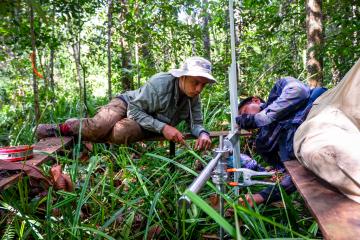
In order to mitigate climate change, we must urgently reduce greenhouse gas emissions, and solutions that reduce emissions at the lowest cost per ton are needed for the greatest impact. Reducing and avoiding deforestation presents one opportunity to abate emissions. A randomized evaluation in Uganda, for example, examined the effectiveness of a Payments for Ecosystem Services program, which paid landowners not to cut down trees. The evaluation found that deforestation declined, and CO2 emissions were abated at less than US$1 per ton delayed from entering the atmosphere. While this evaluation examines the impacts of just one small-scale program, it has great potential to scale in other settings given the demonstrated cost-effectiveness.
Pollution
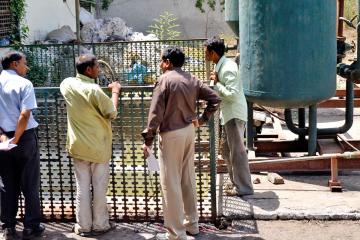
Activities that produce greenhouse gas emissions also produce local pollutants which have harmful impacts on human health and the environment. Local pollutants often disproportionately impact low-income communities, who are more likely to live near sources of pollution. Balancing this inequality by lowering air pollution and improving respiratory health is even more important in the face of respiratory viruses, like Covid-19. This was of particular concern in India, which struggles with some of the worst air pollution globally. One solution that has already been scaled in Gujarat, India is improving third-party audits by changing incentives for industrial pollution auditors.
Adaptation
Many are already experiencing the effects of climate change—spotlighting the need for strategies to improve resilience to climate change for vulnerable populations. In low- and middle-income countries, the income and agriculture outputs of smallholder farmers are particularly vulnerable to extreme weather events. The adoption of new technologies can be a helpful solution. One example of this occurred in India, where researchers evaluated the impact of flood-tolerant rice. Adoption of the new rice variety reduced risk and encouraged additional investment in smallholder farms, resulting in increased yields and resilience to climate shocks.
These results offer promising guidance for similar programs in other rice-growing countries.
Energy efficiency
Ensuring that energy use is efficient is essential to a low-carbon future. To promote energy conservation in the United States, researchers evaluated the impact of home energy reports on energy conservation. The evaluation found that receiving reports led to reduced household energy consumption. Initially, energy savings were driven by immediate response to the report, but eventually, households made long-term changes to energy consumption habits even after they were dropped from the program after two years. Based on these findings, home energy reports may have the potential to scale in similar contexts and further contribute to increasing energy efficiency.
Looking to the future
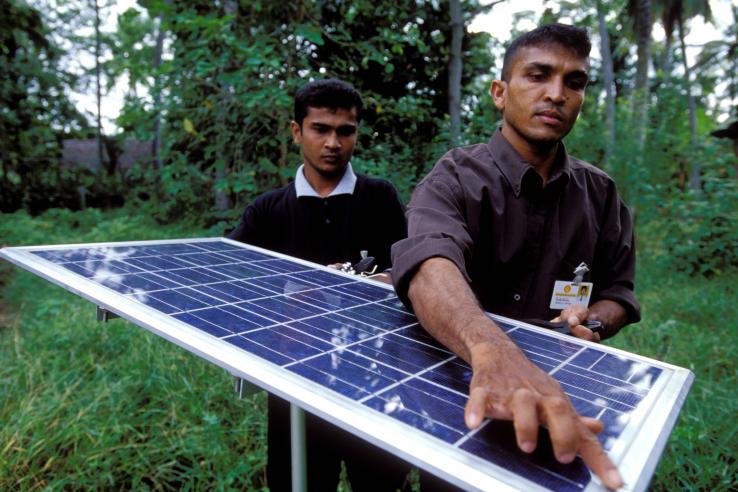
These demonstrated solutions are significant steps for evidence-informed policy addressing the global climate challenge, and more research is underway. J-PAL affiliated researchers are evaluating an array of interventions to address climate challenges and its effects on vulnerable populations, from reducing emissions through increased ride-sharing, to the adoption of off-grid solar power among small retailers, to rainwater harvesting techniques for small scale farmers.
However, many popular climate technology and policy solutions have not been evaluated in the real world to measure their impacts on emissions and people's lives. Although there is much evidence on the impacts of climate change and abundant promise in technological innovations, more research is needed for decision-makers to scale solutions that are effective in real-world settings.
To address this, the King Climate Action Initiative (K-CAI) at J-PAL is dedicated to designing, piloting, evaluating, and scaling innovations that not only tackle climate change but benefit people living in poverty. Through K-CAI, our focus will remain on developing climate solutions with demonstrated effectiveness that address both the urgent need to reduce global emissions and protect low- and middle-income communities.
To stay up to date on environment, energy, and climate change policy solutions and research, subscribe to our mailing list and mark “Environment & Energy” as a sector interest area.
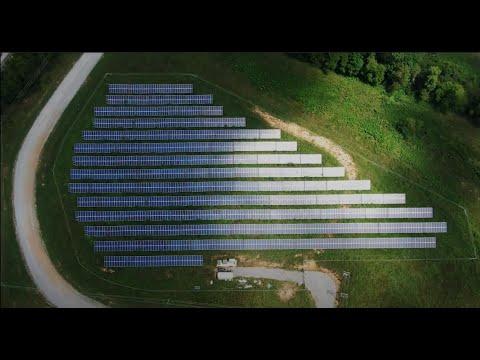
Video: Celebrating Earth Day
J-PAL's King Climate Action Initiative announced the results of its first competition aimed at identifying innovative solutions at the intersection of poverty and climate change, serving as a critical first step in building a longer playbook of evidence-based and cost-effective climate change solutions.
Last week, the Biden administration took executive action to address climate change, including an order to promote evidence-informed decision making. This action signals a renewed vigor to fight the climate crisis from the United States, and there is hope for greater global cooperation and focus on scientific evidence.
Without urgent and collective efforts, the effects of climate change will be felt more deeply, particularly by people experiencing extreme poverty. Climate solutions need to not only reduce emissions and pollution but also address adaption and energy access challenges to protect the most vulnerable populations.
However, there is still a critical lack of research on the real-world impacts of climate solutions. Lab-generated evidence can fail to account for human behavior, such as imperfect implementation or low take-up. To ensure the most effective solutions are scaled, investments in real-world evaluations are crucial.
The King Climate Action Initiative (K-CAI) was launched in July 2020 to address this need for more rigorous research to combat climate change. With support from King Philanthropies, the $25 million initiative is dedicated to funding randomized evaluations that will generate rigorous evidence and catalyze the scale-up of effective climate policy and technology solutions.
K-CAI is among the first major climate change initiatives devoted to benefiting people experiencing poverty, generating evidence in real-world settings, and translating that evidence into large-scale action.
Funding projects across K-CAI’s four focus areas
K-CAI recently concluded its first funding competition and will support 14 projects in total, including 10 research projects and four scaling projects. These funded projects all fall within K-CAI’s four main focus areas: climate change mitigation, pollution reduction, adaption, and energy access.
Climate change mitigation
In order to mitigate the worst effects of climate change, we must significantly reduce global greenhouse gas (GHG) emissions. The adoption of innovative technologies or increased efficiencies can reduce industrial emission intensity and its harmful effects. One K-CAI-funded project by Robert Metcalfe, dedicated to reducing GHG emissions in the shipping industry, will evaluate whether changing management practices can increase fuel efficiency in the shipping industry.
There is also a significant opportunity to reduce emissions through conservation and avoided deforestation. Building evidence from previous a randomized evaluation on payments for ecosystem services (PES) in Uganda, a new K-CAI scale-up project by Seema Jayachandran, Santiago Izquierdo-Tort, and Santiago Saavedra aims to address funding constraints by piloting modifications to certain design features of Mexico’s PES program to increase the program’s cost-effectiveness.
Pollution reduction
Beyond GHG emissions, local pollutants, such as particulate matter, have harmful effects on health and productivity. Building on evidence from a 2019 evaluation in Gujarat, India, one new project by Michael Greenstone, Rohini Pande, Nick Ryan, and Anant Sudarshan will support regulators in piloting and scaling market-based schemes for air pollutants in Punjab and Gujarat. The goal of this effort is to reduce the emission of targeted air pollutants and the cost of compliance with environmental regulations.
Another pollution-focused project supported by the initiative by Douglas Almond and Shuang Zhang is leveraging data from continuous emissions monitoring systems in China to improve environmental inspections in China, with the aim of understanding if, when provided with better emissions data, environmental inspectors can impact enforcement and reduce industrial air pollution.
Climate change adaptation
Climate change is increasing the incidence of extreme weather events, from wildfires to hurricanes to droughts and floods. For low-income communities and countries, increasing resilience to extreme weather events is critical.
A new K-CAI-funded project by Rohini Pande and Maulik Jagnani aims to address this challenge through the first randomized evaluation of a flood early warning system in India, which will leverage forecasting and alerting systems and grassroots volunteers trained in community outreach. This will generate insights on how to disseminate time-sensitive forecasts that encourage behavior that protects individuals from flood risks, despite the high initial costs of those behaviors.
Energy access
As economies in low- and middle-income countries grow, so will energy demand. This is a current challenge the City of Cape Town in South Africa is facing.
Cape Town provides free basic electricity to low-income households and has committed to net carbon neutrality by 2050. The City must balance equitable growth goals with demand for utilities, but has limited tools at its disposal. A new scale-up project by Kelsey Jack will adapt existing evidence on targeting to improve the delivery of electricity subsidies to low-income households in Cape Town, building on existing long-term partnerships between J-PAL Africa, the principal investigator, and the City.
Next steps for climate solutions
Funding these projects is a critical first step in building a longer playbook of evidence-based and cost-effective climate change solutions focused on both mitigation and adaptation. K-CAI's first round of projects demonstrates that it is possible to rigorously evaluate climate policies in real-world settings with regulators, companies, and utilities and learn about program effectiveness as they take policy action.
These projects utilize an innovative combination of high- and low-tech solutions in order to adapt climate solutions to low- and middle-income country contexts. Not only is this technological innovation key, but their focus on enabling policies is equally important to ensuring solutions are both effective and equitable.
“Policy innovation and evaluation, just like technological innovation, is vital for confronting climate change. It can help build the case for policy action and ensure that good technologies achieve their ultimate goals,” said Claire Walsh, K-CAI Project Director.
By investing in evaluation to learn whether climate policies work, K-CAI can help ensure that emissions are successfully cut and help low-income communities adapt.
K-CAI’s efforts to combat climate change through research and policy change will continue. The initiative recently launched its second round of funding for Spring 2021, which will continue to fund projects that identify, generate, and scale cost-effective solutions across its four focus areas.
To stay up to date with environment, energy, and climate change research and related policy implications, subscribe to our mailing list and mark “Environment & Energy” as a sector interest area.

This Earth Day, amid the coronavirus pandemic, the connections between our health and well-being and that of the planet are more present than ever. COVID-19 and climate change share the dubious distinction of taking the greatest toll on the world’s most vulnerable.
This includes people living in extreme poverty who will feel the economic aftershocks of the pandemic for months or even years to come. Climate change, too, will disproportionately harm people experiencing poverty, and threatens to undo decades of progress in poverty alleviation and improvements in human well-being. By 2030, the World Bank estimates that changes to the climate will push more than a 100 million additional people below the poverty line.
New research shows that urban centers with higher air pollution—which has long impacted people’s health—is associated with increased rates of COVID-19 deaths relative to cities with better air quality. The likelihood of pandemics increases with deforestation and land-use changes, also key drivers of climate change.
Without significant investment in evidence-based climate change adaptation and mitigation, these challenges will only grow more insurmountable.
The nexus of climate change and poverty
These are not future doomsday predictions. Many people experiencing poverty around the world already grapple with the consequences of a changing climate, in many cases because they live in geographies that are hardest hit.
For instance, smallholder farmers now face more intense and frequent weather events, like drought and flooding. Lower crop yields drive up food prices and food insecurity—a toll for the poor who spend more than half of their incomes on food.
While poised to bear the brunt of climate damages, the poor have far fewer resources to adapt. Without adaptation, climate change poses an existential threat to livelihoods and well-being.
Millions will be forced to migrate due to extreme weather. 2017 saw more people forcibly displaced around the world than any previous year. Extreme weather events—flooding, fires, droughts, and intensified storms—accounted for one-third of all displacements.
The Climate Impact Lab estimates that rising temperatures will kill more than 1.5 million more people in India alone by 2100. Those who can afford air conditioning in the face of extreme heat will use it, and global energy demand for cooling is projected to triple by 2050. In warmer countries like India, where average high temperatures in the summer will reach at least 95 degrees, it could grow five-fold.
It is the most vulnerable who will suffer the most. Air conditioners in the face of extreme heat and other technologies to cope with climate shocks may not be affordable or accessible. Even for those who can afford air conditioning, connections to the electrical grid will be unreliable and may even further exacerbate emissions contributing to climate change.
The global climate and energy challenge
While it is clear that people experiencing poverty will disproportionately bear the burden of climate change, policy responses to reduce emissions and build resilience present far more of a trade-off.
On one hand, economic growth—much of which will be fueled by the very fossil fuels driving the climate crisis—is urgently needed to lift people out of poverty. On the other hand, those who need growth the most have the most to lose in the face of climate change and the fewest resources to adapt.
As echoed by our collaborators at UC Berkeley’s Center for Global Effective Action, this trade-off is becoming ever more salient and consequential, especially against the backdrop of the pandemic and ensuing economic downturn.
Within the next 10 to 15 years, leaders in the public and private sector must take significant action to avoid the worst climate scenarios.
Yet, rigorous evidence on what approaches are most effective, let alone use of evidence from impact evaluations in climate decision-making, is still limited. Decisions about whether to invest in programs and policies are often based on projected impacts, as opposed to the performance of these approaches tested in the real world through impact evaluations.
When it comes to tackling climate change, we’re short on time—and short on evidence of the right approaches.
Backing climate policy with evidence
J-PAL’s global network of affiliated researchers, staff, and many policy partners has helped catalyze a culture of scientific evidence use for poverty alleviation and international development. Since 2010, our Environment, Energy, and Climate Change sector has been applying this same scientific approach to identify effective policies and programs at the intersection of climate change and poverty alleviation.
J-PAL affiliated professors and regional offices are already generating insights and informing policies on effective strategies for climate change mitigation and adaptation.
More than 40 randomized evaluations have tested policies and programs aimed to reduce further carbon emissions and help the most vulnerable avoid damages from climate change.
These include strategies like paying farmers to conserve forests, reducing air pollution through emission trading schemes, and empowering smallholder farmers to adopt climate resilient technologies, like stress tolerant seeds and rainwater harvesting techniques.
The opportunities for rigorous impact evaluations in climate change are growing, alongside growing public and private commitments and resources to act. Together, these can help policymakers learn which approaches are effective, where, and why to direct limited resources for climate change to solutions that have the greatest impact.
COVID-19 foreshadows the scale of the unprecedented threats we face, be it pandemics or climate change, and the need for resilience on a global scale.
Innovations in measurement and groundbreaking partnerships between researchers and policy partners are pushing the frontier of impact evaluations in climate change to generate the evidence we need to reduce climate damages and build societies that are more resilient in the face of it. We look forward to showcasing how J-PAL’s global network is building a culture of evidence use at the nexus of poverty alleviation and climate change.
Stay tuned for more highlights of our work around the world to measure the impact of climate change policies and programs, and build resilience in the face of global threats.
Evidence from a randomized evaluation informed the scale-up of a pollution audit policy in Gujarat, India.
Research by J-PAL affiliates Esther Duflo (MIT), Michael Greenstone (University of Chicago), Rohini Pande (Yale University), and Nicholas Ryan (Yale University) has shown that making environmental auditors more independent improved the accuracy of pollution audit reports and led industrial plants in the Indian state of Gujarat to reduce their emissions. Based on the results of the randomized evaluation, the Gujarat Pollution Control Board (GPCB) reformed its environmental auditing system in 2015, issuing new guidelines that require random assignment of environmental auditors. Members of the research team continue to work closely with officials in Gujarat and other Indian states on environmental policy design and evaluation.
The Problem
Auditors often lack incentives to accurately report pollution by industrial plants.
Rapid industrial growth in countries like China and India has greatly reduced poverty, but it has also led to severe air and water pollution, resulting in shorter and sicker lives for millions of people. The World Health Organization estimated that in 2016, urban air pollution caused 4.2 million deaths worldwide, most of which were in low- and middle-income countries.1
To curb pollution, regulators need to know which plants are polluting most. One way to monitor industry compliance with environmental regulations is through third-party auditors. However, in most countries, auditors are managed and paid by the company they are auditing, creating a conflict of interest. In these systems, auditors may distort or falsify their reporting to maintain good relationships with the companies they audit. Furthermore, if auditors do not report the truth, there is no reason for the plants to comply since regulators will not know if they fail to meet pollution limits.
In 1996, the Indian state of Gujarat sought to strengthen its environmental regulatory framework by introducing the first third-party environmental audit system in India. The initial system, however, was thought to produce unreliable information about pollution. Recognizing this problem, GPCB sought out researchers to help reform the audit market in 2009.
The Research
Changing auditors’ incentives made them more likely to report the truth about pollution levels at industrial plants. In response, the plants polluted less.
J-PAL affiliated researchers collaborated with GPCB to design and evaluate a set of reforms in which auditors were randomly assigned to industrial plants, paid from a common pool, monitored for accuracy, and paid a bonus for accurate reports. Industrial firms in Ahmedabad and Surat, the two largest cities in Gujarat, were randomly assigned to participate in the new audit system.
The results were striking: under the new system, auditors were 80 percent less likely to submit a false pollution reading. In response to more accurate audits, industrial plants reduced emissions of air and water pollutants by 28 percent and this effect was driven by the highest-polluting plants.
For more about this research, read the evaluation summary.
The state is at the forefront of testing and implementing innovative policies that actually work, which is why we wanted to partner with this team of researchers. The visionary leadership of the state coupled with the strong evidence generated through the research has been a guiding force for implementing new ideas in our march towards sustainable development.
–Hardik Shah, Member Secretary of GPCB
From Research to Action
GPCB’s commitment to testing various reform options ensured that the right policies could be effectively implemented and scaled.
Informed by the results of the evaluation, the GPCB has integrated the tested reforms into its strategy and expanded them across the state through a program known as the Environmental Audit Scheme.2 Per the policy, industries manufacturing certain products are required to submit, and pay a fixed cost for, environment audits.
To implement the new reforms, GPCB worked with programmers to develop a new software system, known as the Extended Green Node (XGN), that tracks and manages all interactions between GPCB and polluting industrial plants. The new software, which was rolled out across the state in March 2015, automatically randomly assigns auditors to firms so that neither the auditors nor the regulators have discretion regarding who audits a particular firm. Industries are required to upload their environment audit reports—which cover manufacturing processes, air and water pollution, and safety and remedial measures—through the XGN.
Building on this successful partnership, members of the research team are continuing to work closely with officials in Gujarat and other Indian states on environmental policy design and evaluation.
In Gujarat, following the completion of the third-party study, J-PAL affiliates Greenstone, Pande, and Ryan, together with Anant Sudarshan, have partnered with the Ministry of Environment, Forest, and Climate Change (MoEFCC) and GPCB to evaluate the impact of the first-ever emissions trading program for particulate air pollution on air quality and compliance costs for industrial plants. The Emissions Trading Scheme (ETS) market is being implemented in the industrial city of Surat, where textile and dye mills are a major source of pollution.
The evaluation of ETS leverages data from continuous emissions monitoring systems (CEMS) devices, which were rolled out to plants across the state to send live readings of particulate emissions, thereby increasing transparency. Of 344 solid fuel-burning factories already implementing CEMS in Surat, half were randomly selected to participate in the first phase of a new ETS. Plants participating in the ETS market reduced their pollution emissions by 20 to 30 percent, relative to plants remaining in the command-and-control status quo regime.3 Based on these findings, the GPCB is expanding the project to other highly polluting clusters in Gujarat.
In Maharashtra, the same researchers have partnered with the Maharashtra Pollution Control Board (MPCB) to evaluate whether providing regulators and the public with more information about industrial plants’ pollution emissions increases regulatory compliance and reduces pollution.
The Maharashtra Star Rating program was launched in collaboration with MPCB in 2017 targeting large plants emitting high volumes of pollution. Under this scheme, treatment plants are rated on a scale from five stars (least polluting) to one star (most polluting), based on government tests of particulate matter emissions. These ratings are then publicly disclosed on the program website (mpcb.info).
The program is expected to put additional pressure on polluting industries and recognize the efforts of environmentally conscious industries. Pilot results suggest that being rated publicly increases the probability that a plant receives a legally actionable communication from a regulator.4 Based on these preliminary findings, the MPCB plans to begin training and enrolling industrial plants previously in the comparison group into the program.
This case study was published in October 2018. It was updated in September 2022 to include more information on the Emissions Trading Scheme in Gujarat and the star rating system in Maharashtra.
References
Duflo, Esther, Michael Greenstone, Rohini Pande, and Nicholas Ryan. 2013. "Truth-Telling by Third-Party Auditors and the Response of Polluting Firms: Experimental Evidence from India." The Quarterly Journal of Economics 128(4): 1499-1545. https://doi.org/10.1093/qje/qjt024.
Duflo, Esther, Michael Greenstone, Rohini Pande, and Nicholas Ryan. 2013. "What Does Reputation Buy? Differentiation in a Market for Third-party Auditors." American Economic Review: Papers Proceedings 103(3): 314-319. https://dx.doi.org/10.1257/aer.103.3.314.
World Health Organization. 2018. “Ambient (outdoor) air quality and health”, WHO Fact Sheets, May 2, 2018. https://www.who.int/news-room/fact-sheets/detail/ambient-(outdoor)-air-quality-and-health.
World Health Organization. 2018. “Ambient (outdoor) air quality and health”, WHO Fact Sheets, May 2, 2018.
Energy Policy Institute at the University of Chicago. “India’s Gujarat adopts environmental audit reforms after impact study shows they reduce pollution.” January 28, 2015. https://epic.uchicago.edu/news/indias-gujarat-adopts-environmental-audit-reforms-after-impact-study-shows-they-reduce-pollution/
Michael Greenstone, Rohini Pande, Anant Sudarshan, and Nicholas Ryan. “The Benefits and Costs of Emissions Trading: Experimental Evidence from a New Market for Industrial Particulate Emissions.” Working paper, July 2022.
Energy Policy Institute at the University of Chicago. “Information Disclosure to Improve Environmental Regulation: The Maharashtra Star Rating Scheme.” July 2020. https://epic.uchicago.in/wp-content/uploads/2020/11/Information-Disclosure-to-Improve-Environmental-Regulation-The-Maharashtra-Star-Rating-Scheme.pdf