
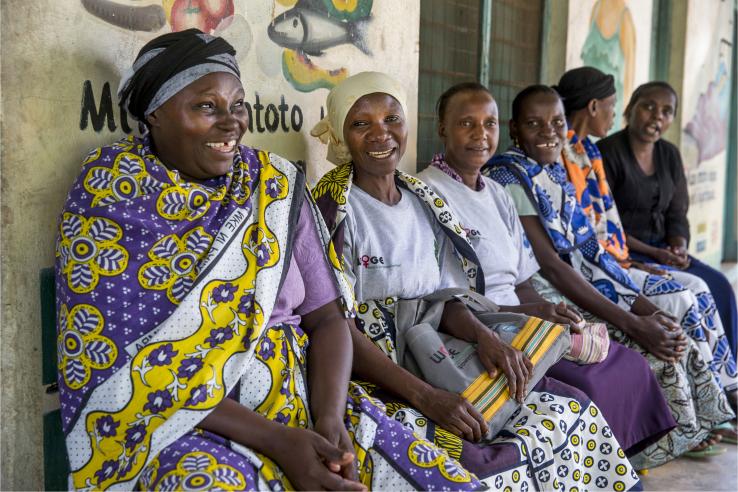
Addressing inequalities in women’s work: J-PAL launches Gender and Economic Agency Initiative
As COVID-19 triggers unprecedented economic disruptions, women are bearing the brunt of the hardship.
Women face even greater challenges to labor force participation than usual due to the pandemic. Thanks to generous support from the Bill & Melinda Gates Foundation, J-PAL’s new Gender and Economic Agency Initiative (GEA) launches to support innovative research on strategies to promote women’s work and enhance women’s economic agency.
Women’s jobs are at risk: 527 million employed women globally work in sectors hit hardest by the pandemic like food service, retail, and entertainment. Informal workers—58 percent of employed women—are particularly vulnerable, as they often faced low wages, poor conditions, and limited protections before the pandemic.
With closure of schools and daycares, women are also burdened with additional unpaid care and domestic responsibilities. This hinders their ability to engage in the labor force. Already before the pandemic, women performed three times more unpaid work than men.
GEA’s work is even more critical as the COVID-19 pandemic has worsened the already-marginalized position that women often face in the labor force. Women around the world participate in the labor force at much lower rates than men: 47 percent of women are in the labor force compared to 74 percent of men. If a woman enters the labor force, she earns on average 77 cents to every dollar a man earns. She’s also more likely to be unemployed or work in the informal sector.
Responses to this crisis must consider its disproportionate impact on women and the unique barriers they face. Rigorous evidence can help policymakers ensure that pandemic response and recovery support women’s work and economic agency.
Launching the Gender and Economic Agency Initiative
Increasing women’s labor force participation is key to achieving the Sustainable Development Goals (SDG5 and 8), however, policymakers and the private sector lack evidence on what works, where, and why. Consequently, women continue to suffer inequalities in the labor market that hinder their economic agency. GEA helps to address this gap through rigorous research.
Led by Lori Beaman (Northwestern) and Seema Jayachandran (Northwestern; Chair, J-PAL Gender Sector), GEA is funding randomized evaluations on women’s work and economic agency in East Africa and South Asia over the next three years. This policy-relevant research can help inform policies and programs on women’s labor force participation in GEA’s five priority countries: Ethiopia, Kenya, India, Uganda, and Tanzania.
Drawing upon our literature review on women’s agency, we’ve identified three themes for potential research:
- Creating work opportunities that are attractive to and supportive of women;
- Preparing women with the necessary skills to secure work and advance in their careers, including in self-employment; and
- Addressing restrictive gender norms and attitudes related to women’s work.
To learn more about potential topics of interest to GEA, please refer to our overview paper.
Research is only one part of GEA’s approach to supporting evidence-informed policies in East Africa and South Asia. We are also synthesizing evidence to share with policymakers and inform their strategies on women’s work and economic agency, building on the findings of a recent literature review on ways to increase women’s agency. Recognizing a growing need, we’re also working to identify and test better measurements of women’s agency that can be used in future research.
Each of GEA’s five priority countries has unique policy opportunities and challenges related to women’s work. For instance, a higher percentage of women work in the East African countries (64-79 percent) than in India (23 percent), suggesting women face different constraints to employment. For more information on the policy landscape in each country, please refer to the appendix of the overview paper.
In addition to the five priority countries, there is limited additional funding available for research in other countries in East Africa and South Asia.
Evaluating potential responses to the COVID-19 crisis
To better understand the impact of the pandemic on women’s economic agency and identify effective responses, GEA launched a special round of funding on COVID-19.
Women and men may experience job loss and recovery differently due to the types of occupations in which they work. Jobs primarily held by women, like healthcare or teaching, may also create additional health risks. Finally, women’s care responsibilities may hinder their ability to search for a job and work. Building upon ongoing studies, researchers are testing whether a job search assistance platform in Pakistan is especially valuable in helping women quickly return to the job search and employment.
Another study is looking at encouraging paid sick leave among female garment workers in Bangladesh. During a pandemic, paid sick leave is more important than ever to help prevent the spread of the virus. It may be especially vital to retain women in the labor force as they are generally responsible for taking care of sick family members. Yet, employees often fear backlash for taking leave. Researchers are partnering with a manufacturing firm to send text messages to workers stating its commitment to employees’ health and the use of sick leave when needed. The evaluation will examine the impacts of the messages on workers’ health and job satisfaction.
What’s next?
Through strong partnerships with researchers and policymakers, GEA aims to build inclusive work opportunities for women in East Africa and South Asia. Stay tuned over the next few months as we share publications and host events on our future work!
If you’re interested in partnering with us to shape policies on women’s work, please contact Mikaela Rabb.
Many countries have witnessed a surge in cases of domestic violence due to the onset of the COVID-19 pandemic and subsequent stay-at-home orders. This phenomenon is especially concerning in Africa, the eastern Mediterranean, and Southeast Asia, where rates of intimate partner violence (IPV) are already high. Now that women are also confined to their homes by lockdown measures, research from the World Health Organization suggests incidences of emotional, physical and sexual violence are likely to increase. The consequences can be dire for women’s mental and physical well-being, even leading to self-inflicted or other-inflicted death.
Many countries have witnessed a surge in cases of domestic violence due to the onset of the COVID-19 pandemic and subsequent stay-at-home orders.
This phenomenon is especially concerning in Africa, the eastern Mediterranean, and Southeast Asia, where rates of intimate partner violence (IPV) are already high. In Africa, we witnessed a similar phenomenon during the 2014-2016 Ebola crisis, which was defined by some as an undocumented rape epidemic.
Now that women are also confined to their homes by lockdown measures, research from the World Health Organization suggests incidences of emotional, physical and sexual violence are likely to increase. The consequences can be dire for women’s mental and physical well-being, even leading to self-inflicted or other-inflicted death.
Governments looking to protect women living in abusive households can turn to the existing evidence for ideas on potential policy measures.
A range of interventions have shown promise in reducing IPV, including:
- Cash transfers which aim to reduce financial stress in the household
- Gender trainings which can change social norms about gender-based violence
- Media campaigns to encourage reporting and change social norms
It’s important to note that none of this research was conducted in emergency settings like COVID-19, so some interventions may not be feasible and results may differ—but by focusing on the mechanisms behind why these interventions were successful, we can still identify important lessons for policymakers to consider.
Cash transfers to alleviate economic stress
Cash transfers have been found to be effective in reducing IPV by alleviating economic stress and increasing women’s power in the home—improving outside options from marriage and giving women means to leave abusive partners. A one-time unconditional cash transfer in Kenya averaging US $709 led to reduced physical and sexual violence when the transfer was made to women and a smaller reduction in physical violence when transferred to men.
Transfers are likely to be more effective if they are extended throughout the stay-at-home period. Evidence suggests that the effects of transfers may not last beyond the period of the transfer. In addition, similar access to resources through microcredit, savings groups, or employment do not lead to sustained impacts in reducing IPV.
Policymakers considering cash transfers should note that they can lead to a backlash and increase IPV (men resorting to violence in order to reassert their authority) if there is no credible threat that the woman could leave the marriage (for example, by having access to job opportunities). A study in Ecuador found that, among less educated women, cash transfers increased emotional violence if women had more years of education than their partner. It should therefore be made clear to women that they can leave their home to seek shelter if they are victims of violence, despite COVID regulations.
In addition, cash transfers should mainly be considered where social protection infrastructure to identify beneficiaries and deliver financial support already exists. IPV interventions will need to be implemented quickly to support women during lockdown. Cash transfers are traditionally difficult to set up; a speedy implementation may be more feasible and cost-effective if mobile cash systems are already in place.
Training and coaching
While more research is needed, several studies have found that training or coaching sessions were effective in reducing IPV. A couples' intervention in Rwanda discussing gender roles and power relations led to large reductions in physical and sexual IPV over the following year.
Training interventions can also be conducted with women alone. A study in India found that twenty participatory health education sessions implemented in self-help groups had positive impacts on women’s self-confidence in refusing sexual intercourse and demanding a condom, reducing the occurrence of unwanted sex.
Combining cash transfers and trainings
Economic interventions have been found in some cases to reduce IPV more effectively when bundled with interventions that intentionally address gender norms, like gender training or family dialogues.
In Côte d’Ivoire, adding gender dialogues to Village Savings and Loan Associations reduced physical IPV for women who attended at least 75 percent of the gender dialogue sessions with their partners. It should be noted that high-attendance couples may have had characteristics that differentiated them from other participants and thus may explain the effects on IPV, but the result still points to the greater effectiveness of bundling than economic interventions alone.
Of course, interventions that are delivered in-person or by bringing people together through community approaches may be more difficult to deliver during social distancing. In addition, it’s important to note that interventions targeting abusive partners individually, for example through text messages, could place women in more danger if the partner believes that they have been reported or are being personally accused.
Mass media and “edutainment”
Recent literature suggests that media and “edutainment” (educational entertainment) campaigns could be effective in reducing violence against women, though more research is necessary. A video series screened to communities in Uganda led to a reduction in cases of IPV. The videos encouraged witnesses to speak out by reducing fears of social repercussions and increased expectations among men that the community would intervene in the case of a violent incident.
Importantly, the study did not change pre-existing social norms around the “acceptability” of IPV, but rather leveraged existing social norms to highlight which forms of violence were not acceptable to the community.
Edutainment may also change social norms around gender violence. In Nigeria, an educational TV series designed to promote safe sex and change attitudes around HIV featured a subplot about domestic violence. Men who had access to the show had a 6 percentage points lower probability of justifying violence, a 21 percent decrease from the comparison group.
More research is needed to understand if campaigns that change social norms also affect behaviors of violent partners. In Tanzania, for example, researchers are currently working to measure the impact of radio programming on gender-related attitudes and behaviors by challenging the legitimacy of violence against women.
Testing innovative policies in a pandemic
In these unprecedented times, policymakers need to develop innovative approaches to protecting women.
For example, J-PAL affiliated researcher Erica Field (Duke University) has been working with the government of Peru to assess whether it’s possible to change social norms by training community leaders on beliefs and stereotypes surrounding gender roles, norms regarding violence, and strategies to identify and prevent GBV.
During COVID-19, the research team has been working to tailor the intervention design to account for limitations to in-person interactions. Researchers are exploring using SMS nudges and other technology to deliver training content remotely.
Using existing evidence to design new programs is important to increase the likelihood that interventions will help victims of intimate partner violence and to reduce the risk of backlash from perpetrators seeking to re-establish the balance of power following well-intentioned interventions.
Integrating evaluation methods will also be important to answer remaining questions:
- What is the impact of targeting men rather than women in IPV prevention programs like cash transfers and training, and can it reduce the risk of backlash?
- How effective is digital technology in delivering gender training, compared to in-person facilitation?
- Can different interventions like media campaigns and empowerment training change social norms and do the results translate into reduced cases of IPV?
To learn more about how to build evidence-based policies that address intimate partner violence or integrate an evidence-oriented approach into your existing policies, read J-PAL’s new women’s agency literature review and don’t hesitate to contact us. J-PAL Africa is working with partners in southern Africa to integrate evidence-based approaches into policy design and would be happy to support other African partners in this work. Please reach out to Alessia Mortara if you are interested.
Social norms also often persist despite economic growth, and can negatively impact development outcomes. Evaluating the impact of interventions targeting social norms can be useful to understand how they might be changed.
Understanding social norms is important to reducing inequality and improving outcomes for marginalized groups. Broadly, social norms can be thought of as shared expectations or informal rules among a set of people. These norms define acceptable attitudes and behaviors for different identity categories—for example, those of gender, race, and caste.
Social norms also often persist despite economic growth, and can negatively impact development outcomes. Evaluating the impact of interventions targeting social norms can be useful to understand how they might be changed.
When social norms manifest as gender norms, they can lead to harmful—or helpful—gender-related practices. For example, research indicates that when gender norms within a society are supportive of female employment, it can result in delayed marriage, increased female work aspirations, and improved child health.
But among researchers, social and gender norms are often seen as nebulous constructs that cannot be objectively measured. These constructs may be difficult to quantify into measurable household-level indicators, as researchers would do for an academic study, because they also reflect structural issues embedded at the societal level. Or so it is widely perceived.
Here, we interrogate the notion that measurement of social norms is difficult and present an overview of tools J-PAL affiliated and invited researchers have used to measure such outcomes in impact evaluations.
We present examples of such research to demonstrate that researchers and practitioners who are concerned that asking direct questions about norms may yield biased results have solutions at hand: evaluating how norms change attitudes and assessing how norms alter behaviors.
Researchers employ these measurement approaches in impact evaluations of development programs. These approaches reveal valuable insights into what works, under which circumstances, to improve outcomes. The two approaches have helped implementers establish the effectiveness of their programs, and policymakers identify and scale up effective programs.
Attitude Change
Development and behavioral economics often borrow tools from social psychological research in order to study attitudes (one’s belief of what is socially acceptable).
Let’s take the case of a J-PAL-funded evaluation of a school-based gender attitude change program implemented by the NGO Breakthrough in Haryana, India.
Researchers used one such tool, the Implicit Association Test (IAT). The IAT exposes participants to two concepts and detects how strongly individuals connect these concepts. One application of this test is in understanding how strongly people associate certain groups with certain stereotypes. In the case of gender, the test would measure how strongly people associate women with concepts stereotypically associated with women—for example, domesticity or docility.
Practitioners and researchers often believe that for tools such as the IAT, field data collection in low-income settings is challenging. Certainly, such tools may require equipment, internet connectivity, and specially trained surveyors. However, the use of the IAT in low-income government schools in Haryana for the Breakthrough study demonstrates the applicability of these tools in development economics research.
Asking individuals about their views towards certain social groups is another method of evaluating social attitudes, especially if IATs may not be possible,. For example, in the evaluation of Breakthrough’s gender attitude-change program, respondents were asked to indicate the extent to which they agreed with statements such as “A woman’s most important role is being a good homemaker.”
One concern with these direct survey questions is that respondents may give a socially desirable response—a phenomenon known as “social desirability bias”—and therefore biasing the results. However, there are ways to statistically test for the existence of this bias.
For instance, the Marlowe-Crowne scale of social desirability assesses the extent to which a respondent shares their actual opinions, rather than misrepresenting their views to appear more socially acceptable. The scale gauges if respondents give answers that are “too good to be true,” such that no one would agree with these statements unless trying to give the “right answer.”
Respondents in the Breakthrough evaluation were tested on this scale, and it was found that treatment effects were equally large among study participants with a strong tendency to provide honest responses.
Behavior Change
Changing attitudes may not be enough to change behaviors, as there may be other constraints. For practitioners interested in behaviors as a way to better understand the prevalent social norms in a given context, studying real and hypothetical decision-making is a novel tool to do so.
In the evaluation of Breakthrough’s program, one measure in the two-year follow-up survey assessed whether study participants would sign a public petition supporting gender equality, and another looked at take-up of a scholarship offered to girls.
Thus, if the school-based program is successful, deeply held gender attitudes change and gender-related behaviors will concomitantly change: all students will be more vocal in support of gender equality, and girls will be more motivated to pursue higher education.
Similarly, in a J-PAL-funded study on the impact of recreational cricket leagues on inter-caste contact, researchers measured behavior change by asking participants to choose future teammates and people they would consider “friends” from a list. The researcher hypothesized that participants who were exposed to people of other castes would have more positive attitudes about other-caste individuals and therefore select more diverse friends and future teammates.
Another study on caste discrimination used grades given on test papers that researchers randomly labelled with different caste names to understand how discriminatory school teachers were.
Common to all three studies is the approach of measuring people’s exhibited behaviors as a way to understand social norms and if, and how, they change.
Looking ahead
It is an exciting time for researchers, donors, and implementers aiming to transform social norms hindering development and equality. The research community is continuously developing and refining new tools to measure outcomes that were once considered difficult to measure.
J-PAL affiliated researchers and staff have contributed to this endeavor by producing the Practical Guide to Measuring Women’s Empowerment, which draws on experiences from their research around the world and offers practical tips for how to measure women's and girls’ empowerment in impact evaluations.
Although norms may seem intangible, the studies cited above illustrate that it is possible to measure norms as an outcome in impact evaluations. Stakeholders stand to benefit from drawing from the literature of impact evaluations of programs aimed at changing social norms, and applying these concepts in their own work.
This rich and growing literature can help implementers gain a more nuanced understanding of successful program components, and can also aid policymakers in scaling what works.
In honor of International Women’s Day this week, we are highlighting insights from a new literature review of the most effective approaches to improving women's agency and sharing ideas for further research.
In order to identify emerging lessons on the most effective approaches to improving women’s agency, J-PAL undertook a literature review of 160 experimental and quasi-experimental studies in lower- and middle-income countries (the main findings are also summarized in our evidence review).
In honor of International Women’s Day this week, we are highlighting insights from this review and sharing ideas for further research.
Why study women’s agency?
A growing body of evidence, including from J-PAL affiliated researchers, evaluates programs that actively seek to shift gender norms (informal rules that impose expectations about behavior that are dependent on gender) or improve women’s agency (their ability to define and act on goals, make decisions that matter to them, and participate in the economy and public life).
For example, a study in India led by Gender sector chair Seema Jayachandran and co-authors found that encouraging students to discuss gender equality in the classroom positively impacted adolescents’ gender attitudes and encouraged gender equitable behaviors.
The goal of our literature review, supported by the Bill & Melinda Gates Foundation, was to synthesize the evidence from this and other such studies, to gain insights on what works to enhance women’s agency.
Because gender gaps that impair women’s ability to make choices for themselves exist in many areas of life, women’s agency can be exercised in countless ways. Given this, we adopted a broad definition of agency in the literature review that included both direct and indirect indicators, building on previous work by Kabeer (1999), Malhotra, Schuler, and Boender (2002), Quisumbing, Rubin, and Sproule (2016), Donald et al. (2017), and Laszlo et al. (2017).
In our list of direct indicators, we included outcomes that are fundamental to a woman’s ability to make meaningful choices and act on them, such as decision-making power, psychological elements of agency (termed “power within”), freedom of movement, and freedom from violence.
We also included indirect indicators, which are outcomes and behaviors that often reflect a woman having more agency, including the timing of marriage and childbearing, contraceptive use, labor force participation, income generation from entrepreneurship, participation in politics and community decision-making, voting behaviors, and participation in groups and ties in the community.
Major trends
The literature review begins with an analysis of patterns in these direct and indirect indicators of agency across 160 experimental and quasi-experimental studies.
Overall, the evidence suggests that policymakers, practitioners, and researchers should be more intentional when it comes to addressing power imbalances and social inequalities based on gender by designing programs that directly address attitudes about gender. The major trends we identified are:
- Gender norms moderated—or even blocked—impacts: Many studies found that regardless of whether or not gender dynamics were considered in the program or research design, they may end up playing a meaningful role in moderating or even blocking the intended impacts.
- Access doesn’t equal control: Access to resources alone—while important for reducing gender gaps in access—is often not an effective means to enhance women’s agency without addressing gender-specific constraints faced by women.
- Opportunities to enhance women’s agency change throughout a woman’s life: Based on the studies we reviewed, there tended to be more significant impacts in programs aiming to support young women in delaying marriage and childbearing than in programs that aimed to change household decision-making dynamics within a marriage, perhaps because women did not have good outside options.
- Programs to address multiple constraints were promising but need more research: While programs designed to relieve multiple constraints that women face—such as lack of access to financial resources, lack of skills, or gender norms that favor men—appeared to be effective in improving women’s agency, more research is needed on why the programs were effective, and whether the full packages of services were necessary. These programs often included elements that raised awareness of gender dynamics or developed life skills.
Some key takeaways
Beyond these findings, we also identified a range of takeaways specific to each indicator of agency that we reviewed. Here are examples of some of the findings. We have listed one example finding from each section—click through for more details and to read more takeaways from each section of the review:
Direct indicators of agency:
- “Power within” (a term that includes aspirations; self-efficacy, or belief in one’s ability to achieve goals; and attitudes towards gender norms): Adolescent girls’ programs that included soft and life skills training, sometimes bundled with other interventions, improved girls’ self-efficacy, confidence, and reduced their acceptance of restrictive gender norms.
- Household decision-making: The economic interventions we reviewed (microcredit, savings, unconditional transfers, and multi-component poverty alleviation programs) had mixed and inconsistent impacts on women’s household decision-making. However, a small number of studies found that improving property rights laws and the justice system’s capacity to address domestic violence improved women’s influence over family decisions. There are also key issues with how researchers measure decision-making, which we discuss in a later section.
- Freedom of movement: Most studies in which an intervention improved freedom of movement did not identify how exactly this effect occurred. However, two studies found that increasing women’s power in the home through control over financial resources was also effective in improving women’s freedom of movement, suggesting that this channel should be explored further.
- Freedom from violence: Women’s access to cash and food transfers decreased experiences of intimate partner violence in the short run (though one study documented increases in emotional violence for some women). Reducing poverty-related stress and tolerance for violence are potential explanations for these impacts. Access to microcredit, savings groups, or employment did not lead to similar results.
Indirect indicators of agency:
- Timing of marriage and childbearing: Overall, interventions that changed perceptions about girls’ abilities and opportunities or increased the educational and economic opportunities available to them encouraged girls and young women to delay pregnancy.
- Contraceptive use: Giving women more direct control in family planning by providing privacy, life skills training, more options in contraceptive products, or encouraging more gender-equitable attitudes among men increased women’s agency in contraceptive use.
- Labor force participation: Providing access to free or subsidized childcare increased women’s labor market participation in Indonesia, Kenya, and parts of Latin America.
- Income generation from entrepreneurship: Business training programs varied greatly in program design and had mixed impacts on earnings. Successful programs often included gender equality content or addressed gender specific constraints such as agency, soft skills, or social networks.
- Participation in politics and in community decision making: The "Graduation” approach increased women’s participation in politics and community decision-making in several contexts.
- Voting behaviors: There is suggestive evidence that information sharing programs which aimed to encourage voting among women were not successful due in part to restrictive gender norms.
- Participation in groups and ties in the community: Several studies suggest that women’s self-help groups either increased or strengthened women’s ties in the community and participation in other groups in South Asia.
Overall, we found that adolescent girls’ programs, laws that mandate gender equality, cash and in-kind transfer programs, and BRAC’s multi-component poverty alleviation program (called the “Graduation" approach) were effective in improving one or more aspects of women’s agency.
The literature review also includes notes on impacts of interventions that engage men, and on the challenges of measuring women’s agency, along with an appendix detailing each study we included and the metrics we used for broad indicators like “power within,” household decision-making, and violence against women.
Future research
While we covered a range of outcomes in this review, there are still areas that merit further research and synthesis. A better understanding of how characteristics like race, class, ethnicity, national origin, ability, sexual orientation, religion, and gender identity affect the impacts of policies and programs will further improve our understanding of how to enhance women’s agency.
J-PAL affiliates are evaluating a range of exciting new projects that attempt to actively shift gender norms and change gender-related power dynamics.
For example, a study led by Erica Field and co-authors evaluates the impact of training local leaders to shift attitudes about gender-based violence in Peru, and a study led by Elise Huillery and co-authors evaluates the impact of youth clubs designed to change young people’s attitudes towards gender norms in Niger—these are just a few examples of how our affiliates are charting new ground in rigorous research to improve gender equality.
Continuing to research and understand approaches that are designed to shift—rather than accommodate—individual and collective gender norms that perpetuate inequality is a priority for policymakers and practitioners seeking to achieve gender equality. At J-PAL, we will continue to focus on enabling this innovative research in more settings, and will share new findings and policy insights as they develop.