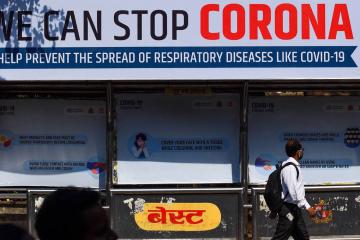
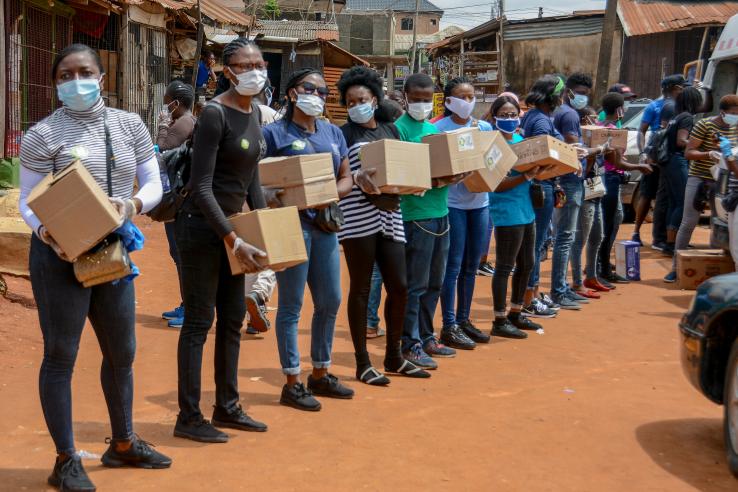
Cushioning the poor from the COVID-19 shock
In an op-ed for Project Syndicate, Rema Hanna and Ben Olken explain that expanding social protection to reach the most vulnerable people must be a pillar of every country’s COVID-19 strategy.
This joint statement is released in cooperation with Innovations for Poverty Action, the Center for Effective Global Action, the Yale Research Initiative on Innovation & Scale, and the signatories listed at the bottom of this post.
As the Covid-19 pandemic crossed the threshold of two millions lives lost, the world remains at a precipice: though vaccinations are underway, the virus continues its spread. Just as urgent, economic crises are devastating the most marginalized populations around the world. The World Bank estimates between 119 and 124 million people fell into poverty in 2020 and, after consistently declining for nearly 25 years, extreme poverty is now increasing.
The Biden Administration has affirmed its commitment to work with other countries and multilateral institutions to combat Covid-19 to advance global health security. We commend this spirit of partnership and we urge similar bold, evidence-informed global action to tackle the accompanying crises of hunger and poverty.
When the pandemic hit, an international coalition of researchers joined forces to rapidly assess the socioeconomic effects of the first months of the health and economic crises in low- and middle-income countries. In interviewing over 30,000 people in nine countries in Asia, Africa, and Latin America, the team documented immediate and widespread drops in employment and income, and increases in food insecurity. Significant percentages of respondents across the surveys reported being forced to miss meals or reduce portion sizes, including 48 percent of rural Kenyan households, 69 percent of landless, agricultural households in Bangladesh, and 87 percent of rural households in Sierra Leone (the highest level across the samples). Across the 16 samples, between 8 and 87 percent of respondents reported a drop in income during the crisis period, with a typical country (median) at a staggering 70 percent.
Even with urgent action on vaccines, much of the global south will have to wait much longer—some potentially until 2024—before fully vaccinating their populations, and new variants may emerge when the virus is allowed to spread. Drawing on decades of rigorous evidence, we urge the international community, including governments, funders and multilateral organizations, to take the following actions to mitigate the crises of hunger and poverty:
By centering its efforts on substantial continued economic support together with vaccine distribution, the international community can lay the groundwork for a long-term recovery. The economic fallout from the pandemic continues to imperil the livelihoods of the world’s most vulnerable. Insufficient action now will delay this recovery and widen inequality. The stakes could not be higher.
Joint statement signatories
Dennis Egger, University of California, Berkeley
Elliott Collins, Innovations for Poverty Action
C. Austin Davis, American University and Yale University
Günther Fink, University of Basel
Johannes Haushofer, Stockholm University
Dean Karlan, Northwestern University and Innovations for Poverty Action
Magdalena Larreboure, Busara Center
Salim Benhachmi, Yale University
Macartan Humphreys, WZB Berlin and Columbia University
Christopher Udry, Northwestern University
Shana Warren, Innovations for Poverty Action
Doug Parkerson, Innovations for Poverty Action
Paula Lopez-Pena, Yale University
Niccoló F. Meriggi, The International Growth Centre
Susan Athey, Stanford University
Maarten Voors, Wageningen University and Research
Ashish Shenoy, University of California, Davis
Michael Walker, University of California, Berkeley
Edward Miguel, University of California, Berkeley
Ahmed Mushfiq Mobarak, Yale University
Andrew Zeitlin, Georgetown University
Craig McIntosh, University of California, San Diego
Valentina Barca, Social Protection Approaches to Covid-19 Expert Advice
Paul Niehaus, University of California, San Diego
Laura Alfers, Rhodes University, South Africa
Elisabetta Aurino, Imperial College London
The Abdul Latif Jameel Poverty Action Lab (J-PAL)
Center for Effective Global Action (CEGA)
Innovations for Poverty Action (IPA)
International Growth Centre (IGC)
Yale Research Initiative on Innovation & Scale (Y-RISE)
This note provides an overview of the evidence from randomized evaluations that has come out during the Covid-19 pandemic thus far to combat these barriers. These general lessons on increasing uptake of healthy behaviors and improving the delivery of health products and services may be of value in informing future outbreak response.
Please note: This document was initially prepared by the J-PAL Health Sector in 2020 and updated in 2021 and again in 2022 to provide recommendations for responding to the Covid-19 pandemic. It is not an exhaustive review of all the rigorous evidence on the discussed topics.
Last updated: November 2022.
Throughout the duration of the novel coronavirus 2019 (Covid-19) pandemic the World Health Organization (WHO), national health agencies, and other experts have issued guidance on measures to prevent Covid-19 infection such as practicing social distancing, wearing a mask, and handwashing frequently. However, following this guidance has not always feasible for everyone. Individuals living in overcrowded conditions may not be able to practice social distancing, those whose livelihoods depend on frequent and close interactions with others may not be able to afford avoiding these activities, and those without access to clean water and soap may not be able to wash their hands frequently.
Other individuals may not be aware of the guidelines, may not understand the specific steps to follow, or they may not be convinced of the need to practice these behaviors. Misinformation about Covid-19 and its vaccines has also undermined public health guidelines and trust in health systems. In instances where lack of clear messaging or inadequate understanding of the need to practice recommended behaviors are the primary barriers to guideline adherence, evidence from rigorous research can help to inform government actions. Such evidence can be similarly helpful in areas where preventive vaccines are more readily available, but lack of information or presence of misinformation are the main constraints to uptake.
This note provides an overview of the evidence from randomized evaluations that has come out during the Covid-19 pandemic thus far to combat these barriers. These general lessons on increasing uptake of healthy behaviors and improving the delivery of health products and services may be of value in informing future outbreak response. For lessons specific to increasing the reach and uptake of vaccines, please see the brief available here.
This note does not tailor recommendations to specific contexts or provide details on implementation. Rather, we encourage policymakers to reach out to Emily Blagg ([email protected]), J-PAL Health Sector Senior Policy Associate, for follow-up conversations on incorporating the evidence into policy decisions.
Many governments, especially at the onset of the Covid-19 pandemic, advised residents to stay home, practice social distancing, regularly wash hands, and take various other actions to prevent Covid-19. In future outbreaks, it is likely that many individuals will similarly find it challenging to regularly practice recommended behaviors like these due to financial insecurity, lack of access to clean water or soap, and other constraints. For those who are physically able to take up these behaviors, what information is shared, how it is shared, and through whom may influence adherence, particularly if the information is new or rapidly evolving.
Evidence on behavior change campaigns shows that framing information in a specific and actionable way is important. Carefully considering the messengers who convey the messages and the platforms through which this information is disseminated are also essential for increasing the reach of public health messages and combating misinformation.
Implement specific and actionable information campaigns to encourage key preventive behaviors. A large body of evidence1 from around the world shows that simply urging people to change behavior usually does not work. Rather, policymakers may find it beneficial to issue specific information on what behaviors to take up and why these actions are important, particularly when introducing new recommendations. For example, when recommending handwashing, policymaker advice to wash hands upon returning from the grocery store or to set an alarm to remember to wash hands every two hours is likely to be more effective than more general exhortation to “wash hands regularly.” Likewise, encouragement to replace handshakes with head nods or elbow bumps may be more actionable than simply telling individuals to avoid handshakes.
Three studies from the J-PAL network provide evidence that specific and actionable information can indeed also change Covid-19 preventive behaviors.
Where possible, incorporate key public health messages into new or existing entertainment media (or “edutainment”) to help improve adherence to recommended behaviors. Media such as television, radio, or other entertainment platforms can be used to change attitudes and behaviors by embedding educational messages in a bigger storyline.5 As people around the world have spent more time at home during the Covid-19 pandemic, the ability to identify with characters facing similar changes to their personal life may have further underscored edutainment’s potential to influence individual behavior.
While J-PAL affiliates have not yet studied edutainment in a Covid-19 context, studies from before the pandemic demonstrate the impact of edutainment on behaviors.6 For example, in Nigeria,7 the edutainment television series MTV Shuga improved knowledge and attitudes towards HIV and risky sexual behavior and increased the likelihood of getting tested for HIV. Effects were stronger for viewers who reported being more involved with the story or identified with the characters.
Social media like Twitter and Facebook can be a powerful delivery platform to share key public health messages and combat misinformation. Such social media sites have become a vital part of information-sharing in the 21st century, and evidence shows that leveraging them can be an effective means of amplifying messages to shift beliefs and behaviors.8 This is particularly true when the messenger is effective and information is framed in a specific and actionable manner. Because they can also be a source of misinformation, monitoring online platforms such as Facebook, Twitter, WhatsApp, and others for false messages can help identify situations where correcting misconceptions can be particularly important.
Three studies from J-PAL affiliates and invited researchers show the importance of leveraging social media during Covid-19, both to share information on important preventive behaviors and to combat misinformation.
These messages may have been effective in part because they came from a known and respected source or because they came early in the pandemic, before beliefs and practices became more entrenched.
While SMS messages containing information or advice may not always be effective, as found in this study from Bihar, other studies such as the one from West Bengal indicate that they can have an impact. Because SMS-based messaging is low cost, it may be worth implementing it, particularly if implemented alongside other interventions mentioned in this note.
Evidence on information provision demonstrates that receiving messages from those with whom one feels a connection—community members, peers, characters on TV shows and other forms of entertainment, celebrities, etc.—can be important for uptake of recommended behaviors. Messaging this information with specific and actionable steps can be additionally impactful, while leveraging platforms such as social media can help to widely disseminate information.
Directly leverage the influence of well-connected community members and peers (while avoiding face-to-face interactions as needed) to help spread accurate information on new recommendations. While top-down messaging that is framed in a specific and actionable way can change behavior, studies from around the world have found that leveraging the community is also important for sustained behavior change. Where guidelines on social distancing may make in-person interactions difficult or inadvisable, online and mobile platforms can be good ways to leverage this influence.
Five studies from J-PAL affiliates provide further evidence on the impact of peer and social networks on behavior change for Covid-19 prevention.
Educating celebrities early on in an epidemic and leveraging their voices can help to increase the reach of public health messages and avoid the spread of misinformation. Depending on the content and accuracy of their message, all individuals with a media following can have a positive or negative impact on public opinion and behavior. Celebrity endorsement or information-sharing may be particularly powerful when celebrities speak in their own voice.
Two studies by J-PAL affiliates support the recommendation that hearing directly from celebrities can shift behavior around Covid-19.
Note that, to date, this recommendation on celebrity endorsement is based on three studies22 rather than a broader body of research.
Programs or policies that increase trust in the health system could improve reporting and cooperation with health guidelines, which in turn could help increase testing, reduce the spread of the disease, and reduce mortality.
Implement interventions that increase trust in health systems. What interventions are effective can vary based on context. Improving perceptions of quality may be effective in some areas, while ensuring patients see doctors whom they trust may be more important in others. Such interventions may be most impactful in areas with low baseline utilization of health care services or amongst populations with low levels of trust in the health system (including marginalized groups that may include migrants, LGBTQ individuals, indigenous communities, or racial minorities depending on the context). Additional trust-building policies, such as ensuring patient confidentiality with regard to immigration status, could also help address wariness of the formal health system. Such measures would likely improve the resiliency of the health systems over time; they may also possibly improve outcomes if implemented during or right before a major health shock, though this has not been studied to date.
Establishing trust that is not already present can be difficult. For instance, following an analysis that found that those who trusted the police were more likely to comply with Covid-19 restrictions, a study from Uganda23 tested the impact of a new community policing program that aimed to improve relationships between the police and the community. The program only slightly increased trust in the police, and it had no impact on adherence to health guidelines.
As discussed above, leveraging the voice of messengers who are trusted by the audience is important for increasing adherence to guidelines. However, who these trusted messengers are will likely change across contexts. Three studies by J-PAL affiliates highlight messenger characteristics that may be especially important in the United States to change behavior and increase adherence to preventive guidelines and uptake of vaccines. A fourth study across twelve Latin American countries further highlights the context-specific nature of trusted messengers.
Since a health crisis may be accompanied by a severe economic one, cash transfers can provide income support and potentially increase uptake of healthy behaviors.
Leverage cash transfers, especially those conditioned on uptake of Covid-19 preventive behaviors, to improve prevention. Unconditional transfers can provide income support. While both conditional and unconditional transfers have costs associated with determining eligibility, targeting the transfer to intended households, and delivering the cash, a review of the literature28 shows that cash transfers conditioned on certain behaviors increase take-up of those behaviors. Cash transfers with no conditions increase spending on overall household priorities and improves general well-being. Policymakers may consider the outcome(s) they are hoping to achieve, as well as the relative costs and benefits of each type of transfer across all target outcomes, when determining which transfer to implement.
Two studies by J-PAL affiliates found that cash transfers improved several indicators of household well-being, including in health, and increased self-reported adherence to preventive measures during the Covid-19 pandemic.
The practices described above can help motivate individuals and households to take up healthy behaviors. However, take-up of preventive commodities is only possible if they are readily available and easily accessible. As governments and other actors think through distribution of essential commodities once they are developed, research yields insights on how to deliver them to maximize uptake and encourage adherence to guidelines.
When feasible, subsidizing recommended preventive health products and eliminating user fees can increase uptake. Uptake of preventive health products, such as vaccines, is highly sensitive to price. A review of more than 15 studies from around the world31 shows that take-up reduces dramatically even with small price increases, and especially so for products with large social externalities. Making protective masks, tests, soap, and other preventive commodities free of charge can help to ensure increased uptake. This is also important for ensuring take-up of vaccines and treatments.
One study by J-PAL affiliates shows the importance of free distribution on increasing uptake during the Covid-19 pandemic.
In addition to common feasibility and information constraints that may hinder adherence to guidelines, evidence also points to the emerging role mental health and stigma may have in impacting ability to adhere.
The health and social impacts and economic disruption caused by Covid-19 have increased the prevalence of mental health illnesses, especially among vulnerable groups in poverty. The stigma associated with being infected or being suspected as more likely to be infected can lead to harmful discrimination and negatively impact mental health in addition to discouraging compliance with public health guidelines. Stigma and discrimination can arise from a lack of knowledge and fear.
Four studies by J-PAL affiliates highlight other important elements, like mental health and stigma, to keep in mind when considering barriers to adherence to preventive behaviors.
This note highlights some general lessons on how policymakers may be able to increase adherence to Covid-19 guidelines and improve the delivery of key health products. It does not intend to provide details on implementation. Policymakers interested in learning more about the evidence presented here are encouraged to reach out to Emily Blagg ([email protected]), J-PAL Health Sector Senior Policy Associate, for follow-up conversations on incorporating the evidence into policy decisions.
1 See J-PAL Policy Insight here.
2 Banerjee et al, 2020
3 Abel et al 2021
4 Abaluck et al 2021
5 J-PAL’s Policy Insight containing evidence on edutainment is available here.
6 J-PAL’s Policy Insight containing evidence on edutainment is available here.
7 Banerjee et al. 2019
8 Alatas et al. 2021; Banerjee et al, 2020; Bowles et al. 2020
9 Bowles et al. 2020
10 Banerjee et al, 2020
11 Breza et al. 2021
12 Bahety et al. 2021
13 J-PAL’s Policy Insight containing evidence on leveraging peer effects and social networks for health is here.
14 Banerjee et al, 2020
15 Abel and Brown 2020
16 Allen et al. 2021
17 Vlassopoulos et al. 2022
18 Burlando et al. 2022
19 Alatas et al. 2021; Banerjee et al, 2020
20 Banerjee et al, 2020
21 Abaluck et al. 2021
22 Alatas et al. 2020; Banerjee et al, 2020; Abaluck et al. 2021
23 Blair et al. 2021
24 Alsan et al. 2021
25 Torres et al. 2021
26 Alsan and Eichmeyer 2021
27 Albornoz et al. 2022
28 J-PAL’s policy insight on the topic is available here.
29 Banerjee et al. 2020
30 Karlan et al. 2022
31 J-PAL’s policy insight on the topic is available here.
32 Abaluck et al. 2021
33 Vlassopoulos et al. 2022
34 Islam et al. 2021
35 Sadish et al. 2021
36 Akesson et al. 2021
J-PAL Global Executive Director Iqbal Dhaliwal reflects on 2020 and how J-PAL will continue to build on lessons learned during this challenging year in his annual letter.
Today, in the midst of a pandemic that has imposed untold suffering on millions worldwide, there are signs of hope on the horizon. Although the vaccine is rolling out worldwide in the coming months, the pandemic will still alter the course of the next decade, particularly for the world's poorest. J-PAL worked with many new and existing partners in creative ways in 2020 to meet the needs of a changing world.
We were far from immune to the impact of the pandemic. While the full consequences of the pandemic are still coming to bear, we have seen grants for critical research and scaling put on hold and great uncertainty in the research pipeline, forcing us to halt field research and shrink our staff. We pivoted to adjust our research operations from in-person to remote surveys and, through our Innovations in Data and Experiments for Action (IDEA) Initiative, leveraged administrative data for rapid research to inform policy responses.
Our work continues to evolve to address new pandemic-related challenges as they arise. We have collaborated closely with policymakers around the world to ensure that their pandemic responses are informed by relevant existing scientific evidence, synthesizing evidence around pressing topics like increasing adherence to health guidelines and keeping children learning.
Our affiliated researchers have already released results from new research projects designed to inform pandemic response, including those aimed at addressing preventive health behaviors and stemming learning loss despite school closures.
And in the midst of ongoing challenges, J-PAL was fortunate to be able to launch a few new initiatives to strengthen evidence-informed policymaking. With the generous support of King Philanthropies, we launched our biggest research initiative yet, the $25 million King Climate Action Initiative (K-CAI), to tackle the challenges of climate change and explore solutions at the intersection of climate and poverty alleviation.
We opened a new regional research center in the Middle East and North Africa in collaboration with the American University in Cairo and longtime J-PAL partner Community Jameel. This new center will focus on generating rigorous research to reduce poverty and support a culture of evidence-informed decision making in the region.
We are also proud to have launched the Jobs and Opportunity Initiative (JOI) in partnership with Google.org, and the Gender and Economic Agency Initiative (GEA) in partnership with the Bill & Melinda Gates Foundation. JOI and GEA will support innovative research on pressing labor market challenges and strategies to promote women’s work and enhance women’s economic agency. This work is even more critical as the pandemic exacerbates enduring unemployment and existing inequalities faced by women in the labor force.
As we look toward 2021, we are working to launch new initiatives aimed to provide evidence-based insights for policymakers related to improving humanitarian response in emergencies, building robust social protection programs, reducing discrimination, and combating disinformation and democratic backsliding.
We welcomed 34 new affiliated professors to our network, bringing the total number up to 227. Our new affiliates hail from 29 universities across 4 continents. Our pool of invited researchers to specific initiatives and regions rose to 300.
Amid all the uncertainty, it is more important now than ever to strengthen our bonds with our partners and keep evidence at the forefront of decision-making. Because of Covid-19, extreme poverty is increasing worldwide for the first time in more than twenty years. And climate change continues to be as much of an existential challenge today as it was a year ago before we had heard of Covid-19. We have a long fight ahead of us and everyone at J-PAL is committed to continue doing our bit.
I sincerely hope that in 2021, we will be able to build on the lessons learned during this challenging year to create a stronger world more equipped to use evidence in the fight against poverty and climate change. A huge thank you to all our partners, researchers, and staff for their steadfast commitment to our mission, and to you, our readers, for continuing to value evidence and scientific rigor during these trying times.
Iqbal Dhaliwal
Global Executive Director, J-PAL
In an op-ed for Project Syndicate, Rema Hanna and Ben Olken explain that expanding social protection to reach the most vulnerable people must be a pillar of every country’s COVID-19 strategy.