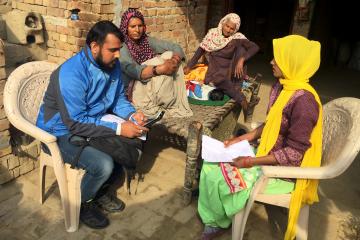

Taking an evidence-informed approach to pandemic response
As the COVID-19 pandemic started to take hold worldwide, J-PAL affiliated professors and staff jumped into action to critically analyze the evidence base related to health behavior change, domestic violence, cash transfers, education, and more. With this analysis, we have been working closely with government partners to inform policy decisions with evidence.
This is especially critical in times of global crisis, when decisions must be made quickly and confidently with millions of lives at stake. It is also much more difficult given the magnitude and ever-changing nature of our current health and economic challenges, the urgent need for action, and the limitations of real-time data.
Understanding how to apply existing evidence to pandemic response requires a close reading of the research and a deep understanding of local conditions. The world we live in is suddenly radically different from the world in which past RCTs were conducted; can the findings still be relevant to decision-making?
The short answer: It depends—on the way the study was designed, the strength of the findings, the mechanisms behind the results, and—critically—contextual and implementation details. In some cases, the core principles of generalizability can indeed help inform decision-making.
Supporting government responses
In Chile, for example, J-PAL LAC Scientific Director Francisco Gallego and affiliate Claudia Martinez, with support from J-PAL LAC staff, worked closely with the Ministry of Finance to design Chile’s cash transfer pandemic relief program, incorporating best practices from a large body of RCT literature. In recognition of this work and his longtime contributions to public policy Francisco received Pontificia Universidad Católica de Chile’s Abdon Cifuentes Award in June, given to academics in any field who have had a positive impact in the country. (Read a Q&A with Francisco.)
Claudia was also involved in the national accord between the government and the Finance Committee of the Senate to finance economic and social policies related to COVID-19. Now, Claudia, Francisco, and J-PAL affiliated professors Jeanne Lafortune and Jose Tessada are continuing to work with the Ministry of Finance to design several labor market policies using the best available evidence.
In India, J-PAL Director Abhijit Banerjee is advising the Government of West Bengal on pandemic response, and J-PAL Global Executive Director Iqbal Dhaliwal serves on a high-level advisory committee for the Government of Punjab to bring an evidence-based perspective to policy decisions affecting millions of people.
And in Egypt, Mexico, Morocco, South Africa, the United States, and many other countries, J-PAL affiliates and staff have also engaged with governments to provide policy insights from RCT literature. This reflects high demand from policymakers not only for evidence, but for guidance on how to interpret evidence responsibly and effectively.
Research innovation
The landscape of poverty in many countries is rapidly changing, and social service needs are higher than ever. We’re also leveraging J-PAL’s research infrastructure to help governments carry out large-scale surveys to quickly identify where social services are most needed and develop rapid policy responses.
In Indonesia, for example, J-PAL Southeast Asia Scientific Directors Rema Hanna and Ben Olken worked with the Ministry of National Development Planning and Ministry of Social Affairs to conduct a nationwide survey of almost 30,000 social development facilitators, and have been conducting regular online surveys since late March. Both surveys seek to learn how people’s lives have been affected by the pandemic, from job losses to food insecurity to financial distress.
The COVID-19 pandemic put a stop to dozens of ongoing J-PAL randomized evaluations around the world. As we begin to adapt to more permanent social distancing, we’ve had to adapt our research practices to ensure that people participating in research projects and the staff who carry out those projects stay safe and healthy, and are funding new COVID-related RCTs under strict health protocols.
In Italy, J-PAL affiliate Eliana La Ferrara and coauthor Michela Carlana are evaluating the impacts of a remote tutoring intervention for Italian schoolchildren who encountered difficulties with distance learning, possibly due to disadvantaged backgrounds.
In West Bengal, India, J-PAL Directors Abhijit Banerjee, Esther Duflo, and Ben Olken, with affiliates Marcella Alsan, Emily Breza, Arun Chandrasekhar, and coauthors conducted a large-scale SMS messaging campaign with 25 million people to encourage health-preserving behavior like social distancing and good hygiene, and encourage reporting of COVID-19 symptoms to local public health workers. The campaign increased health-preserving behavior and doubled the reporting of health symptoms, among other positive effects.
And in Ghana, J-PAL affiliates Dean Karlan, Robert Darko Osei, Chris Udry, and coauthors Ben Roth and Matt Lowe are evaluating the impacts of digital cash transfers as incentives for compliance with social distancing guidelines.
See more J-PAL-funded COVID-related studies on our initiative pages.
Looking forward
As we look to a future of ongoing social distancing, strained health systems, and economic challenges, we are continuing to fund new research to generate evidence on effective pandemic response. Much of this research is designed to generate quick results, and we’ll share these on the J-PAL website and with our partners as soon as they’re available.
We’re also pivoting our training work to shift our in-person training courses online, and we’re enrolling thousands of students in the online MITx MicroMasters in Data, Economics, and Development Policy.
And we will continue to work closely with government partners to keep data and evidence at the forefront of policy decisions. For the latest updates, visit J-PAL’s COVID-19 page.

J-PAL health sector co-chairs and staff discuss some lessons from the evidence for increasing adherence to Covid-19 guidelines
Please note: This note was prepared by the J-PAL Health Sector in 2020 to provide recommendations for responding to the COVID-19 pandemic. It is not an exhaustive review of all the rigorous evidence on the discussed topics.
To download this note in pdf form, click here.
As of May 2020, the novel coronavirus 2019 (COVID-19) has spread to every region of the world, infecting millions of people and killing hundreds of thousands.1 With no cure yet identified, prevention is essential. The World Health Organization (WHO), national health agencies, and other experts have issued guidance on best practices, from practicing social distancing to frequent handwashing.
Following this guidance is not necessarily easy for everyone. For instance, individuals living in overcrowded conditions may not be able to practice social distancing, those whose livelihoods depend on frequent and close interactions with others may not be able to afford it, and those without access to clean water and soap would not be able to wash their hands frequently. Other individuals may simply not be aware of the guidelines, may not understand the specific steps to follow, or they may not be convinced of the need to practice these behaviors.
In instances where lack of clear messaging or inadequate understanding of the need to practice recommended behaviors are the primary barriers to guideline adherence, evidence from rigorous research can help to inform government actions. This note provides some general lessons on increasing uptake of healthy behaviors and on improving the delivery of health products and services. It does not tailor recommendations to specific contexts or provide details on implementation. However, given the importance of tailoring interventions to suit local contexts, we encourage policymakers to reach out to Anupama Dathan, J-PAL Health Sector Manager, for follow-up conversations on incorporating the evidence into policy decisions.
Designing information campaigns to increase uptake of preventive behaviors
Many governments are advising residents to stay home, practice social distancing, regularly wash hands, and to take various other actions to prevent COVID-19. Many individuals will find it impossible to regularly practice the recommended behaviors due to financial insecurity, lack of access to clean water or soap, and various other constraints. For those who are physically able to take up these behaviors, what information is shared and through whom may influence adherence. It will also be important to avoid spreading misinformation when doing so.
Information is often impactful in changing behavior when it is specific and actionable.
Simply urging people to change behavior usually does not work. This insight comes from a number of studies from around the world, focused on a number of health topics.2 For instance, providing health insurance consumers in the United States with specific and personalized price information on the cost of prescriptions increased the likelihood of consumers switching plans and decreased annual consumer costs (Kling et al. 2012).
- Recommendation: Specific and actionable information campaigns to encourage key preventive behaviors for COVID-19 may be particularly effective. Experts may find it beneficial to continue issuing specific information on what behaviors to take up and why these actions are important. For example, advice to systematically wash hands upon returning from the grocery store or to set an alarm to remember to wash hands every 2 hours may be more effective than more general exhortation to “wash hands regularly.” Likewise, encouragement to replace handshakes with head nods or elbow bumps may be more actionable than simply telling individuals to avoid handshakes.
It is important to leverage the influence of peer networks such as friends and neighbors when asking individuals to take up new behaviors.
While top-down messaging that is framed in a specific and actionable way can change behavior, leveraging the community is also important for sustained behavior change.3 For example, a study in Nepal found that high school girls whose friends received a menstrual cup were more likely to adopt them as well (Thornton and Oster, 2008). Two experiments from India demonstrated that highly central individuals in a community may be particularly effective at spreading important information and that community members are able to identify such individuals quite reliably (Banerjee et al. 2019). In rural Peru, a large-scale handwashing intervention in 2010 involving a mass media campaign (radio, posters, and promotional events) alongside a community-based training improved knowledge and modified behaviors, while mass media alone had no impact. The campaign led to more households correctly identifying that water and soap was the best way of washing hands and increased the number of people washing their hands before eating (Galiani et al 2015; Galiani et al. 2012).
- Recommendation: Directly leveraging the influence of well-connected community members and peers (while avoiding face-to-face interactions) may help to spread accurate information on new recommendations. While guidelines on social distancing make in-person interactions difficult, online and mobile platforms may be good ways to leverage this influence.
Edutainment may be a promising delivery method for key public health messages and increasing take-up of health products.
Television, radio, or other entertainment platforms can be used to change attitudes and behaviors by embedding educational messages in a bigger storyline.4 In Nigeria, for example, the edutainment television series MTV Shuga improved knowledge and attitudes towards HIV and risky sexual behavior and increased the likelihood of getting tested for HIV (Banerjee et al. 2019). Effects were stronger for viewers who reported being more involved with the story or identified with the characters.
- Recommendation: Where possible, incorporating key public health messages on social distancing and hand washing into new or existing entertainment media could help improve adherence to recommended behaviors. The increased time spent at home due to COVID-19 lockdown orders and the ability to identify with characters facing similar changes to their personal life may further underscore edutainment’s potential to influence individual behavior. Edutainment may be difficult to produce under social distancing practices; however, animation or other art could potentially ease some of these concerns.
Engaging celebrities in sharing key health messages can increase the reach of these messages.
In Indonesia, a study leveraging Twitter found that celebrity endorsement significantly increased the likelihood that a tweet promoting immunization was liked or retweeted relative to similar tweets without celebrity endorsement. The effect was particularly large when celebrities were seen as speaking in their own voice, rather than citing external sources. By contrast, explicitly citing sources in the tweets actually reduced diffusion (Alatas et al 2020).
- Recommendation: Educating celebrities early on in an epidemic and leveraging their voices can help to avoid the spread of misinformation or the undermining of public health campaigns. Depending on the content and accuracy of their message, all individuals with a media following can have a positive or negative impact on public opinion and behavior. Celebrity influence may continue to be important for raising the profile of COVID-19 in the medium-term, when the current level of awareness has subsided but preventive measures are still important. Note that, to date, this recommendation is based on a single study rather than a broader body of research.
Evidence on information provision demonstrates that receiving messages from those with whom one feels a connection—community members, peers, characters on TV shows and other forms of entertainment, celebrities, etc.—can be important for uptake of recommended behaviors. Messaging this information with specific and actionable steps can be additionally impactful. It is also important to avoid spreading misinformation through these platforms.
Leveraging cash transfers to increase uptake of preventive behaviors
Cash transfers can act as both income support and encourage uptake of healthy behaviors.
Since the COVID-19 pandemic is a health crisis accompanied by a severe economic one, cash transfers can provide income support and potentially increase uptake of healthy behaviors.
A review of the literature shows that offering conditional cash transfers (CCTs) that require households to meet certain conditions on healthy behavior generally increases adoption of targeted behaviors.5 In some cases, making households aware of the importance of such behaviors and implying that the transfer should be used for them, without strong enforcement of conditions, also contributed to the increase in health service utilization.
Providing cash with no conditions, or unconditional cash transfers (UCTs), increases spending on household priorities and often improves overall household well-being. However, improved health outcomes are difficult to detect unless the cash transfer is very large.
- Recommendation: Cash transfers can be leveraged to increase uptake of healthy behaviors. Both UCTs and CCTs have costs associated with determining eligibility, targeting the transfer to intended households, and delivering the cash. Additionally, the conditions in a CCT can be soft (unenforced) or hard (enforced), or the transfer can also be unconditional but accompanied by specific, actionable information. When determining which type of transfer to implement, policymakers may consider the outcome(s) they are hoping to achieve, as well as the relative costs and benefits of each type of transfer across all target outcomes. A CCT with hard conditions has additional costs associated with monitoring which households are adhering to the conditions, which vary based on the design and strictness of the conditions, as well as on local capacity for monitoring and enforcing the conditions. If implementing a CCT, it will be important to determine what desired behaviors would be conditioned and whether monitoring take-up of these behaviors is feasible, or whether to rely on soft conditions or information provision instead. For instance, a hard condition may be possible if focused on testing for COVID-19, but a soft condition or information provision may be preferred if the priority is ensuring adherence to a lockdown or shelter-in-place policy.
Strategies to improve the delivery of health products and services
The practices described above can help motivate individuals and households to take up healthy behaviors. As governments and other actors think through distribution of essential commodities once they are developed, research yields insights on how to deliver them to maximize uptake.
Increased trust in the health system may be critical for more community cooperation with health guidelines.
A study in Sierra Leone found during the 2014-16 Ebola crisis that community monitoring of government-run health clinics and status awards for clinic staff (both implemented roughly two years prior to the Ebola health crisis) improved the community's perception of health care quality, utilization of health services, and Ebola-related health outcomes. During the crisis, the interventions increased Ebola testing rates and reduced mortality among patients, driven by improvements in the community monitoring intervention (Christensen et al. 2020). A study from the United States similarly showed the importance of trust in the health care system: black men, typically more mistrustful of the health care system, were more likely to trust providers of the same race. Seeing doctors they trusted increased their preventive health care utilization rate, including receiving the seasonal flu vaccine (Alsan et al. 2019).
- Recommendation: Programs or policies that increase trust in the health system could improve reporting and cooperation with health guidelines, which in turn could help increase testing, reduce the spread of the disease, and reduce mortality. In the study from Sierra Leone, the social accountability intervention had been implemented prior to the Ebola health crisis. Still, interventions that increase trust may be most impactful in areas with low baseline utilization of health care services or amongst populations with low levels of trust in the health system (including marginalized groups that may include migrants, LGBTQ individuals, indigenous communities, or racial minorities depending on the context). Additional trust-building policies, such as ensuring patient confidentiality with regard to immigration status, could also help address wariness of the formal health system. Such measures would most likely improve the resiliency of the health systems over time; they may also possibly improve outcomes if implemented during or right before a major health shock, though this has not been studied to date. Note that, to date, this recommendation is based on two studies rather than a broader body of research.
Providing recommended preventive health products such as COVID-19 tests, masks, an eventual vaccine, and others for free (once supply-side shortages are addressed) can help to ensure mass uptake.
Uptake of preventive health products, such as vaccines, is highly sensitive to price. A large body of evidence shows that take-up reduces dramatically even with small price increases, and especially so for products with large social externalities.6 For example, when a program in Kenya moved from free provision of deworming tablets to charging US$0.30 per child, take-up fell from 75 percent to 18 percent (Kremer and Miguel 2007). Furthermore, preventive products distributed for free have generally been put to good use.
- Recommendation: When feasible, subsidizing recommended preventive health products and eliminating user fees can increase uptake. There is currently a severe shortage of preventive products such as protective masks and COVID-19 tests, and a COVID-19 vaccine is not yet available. Once these supply-side issues have been addressed, providing these recommended products for free to the target population can ensure immediate, mass uptake.
This note highlights some general lessons on how policymakers may be able to increase adherence to COVID-19 guidelines and improve the delivery of key health products once they are readily available. It does not intend to provide details on implementation. Policymakers interested in learning more about the evidence presented here are encouraged to reach out to Anupama Dathan, J-PAL Health Sector Manager, for follow-up conversations on incorporating the evidence into policy decisions.
For more information, see this webinar by J-PAL Health Sector co-chairs, Karen Macours and Pascaline Dupas, on "Insights from behavioral economics for adherence to COVID-19 recommendations and improving service delivery during the current crisis."
1. World Health Organization. 2020. “Coronavirus disease 2019 (COVID-19): Situation Report 107.”
2. Studies from J-PAL affiliates on specific and actionable information provision include, Galiani et al. 2015; Bennear et al. 2013; Dupas 2011; Dupas et al. 2018; Maughan-Brown et al. 2015; Meredith et al. 2013; Kling et al. 2012
3. Studies from J-PAL affiliates on peer effects and social networks for health include Dupas 2014; Oster and Thornton 2012; Kremer and Miguel 2007; Goldberg et al. 2019; Banerjee et al. 2019
4. Studies from J-PAL affiliates on edutainment include Banerjee et al. 2019; Banerjee et al. 2016; Green et al. 2018
5. J-PAL's policy insight on the topic is available here.
6. J-PAL’s policy insight on the topic is available here.
Over the past few months, we’ve developed new resources on transitioning to phone surveys, with guides that span from budgeting to remote trainings to quality assurance best practices. They are intended to complement our crowd-sourced best practices by providing in-depth guides that address challenges specific to remote survey work.
The safety of research participants and staff is of utmost importance to J-PAL. On March 17, J-PAL suspended all research activities that require in-person contact in order to limit the spread of COVID-19. Since the suspension of in-person research activities, J-PAL staff have worked to quickly adapt to phone and online surveys where possible to minimize disruption to ongoing research projects.
Over the past few months, we’ve developed new resources on transitioning to phone surveys, with guides that span from budgeting to remote trainings to quality assurance best practices. These resources, along with those developed by Innovations for Poverty Action (IPA), are listed below. They are intended to complement our crowd-sourced best practices by providing in-depth guides that address challenges specific to remote survey work. For tips on obtaining electronic signatures (e.g., for consent forms), see also J-PAL North America’s recent blog post. IPA’s RECOVR hub houses COVID-related questionnaires and will be updated as IPA’s technical resources are made public.
Planning the transition to CATI
-
Transitioning to CATI checklist (12 pages) Saurabh Bhajibhakare, Ambika Chopra, Putul Gupta, and Mustufa Patel, J-PAL South Asia
- A starting point for projects transitioning to phone surveys. Provides a high-level overview of the steps involved so that key tasks are not forgotten. The appendix includes detailed guidance on remote monitoring of surveyors, from hiring to tracking productivity and conducting weekly debrief sessions.
- Budgeting for phone surveys with remote monitoring (5 pages) Putul Gupta, J-PAL South Asia
- This resource includes surveyor productivity estimates, a reference budget, sample team structures, and more. Please note that the costs and training scenarios are tailored to the J-PAL South Asia office and may need adapting to other contexts.
- Key takeaways:
- Budget for additional days of training even if the instruments are shorter and simpler, since projects will need to spend additional time training surveyors on protocols for conducting phone surveys (tracking calls and making appointments) as well as data security and transfer protocols. It is also important that each surveyor gets enough practice and attention, an element that becomes even more critical in the remote training setup.
- Be conservative in productivity estimates, as a fair share of surveyors’ time is spent reaching out to potential respondents multiple times before success. For a 30 minute phone survey, we’ve found 4-8 surveys/person/day to be a realistic estimate; for shorter (10-15 minutes), we aim for 10-14 surveys/person/day.
- Productivity estimate should take into account whether you’re trying to target a specific respondent (caregiver, household head) for the survey, which might mean more attempts to get that specific individual on the line.
- Consider budgeting for one supervisor for 3-4 surveyors. The supervisor can listen in on calls, verify call logs, tally attempts and completed surveys at the end of each day, track surveyor start and end time, ensure appointments are being completed, etc.
- Costs will change, particularly if surveyors are working from home. For example, travel allowances will not apply. If surveyors use their own devices, tablet rentals may not be needed, but surveyors will need number masking. Additionally, projects will need to budget for data packs for surveyors keeping in mind the nature of monitoring protocols (use of recordings) and training plan (platform, use of videos, etc.)
Training and quality assurance
- Remote trainings for field staff (7 pages) Putul Gupta, J-PAL South Asia
- Synthesizing learnings from six J-PAL South Asia projects that launched phone surveys during the COVID-19 lockdown, this resource provides tips on planning for remote trainings, guidance on training effectively, and possible mitigation strategies to deal with challenges unique to remote training.
- Key takeaways:
- Do your homework on potential enumerators and ensure that they have the required equipment for phone surveys before they come to the training,
- Choose your training platform carefully. Get your training participants to familiarize themselves with the platform ahead of the actual training.
- Break the training plan into a number of small sessions to facilitate better comprehension and retention. Build in enough time into the training schedule for mock sessions and team debriefs. To overcome logistical hurdles, budget a few breaks of 10-15 minutes through the day when devices can be charged.
- Train a small team of senior field staff ahead of the actual training and leverage their support in building resources and planning for the training.
- Share sharp and concise resources that help training participants understand and apply what they learn during the training. Avoid sharing all the resources at once. Ensure that the training resources are appropriately formatted for viewing on mobile devices.
- Leverage technology (videos, screen sharing, breakouts) to keep the participants engaged.
- Utilize quizzes and demo recordings to identify knowledge gaps at the enumerator level as well as systematic gaps in understanding within the team for specific questions.
- PRACTICE, PRACTICE, PRACTICE!
- Quality assurance for CATI (4 pages) Saurabh Bhajibhakare, J-PAL South Asia
- This resource covers specific modifications to accompaniments, back checks, high frequency checks, audio audits, and daily supervision that can be made to accommodate phone surveys.
- Key takeaways:
- Closely monitor call status attempts, refusal rates (by time, day of the week), and the number of incorrect phone numbers in your sample from day 1. This information should actively feed into revising your productivity assumptions and budgets.
- Accompaniments for phone surveys can be conducted through call conferencing (or a three-way call)—though note that IRB approvals are necessary if you plan to have a third party listen to calls for monitoring purposes. Be sure this information is included in the informed consent process. Staff might incur call or message costs and a reimbursement process should be put in place to cover this.
- Audio recordings can function like accompaniments but done post hoc (though also require IRB approval). Options include SurveyCTO’s audio audit feature and call recording features from platforms such as Exotel. Recordings are enabled by default when using the web version of Exotel, but when using the Exotel field plug-in for SurveyCTO call recordings can be toggled on or off.
- Call logs are a good place to check if the right phone numbers were called, the number of call attempts, and the duration of the calls. For SurveyCTO, use the early release versions of Android Collect 2.70.2+ to capture call logs using the phone-call-log() function. For Exotel, the call reports can be exported from the web platform.
- Set up and test the SurveyCTO data flow for high frequency checks well in advance, including setting up import .do files and the code for running High Frequency Checks (HFCs). Check out IPA’s HFCs in Stata and J-PAL’s R code for HFCs. Also check out Stata utilities to work with SurveyCTO data (additional information on the sctoapi command here).
Technical solutions
- Need to conduct remote trainings in areas with limited internet access? IPA has developed a field plug-in to embed YouTube videos into SurveyCTO forms
- More technical resources, not all COVID-specific, can also be found on IPA’s GitHub.
- If surveyors need to use their own devices, consider a call masking platform such as Exotel. R. Ramakrishna at J-PAL South Asia has developed a SurveyCTO field plug-in for Exotel calls and SMS.
- For step-by-step guidance on getting set up with Exotel, see the Quick Guide to Using Exotel (3 pages) Saurabh Bhajibhakare, J-PAL South Asia
Back in February of this year, J-PAL hit a milestone: our affiliates collectively conducted over 1,000 randomized evaluations. Six months later, we revisit this milestone with a new perspective.
Back in February of this year, J-PAL hit a milestone: our affiliates collectively conducted over 1,000 randomized evaluations.
Six months later, we revisit this milestone with a new perspective. As the pandemic drags on, our body of work has expanded to include over two dozen new evaluations aimed at generating urgently needed evidence for the fight against COVID-19. We have also leveraged our affiliates’ expertise and our extensive library of evaluations to provide evidence-based insights to inform the design of policies to support the world’s poorest and most vulnerable in this time.
Our ability to respond quickly to urgent demands for evidence during the COVID-19 pandemic is due to this impressive body of pre-existing research. These 1,000+ evaluations are the result of the vision and dedication of our affiliated professors, but also a veritable army of behind-the-scenes contributors. To run a randomized evaluation in the field requires so much more than an interesting research question: The commitment of implementers, the data collection expertise of local enumerators, the trust and participation of local communities, and the hard work of research staff.
J-PAL was created in part to help strengthen the partnerships and research infrastructure to make this research possible. When Abhijit Banerjee, Esther Duflo, and Sendhil Mullainathan co-founded J-PAL in 2003, our first cohort of affiliates consisted of just five professors with (at the time) only a handful of randomized evaluations to their names: Marianne Bertrand, Dean Karlan, Michael Kremer, Dan Levy, and Edward Miguel.
Since then, our network of researchers has grown to include 194 professors committed to rigor, purpose, and innovation in their randomized evaluations. But the movement to bring scientific evidence into policymaking has grown far beyond the participation of our affiliates. J-PAL and Innovations for Poverty Action (IPA), along with many other organizations, have expanded into an infrastructure of over a thousand talented staff committed to making a difference at every step of the research-to-policy process.
Every single one of the 1,000 evaluations we celebrate today was made possible by teams of hardworking enumerators, field team managers, and research assistants, as well as the goodwill and patience of the hundreds of thousands of respondents who participated in the research. A strong local research infrastructure is essential not only to carrying out successful data collection, but also to ensuring that research is grounded in the local context and implemented with respect.
Our research staff has been the backbone of J-PAL’s regional offices. For instance, Shobhini Mukerji was one of our earliest field staff, starting as a research assistant in the Odisha clean cookstoves project. Today, she is among the longest-serving staff members of J-PAL. Now the Executive Director of J-PAL South Asia, she heads J-PAL’s largest office and manages its significant expansion into policy outreach and capacity building.
In addition to supporting research in the field, J-PAL’s research and training staff work to create the next generation of evaluators and equip them with the resources and tools they need. This dedicated team develops research resources that are accessible to all; supports research design and implementation, providing crucial support to projects on the ground in dozens of countries around the world; and trains the next generation of local researchers in randomized evaluation methodology.
Some of our earliest evaluations have had a profound influence on J-PAL’s direction. An early partnership with the Indian NGO Pratham to evaluate the “Balsakhi” remedial tutoring program (Banerjee et al. 2007) grew into an over two decades-long collaboration to test, adapt, and scale up what came to be known as the Teaching at the Right Level approach.
Kremer and Miguel’s (2003) evaluation of primary school-based deworming produced experimental evidence showing that deworming is one of the simplest and most effective ways to help children stay healthy and remain in school. Subsequent evaluations and resolute efforts by Kremer, Evidence Action, and others to scale the intervention led to over 292 million children being dewormed. These early evaluations, along with many others (Duflo, Kremer, and Robinson 2008, Kremer, Miguel, and Thornton 2009, and Dupas 2011, to name a few), helped open doors for high-potential research efforts and policy collaborations.
A fundamental aspect of J-PAL’s work is to make evidence from randomized evaluations accessible to broader audiences. To this end, we’ve written hundreds of jargon-free summaries of results of evaluations and published them to our website. (Some of the 1,000 evaluations are ongoing, so don’t yet have summaries—stay tuned!)
In addition, with the guidance of our academic co-chairs, we’ve synthesized evidence from across evaluations to produce actionable policy insights and practical recommendations, as well as produced several rapid-response notes highlighting evidence to inform COVID-19 response policies.
And we’ve written up a series of case studies documenting just a few of the many ways in which evidence from randomized evaluations is changing how we understand and address problems related to poverty.
In addition to documenting and synthesizing research, J-PAL staff serve as “matchmakers,” helping connect our affiliated professors with implementing partners to catalyze new research and innovation. We are also connecting our affiliates to policymakers seeking expert advising on their COVID-19 response policies, which has already led to several innovative new social programs.
Also to this end, and with the generous support of our donors, we run competitive funding initiatives for researchers to support randomized evaluations that seek solutions to policy challenges in governance, post-primary education, healthcare delivery, and financial inclusion, to name just a few. We have also been able to run off-cycle rounds to fund rapid, useful, and safe COVID-19 research.
As we look to the future, we are focused on expanding our library of research resources and training courses, drawing out even more critical lessons that provide practical guidance for policymakers, supporting scale-ups of effective programs, and expanding the evidence base on key issues like health care delivery, social protection, climate change, and labor.
We are incredibly grateful for the passion and dedication of our ever-growing affiliate network and the many, many staff and partners who constitute the movement to bring scientific evidence into the conversation around poverty alleviation, without whom J-PAL would only be an ambitious idea. And thank you, reader, for accompanying us on this seventeen-year journey.