
Affiliate Spotlight: Shawn Cole
To read the full profile, please download the PDF version here.
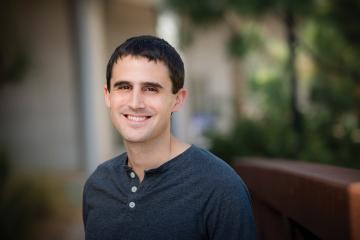
Shawn Cole is a Co-Founder and Chair of the Board at Precision Development (PxD), the John G McLean Professor of Business Administration at Harvard Business School, and serves as a Co-Chair for J-PAL’s Innovations in Data and Experiments for Action (IDEA) Initiative. For over twenty years, Shawn has researched what makes information impactful and how it can be effectively communicated, with a focus on banking and corporate and consumer finance in low- and middle-income countries.
Shawn and his research collaborators are aiming to lead a digital revolution in the practice of development economics, particularly for the delivery of information and services to low-income populations. His research, spanning financial advising for small businesses to the delivery of timely advice to smallholder farmers, focuses on harnessing the potential of high-quality information and technology platforms in reaching a large number of people quickly and cost-effectively.
“We’re going to see more and more approaches like this as governments realize that the cheapest and most effective way to communicate with their populations is to do so directly via a technology platform,” he says.
This use of digital communication tools is emphasized most prominently in Shawn’s work to improve the delivery of agricultural extension services. Extension services, or technical advice and inputs regarding agricultural practices that can improve farm productivity, have traditionally been delivered in-person in low- and middle-income countries (LMICs): either through extension agents who physically visit farms or through farm field schools, in which groups of farmers come together to experiment with new agricultural practices. However, in many settings, these traditional models have had limited success in delivering timely and customized information to farmers who often live in remote areas.
Starting in 2011, Shawn and his research partners found that using mobile phones to send agricultural extension services to cotton farmers in Gujarat, India was impactful in causing them to adopt a number of recommended agricultural practices related to fertilizer, pesticides, and seed selection. Around the same time, J-PAL affiliated professors Lorenzo Casaburi (University of Zurich), Michael Kremer (University of Chicago), and Sendil Mullainathan (University of Chicago) found similarly promising results on farmer behavior by sending text message reminders about key tasks to be performed during the agricultural cycle to sugarcane farmers in Kenya.
Based in part on these results, Shawn, along with Michael Kremer, Dan Björkegren (Brown University), and Heiner Bauman, co-founded Precision Agriculture for Development (PAD, recently renamed Precision Development or PxD) in 2016 to leverage the growing use of mobile phones in LMICs and directly provide smallholder farmers with customized information and services to improve productivity.
PxD aims to harness agricultural technological innovations and data unearthed by agricultural trials on optimal farm inputs like seed varieties and fertilizer amounts and deliver this information to farmers. However, as important as it is to determine what is optimal, it is crucial to find a way to effectively communicate this information:
“People are increasingly gaining access to information services and it’s a particularly compelling opportunity to establish trusted brands, perhaps in cooperation with governments or nonprofits, to provide useful information to large numbers of people.”
Shawn’s interest in low-cost technologies goes beyond embedding them in randomized evaluations to how research is conducted on them in the first place. Borrowing from the tech sector, Shawn and his partners at PxD place great emphasis on rapid A/B tests to create a space for millions of farmers to provide continuous feedback on the services they receive and constantly improve the platform. Currently, PxD is servicing 5 million farmers across ten countries in Africa, Latin America, and South Asia through this iterative process.
For over twenty years, Shawn has researched what makes information impactful and how it can be effectively communicated. To Shawn, information, whether it be agricultural extension services, financial advice, or even education, “can be incredibly powerful if people believe it, trust it, and if they’re willing to act on it and improve their lives.”

Karthik Muralidharan is the Tata Chancellor’s Professor of Economics at the University of California, San Diego and also serves as a J-PAL Board member and co-chair of the Education sector. A pioneering researcher in education and service delivery, Karthik has profoundly influenced social service delivery in developing countries (especially India) through research and policy partnerships with governments and a body of work spanning over twenty years.
To read the full profile, please download the PDF version here.
Karthik Muralidharan is the Tata Chancellor’s Professor of Economics at the University of California, San Diego and also serves as a J-PAL Board member and co-chair of the Education sector. A pioneering researcher in education and service delivery, Karthik has profoundly influenced social service delivery in developing countries (especially India) through research and policy partnerships with governments and a body of work spanning over twenty years.
Growing up in India in the 1980s, and observing changes induced by economic liberalization in the 1990s, J-PAL affiliate Karthik Muralidharan developed an interest in the transformative power of public policy at a young age. This focus, along with a passion for education, launched Karthik on a path that would soon become his life’s work.
As a development economist, Karthik studies how scarce resources should be allocated to maximize impact. This research is particularly important to governments seeking to design and implement cost-effective programs on a large scale, where mistakes can be costly and potentially difficult to revert. “Over the past twenty years I’ve seen how there is stunning variation in the cost-effectiveness of policies that sound equally sensible sitting in a conference room,” he observes. “The job of the researcher is to bring objective evidence into the discussion.”
In his role as Co-Chair of the Education sector at J-PAL, Karthik guides the synthesis and dissemination of lessons from hundreds of randomized evaluations on education topics. He also chairs J-PAL’s Post-Primary Education Initiative, which funds randomized evaluations that develop and test innovative solutions for improving access and quality of post-primary education in low- and middle-income countries. Through his leadership at J-PAL, Karthik plays a direct role in shaping the field of education research and policy.
Karthik leads many evaluations related to education and social service delivery, with a focus on helping governments identify the most cost-effective approaches to improving outcomes on a fixed budget. For instance, his work has shown that in low- and middle-income country settings, an unconditional doubling of teacher salaries may have no impact on learning outcomes, while even modest amounts of performance-linked pay to teachers can have large positive impacts. School grants on their own may have no impact on learning, while combining them with performance-based pay for teachers can sharply increase the effectiveness of the grants. Finally, simply providing computer hardware may have no impacts on learning, whereas using technology to personalize instruction may have large gains.
These studies and Karthik’s broader body of research illustrate the wide contrast in cost-effectiveness of public policies and the importance of evaluation as a tool for decision-making.
Working in partnership with central and state governments has underpinned much of Karthik’s most ambitious and influential research. “There is an incredible appetite for good analytical inputs among policymakers,” he notes. Although it can take years to evaluate the impact of some programs, Karthik emphasizes the importance of seeking out this knowledge across programs and contexts. He notes that the impact of research is not usually that of a single study, but rather a body of work that can be synthesized to reveal robust patterns in the evidence and be used to guide policy.
A unifying principle of Karthik’s career is his relentless dedication to improving lives. “One of the best pieces of advice I got from my advisor [Nobel Prize-winning economist and longtime J-PAL affiliate] Michael Kremer, was, ‘Never apologize for the fact that your fundamental motivation is to make sure 200 million kids in India have a better education, and that economics is a tool to get you there.’ It's a very powerful tool, but it's not an end in itself.” In his commitment to ensuring that research has policy relevance, Karthik’s work at J-PAL and longterm partnerships with governments have been instrumental to policy change on a large scale.
Karthik Muralidharan has been a J-PAL affiliate since 2009. For more information about J-PAL and to read about Karthik’s research, visit povertyactionlab.org. You can learn more about Karthik’s journey in education research and policy, in the following conversation.
Elise Huillery is a Professor of Economics at Paris Dauphine University. Her research focuses on policies addressing lack of education and the psychological barriers to individual progress out of poverty. From the humanitarian projects of her youth to the policy research she leads today, Elise Huillery’s career reflects a long-held commitment to eradicating poverty and inequality.
To read the full profile, please download the PDF version here.
Elise Huillery is a Professor of Economics at Paris Dauphine University. Her research focuses on policies addressing lack of education and the psychological barriers to individual progress out of poverty. From the humanitarian projects of her youth to the policy research she leads today, Elise's career reflects a long-held commitment to eradicating poverty and inequality.
Having worked on humanitarian projects in Romania and Cameroon as an adolescent, Elise Huillery was introduced early on to the real-world challenges that can lead development policies and programs to fail. These experiences drove her to pursue a career dedicated to identifying and overcoming barriers to economic development.
Elise is a strong believer in education as the key to overcoming entrenched poverty. But to Elise, the question is not just whether a person has access to education; it is also a question of what drives students to value and pursue education.
“One important reason why some people get more educated than others are the aspirations and motivation that they put into it,” she notes. As a high school student, Elise was acutely aware of the disparities in ambition among her classmates of equal ability but varied socioeconomic backgrounds. “The situation seemed deeply unfair, although nobody seemed to notice it, given that it was personal preferences guiding individuals’ choices.”
As a researcher, Elise is interested in how poverty and social inequality shape one’s perceptions, beliefs, and decision-making. “Not only does poverty affect the external constraints that people face, but it also imposes internal constraints that amplify the external ones,” she explains. “Policymakers should not only worry about the socioeconomic or institutional aspects of poverty; they should also address the psychological barriers to individual progression. It may be a necessary condition to make additional resources efficient.”
She addresses this issue in a recent study conducted in her native France. Elise and co-authors evaluated the impact of Energie Jeunes, a program aimed at promoting a growth mindset and decreasing perceived social determinism among adolescents in disadvantaged neighborhoods. In the program, facilitators encourage students to adopt good study habits, to work hard, and to find positive role models over the course of twelve short sessions over four years.
They found that the program resulted in an increase in student grades, a reduction in disciplinary sanctions, better attitude in class, and a shift towards a growth mindset among students. Given the short duration of the sessions and the low cost of the program, this outcome is particularly promising. These results caught the attention of the French Ministry of Education and motivated the idea of another evaluation to test a growth mindset training targeted at teachers themselves.
Elise is deeply committed to working at the intersection of academia and policy. In addition to her research and teaching responsibilities, she is also a member of France’s Conseil d’Analyse Economique, an independent, nonpartisan advisory body reporting to the French Prime Minister. In her role on the Council, she works to shed light on economic policy issues at an early stage, when government policy is still being developed.
Elise has been involved with J-PAL since 2008, when she worked as a postdoctoral fellow on a randomized evaluation in Niger. Now an affiliated researcher, she has been instrumental to shaping the research agenda around social inclusion in Europe. “J-PAL is a place where rigor and accuracy matter as much as policy relevance and social transformation. Being an affiliate means a lot to me.”
Elise Huillery has been a J-PAL affiliate since 2010. For more information about J-PAL and to read about Elise’s research, visit povertyactionlab.org.
Paul Niehaus is a co-founder and president of GiveDirectly, co-founder of fintech start-up Segovia, and professor of economics at the University of California, San Diego. Named one of 100 leading global thinkers by Foreign Policy magazine in 2013, Paul represents a new generation of development economists who think creatively about ways to improve the world.
To read the full profile, please download the PDF version here.
Paul Niehaus is a co-founder and president of GiveDirectly, co-founder of fintech start-up Segovia, and professor of economics at the University of California, San Diego. Named one of 100 leading global thinkers by Foreign Policy magazine in 2013, Paul represents a new generation of development economists who think creatively about ways to improve the world.
Paul and his research collaborators target questions whose answers can have an impact on a broad population and be immediately useful to policymakers. “My teammates and I look for big turning points,” he explains, “often government decisions, where having more evidence could correct a widespread misconception or guide a better choice.”
This approach has led Paul and his frequent co-authors and J-PAL affiliated professors Karthik Muralidharan (University of California, San Diego) and Sandip Sukhtankar (University of Virginia) to examine, for example, how the creation of new infrastructure for India’s Direct Benefit Transfer program could transform the roughly 10 percent of GDP the country spends on its safety net and subsidy regimes. They do so using “at-scale” evaluations: randomized evaluations of large reforms conducted as they are rolled out.
In a recent paper Paul and Karthik argue that at-scale evaluations are valuable for two reasons: First, they provide an opportunity to learn about issues of direct importance to policy, since the programs they study are already being funded and implemented; and second, they predict large-scale outcomes in a way that smaller-scale evaluations may not.
Those who follow the debate over universal basic income (UBI) or unconditional cash transfers will also be familiar with Paul’s charitable work. Paul co-founded GiveDirectly—the leading international NGO specializing in enabling donors to send money directly to those who need it. GiveDirectly has promoted the use of randomized evaluations to test impact with over a dozen studies completed or in progress, including head-to-head tests comparing cash to conventional aid programs as well as the largest evaluation of UBI to date.
Paul is conducting this evaluation with J-PAL co-founder Abhijit Banerjee (MIT) and J-PAL Africa Scientific Director Tavneet Suri (MIT), as well as GiveDirectly co-founder Michael Faye. The evaluation will measure the effects of basic income delivered over twelve years to entire communities in Kenya, and compare these to the effects of the shorter-term transfers that are more common today. GiveDirectly began delivering transfers in 2018 and preliminary results will be available within one to two years.
“The core premise of GiveDirectly is that we shouldn’t start by assuming we can find better ways to help poor people than they could find for themselves,” Paul argues. “Currently that’s how close to 100 percent of foreign aid works—but given the totality of the evidence, we think the burden of proof should be the other way around.”
When a problem cannot be addressed with a randomized evaluation, “don’t be that person with a hammer,” he warns. Building fundamentally respectful and empathetic relationships with research partners and communities underpins his research ethos. “You want to build trusting relationships with people who see that you are genuinely thinking about what’s right, even if at the moment it may not happen to be the thing you do.”
Paul’s work demonstrates the value of practical research and evidence in informing policy at a national scale. As an economist and leader in the financial inclusion space, his career has been defined in part by his willingness to take initiative. “The space of folks with opinions about what someone else ought to do is already pretty crowded! There can be a lot of value in just getting out there and doing the hard work that you think needs to be done.”
Paul Niehaus has been a J-PAL affiliate since 2011. Read more about him and his research here.