Image
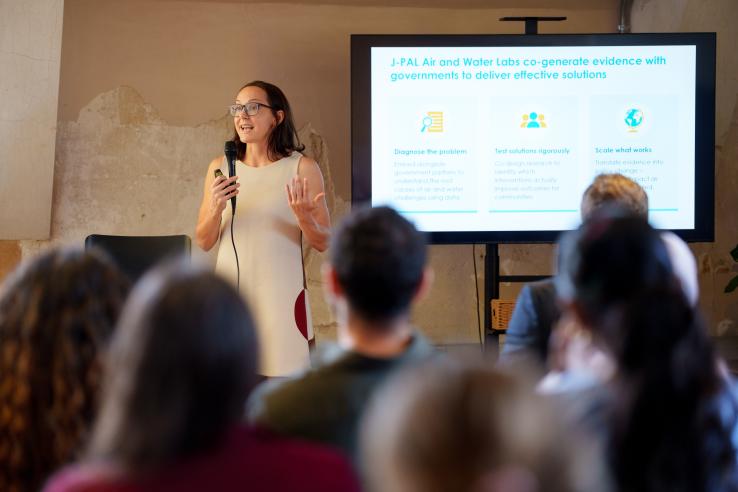
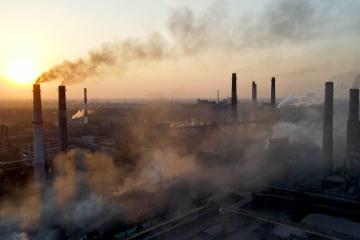
Policymakers face impossible choices. They have to decide how to deliver scarce resources to the people they serve at a massive scale. With climate challenges and disasters on the rise, these decisions get harder—and they need to be made faster. So what can be done? We headed to London Climate Action Week (LCAW)—an annual convening for businesses, governments, and organizations to share knowledge and accelerate climate commitments across sectors–to discuss how governments are coping with the health effects of extreme heat and air pollution, designing sustainable cities, and working with indigenous leaders on cash transfers for adaptation. Together with Community Jameel, J-PAL’s Air and Water Labs (AWLs) from Egypt, India, and South Africa co-hosted a conversation about bringing policymakers together with researchers to confront these many challenges at scale.
The panel discussion featured Hugh Cole, Chief Data Officer and Strategy Director at the City of Cape Town; Dr. Sherifa Sherif, Executive Director at the National Institute of Governance and Sustainable Development in Egypt; and Tithee Mukhopadhyay, Deputy Executive Director at J-PAL South Asia; moderated by Uzma Sulaiman, Associate Director of Partnerships at Community Jameel. Opening the event, Cape Town Lab Scientific Director Kelsey Jack spoke about the journey the AWLs have taken and their potential to inform policy for people throughout their combined regions, and South Asia Lab Lead Gargi Pal unpacked how Emissions Trading Schemes for air pollution went from an idea to a major policy shift in India and beyond. The discussion that followed highlighted concrete examples of partnerships and projects that are contributing to a climate-resilient future.
As governments face multiple economic, political, and environmental constraints, it may be tempting to turn to new technologies or shiny silver bullets to deliver results. But here is what we know: lasting climate resilience won’t come from a new AI tool or financing on its own. Because without sustained government commitment and capacity to adapt, pilot, and scale proven programs, even the best solutions fall apart.
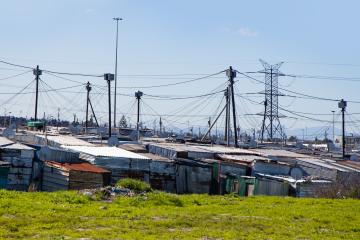
Our Air and Water Labs (AWLs) build just this capacity. Operating in Egypt, India, and South Africa, we embed researchers and staff in governments that are facing real climate crises, not observing from the sidelines. In Cape Town, we work with the municipal government on optimizing its Free Basic Electricity program to achieve affordable energy access for all Capetonians and reach Cape Town’s climate goals. Simultaneously, we’re examining ways to improve water service delivery through optimizing water pricing structures and new infrastructure, like advanced metering infrastructure (AMI). In Egypt, our staff work with the Ministry of Agriculture to enhance farmers’ climate resilience through tailored extension services, evaluating useful applications of AI, and credit solutions. And in India, we co-designed, tested, and scaled the Emissions Trading Scheme with the State Pollution Control Board, an effective way to tackle industrial air pollution while promoting economic growth. It’s now scaling globally with a new partnership in Rio de Janeiro just announced at London Climate Action Week.
What makes this work possible? One thing stands out: sustained partnership and commitment over time. External researchers and collaborators working with governments often approach policy problems from an outsider’s perspective, coming in for one engagement, then leaving. But this doesn’t have to be the model. Researchers, when embedded or dedicated to long-term collaboration with governments, can provide something unique: independent credibility and sustained engagement over years, not months or weeks. Another critical ingredient to make this a reality is support from funders that understand the value of deeper, long-term engagements.
There are plenty of climate solutions out there, but it is less common to see examples such as AWLs that collaborate with governments for many years to take evidence-based solutions to scale . In order to continue building climate resilience, we need more long-term, locally-grounded partnerships between researchers and governments. It doesn’t require embedding labs in every ministry, but it does require investing in the trust between different actors—the time it takes to build those relationships–that makes evidence usable in the first place.
Our Air and Water Labs are just one successful example of this type of collaboration. At our LCAW event, we heard from audience members and partners about their models for working with governments. But the underlying principle is the same: take time to build trust, learn together, and engage deeply in the local context.