Image

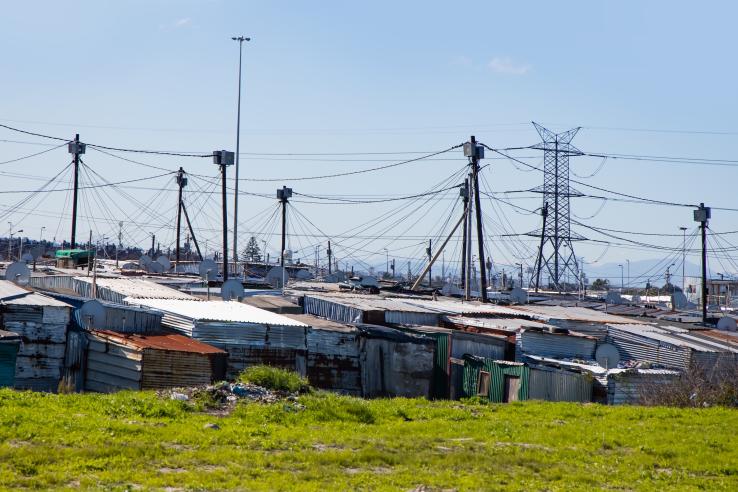
Cape Town’s 2017 water crisis prompted the City government to look at its data differently. Behind the millions of meter readings and billing records lay unanswered questions: How successful were the water conservation efforts across different areas in Cape Town? What does equitable water pricing look like? How can the City balance their need for fiscal sustainability against their mandate to provide water to residents reliably?
This crisis became a catalyst for change, prompting the City to proactively build partnerships that could help generate evidence from existing data. This drive, combined with the decade-long partnership between J-PAL Africa and the City of Cape Town, led to the launch of Water, Air and Energy (WAE) Lab in 2024, embedded within the City’s Policy and Strategy team.
The Lab is a part of the larger Air and Water Labs initiative launched in partnership with Community Jameel, and works at the intersection of research and policy by generating evidence on solutions to specific urban energy and environmental challenges. It aims to bridge the gap between academic research and municipal operations, providing a new model for how cities can leverage partnerships to build evidence-informed policies.
The City of Cape Town manages vast and complex datasets across its core service delivery systems. These records form the backbone of how the City functions day to day. Beyond their operational value, these records hold the potential to guide smarter planning, strengthen performance monitoring, and enable continuous learning.
Cape Town’s water data ecosystem draws from multiple sources, such as household meter readings, tariff and billing records, and geospatial coverage maps. Together, these datasets are helping the City understand patterns of household demand and evaluate the impact of conservation initiatives launched after the 2017 water crisis.
Through the WAE Lab’s research, we have gained valuable insights into how City of Cape Town data can inform smarter, fairer policies.
Responding to changing water use in drought conditions
By combining millions of household-level billing records with satellite imagery and groundwater monitoring data, a study by J-PAL affiliated researcher Kelsey Jack (UC Berkeley: Energy, Environment, and Climate Change sector Co-Chair) and coauthors Alexander C. Abajian (UC, Santa Barbara), Cassandra Cole (Harvard), Kyle C. Meng (UC, Santa Barbara) and Martine Visser (UCT) revealed that, during the Day Zero drought, affluent households reduced their municipal water use far more than households in low-income areas in part because they could afford to drill private boreholes.
This private adaptation helped the City avoid running dry, but it also eroded the water department’s revenue base and shifted costs onto lower-income families who remained dependent on public water. The City’s data made it possible to trace these inequities in real time and evaluate the effectiveness of its policy response: introducing fixed service charges and expanding free water allocations for low-income households, while still ensuring policies allow for sustainable City financial planning.
Evaluating discounted and free water utility provision
Another 2025 WAE Lab-funded study by Cassandra Cole (Harvard) used water billing and primary survey data to examine how the City’s system of free water allocations and discounted water price shaped household behavior during the crisis. She found that, although the policy effectively shielded low-income households from unaffordable bills, the lower prices did not lead to higher water consumption among eligible households.
This is important because the reduced prices were intended not only to make water affordable but also to ensure that low-income households could maintain a basic level of water use during the crisis. The study also found that many households did not know the actual price of water, or even when their supply was free. Some households undertook costly or unneeded “water-saving” measures to save money they weren’t being charged, likely at the expense of their own welfare.
Given these findings, another crucial element of this study was explaining billing details to households. This program focused on increasing awareness about price among low-income households, showing how clearer pricing can strengthen water conservation and ensure equitable access to water for lower-income households. The study also tracked water use among these households in subsequent months to observe whether the information program led households to increase their water usage; these results are forthcoming.
Looking ahead
Together, these studies show the immense value of the City’s administrative data not only for managing crises, but also for designing evidence-based policies that balance sustainability, equity, and resilience. They also show that equitable access to information is crucial in supporting households to benefit from progressive tariff structures and provisions.
Going forward, the WAE Lab team is investigating the impact that the replacement of residential and commercial meters with smart AMI water meters will have on revenue recovery, water use habits, and whether these meters could help enable other interventions like off-peak water usage.
Electricity data offers another powerful lens on urban well-being. The City’s electricity department maintains detailed information on consumption patterns, prepaid metering, and payment trends. By integrating and analyzing these records, the WAE Lab helps identify households at risk of energy poverty and supports departments in designing interventions to promote equitable and sustainable access to energy.
The impacts of free electricity
One of our ongoing studies is examining electricity usage among households on different price levels. This research, led by J-PAL-affiliated researchers Kelsey Jack and Seema Jayachandran (Princeton; Gender sector Co-Chair), is particularly interested in enhancing the efficacy of the targeting of the Free Basic Electricity program. Using the City’s administrative data, the research team will survey households with and without the free units to understand, among other things, the extent to which being switched from one price level to another changes energy consumption, household energy mixes, and household spending on other goods and services.
The hope is that this research will assist in understanding how to allocate free electricity benefits in a way that better supports the households who need it the most, while also maintaining the fiscal sustainability of the City’s budget. These insights are crucial for assessing how tariff changes affect different customer groups.
While sanitation infrastructure might not have received the same level of coverage as water and energy in recent years, it crucially sits at the intersection of climate resilience and public health. WAE Lab researchers are analyzing service requests, maintenance logs, and public health data to map and identify recurring sewer blockages and their impact on urban flooding and public health.
Reducing sewer runoff and diarrheal diseases
Preliminary findings from a study led by Molly Lipscomb (University of Virginia) and Joshua Deutschmann (U Chicago) reveals that Cape Town receives over 200,000 service calls for sewer blockages each year, with incidents rising steadily since 2017. These blockages are not only costly for the municipality to clear, but they also have measurable effects on environmental and public health. Since high rainfall increases the incidence of diarrhea, particularly in population-dense neighborhoods, well-functioning sewers can help prevent disease spread.
The study further links sewer failures to poor solid waste management. Areas with more garbage disposal complaints experience substantially higher rates of sewer blockages, even after accounting for local characteristics.
Together, these findings highlight how sanitation, waste management, and urban infrastructure systems are deeply interconnected, and how the City’s administrative data can be used to identify at-risk areas, target preventive maintenance, and design integrated interventions that protect both environmental and human health.
Underlying all of these efforts is a strong commitment to data privacy, security, and ethical use. The WAE Lab plays a key role in designing and supporting governance processes that protect personal information while enabling safe, responsible research and evidence generation. These safeguards ensure that the City’s data is used not only effectively, but also ethically and transparently.
This partnership has been strengthened by the City's broader data infrastructure investments. The City's Data Strategy, adopted in 2018, recognizes administrative data as a collection of public assets that should be managed to maximize public benefit and organizational growth.
A key component of this infrastructure is CKAN, an open-source data sharing platform that the City uses for efficient data exchange. The platform serves as both a data discovery tool and a secure distribution system. For more details on the City's data infrastructure and sharing systems, see the City of Cape Town chapter in J-PAL’s Handbook on Using Administrative Data for Research and Evidence-based Policy. Through the Lab, the City has also onboarded an embedded data engineer, strengthening the technical capacity needed to maintain and enhance data infrastructure that serves both municipal operations and research partnerships.
The WAE Lab’s approach integrates field visits and community surveys alongside administrative data analysis, validating data-driven insights with lived experience. This collaborative partnership has generated learning for both parties: City officials gain access to rigorous research methodologies, while researchers develop a deeper understanding of City’s data and operations, resulting in research that informs City’s policy and strategy. Building on this foundation, the initial investment from Community Jameel has helped position the Lab as a credible partner, crowding in additional funders and supporters—including the Fund for Innovation in Development (FID), who are now contributing to the expansion of the portfolio.
Cape Town’s experience offers valuable lessons for cities worldwide. When treated as a public asset, administrative data becomes far more than an archive of transactions—it becomes a dynamic foundation for learning, adaptation, and evidence-informed policymaking.