

Desenvolvendo uma comunidade global para avaliação de impacto: Cursos online do J-PAL
Este é o terceiro artigo em uma série ilustrando histórias de como os cursos de treinamento do J-PAL construíram novas parcerias de política e pesquisa e fortaleceram as já existentes para promover a tomada de decisões baseada em evidências. O primeiro artigo da série destaca dois exemplos significativos de participantes do curso Avaliando Programas Sociais do J-PAL, e o segundo artigo mostra como cursos personalizados fortaleceram parcerias governamentais na Indonésia e no Egito.
Os cursos online do J-PAL ampliam o alcance de nossos materiais de treinamento em avaliação de impacto para públicos em todo o mundo e permitem que participantes acessem o conteúdo de acordo com sua própria agenda. Estas ofertas incluem o curso online Avaliando Programas Sociais, que reflete o conteúdo do nosso treinamento presencial. Através de uma série de módulos integrados e interativos, o curso fornece à participantes uma compreensão profunda sobre avaliações aleatorizadas e como elas são projetadas em contextos reais. Participantes mergulham em palestras de professores e professoras afiliados e equipe sênior do J-PAL, estudos de caso baseados em projetos de pesquisa da rede J-PAL e oportunidades de compartilhar ideias e colaborar por meio do fórum de discussão do curso.
Atualmente, o J-PAL oferece a versão online do curso Avaliando Programas Sociais em inglês, espanhol e português, com planos de adicionar conteúdo em francês no futuro. Cada curso é gratuito, com a opção de obter um certificado de conclusão mediante uma pequena taxa, aberto a qualquer pessoa e normalmente tem duração de vários meses. Desde o lançamento do primeiro desses cursos online em 2014, a cada ano incorporamos conteúdos melhorados e atualizados para refletir os desenvolvimentos no campo e o feedback de participantes sobre o que é mais útil em seu trabalho.
Esses cursos atingiram dezenas de milhares de pessoas de 181 países desde seu lançamento. Mais de 11.000 participantes receberam certificados de conclusão, e a comunidade global do curso continua a crescer. Este artigo se aprofunda em três exemplos de como esses cursos online ajudaram participantes ao redor do mundo a fortalecer a cultura do uso de evidências em suas organizações e informar avaliações reais.
Aplicando lições à avaliação de programas educacionais nas Filipinas
Juvhan Rebangcos se inscreveu no curso online Avaliando Programas Sociais em 2022 para construir uma comunidade de prática de monitoramento e avaliação no Teach for the Philippines (TFP), onde ele é gerente de avaliação de dados e impacto, apoiando a missão da organização de garantir que todas as crianças filipinas se beneficiem de uma educação de alta qualidade. Ele observou que o aprendizado do curso o equipou "com o know-how de estimar impacto social, que é fundamental para medir e validar os resultados de estudantes", e que as melhores práticas do mundo real compartilhadas ao longo do curso são especialmente aplicáveis ao trabalho dele e de seus colegas.
O TFP conduziu um pequeno estudo piloto para testar o programa modular online da organização, voltado para alfabetização e aritmética remediativas, durante a pandemia da Covid-19. Depois que Juvhan concluiu o curso Avaliando Programas Sociais online, ele utilizou o que aprendeu no curso para refinar o design da avaliação, abordar desafios como desistência e baixa frequência, e expandir o tamanho da amostra para a próxima avaliação do TFP, testando o impacto da implementação do mesmo programa com aprendizado presencial. Ele lembra que recorrer ao curso foi sua bússola ao gerenciar o estudo no início deste ano e também forneceu novas ideias para futuras avaliações do impacto do TFP.
Ele diz: "Daqui para frente, sabemos que avaliações aleatorizadas serão uma opção preferencial sempre que estivermos testando um piloto, buscando inovações no programa ou validando resultados. Além dos resultados que poderemos usar no futuro, podemos aprender muito com nossa experiência ao conduzi-las." Juvhan planeja continuar a aplicar lições do curso para fortalecer a cultura de uso de evidências em sua organização.

“O curso me preparou para projetar configurações experimentais, lidar com possíveis ameaças à pesquisa e navegar pela ética de nossas atividades de pesquisa. Mais importante ainda, minha experiência no curso me ajudou a criar histórias informadas por dados, baseadas em evidências e convincentes para demonstrar o impacto eventual de nosso trabalho como organização.”
- Juvhan Rebangcos, Gerente de Avaliação de Dados e Impacto, Teach for the Philippines
Democratizando o conhecimento para informar a tomada de decisão em toda a América Latina
O escritório do J-PAL para América Latina e Caribe (J-PAL LAC) tem dois cursos online em espanhol e português com objetivo de democratizar o acesso a estudantes na região. O "Evaluación de Impacto de Programas Sociales", oferecido em espanhol, é liderado pelo diretor científico da J-PAL LAC, Francisco Gallego. O "Avaliação de Impacto de Programas e Políticas Sociais" é oferecido em português, em parceria com a Escola Nacional de Administração Pública (ENAP). Os cursos online do J-PAL LAC fortalecem a formação para parceiros de língua espanhola e portuguesa, ajudando participantes a se envolverem com evidências para mudanças políticas impactantes e fomentando uma cultura de evidência e avaliação. Estudantes passados destacaram o valor prático do material para o design, implementação e avaliação de programas na região, bem como a eficaz combinação de teoria e prática. Os cursos também servem como uma introdução ao trabalho do J-PAL e um ponto de partida para futuras parcerias.
Virgílio Pires, auditor fiscal do Ministério do Trabalho, conectou-se com o J-PAL para explorar oportunidades de avaliação após concluir o curso em 2021. Isso levou a uma parceria com os pesquisadores afiliados do J-PAL, Jeanne LaFortune e José Tessada, em uma avaliação aleatorizada medindo o impacto das intervenções de segurança do trabalhador, com apoio da Iniciativa de Empregos e Oportunidades do J-PAL LAC no Brasil. A avaliação está estudando o possível efeito do treinamento de segurança virtual em relação a inspeções de segurança presenciais no bem-estar de trabalhadores e trabalhadoras no setor de manufatura brasileiro, além de investigar a relação custo-benefício de visitas tradicionais presenciais em comparação com treinamentos virtuais menos onerosos.

"O curso foi crucial para despertar meu interesse na avaliação de políticas públicas. A partir deste curso, percebi que é possível realizar uma avaliação de impacto de projetos em inspeção do trabalho... Assim, surgiu nossa proposta de realizar uma avaliação focada na prevenção de acidentes e doenças relacionadas ao trabalho. Além de fornecer conhecimento sobre [avaliação de impacto], o curso também me apresentou ao trabalho do J-PAL, do qual eu não tinha conhecimento anterior. Tivemos a sorte de apresentar o projeto ao J-PAL, e a [pesquisadora afiliada do J-PAL] Jeanne Lafortune aceitou porque estava alinhado com tópicos de pesquisa que ela já estava explorando."
- Virgílio Pires, Auditor Fiscal do Ministério do Trabalho
Direções Futuras: Personalizando o aprendizado híbrido para parcerias de treinamento Francófono
Em 2022, o J-PAL Europa desenvolveu uma versão em francês do curso online Avaliando Programas Sociais em parceria com o Laboratório de Emprego do Marrocos para um treinamento híbrido com parceiros governamentais no Marrocos. O desenvolvimento do curso foi liderado pelo Diretor de Treinamento do J-PAL Europa, Ilf Bencheikh, juntamente com os pesquisadores afiliados J-PAL, Elise Huillery, William Parienté e Roland Rathelot. O curso, "Evaluer les Programmes Sociaux", foi usado pela primeira vez em um formato híbrido com o Tribunal de Contas Marroquino no início de 2023. Cerca de trinta pessoas seguiram os módulos do curso online por um período de três semanas. Após concluir o curso online, elas participaram de três sessões presenciais de meio dia, onde exploraram determinados aspectos com mais profundidade, interagiram com a equipe de ensino e obtiveram respostas para suas perguntas. Essa parceria demonstra o potencial de cursos híbridos personalizados, que combinam a acessibilidade do aprendizado assíncrono para módulos fundamentais com conteúdo presencial personalizado para um setor, área geográfica ou nível de detalhe técnico específico.
Embora "Evaluer les Programmes Sociaux" ainda não esteja aberto ao público geral, a equipe do J-PAL Europa continua personalizando e incorporando o material do curso em parcerias de treinamento, com eventos futuros planejados na Costa do Marfim. Esperamos incorporar estes conteúdos em cursos online abertos do J-PAL no futuro.
Outro novo curso online, baseado no "Avaliando Programas Sociais" e cuidadosamente projetado para as necessidades de formuladores e formuladoras de políticas educacionais e profissionais na França, está atualmente sendo desenvolvido pela equipe de Inovação, Dados e Experimentos em Educação do J-PAL Europa. O curso será lançado nos próximos meses e se juntará ao conjunto de cursos do J-PAL, marcando uma nova área de inovação em cursos online personalizados para apoiar a avaliação de impacto e o uso de evidências por região e setor - acompanhe nossa página de cursos online para atualizações uma vez que o curso estiver disponível.
Junte-se a uma comunidade global de práticas
Spencer Obiero, um estudante do Bates College de Nairobi, Quênia, que completou o curso online "Avaliando Programas Sociais" do J-PAL no início deste ano, disse que o curso o lembrou de uma clássica equipe de super-heróis: “Eu gosto de como diferentes professores, como os super-heróis da Marvel, Os Vingadores, foram reunidos para ensinar este curso. É incrível!"
Cursos online, como filmes de super-heróis, reunem um grande elenco com origens diversas para enfrentar problemas críticos e complexos. Com o curso online "Avaliando Programas Sociais", o J-PAL combina expertise regional a uma rede mundial para apoiar o trabalho de formuladores e formuladoras de políticas, profissionais e gerentes de programas em entender e medir impacto. No entanto, o cerne dos cursos online do J-PAL é o grupo dedicado de estudantes que continuamente compartilham seus pensamentos e experiências de diferentes contextos, aprimorando os cursos - e o aprendizado da comunidade - com suas ideias.
Tem interesse em se inscrever para um dos cursos online do J-PAL? "Avaliando Programas Sociais" estará aberto para inscrições até 1 de dezembro na plataforma online MITx, e você pode visitar nossa página de cursos online para ver a lista completa de nossos próximos cursos. Para se aprofundar ainda mais em tópicos de economia e análise de dados, considere se inscrever em um dos cursos semestrais do nosso programa MicroMasters em Dados, Economia e Design de Políticas.
The journey of the DEDP MicroMasters program has been marked by growth, reflection, and celebration. We are delighted to announce another milestone for the program: the launch of a new Public Policy Track to complement our existing curriculum. Accompanying this new Public Policy Track is a change in the name of the program to Data, Economics, and Design of Policy.
Earlier this year, the Data, Economics, and Development Policy MicroMasters program celebrated its five-year anniversary, and we reflected on our achievements throughout this journey. Today, as we look forward, we are delighted to announce another milestone for the program: the launch of a new Public Policy Track to complement our existing curriculum, which has so far primarily focused on international development. Accompanying this new Public Policy Track is a change in the name of the program to Data, Economics, and Design of Policy. This revised program name maintains the acronym DEDP while capturing the expanded range of subjects covered in the curriculum. Additionally, we will be introducing a new course, Microeconomic Theory and Public Policy, to the program’s offerings.
Despite these exciting changes, the mission of the DEDP program remains steadfast on empowering a community of diverse, exceptional individuals with the technical skills to tackle poverty alleviation using evidence-based approaches. The expansion will allow us to strengthen this mission by broadening the scope of the program, thus allowing learners to specialize in their respective interests.
Our existing curriculum delves into the fundamental questions that are central to understanding the challenges faced by countries grappling with widespread and persistent poverty. This emphasis is evident in our elective courses offered under the International Development Track, which include the Challenges of Global Poverty, Foundations of Development Policy, and Political Economy and Economic Development. Employing real-life, empirical examples from the context of low- and middle-income countries, these courses investigate the key questions posed by scholars studying poverty: What determines the decisions of low-income households in developing countries? Is microfinance invaluable or overrated? Does economic development drive political institutions, do political institutions affect economic development, or is there a third factor affecting both?
However, it is important to recognize that poverty manifests differently across regions and contexts. In high-income countries, pressing policy concerns possess distinct characteristics. Thus, the new track will concentrate on public policies relevant to areas like international trade, climate change, and minimum wage, primarily drawing examples from the US and other high-income countries. As such, the Public Policy Track builds on the core courses through two electives: Good Economics for Hard Times, taught by Esther Duflo and Abhijit Banerjee, and Microeconomic Theory and Public Policy, taught by David Autor. Specifically, the new course will utilize empirical examples to evaluate theory, focusing on the causal effects of policy interventions on economic outcomes, and explore a range of local topics as well as those that transcend geographic boundaries.
What do these changes mean for our learners in practice? Learners in both tracks will be required to complete the three existing core courses: Microeconomics, Data Analysis for Social Scientists, and Designing and Running Randomized Evaluations. Learners pursuing the International Development Track (the existing track) credential will be required to take two of three electives. Learners pursuing the Public Policy Track credential will be required to take the two electives (Good Economics for Hard Times and Microeconomic Theory and Public Policy). Learners who meet the requirements of both tracks will earn two separate credentials.
Credentials holders will be eligible to apply to a DEDP Master’s program at MIT or pursue an accelerated degree at one of our pathway universities around the world. Learners in the Public Policy Track will have the opportunity to apply to the Master’s program starting in fall 2024. Admitted applicants will be notified in spring 2025 and will matriculate in spring 2026.
The journey of the DEDP MicroMasters program has been marked by growth, reflection, and celebration. As we push forward with these exciting developments, we simultaneously widen our scope on poverty alleviation as well as sharpen our focus on the nuances of evidence-based policy making in varied contexts. In doing so, we hope to continue to welcome a wider, more diverse audience of learners who can contribute their perspectives and who are collectively better poised to implement meaningful change.
This is the second blog in a series illustrating stories of how J-PAL’s training courses have built new policy and research partnerships and strengthened existing ones to advance evidence-informed decision-making.
This is the second blog in a series illustrating stories of how J-PAL’s training courses have built new policy and research partnerships and strengthened existing ones to advance evidence-informed decision-making. The first blog in the series highlights two meaningful examples from J-PAL’s Evaluating Social Programs course participants, the third illustrates how online course participants applied learnings at their organizations, and the fourth shares how training activities within J-PAL's evaluation incubators helped partners engage more deeply with research design.
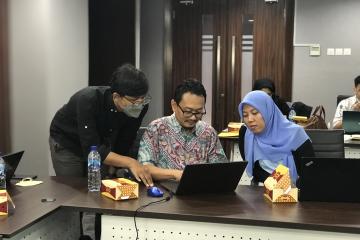
Through our custom courses, J-PAL works in close partnership with organizations to tailor our training materials on using and producing rigorous evidence to meet specific interests and learning goals. This can include customizing content to a particular sector, geographic area, or level of technical detail, such as a workshop on strategies to measure gender outcomes for practitioners working on gender-related programs in South Asia. These tailored offerings enable participants to engage with examples that resonate with their experiences and equip them to apply learnings to their work.
Many of our custom course partners include government ministries, non-governmental organizations, and multilateral organizations that hope to establish evaluation strategies for the social programs they implement. Custom courses can offer both theoretical and practical guidance to organizations through critical stages of their programs’ evaluation cycles, from developing a theory of change and measurement strategy to using evidence in program decision-making.
This blog showcases two examples of how custom courses contributed to meaningful research and policy partnerships by building evaluation skills. These represent two out of the hundreds of custom courses J-PAL has held for thousands of participants around the world: with courses delivered in Arabic, English, French, Indonesian, Portuguese, and Spanish, J-PAL’s past custom courses span across forty countries, from Argentina to Vietnam.
Building data collection and analysis skills for implementation monitoring in Indonesia
Since 2021, J-PAL Southeast Asia has worked closely with the Center of Education Standards and Policy (PSKP) within the Ministry of Education, Culture, Research, and Technology of Indonesia to evaluate the impact of their Empowering Schools Program on learning outcomes. This program encompasses an integrated set of interventions to transform teaching and school management practices. Through this collaboration, J-PAL Southeast Asia learned about the PSKP’s ongoing process monitoring activities. Drawing on J-PAL’s experience collecting and analyzing quantitative data, J-PAL Southeast Asia partnered with the PSKP to develop a custom training series to share best practices and support the PSKP in conducting a survey to monitor the nationwide implementation of the Empowering Schools Program.
The training series, delivered throughout 2022 and 2023, provided an overview of basic monitoring and evaluation concepts, including survey development, sampling and sample size, and data management and analysis. In addition to in-class training, J-PAL research staff served as discussion partners to provide examples and inputs based on real cases faced by the PSKP. For example, in meetings with the PSKP on their survey questions and sampling, M. Thoriq Akbar, Senior Research Associate at J-PAL Southeast Asia, offered practical guidance on how to draw samples based on the PSKP’s list of participating schools and how to rephrase ambiguous survey questions.
When evaluating the Empowering Schools Program, quantitative data management and analysis is a crucial component to monitor the process and measure the impact. This training provides an alternative tool for us to manage and analyze our data.
- Bakti Utama, training participant from the PSKP, Ministry of Education, Culture, Research, and Technology
Deepening a partnership for evaluating early childhood programs in Egypt
In collaboration with the Egyptian Ministry of Social Solidarity (MoSS), J-PAL Middle East and North Africa (MENA) co-designed a randomized evaluation to test the impact of providing childcare subsidies and employment services on women’s employment and empowerment outcomes, as well as children’s cognitive and socioemotional skills. To ensure the success of this collaboration and strengthen capacities for producing and using evidence, MoSS requested a tailored training for monitoring and evaluation specialists and implementers of the program.
J-PAL MENA organized a two-day training workshop for Ministry staff in January 2022 to provide foundational knowledge on randomized evaluations tailored to the Egyptian context. After covering considerations for why, when, and how to conduct a randomized evaluation through lectures and interactive case studies, the final session offered a deep-dive into the ongoing evaluation of the subsidized access to nurseries program. This created an opportunity for participants to learn more about research design and implementation decisions, contribute new perspectives, and clarify important details of the study. Participants shared positive feedback on the workshop and came away with a deeper understanding of how the evaluation will lead to actionable insights for the program and their work.
The training proved to be highly beneficial for the Ministry staff as it provided them with a comprehensive understanding of how randomized evaluations can effectively evaluate national programs. The staff also acquired practical skills that would enable them to support the current study co-designed with J-PAL MENA. Based on these positive outcomes, we believe that randomized evaluations can serve as a valuable tool to evaluate other early childhood programs in the country.
- Mohsen Nagy, Early Childhood Development National Program Manager, MoSS, and training participant
Strengthening partnerships through custom course collaborations
Through customized training modules and discussions, J-PAL training teams are able to share relevant experiences and provide timely inputs to support partners’ objectives, forging relationships for evidence use beyond a single randomized evaluation. Custom courses support partners in pursuing rigorous monitoring and evaluation, which strengthens the culture of evidence-informed decision-making in their institutions.
Interested in learning how J-PAL can design a custom course for your organization? Visit our custom courses page to learn more and get in touch with our team.
In this blog, we highlight two notable examples of how Evaluating Social Programs courses led to high-impact research and policy partnerships, while recognizing the impressive community of practice among course alumni around the world.
This is the first blog in a series illustrating stories of how J-PAL’s training courses have built new policy and research partnerships and strengthened existing ones to advance evidence-informed decision-making. The second showcases how custom courses strengthened government partnerships, the third illustrates how online course participants applied learnings at their organizations, and the fourth shares how training activities within J-PAL's evaluation incubators helped partners engage more deeply with research design.
Since establishing our training group in 2005, J-PAL has delivered hundreds of in-person and online courses to train over 20,000 people around the world on how to generate and use evidence from randomized evaluations. From integrating existing evidence and data into decisions to building research partnerships to conduct impact evaluations, many of our training participants apply learnings to strengthen the culture of evidence use in their organizations.
Growing a community of practice for Evaluating Social Programs
Our flagship course, Evaluating Social Programs, is designed for policymakers, practitioners, and researchers interested in learning how randomized evaluations can help determine whether their programs are achieving their intended impact. Offered in several locations around the world each year, the week-long course combines interactive lectures, real-world case studies, and small group sessions to integrate key concepts with practical applications. Participants build connections with peers, academic researchers, and policy experts and come away from the course with the resources and tools to map out an evaluation strategy for their own programs and policies.
In this blog, we highlight two notable examples of how Evaluating Social Programs courses led to high-impact research and policy partnerships, while recognizing the impressive community of practice among course alumni around the world. First delivered in Cambridge, USA, and Chennai, India in 2005, the course has trained over 2,750 participants through more than 75 offerings in locations ranging from Argentina to Zambia, as well as live Zoom offerings in response to Covid-19. We also have self-paced, online versions of the course in several languages to expand the reach of the course content to learners worldwide.
Forging a partnership for evaluating biometric enrollment in Liberia
J-PAL’s Digital Identification and Finance Initiative (DigiFI Africa) built a partnership with Liberia’s Ministry of Gender, Children, and Social Protection through J-PAL Africa’s virtual Evaluating Social Programs course in August 2021 when Shadrach Saizia Gbokie, a program manager for Liberia's Social Safety Net Project, attended the training and engaged in group work sessions led by a policy manager from DigiFI. After the training, members of our team and the Ministry discussed their work and their interest and capacity to conduct research.
During these conversations, DigiFI connected with the National Coordinator for Social Protection at the Ministry, Aurelius Butler. Since then, DigiFI has worked closely with Aurelius and the Ministry to develop a new randomized evaluation to help answer their questions around how to enroll urban communities in their new household registry using biometric data. Researchers Erika Deserranno, Andrea Guariso, and Andreas Stegmann were matched with this opportunity, and Aurelius and Dackermue Dolo from the Ministry later attended J-PAL Africa’s 2022 Evaluating Social Programs course to dive deeper into the research methodology. One of the questions the evaluation will try to answer is whether biometric identification systems help reduce barriers to accessing social programs and achieve accurate program targeting and efficiency.
The course on Evaluating Social Programs truly presented a space for the Ministry to fully engage with research and understand what we could achieve for the betterment of our citizens. By providing a comprehensive deep dive into research methodology we are now able to better articulate and refine our objectives. The course truly made an immediate impact in our work, as we have already begun using 90% of what we took from the course.
-Aurelius Butler, National Coordinator for Social Protection, Ministry of Gender, Children, and Social Protection, Liberia
Sparking an education technology evaluation in India
An Evaluating Social Programs training in New Delhi in 2015 was instrumental to seeding an evaluation of Mindspark, a personalized adaptive learning platform of the Indian ed tech company, Educational Initiatives (Ei). At the time of the training, Pranav Kothari was Vice President at Ei and was overseeing the development of the Mindspark product as well as deploying the product in Mindspark centers, which sought to bring a Hindi version of the tool to low-income neighborhoods in urban Delhi. He applied to J-PAL South Asia’s training, hosted in partnership with CLEAR South Asia, with a specific goal—to be sure that every child in a Mindspark center is learning—and was keen to undertake a systematic assessment of the program and its implementation to understand whether or not it worked as intended.
The course’s focus on both the theory and practice enabled Pranav to take the first step in designing a potential evaluation of the Mindspark center program. During the training’s small group work sessions, he worked closely with Maya Escueta, former Policy and Training Manager at J-PAL South Asia, to develop a preliminary evaluation plan. Seeing the potential in the program and its evaluation, Maya visited the Mindspark centers, and eventually brought on J-PAL affiliated researchers Karthik Muralidharan, Abhijeet Singh, and Alejandro Ganimian to conduct a full-scale randomized evaluation. Run in close collaboration with Pranav and the Ei team, the evaluation demonstrated that the program increased learning levels across all groups of students. The study has since become one of J-PAL’s landmark studies in education and offers valuable evidence on the use of computer-adapted learning in low-resource settings.
While we had been working on the ground for over two years, we wanted a third-party evaluation to determine whether our intervention was useful or not. This course helped us plan and conduct an RCT, allowing us to identify how well our program worked and where we could refine it. These results have led to newer versions of the program, and have helped us scale Mindspark to reach over 300,000 students, or about 500 times the number of students that were initially studying in the centers. I have also learned many skills which helped Ei in doing impact evaluations of other educational interventions.
-Pranav Kothari, Chief Executive Officer, Educational Initiatives
Training to strengthen evidence-informed decision-making
J-PAL’s Evaluating Social Programs course equips program implementers, policymakers, and researchers with the tools to understand and engage with randomized evaluations to become better producers and users of evidence. This blog shines a light on just a few examples of how past participants through the years have integrated learnings at their organizations to advance evidence-informed decision-making.
Interested in learning how to strengthen impact evaluation at your organization? Explore and apply to one of J-PAL’s upcoming Evaluating Social Programs courses.