J-PAL launches new Inclusive Financial Innovation Initiative in Southeast Asia
Indonesia’s digital economy has quadrupled since 2015—reaching an approximate value of USD$40 billion in 2019. Much of this growth is driven by the country’s e-commerce sector, which recorded 88 percent growth from $1.7 billion in 2015 to $21 billion in 2019.
The digital financial services (DFS) sector is among the fastest-growing: the number of financial technology (“fintech”) companies in Indonesia more than doubled from 130 in 2017 to more than 320 in 2019. In addition to this rapid growth in the private sector, the Indonesian government is increasingly moving towards digital delivery of social assistance programs in the public sector.
J-PAL Southeast Asia, based at the Faculty of Business and Management at the University of Indonesia, is launching the Inclusive Financial Innovation Initiative to answer important policy questions now at the forefront of the region’s economic growth. With the support of the Bill and Melinda Gates Foundation, the three-year initiative aims to ensure that digital financial services can drive economic development while lifting up women, low-income groups, and marginalized communities.
While growth in e-commerce and DFS represents a promising opportunity to advance financial inclusion, use of DFS is currently concentrated among young, urban, and higher-income populations. As digital technologies continue to improve and costs of service provision decline, there is a growing opportunity to expand the reach of DFS and leverage it as a tool for broad-based financial inclusion.
The Inclusive Financial Innovation Initiative will build on existing global evidence to understand how DFS can be used to accelerate financial inclusion and broad-based economic development within Indonesia and beyond.
The Initiative will include three intersecting workstreams to provide actionable evidence to members of Indonesia’s DFS ecosystem, including policymakers, practitioners, and non-profit organizations:
- Policy research and analysis: Under the Initiative, J-PAL staff and researchers will review the existing global evidence base to offer evidence-based policy recommendations for how to leverage DFS to improve government anti-poverty programs and benefit marginalized groups, and to identify knowledge gaps where new research is needed to answer important questions.
- Creation of a Learning Collaborative: To encourage collaboration, the Initiative will facilitate a learning and communication platform where relevant stakeholders in the financial inclusion and digital finance sector can connect, share knowledge and best practices, and formulate strategies to answer priority research and policy questions.
- Research collaboration: The Initiative will develop innovative pilot studies and randomized evaluations to answer policy-relevant questions. It will build partnerships to ensure that the evidence produced by these studies can directly contribute to policy decisions.
Why focus on financial inclusion?
Financial products and services are designed to help individuals build resilience to unexpected events and take advantage of opportunities, and are often viewed as key tools for improving families’ welfare and economic mobility.
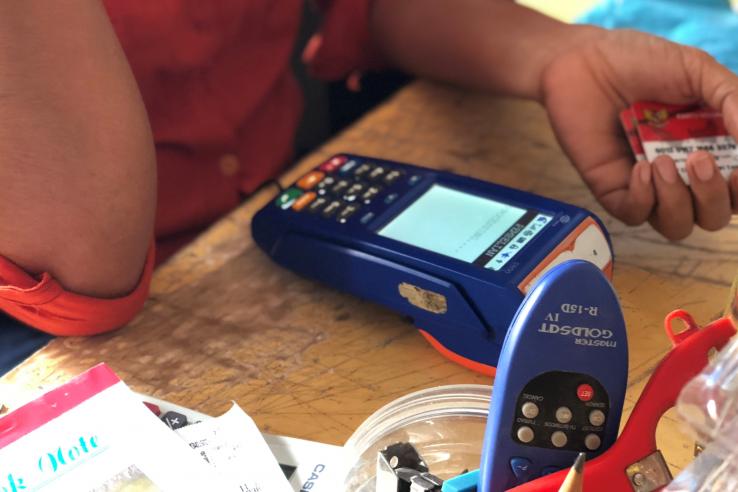
Existing evidence suggests that improving access to savings accounts can have positive effects on household welfare, and that digital financial tools like mobile money may offer users significant benefits. For example, studies in Chile and Kenya have found that access to basic bank accounts allowed households to better manage fluctuations in income, increase business investment, and increase private expenditure levels. Meanwhile, offering mobile phone-based savings accounts to parents in Kenya whose children were about to enter high school increased enrollment by 5 to 6 percentage points.
Digital financial services can also be a tool for boosting women’s economic engagement and empowerment.
For example, a study in India found that linking earnings from a government workfare program to women’s bank accounts (rather than household-level accounts), coupled with a basic account training, led to increased female employment both within the workfare program and the private sector, especially for those women whose husbands expressed the most opposition to women working.
In Niger, disbursing cash transfers via mobile money improved diet diversity during the 2009-2010 food crisis relative to cash-in-hand transfers. Women who received mobile transfers were more likely to travel to weekly markets, be involved in selling household grains, and spend more on children’s clothing than those in the other groups.
Why focus on Indonesia?
Indonesia’s DFS providers are developing tech-based innovations to increase financial inclusion among households that are currently underbanked or unbanked altogether. For example, micro, small, and medium enterprises (MSME) now have access to digital payment services designed to boost transactions, improve bookkeeping, and build better credit scores.
Women’s savings collectives, called arisan, also have opportunities to go digital through MAPAN arisan. Digitized arisan groups can collectively purchase goods online without disrupting their household cash flow.
Finally, online peer-to-peer lending such as Amartha and TaniFund offer access to credit for farmers, fishermen, and micro-merchants who have been largely ignored by formal banking institutions. While these and other innovations are promising, we know little about their real causal impacts on the lives of the poor.
To push the frontier further, we need more evidence on what types of DFS work within the context of Indonesia’s regulatory and business environment, infrastructure, and demographics; why they work; and how they can be deployed to maximize impact.
Working alongside a diverse set of collaborators, the Inclusive Financial Innovation Initiative aims to contribute to an inclusive, impact-driven digital finance ecosystem in Indonesia.
For more information, contact Aliyyah Rusdinar.

J-PAL Africa, based at the University of Cape Town, recently launched the Digital Identification and Finance Research Initiative (DigiFI Africa). Supported by the Bill and Melinda Gates Foundation, this USD$7 million research fund is designed to study the impact of innovative government and private sector payment systems and digital identification (ID) reforms on citizens and governments across Africa.
Policymakers across Africa are increasingly investing in large-scale digital identification and digital payment systems. Because these systems are so new, little rigorous research exists on how best to design and implement such systems in low-income contexts. How do these rapid changes affect the lives of citizens? How can they best be structured to lead to the most benefit? Are any groups adversely affected by these reforms?
DigiFI Africa will cluster research around these questions, supporting research that evaluates impacts on citizens and generating results that provide guidance on critical design questions as reforms go to scale.
Improving efficiency in public spending through digital finance and digital identification has the potential to have large impacts across Africa. For example, these technological innovations have the potential to enhance record-keeping and transparency by collating administrative data and automating transactions, decreasing the potential for delays and errors in payment systems. Digitizing payments can reduce both the need for travel to access financial services and the time burden of engaging with administrative processes. In addition, digitizing the process of business registration and firm regulation can bring more firms into the tax system and raise revenues for the government.
The DigiFI Africa framing paper lays out the research agenda for the initiative. DigiFI Africa promotes research to address the following questions:
-
From a government’s perspective:
-
How can digital ID systems assist with targeting and efficiency in public programs? Do digital ID systems assist or hinder in reaching marginalized populations?
-
Can digital ID systems and digital payments reduce rent-seeking? What are the generalized equilibrium effects of digital payments on rent-seeking?
-
How can digital ID systems and digital payments assist in building incentive systems to motivate public servants?
-
How can payment design (such as targeting a specific household member to receive the transfer or changing timing the payment) affect its impact?
-
-
From a citizen’s perspective:
-
How do government services linked to digital IDs affect citizens? What are the best ways to design these linked services for the greatest impact at the lowest cost? Do digital ID systems and digital payments encourage or dissuade take-up of government programs?
-
Do digital ID systems improve the overall efficiency of government programs? If so, do these efficiency gains reduce poverty?
-
How do digital IDs affect voter participation, the fairness of elections and electoral outcomes? Does increased enfranchisement affect policy decisions?
-
Can digital IDs promote further digitization in financial systems and thus enhance financial inclusion? How does this affect short- and long-term poverty outcomes?
-
Can digital payment schemes empower traditionally weaker household members or affect the allocation of household resources?
-
-
Fiscal capacity:
-
Can expanding the formal economy increase the tax base through incentives and simplified processes introduced by digital payments and digital IDs?
-
-
Externalities:
-
What is the impact of digital ID and digital payment systems on market-level general equilibrium effects? What are their impacts on wages and employment? Are there impacts on occupational choice or migration?
-
What are the spillovers on non-beneficiaries of digital ID and digital payment systems?
-
-
Private sector impacts:
-
Can digital ID systems encourage businesses to enter the formal sector? Do these reforms reduce entry costs to entrepreneurship and enable productive investment?
-
Can digital ID systems help strengthen law-enforcing institutions and in turn affect private investment?
-
DigiFI Africa will run a competitive research fund with requests for proposals (RFPs) twice annually through 2022. The initiative will support researchers in conducting two phases of work:
-
Formative research that includes pilots and high-frequency monitoring systems to assess the status and health of digital payments and digital ID programs at various stages of reforms.
-
Rigorous randomized impact evaluations to test the impact of roll-outs of promising digital payment and digital ID reforms.
Funding is open to J-PAL affiliates, invited researchers, researchers with a PhD based at an academic institution in Sub-Saharan Africa (details here), and PhD students who have a J-PAL affiliate on their dissertation committee. The Round 1 RFP closes on September 20, 2019. For more information, contact Aimee Hare.
At the start of a new year, many people around the world set resolutions to improve their lives over the course of the year: to eat healthier food, to be kinder, and to quit smoking, to name just a few. Many resolutions are bound to fade over time—one common statistic claims that only 8 percent of Americans actually achieve the resolutions they set at the beginning of the year. But evidence from a wide body of research provides us with insights that can help us achieve our goals.
One relatively well-researched area, for example, is helping people save for the future. Savings represent a pool of funds that can be used to invest in promising opportunities or to cope with unexpected setbacks. Yet, in 2017, 52 percent of adults worldwide reported that they had not saved or set aside any money in the past 12 months, according to the World Bank’s 2018 Global Findex. Adults in developing countries are less likely to save than their counterparts in high-income countries; in 2017, only 43 percent of adults in developing countries reported saving any money in the past 12 months, compared to 71 percent of adults in high-income countries. Given that savings can enable people to smooth consumption and finance productive investments, what explains these low savings rates? And what can (or should) be done to increase savings behavior?
Researchers affiliated with J-PAL and our sister organization Innovations for Poverty Action (IPA) have identified five potential barriers that prevent people, especially low-income individuals, from saving:
- First, costs, both monetary and non-monetary, can impede account ownership and use. Especially in developing countries, the accounts available to low-income individuals often charge fees for opening and withdrawing funds from accounts, and many have minimum balance requirements. Households may also face non-monetary costs that prevent them from using savings accounts, like the time required to travel to the nearest bank branch. Reducing these costs can promote savings product ownership and use, and in a number of studies has also led to increases in investment, income, and resilience to setbacks. However, access to accounts does not guarantee increased savings: according to the Global Findex, only 31 percent of account owners in developing countries reported having saved at a financial institution in the past twelve months.
- Second, people’s natural behavioral tendencies can lead them to save less than they would prefer. Simple forgetfulness, over-optimism, or the tendency to prioritize today’s spending decisions over those in the future lead many to forgo saving. Financial products specifically designed to overcome behavioral biases have been effective tools to increase savings in a number of contexts. Examples include reminders to save, peer savings monitors and savings groups that leverage social pressure, and commitment savings products that restrict the use of funds until a certain goal is met.
- Third, social links and obligations affect savings behavior within and between households. Individuals often face competing interests for their money from spouses, relatives, and friends, both within and outside the household. Within the household, saving and investment decisions depend on the distribution of decision-making power and the compatibility of individuals’ preferences for spending and saving. Differences in bargaining power can affect women’s demand for products that make it easier to access cash (e.g., ATM cards); conversely, products that restrict access to cash (e.g., mobile transfers, commitment savings accounts) can increase bargaining power. Savings products can also reduce dependence on loans or transfers from a household’s social network.
- Fourth, lack of trust in financial institutions may affect the willingness of individuals to save in banks or other institutions. Similarly, regulatory barriers such as “know your customer” rules may disproportionately affect low-income individuals who may lack official identification or a residential address. These regulations can increase costs for low-income households to save in formal financial institutions. As evidence on increasing trust in financial institutions and addressing regulatory barriers is limited, this is a promising area for future research.
- Finally, knowledge gaps and limited information can lead people to under-save, over-save, or save inefficiently. Although policymakers and practitioners alike view financial literacy and capability as priority areas to increase access to finance among low-income populations, traditional classroom-based trainings have rarely succeeded in imparting lasting knowledge or changing people’s financial behavior. Recent evidence suggests that simple, targeted, actionable, and/or accessible trainings are more likely to change financial behaviors.
With this evidence at hand, a question emerges: Should we encourage people to save? Evidence from a number of randomized evaluations suggests that offering people savings products can lead to increased investment in businesses or education, increased income, reduced vulnerability to setbacks, or reduced debt. (For a more comprehensive review of savings product impact evaluations, see Figure 5 of Dupas, Karlan, and Robinson 2018.)
However, increasing savings balances may not be ideal for all people at all times. For example, it may be optimal for a household to pay down existing high-interest debt rather than save in an account that pays a modest interest rate or charges account holders to maintain or withdraw funds. In other cases, the benefits to spending income immediately—for instance, in the case of food insecurity or a health emergency—may be larger than the benefits of saving. In general, financial decisions are complicated and depend on the unique circumstances facing any individual or household.
While no recommendation can be one-size-fits-all, as a development community, we should work to ensure that every household has access to financial products and services that meet their needs, and to the information and knowledge that will enable them to use those products and services. Banks and microfinance institutions should (continue to) offer low-cost or free basic savings accounts, which make it less costly for households to save in a formal institution.
When designing savings products for low-income households, financial institutions should consider how product design can help overcome barriers to saving. Researchers should continue to study the causes and consequences of under-saving, as well as the innovations or interventions that seek to drive savings behavior. Finally, funders should continue to support the development and evaluation of new strategies to reach those who are under-served or excluded by the existing financial system.
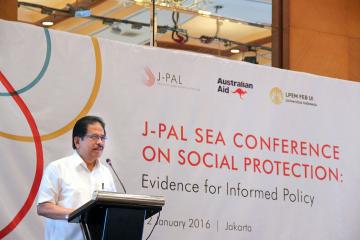
"A good policy is one based on evidence," said Sofyan Djalil, Indonesia’s Minister of National Development Planning, at J-PAL's conference in Jakarta.
How can governments ensure that social safety net programs reach their intended beneficiaries? What are the benefits and costs of delivering cash transfers electronically? In Indonesia, social protection programs provide over 65 million low-income households with everything from cash support to subsidized food and insurance. To help answer these questions, J-PAL Southeast Asia hosted a policy conference on January 12 on designing social protection programs. Over 200 policymakers, researchers, donors, and civil society members discussed what has worked and how to further improve social protection in Indonesia and Southeast Asia. J-PAL hosted the event with support from the Australian Government and J-PAL's Governance Initiative, supported by the UK Department for International Development (DFID).
“Collaboration with research institutes such as J-PAL is necessary since a good policy is one based on evidence.” said Sofyan Djalil, Indonesia’s Minister of National Development Planning, who delivered keynote remarks along with Andi Dulung, Director General of Social Protection and Security in the Ministry of Social Affairs and Bambang Widianto, the Executive Secretary of Indonesia’s National Team for the Acceleration of Poverty Reduction (TPN2K). “The Government of Indonesia is trying to make improvements in every aspect related to poverty alleviation and inequality. It needs a policy plan based on research,” said Widianto.
“Even a program as simple as giving poor households cash has many design questions to think about,” said J-PAL Southeast Asia co-Scientific Directors Rema Hanna (Harvard) and Benjamin Olken (MIT) in a January 12 op-ed in the Jakarta Post. At the conference, Ben and Sudarno Sumarto (TPN2K) shared effective ways to improve the targeting of cash transfer and subsidized rice programs in Indonesia. Jenny Aker (Tufts University) presented evidence from her research on various ways to deliver cash transfers, including via mobile money. Gabriel Kreindler (MIT) shared findings that dispel the assumption that cash transfers discourage work.
Download the conference slides here. For more information on J-PAL Southeast Asia, please email Widyana Perdhani.