Evidence for digital and bundled services: Framing a research agenda for the Digital Agricultural Innovations and Services Initiative
In December 2021, we announced the launch of the Digital Agricultural Innovations and Services Initiative (DAISI), jointly managed by J-PAL and UC Berkeley’s Center for Effective Global Action (CEGA) and supported by the Bill & Melinda Gates Foundation. Chaired by Jennifer Burney (UC San Diego), Robert Darko Osei (University of Ghana), and Tavneet Suri (MIT), DAISI supports innovative, policy-relevant research on the availability, quality, and reach of bundled digital agricultural solutions and services for small-scale agricultural producers.
As the reach of digital agricultural services has grown rapidly within the last few years, building an evidence base on how they should be designed, implemented, and scaled to best align with the priorities of small-scale producers is an important and timely issue—and one that DAISI is well-positioned to address.
After months of research, conversations, and brainstorming, we are launching a robust research agenda that will guide DAISI’s activities and investments over the next few years.
What are digital and bundled services?
Digital:
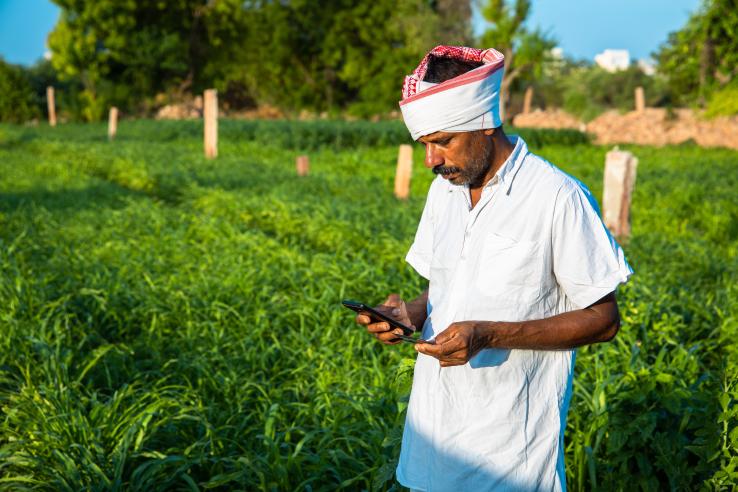
Digital services are platforms and solutions that leverage digital hardware and/or software to deploy agricultural services for farmers, middlemen, co-ops, and other actors to improve their access to information, financial services, markets, or equipment/machines, among others, for use in agricultural activities.
When we think of digital agricultural services under DAISI, we categorize them into two tracks:
Fully digital, where all services are delivered through a digital technology, or hybrid, where there is partial digitally-enabled delivery of at least one service in a package of services (e.g., text message reminders for timely information during planting followed by in-person field visits by a government extension agent before harvest).
Bundles:
Farmers face a myriad of constraints to adopting new technologies that increase agricultural productivity and farmer welfare, like access to credit, savings, inputs, information, infrastructure, institutions, externalities, risk, labor, land, and gender-specific barriers. Alleviating any one of these constraints can help improve the adoption of technologies, but research has shown that increases in adoption from alleviating any single constraint seem to be quite small.
Under DAISI, a bundled program should connect farmers to agricultural services or products that simultaneously relax two or more constraints they face. When characterizing services as a bundle, we consider the number of constraints targeted by the service rather than the mechanism or structure of the service itself.
Framing an agenda: Key themes and questions
DAISI’s research agenda features six main topics with three cross-cutting themes: gender, youth, and climate resilience.
Priority theme 1: Uptake and use of digital and bundled services in agriculture
Digitalizing agricultural services creates opportunities for bundling because of the possibility of reducing implementation and delivery costs while also expanding the reach of the program. Building an evidence base on what types of bundles are most effective in alleviating binding constraints, and how they are effective, will be critical to realizing the full potential of digitalization and bundling.
An important part of this process is gaining an understanding of which bundles farmers and other actors in an agricultural value chain are willing to adopt, and why. For example, what models of integrated or bundled digital and non-digital services drive high rates of adoption and use of agricultural technologies by small-scale producers? Or, do incentives impact the take-up and use of bundled and digital services?
Priority theme 2: Impacts of digital and bundled services on agricultural outcomes
When discussing the effectiveness of bundled, digitally-enabled agricultural services, we consider and encourage researchers to address a range of outcomes: agricultural productivity, agricultural production and profitability, farmer welfare, expansion of opportunities for women and women’s empowerment, and resilience to both extreme weather shocks and longer-run climate and environmental changes.
DAISI will prioritize evaluations that address whether and how bundled and digital services contribute to improved agricultural outcomes. For example, which bundles are most effective at relieving constraints and for which farmers, providers, or agents in a value chain? Or, how cost-effective is the bundle relative to the individual components?
Priority theme 3: Factors that affect how bundles perform relative to their individual components
Little to no rigorous evidence exists to show how bundles of agricultural services perform relative to individual components that make up the bundles.
In theory, there are various reasons to expect that bundles may be more effective than the individual components themselves; in addition to their focus on multiple constraints, there could be strong complementarities (in terms of the benefits to the farmer) among the different components of a bundle that may lead to outsized impacts. Moreover, if the services are digital, a common platform could lower the users’ costs of accessing and learning about the components of the bundle.
DAISI is, therefore, interested in understanding how these complementarities of bundling and digitalization interact to impact agricultural outcomes. For example, what factors facilitate the take-up and use of bundled services relative to the individual components? Or, does the use of one service on a platform incentivize the use of other services available on the same platform for an individual user?
Priority theme 4: Bundled platform externalities, general equilibrium effects, and spillovers
While DAISI will fund research to examine the direct effects of bundled and digital services, we are also interested in capturing and assessing any unforeseen impacts of these programs on people and markets that are not receiving the service directly—spillovers, externalities, or general equilibrium effects. Some examples of these effects would be information transfer from participating farmers to neighboring farmers, learning externalities as a result of technology adoption, or market-level changes in credit provision as a result of a cash transfer or mobile money platform, respectively.
There has been little research on this in low- and middle-income economies, especially in agriculture, so DAISI encourages cross-discipline research partnerships to study these effects. For example, does the use of one (or multiple) service(s) on a platform incentivize other users in the household or community? Or, does one service serve as an on-ramp for access and use of other non-agricultural services (e.g., the expansion of mobile money creating opportunities for other digital services)?
Priority theme 5: How bundles or agricultural services can be most effective in addressing gender-specific constraints
While gender is also a cross-cutting theme to be considered (see below for more), there are substantial opportunities to design and evaluate programs that target women and dive deeper into the dynamics that affect women in agricultural value chains. Specifically, women farmers face constraints that men farmers in their same communities do not, ranging from differential access to inputs and information to decision-making barriers around production and profit use. Gender is often incorporated into analysis after an evaluation is complete, primarily by estimating impacts based on gender of the household head. However, DAISI will prioritize research that takes a structural and intentional approach to gender in both design and implementation.
For example, will the bundle relax constraints uniquely faced by women farmers to allow them access to higher productivity technologies and ultimately improve their empowerment and livelihoods? Or, are there specific combinations of services that, when offered together, have a greater likelihood of unlocking barriers and constraints for women, particularly women who seek to be more integrated into commercial agricultural markets?
Priority theme 6: Enabling a conducive environment for innovation, scaling, and sustainability of bundled and digital agricultural services
To scale appropriately and effectively, policymakers and researchers must account for local conditions and implementation capacity, and then adapt programs to that new context accordingly. Scaling can include increasing the reach of an existing program in the same context; innovating, replicating, and expanding a successful evaluated program to similar contexts; or innovating, testing, and reassessing a program that was evaluated and found to be ineffective or not cost-effective.
Given the potential of digitalization to scale programs across geographies, DAISI will encourage researchers to apply for path-to-scale grants as well as consider scale and sustainability of programs in randomized evaluations of existing services and bundles. For example, what are the feasible business models for service provision to replicate and cost-effectively scale these services? Or, can the digital reach of the bundled interventions lower the costs enough to effectively reach farmers at scale?
Cross-cutting themes: Gender, youth, and resource use and climate resilience
DAISI’s cross-cutting themes highlight an opportunity to generate research with previously understudied groups or of understudied topics. For example, agricultural gains for women and youth farmers in sub-Saharan Africa represent untapped potential for digital, bundled services since youth make up about 60 percent of the population and agriculture is the main livelihood for women, though their productivity lags behind that of men’s. Similarly, agriculture and resource use are intertwined, so building farmers’ resilience to weather-based shocks and climate change will be critical to ensuring farmer welfare as well as agricultural productivity and sustainability.
DAISI encourages researchers applying for funding to speak to at least one of these themes in their study. For example, what role do bundled digital services play in improving women’s welfare and empowerment? Through what channels are these impacts realized? How engaged are youth with bundled, digital agricultural services and platforms as entrepreneurs? Does the bundle result in land use or land cover change? Does the bundle change the impact of a climate shock on the production system or farmer welfare?
Through these thematic areas and open questions, DAISI will generate a rigorous evidence base on the impact of digital tools and bundled approaches on improving small-scale farmers’ outcomes, bolstering farmers’ resilience to climate change, connecting farmers to markets, and expanding commercialization in sub-Saharan Africa and South Asia.
What comes next?
Through strong partnerships between researchers, the private sector, service providers, and policymakers, DAISI will address outstanding questions, help providers to evaluate their services and models, and share results relevant to policy and practice in sub-Saharan Africa and South Asia. DAISI’s first call for research proposals opens today, July 14, 2022. Researchers in the J-PAL and CEGA networks are eligible and invited to apply. Learn more about the competition, grant types, eligibility, and guidelines.
For interested resident African and South Asian scholars, learn more about DAISI's Regional Scholars program, eligibility, proposal types, and guidelines for submission.
If you are interested in partnering with DAISI to evaluate your bundled program, digital service, and/or business model, please contact us at daisi [at] povertyactionlab [dot] org.
The effects of climate change will worsen over the next thirty years and will disproportionately impact the world’s poorest people in many ways. In recognition of Earth Day 2022, we're highlighting how food systems, food security, and nutrition are particularly vulnerable to climate impacts.
This Earth Day marks an important opportunity to examine the immediate and looming effects of climate change, as well as potential solutions.
The effects of climate change will worsen over the next thirty years and will disproportionately impact the world’s poorest people. While climate change threatens many areas essential to life, the IPCC’s recently released Impacts, Adaptation, and Vulnerability report finds that food systems, food security, and nutrition are particularly vulnerable through increased pressure on food production.
Evidence-informed adaptation strategies are urgently needed to address this challenge, which is a growing area of focus for J-PAL’s King Climate Action Initiative (K-CAI). With generous support from King Philanthropies, K-CAI generates evidence and works with decision-makers to scale high-impact solutions at the nexus of climate change and poverty alleviation.
Similarly, J-PAL and Center for Effective Global Action’s (CEGA) Agricultural Technology Adoption Initiative (ATAI), with support from the Bill & Melinda Gates Foundation and the UK Foreign, Commonwealth, & Development Office, funds randomized evaluations testing the impact of farmers’ adoption of many climate-resilient technologies in South Asia and sub-Saharan Africa on their productivity, income, and welfare.
Climate change’s threat to food and nutrition
Child malnutrition in the form of wasting and stunting, or when a child has low weight or height respectively, is prevalent in low- and middle-income countries—both causing and exacerbating poverty. This results in higher child mortality rates, harms cognitive development, and impairs education and economic productivity. While stunting has declined over the last two decades, wasting rates have remained persistent and almost half of all deaths in children under five years old are still caused by malnutrition.
Through increased frequency and severity of droughts, floods, and heatwaves and ongoing sea-level rise, food systems are threatened and food insecurity may increase—and children in low- and middle-income communities will have even less access to nutritious food. To prevent these risks, it’s critical to generate evidence and scale solutions that will secure food systems in the face of climate change.
Aligning agricultural yields and climate adaptation
Increasing agricultural yields is an important component of food security. However, agricultural productivity is often at odds with climate change adaptation and resilience strategies. There are two common means of increasing agricultural productivity, both of which can harm the environment in different ways:
- Extending existing production to uncultivated lands, which often requires cutting down trees to clear land.
- Intensifying production through intercropping or higher frequency planting, which can lead to depleting soil of micronutrients and more water use; and new or increased amounts of inputs (e.g., fertilizer and pesticide) on land already under cultivation, which can lead to runoff and water contamination when improperly applied.
There has been substantial research into intensifying agricultural productivity through high-yielding or biofortified crop varietals; high-efficiency inputs, such as fertilizers and pesticides; and less labor-intensive agricultural practices. However, a more recent focus is on the importance of feeding the growing world population in the face of climate change through strategies such as modified crops that can withstand climate disasters, resource sustainability, and the development of practices and technologies that can improve productivity while helping farmers adapt to climate change.
Evidence from randomized evaluations on real-world adaptation strategies
Researchers in the J-PAL network have evaluated the effectiveness of agricultural technologies and strategies to understand their real-world impacts on food security and yields through randomized evaluations.
Coping with risk
One way to strengthen food systems is to help farmers cope with climate change-induced risks, such as extreme weather events. Adopting new technologies can be effective in helping farmers cope with more extreme weather, but research has shown that risk can be a barrier to farmers’ ability and decision to change their existing practices or adopt new technologies. Sustainable crop management techniques that have been rigorously evaluated include two ATAI-funded studies focused on pit planting in Malawi and building demi lunes in Niger, as well as planting trees to combat land clearing in Malawi. Overall, these studies found that providing incentives and information to farmers, or allowing farmers to self-select into the program, respectively, increased farmers’ adoption of these more sustainable farming practices.
Additionally, there has been a substantial body of research on inputs and financial tools, like weather index insurance to protect farmers from the economic risks associated with extreme weather events. Research shows that weather index insurance protects farmers against losses, but low demand at market prices suggests that alternative approaches are still needed. Stress tolerant crops are a promising way to help mitigate weather risk for farmers. In an evaluation of flood-tolerant seed varieties in India, researchers found that risk-reducing seeds had a clear advantage over traditional seeds during floods and there was no difference in yields between the seed varieties even in unflooded areas.
Resource management
Although low- and middle-income countries are among those least responsible for climate change, their resources, such as water and land, are often the most threatened. Strategies for conservation and effective resource management can help small-scale farmers cope with these climate impacts.
Ongoing K-CAI and ATAI-funded research is evaluating the impacts of leveraging price incentives for voluntary groundwater conservation among small-scale farmers in Gujarat, India, and rehabilitating irrigation tanks in Telangana, India. ATAI has also funded an evaluation focused on subsidizing experimentation with irrigation pumps among interested farmers in Kenya. Previous evaluations have tested strategies like disincentivizing crop burning in India and encouraging the adoption of rainwater harvesting tanks in Kenya. In this last example, researchers found that asset collateralized loans helped farmers purchase water tanks in order to harvest rainwater and better adapt to climate uncertainty. K-CAI is currently funding a scale-up project building on these results.
Improving nutrition of staple crops
In the face of potentially diminishing yields, ensuring that the crops that are available are nutrient-dense is especially important. Staple crops, such as beans, maize, wheat, sweet potato, and rice, make up a large part of people’s diets. But traditional varietals of these crops lack critical nutrients humans need to grow and maintain healthy lives.
One means of addressing this is through biofortification, which is the process of making crops more nutritious. Scientists have been increasing the nutrients of crops and food for decades, and in many parts of the world, people have been eating micronutrient-fortified foods for years, including iodized salt, Vitamin D-enriched milk, and iron-enriched flour.
One of the main challenges to improving nutrition through biofortified crops is farmers’ and households’ decisions to grow and eat these more nutritious crop varieties. For example, in Ethiopia, ATAI-funded researchers evaluated the effect of encouraging families to grow and earmark a more nutritious maize variety for children's consumption. They found that households improved grain storage and cooking practices, and children in those households ate more of the improved maize. However, there were no effects on markers of undernutrition, such as height-for-age and weight-for-age, six months after harvest. This suggests that the length of the program or amount of maize was not sufficient to observe changes in children’s nutrition, or there may have been impurities in the grain that reduced its efficacy.
Similarly, evaluations in India on fortified salt and wheat to reduce anemia have found that while uptake increased initially, it was not sustained and ultimately did not reduce anemia or impact the health of the populations studied in either evaluation. These results underscore the need for further research, particularly in the face of climate change.
Bundling agricultural services
Finally, an approach that is gaining more interest among policymakers is connecting small-scale farmers to agricultural services simultaneously, or “bundling,” to alleviate multiple constraints that farmers face when making investments to increase their productivity or mitigate the effects of climate change.
While there has been some research on bundling products together, including in Ghana, Malawi, and Ghana, the studies have not shown consistent effects on farmers’ demand for services, welfare, or productivity, suggesting that more research is needed. Digital technologies or bundles may affect the sustainability of various steps in the value chain. This could be through systems such as:
- Distributing payments more quickly to allow farmers to buy food for their households;
- Providing weather index insurance and weather advisory services through an app;
- And linking farmers to buyers on an e-commerce or e-marketing platform to reduce post-harvest losses, more efficiently route crops to a stable buyer, and reduce transport costs for farmers taking their products to public markets.
J-PAL and CEGA’s new Digital Agricultural Innovations and Services Initiative, generously funded by the Bill & Melinda Gates Foundation, will generate new research to answer some of the lingering questions around digital service provision and bundling on improving small-scale farmer outcomes, bolstering farmers’ resilience to climate change, and connecting farmers to markets in sub-Saharan Africa and South Asia.
Investing in evidence
More rigorous evidence on the effectiveness of climate adaptation policies on food security and nutrition is urgently needed. Earth Day is the time for us all to refocus our efforts.
Researchers need to focus on developing more evidence at the nexus of climate change, food security, and nutrition—particularly on adapting food systems to extreme weather, finding sustainable and local sources of nutritious food, and bundling services to help farmers overcome their productivity constraints. Simultaneously, policymakers need to prioritize evidence-informed decision-making and invest in further evidence generation to determine what approaches are most effective in real-world settings.
These topics are a growing area of focus for K-CAI. If you are interested in partnering with us to support evidence generation or scale policies proven to work in real-world settings within climate adaptation, food systems, and nutrition, please contact us at [email protected].
J-PAL Policy Manager Tanya Kak explains the links between food security and climate change
Through generous support from the Bill & Melinda Gates Foundation, J-PAL and UC Berkeley’s Center for Effective Global Action (CEGA) launched the new Digital Agricultural Innovations and Services Initiative (DAISI) to support innovative, policy-relevant research on the availability, quality, and reach of bundled digital agricultural solutions and services for small-scale agricultural producers.
Agriculture remains central to improving standards of living in low- and middle-income countries and reducing extreme poverty and hunger. A large body of research, some of which was funded through our Agricultural Technology Adoption Initiative, documents the importance of agricultural productivity for improvements in farmer welfare as well as longer-term development outcomes, a process often referred to as agricultural transformation.
Although these links between agricultural productivity, poverty reduction, and long-run economic development have been widely studied, agricultural productivity remains stagnant in sub-Saharan Africa and parts of South Asia. What is preventing the use of new agricultural technologies that would enable productivity increases? If multiple constraints bind, what products can alleviate these constraints at once? And, how can we leverage digital technology to do this, as well as to, more broadly, improve access options and service delivery?
Through generous support from the Bill & Melinda Gates Foundation, J-PAL and UC Berkeley’s Center for Effective Global Action (CEGA) launched the new Digital Agricultural Innovations and Services Initiative (DAISI) to support innovative, policy-relevant research on the availability, quality, and reach of bundled digital agricultural solutions and services for small-scale agricultural producers.
Launching the Digital Agricultural Innovations and Services Initiative
Chaired by researchers from both J-PAL and CEGA, including Jennifer Burney (UC San Diego), Robert Darko Osei (University of Ghana), and Tavneet Suri (MIT), the Digital Agricultural Innovations and Services Initiative (DAISI) will fund research to generate a rigorous evidence base on the impact of digital tools and bundled approaches on improving smallholder farmer outcomes, bolstering farmers’ resilience to climate change, connecting farmers to markets, and expanding commercialization in sub-Saharan Africa and South Asia.
In tackling this agenda, we will prioritize partnership development with commercial providers, private sector technology and fintech firms, telecommunications firms, governments, NGOs, and others to evaluate the impact of their services. DAISI will also focus on generating a body of gender-intentional agricultural research. In addition to social and cultural barriers, we aim to fund studies that address unique constraints for women, such as access to timely information and financing for agricultural investments, financial and digital literacy, control over agricultural income, market linkages and networks, and more. Reducing barriers that limit women’s agency, influence, and decision-making power will be critical to improving economic and welfare outcomes for participating women farmers.
In an effort to further diversify our research network, DAISI will host a Regional Scholars program—similar to the African Scholars programs from DigiFi Africa and JOI—offering dedicated funding and capacity building opportunities for researchers who have completed a PhD in an empirical discipline and currently hold an academic or research position at a university based in a South Asian or African country.
In addition to full-scale randomized evaluations, pilots, and proposal development or travel grants, DAISI will also fund two new proposal categories to respond to the rapid learning needs of private sector providers—rapid A/B product tests and scaling grants to adapt a program for scale or to pilot a scalable, evidence-informed solution. In these and many other ways, DAISI will push our agricultural work into new areas and expand our ability to engage with stakeholders across sub-Saharan Africa and Asia.
Why bundled agricultural innovations and services?
Bundled models and digital platforms that connect farmers to multiple services at once reduce barriers to access both for farmers seeking services, and service providers reaching farmers. When we refer to digital services, we mean platforms that leverage mobile phones, the internet and other digital tools to connect farmers and other actors in a value chain.
Implementers are increasingly using these digital technologies to deliver information, financial services, insurance, trading platforms, local market connections, among others. Often these services are bundled or integrated under the same program, which can be a timely and lower-cost way to reach a large number of farmers. It could also be an effective way to address the multiple constraints farmers face in these environments.
Despite rapid development and growth of implementers in this space, the evidence base on which digitally-enabled services, service targeting mechanisms, and delivery models are effective at improving smallholder farmers’ welfare remains limited. There is even less evidence available on how to reach, benefit, and empower women through such services.
Much as bundled digital agricultural services are starting to appear on the landscape, often provided by the private sector, we still have a lot to learn about bundling. Which bundles are most effective, and for which farmers? How does shifting farming households’ production and marketing decisions (specifically through digital services) affect intra-household decision-making, women’s welfare, and empowerment? And, what are the feasible business models to deliver affordable, scalable solutions to small-scale producers? DAISI will focus on answering these, and many more, critical questions to push our collective understanding of how to best design tools and connect farmers with the services they need in an increasingly digital world.
What’s next?
Through strong partnerships with researchers, the private sector, a variety of service providers, and policymakers, DAISI aims to address outstanding questions relevant to policy and practice in sub-Saharan Africa and South Asia. Stay tuned over the next few months as we share more information on our work and opportunities for funding research on key questions related to bundled and digital agricultural services!
If you’re interested in partnering with us, please contact [email protected].
A weak internet connection did not stop J-PAL Africa Scientific Director Tavneet Suri from getting her point across in our interview: Good research is done with an ear to the ground and a connection to the community. Calling in from her home country of Kenya, Tavneet emphasized how important it is for research to be grounded in ideas that arise from local communities and contexts.
“We can have our econ ‘hats’ on with some theory in mind, but without a deep understanding of the context and constraints in the particular environment you're working in, it's hard to design interventions that might be useful,” Tavneet explained.
Building a career in randomized evaluations
Tavneet’s first interaction with J-PAL occurred when, as an early-career researcher, she was asked to assist with an evaluation in Sierra Leone by J-PAL’s then-executive director Rachel Glennerster. “It wasn’t my first field project, but it was a great opportunity and a new environment for me,” Tavneet said. After gaining more experience leading her own randomized evaluations, she joined the affiliate network and became a member of J-PAL’s Board of Directors.
Now an associate professor in applied economics at the Massachusetts Institute of Technology, Tavneet grew up in Kenya. For her, pursuing a career related to research and policy was a natural evolution of her graduate studies in development economics. Her recent research has focused on how mobile money can help people adapt to unexpected shocks in the short term and build up investments and savings to improve their incomes in the long term.
This includes seminal research examining the impacts of universal basic income in partnership with the NGO GiveDirectly. In collaboration with GiveDirectly, Tavneet and her team evaluated how unconditional cash transfers impacted low-income families in Kenya in the face of economic uncertainty brought on by the COVID-19 pandemic. They found overall positive impacts on food security and both physical and mental health.
Creating opportunities for African researchers
Tavneet’s work at J-PAL extends beyond field research. In addition to serving as one of the scientific directors of J-PAL Africa, she co-chairs three J-PAL initiatives that aim to generate new research and inform policy decisions: the Agricultural Technology Adoption Initiative, the Digital Identification and Finance Initiative (DigiFI), and the Digital Agricultural Innovations and Services Initiative (DAISI).
Of all of the valuable work Tavneet has led at J-PAL, she describes the African Scholars Program as “dear to my heart.” Through DigiFI, J-PAL Africa dedicated a research fund for researchers who have completed a PhD in economics or a related field and are based at an African academic institution to pursue research on the continent and help build stronger policy connections on the ground. The program was unlike anything any other organization had done before in applied economics, so Tavneet and the J-PAL team had to think creatively about how to structure the program to alleviate the real constraints Africa-based scholars faced when launching new research projects.
“Building the African Scholars Program has been my favorite thing to do over the past couple years, and we couldn’t have done it without the infrastructure that J-PAL provides,” Tavneet said, referring to J-PAL’s vast funding and research network. The model quickly proved to be successful; other initiatives at J-PAL have since launched similar programs to help increase funding for locally-based researchers.
Expanding her reach
Tavneet is now exploring opportunities to bring the African Scholars Program to DAISI, launched in December 2021. The initiative supports innovative, policy-relevant research on bundled digital agricultural solutions and services for small-scale farmers. Incorporating the knowledge and experience of locally-based researchers will be essential to developing and evaluating new interventions.
As Tavneet prepares to pass along some of the hats she wears at J-PAL to newer affiliates, she emphasized how much she has enjoyed this work. According to Tavneet, J-PAL’s ability to connect researchers passionate about similar issues makes research “a lot easier” and more collaborative. “J-PAL as an organization really cares about having an impact, and understands why having a presence on the ground is so important to achieving that impact.”