Rigorously evaluating Europe’s climate change response
As part of a series on J-PAL’s expanding research on climate change issues, this post highlights the potential for using randomized evaluations to inform evidence-based climate policy in Europe. In earlier posts, our Energy, Environment, and Climate Change sector team first explored how climate change and poverty concerns overlap and highlighted the need for evidence-informed climate policy, and J-PAL North America presented its agenda for climate change research in North America.
Europe has set the ambitious target of becoming the first climate-neutral continent by 2050, as part of the Green Deal announced by the European Commission last year. Achieving this goal will require committing to a continued major reduction in emissions, expanding access to clean energies, reducing air pollution, and ensuring greater protection for biodiversity. This will involve working with the private sector to roll out climate-friendly technologies and innovations, decarbonize, and ensure sustainable production cycles. It will also require behavior change by Europeans at all levels.
At J-PAL Europe, we aim to contribute high-quality evidence on the programs and policies that offer promise in meeting these ambitious targets.
J-PAL recently launched the King Climate Action Initiative (K-CAI), an initiative at the nexus of climate change and poverty that aims to test and scale high-impact solutions to climate change issues. K-CAI will advance evidence-based climate policies by working with policymakers, technology developers, and climate and social scientists to rigorously evaluate technology and policy innovations in the real-world. Furthermore, K-CAI aims to share insights from this research to shape climate change policy across Europe, and to support the scale-up of innovative approaches found to be effective.
K-CAI support for evaluation and scaling of mitigation programs will be concentrated in high-emitting high-income countries. This is motivated by the fact that cost-effective reductions in carbon emissions, regardless of where they come from, will most benefit people living in poverty since they are hit hardest by climate change.
Europe is the third-greatest CO2-emitting region in the world. At J-PAL, we believe generating evidence on the most effective ways to cut these emissions is an important priority for climate change and poverty reduction efforts globally.
A diverse Europe
Climate change issues have played an increasingly prominent role in public debate across Europe in recent years, as citizens and voters across the political spectrum have demanded more ambitious policies. With more than nine in ten Europeans saying protecting the environment is important to them personally, parties that have made climate change a leading part of their platform have seen recent success in national elections across Europe as well as in the European Parliament.
The nature of the climate change priorities facing European countries varies across the population, from shifting away from high-polluting industries to ensuring sustainability in agriculture and rural areas. High energy prices are a feature of household budgets across much of the continent, raising the question of how access to energy, and particularly clean energy, can be made more affordable.
As average temperatures rise on the continent, there is a need for more innovative climate adaptation policies, particularly for urban populations most vulnerable to increases in temperatures.
Potential for new research in Europe
Policymakers across Europe now have a wide range of proposed interventions to achieve these goals at their disposal, from reducing the costs of cleaner energy sources for consumers to implementing cap and trade schemes. J-PAL Europe will work to generate rigorous evidence on what policies work best at several levels of action:
At the individual or household level
Under its ‘energy efficiency first' principle, the EU has set a 2030 target to reduce energy consumption by 32.5 percent. At the household level, home energy saving programs are often viewed as quick wins on mitigation goals, but evidence from several studies has shown that these policies did not always provide cost-efficient ways to reduce emissions. Evidence such as this plays an important role in helping us understand the way technologies perform in practice and how human behavior may affect the efficacy of different interventions.
At the firm level
The European Union’s Emissions Trading System (EU ETS) is the world’s first and widest greenhouse gas emissions trading system, covering up to 45 percent of European emissions by encompassing 11,000 heavy energy-using industries.
The ETS is based on a 'cap and trade' system, where the overall volume of emissions within the system is subject to a cap and industries receive or buy emission allowances, which they can then trade with one another. This cap is reduced over time so that total emissions fall.
This scheme presents a great opportunity to work with firms and industries to help find cost-effective efficient ways to reduce emissions at scale. In other contexts, researchers are already setting up evaluations to generate evidence on the impacts of trading schemes. For example, in an ongoing evaluation in the state of Gujarat in India, researchers are measuring the effect of the first ever emissions trading program for particulate air pollution on air quality and compliance costs for industrial plants.
At the national or regional policy level
While there are an increasing number of large-scale mitigation efforts being launched in Europe—through the adoption of new regulations, market-based instruments, and awareness campaigns—few of these policies have been rigorously evaluated.
One area where randomized evaluations may provide particularly useful insights is in agriculture, which continues to be a major focus of EU spending. J-PAL affiliates Luc Behaghel and Karen Macours, together with Julie Subervie, have already explored how randomized evaluations can help improve the effectiveness of the different components of the EU’s Common Agricultural Policy (CAP), including through nudges, coordination failures, equity-efficiency trade-offs, or better contract design. Extending this focus to how the CAP can better align with the objectives of the Green Deal will be an area for further research.
The potential for action at the supranational level through the European Commission underscores the value of rigorously testing policies that have the potential for impact at a large scale in Europe.
Generating new evidence
Building future policies targeted at driving behavior change at each of these levels will be crucial to meeting Europe’s ambitious climate change goals. Rigorous evaluations can help us test and measure the impact of various policies to ensure that public and private resources are invested most efficiently to drive the ambitious level of impact that governments, firms, and citizens are demanding.
J-PAL Europe is committed to helping European policymakers at local, national, and regional levels harness the region’s potential to design innovative new policies and technologies to help tackle climate change.
To learn more about J-PAL’s work on Environment, Energy, and Climate Change, click here.
This Earth Day, amid the coronavirus pandemic, the connections between our health and well-being and that of the planet are more present than ever. COVID-19 and climate change share the dubious distinction of taking the greatest toll on the world’s most vulnerable.
This includes people living in extreme poverty who will feel the economic aftershocks of the pandemic for months or even years to come. Climate change, too, will disproportionately harm people experiencing poverty, and threatens to undo decades of progress in poverty alleviation and improvements in human well-being. By 2030, the World Bank estimates that changes to the climate will push more than a 100 million additional people below the poverty line.
New research shows that urban centers with higher air pollution—which has long impacted people’s health—is associated with increased rates of COVID-19 deaths relative to cities with better air quality. The likelihood of pandemics increases with deforestation and land-use changes, also key drivers of climate change.
Without significant investment in evidence-based climate change adaptation and mitigation, these challenges will only grow more insurmountable.
The nexus of climate change and poverty
These are not future doomsday predictions. Many people experiencing poverty around the world already grapple with the consequences of a changing climate, in many cases because they live in geographies that are hardest hit.
For instance, smallholder farmers now face more intense and frequent weather events, like drought and flooding. Lower crop yields drive up food prices and food insecurity—a toll for the poor who spend more than half of their incomes on food.
While poised to bear the brunt of climate damages, the poor have far fewer resources to adapt. Without adaptation, climate change poses an existential threat to livelihoods and well-being.
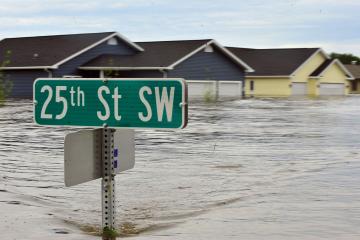
Millions will be forced to migrate due to extreme weather. 2017 saw more people forcibly displaced around the world than any previous year. Extreme weather events—flooding, fires, droughts, and intensified storms—accounted for one-third of all displacements.
The Climate Impact Lab estimates that rising temperatures will kill more than 1.5 million more people in India alone by 2100. Those who can afford air conditioning in the face of extreme heat will use it, and global energy demand for cooling is projected to triple by 2050. In warmer countries like India, where average high temperatures in the summer will reach at least 95 degrees, it could grow five-fold.
It is the most vulnerable who will suffer the most. Air conditioners in the face of extreme heat and other technologies to cope with climate shocks may not be affordable or accessible. Even for those who can afford air conditioning, connections to the electrical grid will be unreliable and may even further exacerbate emissions contributing to climate change.
The global climate and energy challenge
While it is clear that people experiencing poverty will disproportionately bear the burden of climate change, policy responses to reduce emissions and build resilience present far more of a trade-off.
On one hand, economic growth—much of which will be fueled by the very fossil fuels driving the climate crisis—is urgently needed to lift people out of poverty. On the other hand, those who need growth the most have the most to lose in the face of climate change and the fewest resources to adapt.
As echoed by our collaborators at UC Berkeley’s Center for Global Effective Action, this trade-off is becoming ever more salient and consequential, especially against the backdrop of the pandemic and ensuing economic downturn.
Within the next 10 to 15 years, leaders in the public and private sector must take significant action to avoid the worst climate scenarios.
Yet, rigorous evidence on what approaches are most effective, let alone use of evidence from impact evaluations in climate decision-making, is still limited. Decisions about whether to invest in programs and policies are often based on projected impacts, as opposed to the performance of these approaches tested in the real world through impact evaluations.
When it comes to tackling climate change, we’re short on time—and short on evidence of the right approaches.
Backing climate policy with evidence
J-PAL’s global network of affiliated researchers, staff, and many policy partners has helped catalyze a culture of scientific evidence use for poverty alleviation and international development. Since 2010, our Environment, Energy, and Climate Change sector has been applying this same scientific approach to identify effective policies and programs at the intersection of climate change and poverty alleviation.
J-PAL affiliated professors and regional offices are already generating insights and informing policies on effective strategies for climate change mitigation and adaptation.
More than 40 randomized evaluations have tested policies and programs aimed to reduce further carbon emissions and help the most vulnerable avoid damages from climate change.
These include strategies like paying farmers to conserve forests, reducing air pollution through emission trading schemes, and empowering smallholder farmers to adopt climate resilient technologies, like stress tolerant seeds and rainwater harvesting techniques.
The opportunities for rigorous impact evaluations in climate change are growing, alongside growing public and private commitments and resources to act. Together, these can help policymakers learn which approaches are effective, where, and why to direct limited resources for climate change to solutions that have the greatest impact.
COVID-19 foreshadows the scale of the unprecedented threats we face, be it pandemics or climate change, and the need for resilience on a global scale.
Innovations in measurement and groundbreaking partnerships between researchers and policy partners are pushing the frontier of impact evaluations in climate change to generate the evidence we need to reduce climate damages and build societies that are more resilient in the face of it. We look forward to showcasing how J-PAL’s global network is building a culture of evidence use at the nexus of poverty alleviation and climate change.
Stay tuned for more highlights of our work around the world to measure the impact of climate change policies and programs, and build resilience in the face of global threats.
As part of a blog series on J-PAL’s work related to climate change, this post highlights J-PAL North America’s contributions to the evidence base in environment, energy, and climate change to date and articulates our agenda for catalyzing more policy-relevant research.
As part of a blog series on J-PAL’s work related to climate change, this post highlights J-PAL North America’s contributions to the evidence base in environment, energy, and climate change to date and articulates our agenda for catalyzing more policy-relevant research in collaboration with the King Climate Action Initiative (K-CAI) at J-PAL. In an earlier post, our Energy, Environment, and Climate Change sector team reflects on the nexus of climate change and poverty and on the need for evidence-informed climate policy.
In collaboration with our J-PAL colleagues around the globe, the J-PAL North America regional office is taking time to reflect on how the consequences of a changing climate are already affecting communities both worldwide and in our own region.
In North America and globally, structural disparities and discrimination have led to low-income populations and people of color disproportionately experiencing a range of climate change-related hazards including (though not limited to) air and water pollution, loss of livelihoods, and elevated risk of harm from extreme weather events and extreme heat.
As a global organization, J-PAL is working to understand how we can support human development while also better protecting our environment and climate. In the North America region, our network of affiliated professors is working to understand how to most effectively reduce greenhouse gas emissions, reduce carbon co-pollutants that have immediate health consequences, and lower the burden that climate change poses for vulnerable populations in the region.
Climate change priorities in North America
As outlined in the earlier post, climate change and poverty are closely related. Within North America, low-income communities already grapple with the consequences of a changing climate. Researchers also project that issues such as rising temperatures, increases in the frequency of extreme weather, and sea level rise will continue to disproportionately affect people experiencing poverty in the region.
With the United States as the second largest emitter of greenhouse gases in the world, reducing emissions within North America is essential to addressing the dual challenges of poverty and climate change around the world.
This is also important because carbon co-pollutants cause disproportionately high rates of health problems for people experiencing poverty. The current global pandemic is further revealing the linkages between exposure to environmental pollution and increased COVID-19 infection rates, which disproportionately affect low-income neighborhoods and communities of color that tend to be exposed to higher levels of air pollution. Increases in particulate matter and other air pollutants lead to increases in respiratory health problems for children in the United States, particularly for children from low-income households. For these reasons, reducing pollution is a priority area of climate change research for J-PAL North America.
Particularly for communities that are projected to feel the effects of climate change and local pollutants most intensely, rapid adaptation is essential.
However, more research is needed in the context of North America to measure the impacts of common approaches to help communities cope with the impacts of a changing climate.
These can include, for example, updating physical infrastructure such as urban centers and transportation infrastructure to be more resilient to extreme weather, creating cooling centers and community response networks to respond to periods of extreme heat, supporting agricultural institutions and workers in adapting to changing conditions, and training communities for emergency preparedness for extreme weather events.
Leveraging existing evidence: lessons from household energy efficiency programs
J-PAL North America supports the generation of rigorous evidence on equitable programs that address the causes and consequences of challenges in environment, energy, and climate change, and synthesizes evidence on these issues into accessible policy lessons.
One area where rigorous evidence generated by J-PAL affiliated researchers—and by researchers and practitioners from a wide range of fields—can already inform policy decisions is on residential energy efficiency.
Results from five randomized evaluations and three quasi-experimental evaluations illustrate that residential energy efficiency programs are often a costly way to reduce energy consumption and carbon emissions. In the absence of rigorous, causal evidence, many policymakers and program implementers have had to rely on laboratory-based estimates of energy reductions, which often fail to hold true in real-life settings.
Some may consider these findings surprising, since energy efficiency measures are often seen as a double-win solution for lowering energy use and household energy bills. These results highlight the importance of real-world research that can inform policy and program design not just with technical estimates, but also with assessments of how programs work in practice. Combining engineering estimates with insights on human behavior from impact evaluations could help policymakers better predict how effective these programs can be.
Rather than prioritize the status quo strategies to improve energy efficiency, policymakers interested in reducing greenhouse gas emissions should consider policies and approaches that come closer to a direct incentive tied to carbon emissions.
Generating new evidence to reduce emissions
Moving forward, J-PAL North America will continue to leverage our network of affiliated researchers and implementing partners to conduct research on mitigation and adaptation efforts in our region. In fact, rigorous research is already underway.
In California, for example, J-PAL affiliated researcher Michael Greenstone and colleagues Fiona Burlig, Ludovica Gazze, and Olga Rostapshova are working with the California Air Resources Board (CARB) on a J-PAL North America State and Local Innovation Initiative-funded pilot project to test the effectiveness of noncompliance notifications targeting particularly high-emitting trucks that likely exceed limits set by emissions regulations.
CARB regularly conducts screenings of heavy-duty vehicles operating in California but due to the high volume of vehicles (one million heavy-duty trucks operate on California’s roadways each year), CARB cannot inspect all vehicles annually, which makes detecting and addressing regulatory violations difficult. In California, this pollution disproportionately affects low-income communities.
In particular, four cities with high levels of poverty compared to the state average—Bakersfield, Fresno, Modesto, and Visalia—are located along a major freight corridor in the state’s Central Valley and rank in the top ten US cities for particulate matter pollution. This evaluation will measure the impact of compliance strategies on the emissions from heavy-duty trucks.
J-PAL North America is eager to support research of the innovative approaches that researchers and implementers create to mitigate and adapt to climate change.
Complex issues of environment, energy, and climate change demand rapid responses, and it is essential to advance rigorous research to identify effective approaches. Staff, researchers, and practitioners who work with J-PAL’s Environment, Energy, and Climate Change sector are committed to building interdisciplinary collaborations to tackle these challenges together.
To connect or learn more about J-PAL North America’s work in Environment, Energy, and Climate Change, read about our work or contact J-PAL North America Environment, Energy, and Climate Change Sector Lead Erin Graeber.
Today, in partnership with King Philanthropies, we announced the launch of the five-year $25 million King Climate Action Initiative (K-CAI) at J-PAL. The initiative will support innovative research and policy engagement to combat climate change and poverty around the world.
While climate change affects everyone, its impacts are highly inequitable. It disproportionately harms people living in poverty, people of color, and people in low- and middle-income countries, who are more exposed to its negative impacts and often have fewer resources for adaptation.
Climate change also threatens to reverse decades of progress in global poverty alleviation, continuing the disturbing trend of the COVID pandemic, with the World Bank estimating that climate change could push an additional 130 million people into poverty by 2030.
J-PAL’s mission is to reduce poverty by ensuring that policy is informed by scientific evidence. The climate crisis threatens global progress on poverty, and is deeply in need of its own evidence revolution.
While we have essential, substantial, and growing scientific evidence about how humans are changing Earth's climate and how climate change will affect our planet and societies, another important kind of evidence is lacking. In most cases, policymakers don’t have evidence on the impacts of potential climate solutions in the real world, often having to rely on projections of costs and benefits from desk- or lab-based studies.
K-CAI is among the first major climate change initiatives dedicated to 1) generating evidence on the real-world impacts of potential climate solutions using cutting-edge randomized evaluations, 2) working with decision makers to translate evidence on effective solutions into large-scale action, and 3) identifying climate solutions that benefit people in poverty.
Fighting climate change and poverty with evidence on potential solutions
K-CAI will support collaborations between researchers and leaders in government, NGOs, and the private sector to design, pilot, evaluate, and scale evidence-informed climate change solutions that reduce burdens on and increase opportunities for people living in poverty.
Our research and policy agenda will focus on the four pillars of the global climate and energy challenge:
-
Mitigation: Reducing carbon emissions to slow the pace of climate change and its damaging effects;
-
Pollution reduction: Reducing harmful carbon co-pollutants and thereby improving public health, without reducing critical access to energy;
-
Adaptation: Building communities’ abilities to adapt to the economic, social, and environmental impacts of climate change, particularly in settings threatened by rising sea levels, changing rainfall, extreme weather, and shifting disease vectors, among others factors; and
-
Energy access: Increasing access to affordable and reliable energy for low-income families and communities around the world, and shifting energy systems to cleaner sources.
Over the next 10 years, K-CAI aspires to improve the lives of at least 25 million people living in poverty, reduce carbon emissions and carbon co-pollutants equivalent to $125 million or more, and raise significant additional resources to build a movement for evidence-informed policy at the nexus of climate change and poverty.
Building a movement
K-CAI will accelerate and transform J-PAL’s work in climate change across our research network, all seven of our regional offices, and across our ten sector teams—work that has been ongoing since 2010.
To date, J-PAL affiliated researchers have already evaluated more than forty innovative environment, energy, and climate programs in collaboration with policy partners in over a dozen countries, including off-grid solar, emissions trading schemes, better enforcement of existing regulation, residential and industrial energy efficiency programs, stress tolerant crops, social protection for climate change adaptation, and programs to reduce deforestation and agricultural burning. Effective innovations have been scaled by government partners in Chile and India, among others.
Through K-CAI, our vision is to vastly expand this work to help build a movement of researchers and policymakers working toward evidence-informed policy to mitigate climate change and reduce poverty, similar to the movement that the J-PAL network and our many partners have helped build in global development.
Testing and scaling effective solutions
K-CAI will take a two-track approach to inform climate policy, working together with leaders in government, NGOs, and the private sector, and with climate and social scientists around the world:
1) Design, pilot, and evaluate innovations: In addition to testing promising policies and technologies in the real world using randomized evaluations, K-CAI will bring together leading researchers and implementers to test strategies to change behavior, address market failures, and improve the effectiveness of policy and regulation in the transition to low-carbon economies, recognizing that policy innovation is as critical as technological innovation in solving the climate crisis.
2) Scale effective solutions: K-CAI will catalyze the scaling of interventions that already have evidence of effectiveness by funding technical assistance to decision makers in government, NGOs, and the private sector. Under the initiative, we will build a cadre of fellows seconded to policy partners to implement evidence-informed climate and poverty solutions.
Recognizing the need to dramatically reduce carbon emissions in the next decade to avoid the worst climate scenarios, K-CAI will work to speed up the path from research to policy. The initiative will prioritize funding evaluations that work to generate results more quickly, including by making use of satellite, sensor, and administrative data, and evaluations conducted in partnership with policymakers to scale effective solutions.
K-CAI is chaired by J-PAL affiliated researchers Michael Greenstone (University of Chicago) and Kelsey Jack (University of California, Santa Barbara), who will shape the initiative’s research and policy agenda and provide academic leadership. Claire Walsh will serve as K-CAI’s first Project Director.
K-CAI will issue its first call for proposals to J-PAL affiliated and invited researchers in early August 2020 and will announce the first funded research and scaling projects before the end of the year.
We know we cannot achieve our ambitious goals alone. To learn more about partnership opportunities, please contact us at [email protected].
To stay informed about K-CAI’s work, sign up for the J-PAL newsletter and visit our new initiative page.